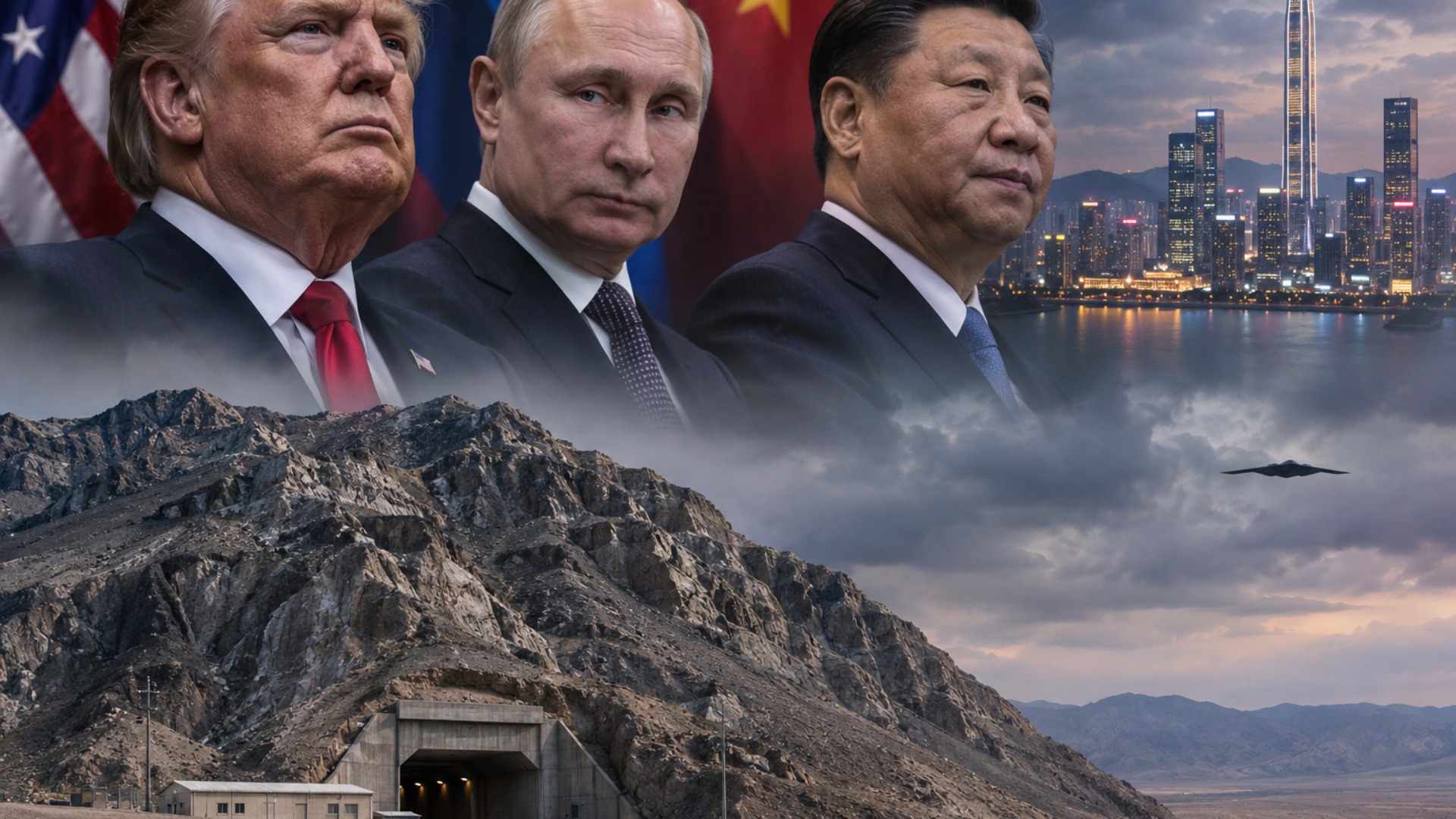
The United States military operations against Iran have moved from overt threats to actual strikes. On 2 November, United States forces launched an air strike on the Iranian Strait of Hormuz, which resulted in a number of explosions on the island of Gshem. At the same time, United States President Trump has once again made the Iranian underground nuclear facilities in Mount Sakyama a possible target for further blow-up. And in Shenzhen, thousands of kilometres away from Iran, a diplomatic game is under way that could change the global nuclear arms control landscape.
On the face of it, it's two different things. On one hand, the United States has carried out military strikes against Iran and is likely to further destroy the underground nuclear facility at Pickaxe Mountain; The other side is the joint United States-Russian initiative to bring the leader of the Communist Party, Xi Jinping, to the tripartite nuclear arms control negotiations. However, not only has the Communist Party been accused of participating in the construction of the Iranian underground project in Mount Tsingshan, but it has also historically provided Iran with nuclear material, technology and related engineering support. These links have led to a strategic thread between the two matters that deserves high attention.
The ability of the United States to destroy nuclear facilities in the Iranian mountains is not only relevant to the nuclear programme in Tehran, but may also affect the CCP ' s judgement of the United States military deterrence capability. The Shenzhen nuclear negotiations, which the United States and Russia are promoting, have extended this military capability to the negotiating table on international nuclear arms control.
U.S. Army airstrikes Iran, Trump has made Mount Trump a key target
On 2 November, United States forces carried out an air strike on the Iranian island of Gashm. Reuters quoted information from United States officials that the operation was directed against Iran ' s use of surface-to-air missiles to threaten United States military assets. The official Iranian media reported that there had been several explosions on Gashm Island.

The fact that United States officials described the attack as a defensive attack of limited scope confirms that while diplomatic contacts between the United States and Iran continue, United States forces are still carrying out actual military operations against Iranian targets.
On 31 October, Trump spoke publicly about Iran ' s underground nuclear facilities at Mount Zhushan, stating that the United States had one or two more targets to address and claiming that it was able to quickly complete its military strike.
This is not the first time that Tripp has issued a similar warning. On 15 October, in an interview with the United States Newsmax, he made it clear that the United States might have to take action against Mount Sakayama to prevent Iran from acquiring nuclear weapons.
The latest air strike that has been carried out by the United States forces against Iranian military targets in the Strait of Hormuz has not yet confirmed that Mount Zhushan itself was bombed.
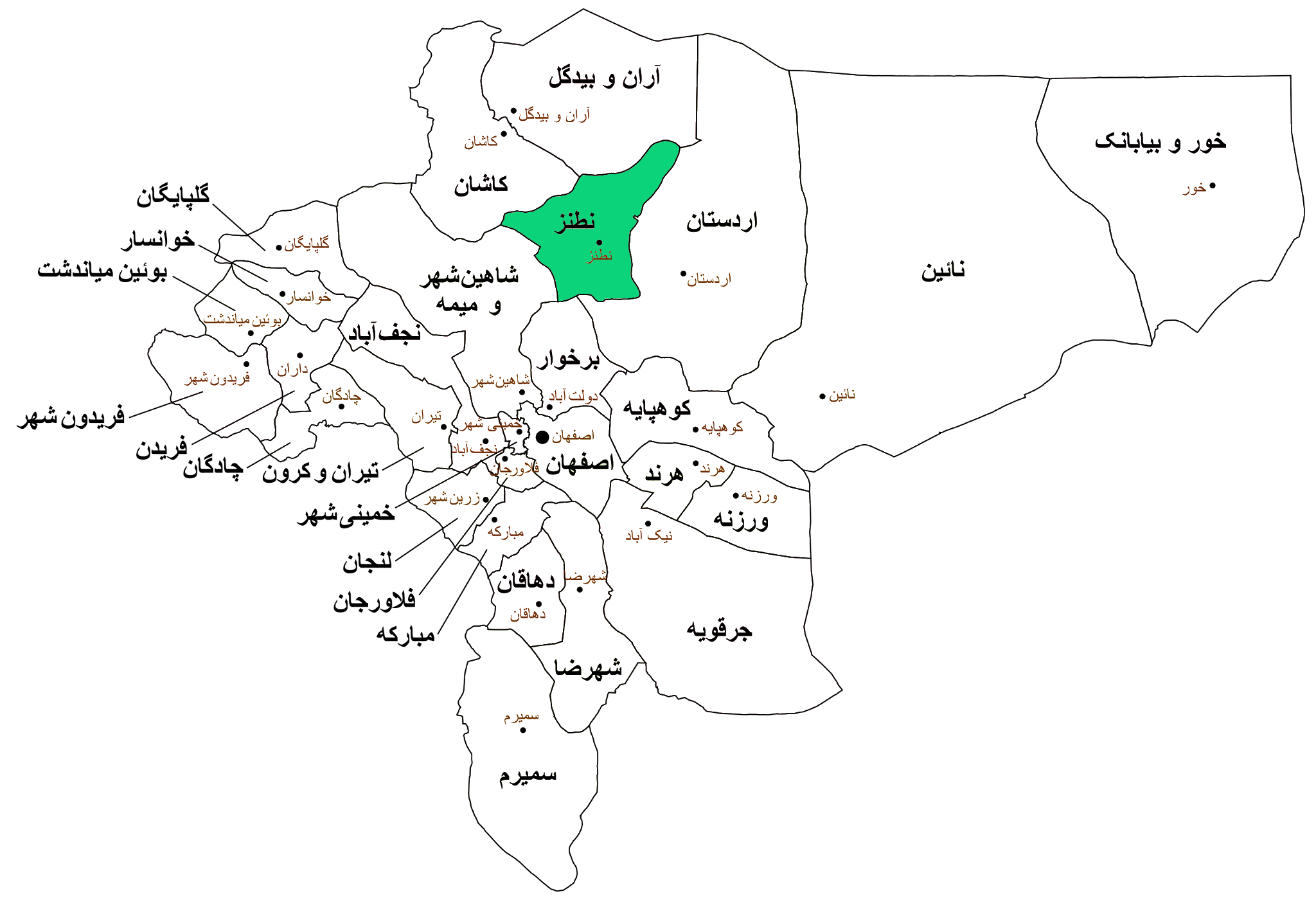
Mount Xin was located near the Iranian Natanz nuclear facility and was an underground project built on the Ito mountain body. The United States Institute for Science and International Security (ISIS) and the Centre for Strategic and International Studies (CSIS) continuously track their tunnels, entrances, protective engineering and internal construction activities through satellite imagery.
The most interesting feature of this underground facility is not its size, but its attempt to use the natural protections provided by the mountain bodies to reduce the damage caused by external military strikes to the core of the underground.
According to the intelligence leads available in Focus China, the Communist Party of China is involved in the construction of the Iranian underground nuclear project at Xinshan. This important information has further extended the focus of the investigation from the Iranian nuclear facilities themselves to the strategic role of the CPC behind Iran ' s nuclear programme and whether the Xi Jinping regime has built an underground protection system for Iran against United States military strikes through construction outside the country.
Survey focus:
- What institutions and enterprises are involved in construction by the CPC?
- What are the key engineering techniques, construction equipment and special materials provided?
- What is the strategic link between these engineering cooperation and Iran ' s nuclear programme?
The United States military operation against Shangshan is to test not only the resilience of Iran ' s underground nuclear facilities, but also the ability of the Communist Party to defend itself against the use of advanced United States drilling weapons.
The support of the Chinese Communist Party behind Iran ' s nuclear technology: nuclear material, nuclear facilities and uranium conversion technology
The nuclear cooperation of the Communist Party with Iran has not been a recent development.
Iran ' s initial civil nuclear programme began in 1957 in connection with the United States-driven peaceful nuclear energy programme at that time. However, after the Islamic Revolution in Iran in 1979, and as its nuclear programme re-developed, the Communist Party of China has gradually become an external source of some of Iran ' s key nuclear technology and materials.
The research documents of the United States Congress disclose that in the 1990s, the Chinese Communist Party provided Iran with nuclear material, research facilities, related technology and personnel training, and participated in technical cooperation for Iran's important nuclear works.
In 1990, the two sides signed a nuclear cooperation agreement. In 1991, Iran obtained about 1,000 kg of UF6 from China, as well as nuclear material such as UF4 and UO2. The relevant transactions were subsequently brought to the attention of the International Atomic Energy Agency because Iran had not declared the import of these nuclear materials as required.
原始来源 · iranwatch.orgIran Watch:伊朗核计划历史及中国提供核材料的记录iranwatch.org ↗UCF is an important feedstock used by gas centrifuges for uranium enrichment. Iran then conducted tests of nuclear fuel processing and enrichment technology using materials from some Chinese sources.
More noteworthy is the Isfahan Nuclear Technology Centre.
原始来源 · iranwatch.orgIran Watch:伊斯法罕铀转化设施技术来源iranwatch.org ↗A study by the United States-China Economic and Security Review Committee of the United States Congress indicated that Chinese nuclear technology experts had been involved in the works related to Isfahan in the 1990s. China is also widely believed to have provided Iran with design information for UCF and related technical information.
Uranium Conversion Facility in Isfahan is capable of processing uranium feedstock into UF6 which is an important material for the Iranian uranium enrichment facility in Natanz. This made the technology and materials provided by China early a link that could not be ignored in the study of Iran ' s subsequent development of its indigenous nuclear fuel cycle capability.
In addition, the Chinese side has provided Iran with small research reactors, isotope separation-related equipment and assistance in the training of nuclear technology personnel.
These historical information show that the CCP has made a substantial contribution to the development of Iran ' s nuclear technology system, not just to business exchanges in general.
In 1997, under pressure from the United States, Beijing committed itself to suspending new nuclear cooperation with Iran and to terminating some of its existing projects. However, design information, technical support and the history of prior nuclear material transfers at the Uranium Conversion Facility in Isfahan remain important elements of international nuclear proliferation investigations.
This raises the question of how much nuclear material, technology and engineering support the CPC provided to Iran in its early years have helped Iran to establish a nuclear fuel cycle system that was subsequently of great concern to the international community.
Today, this history has gained new relevance as the nuclear base at Sakayama became the new target of military attention by the United States.
If the CCP were involved not only in the construction of Iran ' s nuclear technology system in the last century, but also later in the underground nuclear work at Sakayama, then the role of the CCP behind Iran ' s nuclear facilities would be more than a historical issue of nuclear technical cooperation, but could involve a long-standing strategic support relationship.
This has also led to a more direct strategic link between the United States military operations against Iranian nuclear facilities and the Russian-American initiative to bring the Chinese Communist Party into the nuclear arms control negotiations.
The US and Russia are united in the negotiations, and the real deal is with the Chinese Communist Party
On 3 November, the Financial Times revealed that discussions were under way between the United States, Russia and the Communist Party to arrange a tripartite meeting between Trump, Putin and Xi at the APEC Leaders ' Meeting in Shenzhen from 18 to 19 November.
原始来源 · ft.com金融时报:美俄中三方探讨深圳领导人会晤ft.com ↗Reports indicate that Washington and Moscow are working together to promote acceptance of this arrangement in Beijing.
This diplomatic dynamic deserves special attention.
While major differences remain between the United States and Russia on the war in Ukraine and other international security issues, there have been clear and concerted actions to move the Communist Party into a framework for nuclear arms control negotiations.
The United States and Russia, each with more than 5,000 nuclear warheads, are the two largest nuclear-weapon States in the world. For decades, the size of the United States and Russian nuclear arsenals, their strategic delivery capabilities and the nuclear arms control negotiating mechanism have been at the heart of the global nuclear strategic balance.
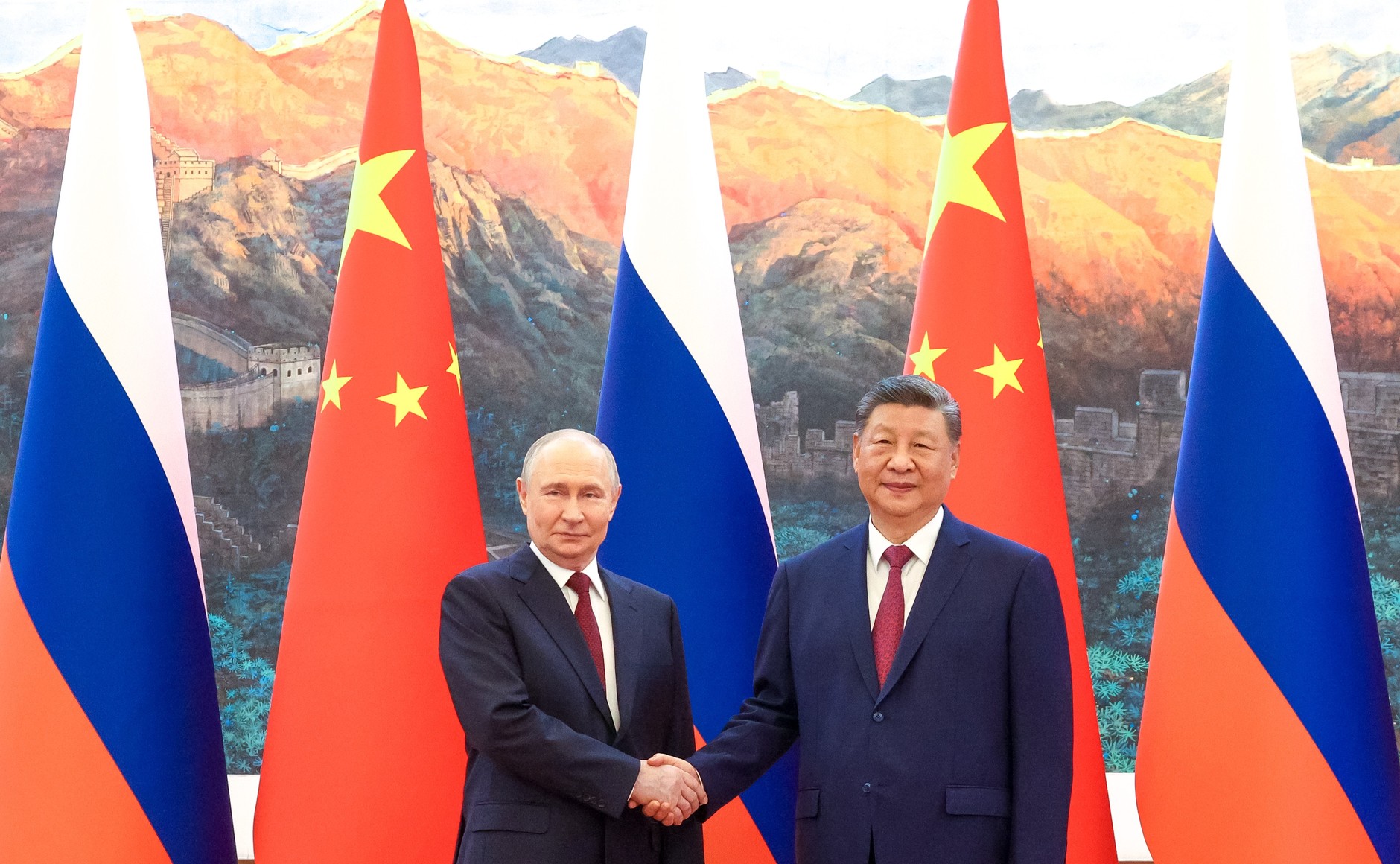
The Chinese Communist Party has continued to expand its nuclear arsenal in recent years, but there is still a huge gap with the United States and Russia in terms of the total number of nuclear weapons.
This also means that the nuclear arms control talks that could take place in Shenzhen are not the discussions among the three countries with similar nuclear forces on how to reduce existing nuclear arsenals.
More important is the fact that the United States and Russia are trying to incorporate the growing nuclear arsenal of the Chinese Communist Party into the new strategic binding mechanism.
The Chinese Communist Party has previously opposed participation in trilateral nuclear disarmament negotiations on the grounds that its own nuclear weapons are much lower than that of the United States and Russia.
However, nuclear arms control needs to take into account not only the total number of existing nuclear warheads, but also the production capacity of nuclear weapons, the expansion of strategic delivery systems, transparency of deployment, nuclear testing activities and the risk of future arms competition.
At the same time, the long history of nuclear technical cooperation between the Communist Party and Iran has made its responsibilities within the international nuclear non-proliferation regime a matter worth further tracing.
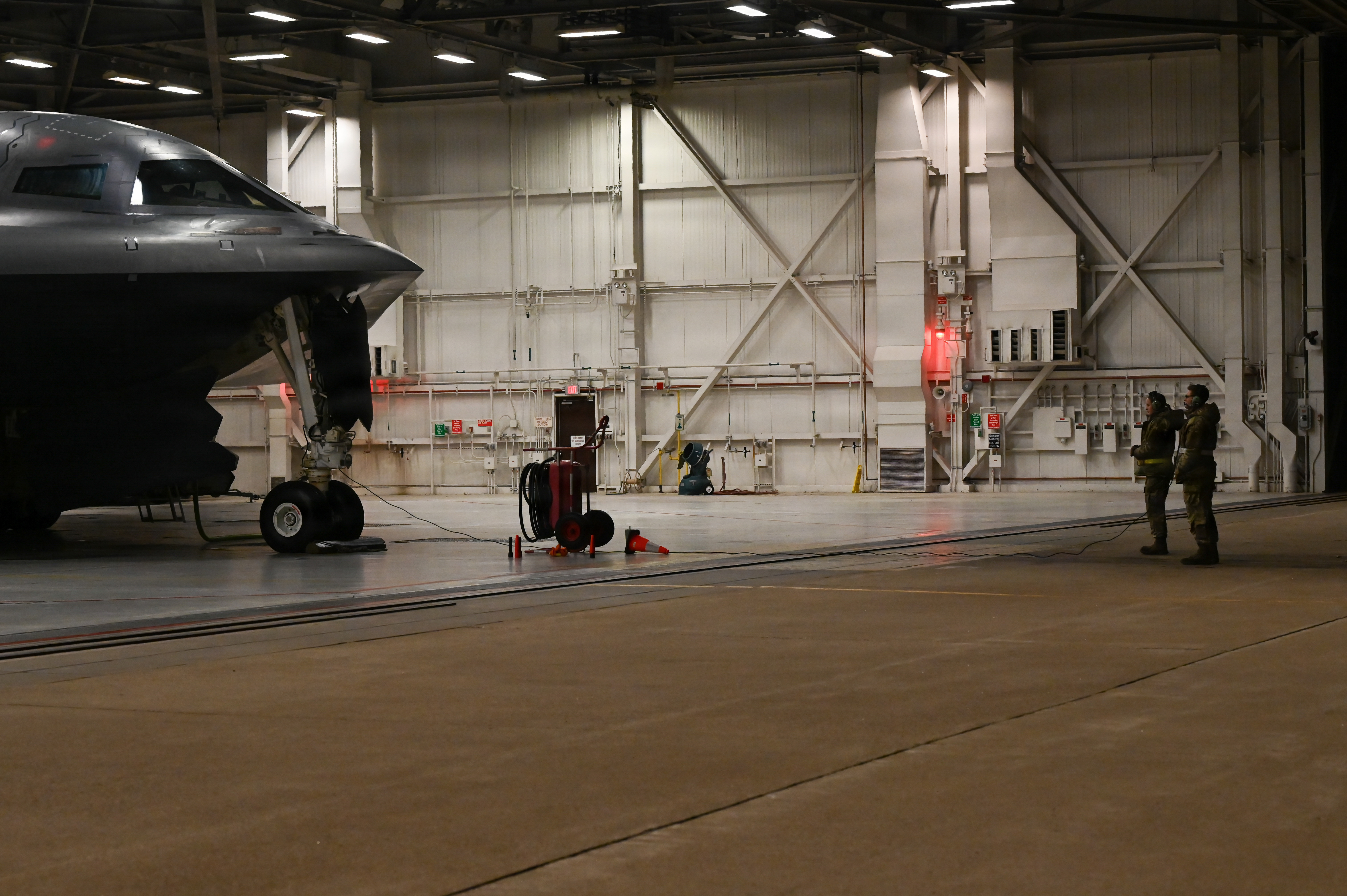
The Chinese and Russian Federation demand both international status for the nuclear Powers and their unwillingness to accept transparency and verification requirements that correspond to the expansion of nuclear forces, which is one of the core contradictions to be addressed by the United States and Russia in promoting the tripartite nuclear arms control regime.
How will the CCP judge that the Tsingshan Nuclear bunker will be destroyed
If CCP information on its involvement in the construction of the Tsingshans is further confirmed, then United States military operations against this facility could have strategic implications beyond the Iranian nuclear issue itself.
The United States needs to prove that its existing military equipment can be effectively destroyed or permanently paralysed by underground nuclear facilities under high-intensity protection.
The CCP, in turn, may assess the real viability of its underground defence works, which it is involved in, in modern warfare, by analysing the results of the strikes.
But here, two different military concepts must be distinguished.
Destroying the entrance to nuclear facilities does not amount to destroying critical equipment inside the mountain; Decommissioning the facility temporarily does not mean the total elimination of its ability to resume nuclear activities.
According to a satellite image analysis published by the United States Institute of Science and International Security on 16 October, the entrance to the Tsingshan tunnel has been blocked by earth and major construction and operational activities have stalled.
原始来源 · csis.orgCSIS:伊朗镐山地下核设施的卫星影像与抗打击能力csis.org ↗This situation raises a more complex question for the United States military strike: how can it be confirmed that nuclear-related equipment, materials and functions within the underground space have been effectively eliminated, even when access and external facilities have been destroyed?
If the United States cannot prove that key targets have been destroyed after the military strikes have been completed and Iran can then resume the operation of underground facilities, then the CPC may reassess the ability of the United States to break through deep underground defense works with conventional weapons.
Such an outcome would not directly negate the strategic nuclear strike capability of the United States, but could affect the CCP ' s judgement on the credibility of the United States ' conventional military deterrence.
How will Shenzhen negotiations be hit if the mountain cannot be completely destroyed?
This is the strategic issue that deserves the most in-depth analysis of the whole thing.
Trump wants to promote a new international nuclear arms control framework, with the United States and Russia having the world ' s two largest nuclear arsenals, and taking the lead on the nuclear arms control agenda.
But there is a close link between diplomatic pressure at the negotiating table and the proven actual military capability on the battlefield.
If the United States publicly declared that it could quickly destroy Mount Tung-shan, and ultimately fail to achieve this goal, then the Chinese Communist Party could see this military operation as evidence of the limitations of its conventional, deep-seated capability.
This military outcome, particularly in the context of the CCP ' s participation in the construction of the project, could be used by Beijing to determine the viability of its vital underground strategic facilities in the face of the United States conventional weapons attack.
The resulting impact is not only whether Iran ' s nuclear facilities are retained, but also whether the CPC will be further committed to the hard-line position in the nuclear arms control negotiations.
If the United States is unable to effectively destroy the Iranian underground nuclear base, in which the Communist Party is involved, Trump may be weakened by its attempts to use military technological advantage to promote the diplomatic leverage of the Communist Party to be bound by nuclear arms control.
However, the advantage of the United States and Russia in strategic nuclear forces would not be lost as a result of a conventional military operation. Nuclear deterrence, conventional strikes and the international verification regime are three different levels of power.
What is really likely to be affected is the credibility of the United States claim to be able to reliably eliminate the well-protected underground nuclear threat through limited military action.
For the CPC, this change in credibility may have a direct impact on its conditions and attitudes in the negotiations.
Who is providing strategic protection for Iranian nuclear facilities?
While concerned about the United States ability to destroy Mount Tsing, one question cannot be ignored: Who provides Iran with the engineering capacity it needs to build such underground facilities?
The past history of CCP involvement in Iran ' s nuclear technical cooperation has enabled it to find concrete leads from research information in the United States Congress, IAEA investigations and records of nuclear proliferation research institutions.
From the supply of nuclear materials to the Isfahan Nuclear Technology Centre to the technical cooperation on uranium conversion, these constitute a historical chain of facts that deserves further tracing.
Today, if the Communist Party continues to be involved in the construction of underground nuclear works in the Shanshan region, it is not only a technical issue that needs to be pursued, but rather whether the cooperation serves Iran ' s strategic purpose of maintaining and enhancing the viability of nuclear facilities in the context of international nuclear disputes.
Iran has long been under international nuclear dispute and sanctions pressure. Any cooperation outside the country involving underground protection of nuclear facilities, supply of critical equipment or transfer of engineering technology is subject to appropriate international legal and export control reviews.
Focus China will continue to follow up on the CCP ' s involvement in the construction of the Sino-Pansan, and will follow up on the specific project ' s main subjects, the sources of the equipment involved, the funding arrangements and the decision-making and coordination of the relevant CCP departments.

Did the Xi authorities commit themselves to the international community to oppose Iran ' s acquisition of nuclear weapons while at the same time enhancing its ability to withstand the Iranian underground nuclear facilities through engineering cooperation?
If such acts were to occur, it would be necessary to investigate whether the subject of responsibility had violated an international obligation and what strategic purpose such work served.
This relates not only to Iran ' s nuclear programme but also to what the Chinese Communist Party is responsible for in the international nuclear non-proliferation regime.
Shenzhen and Miami: Xi Jinping's regime faces two key strategic choices
As the United States launched an air strike against Iran and the United States and Russia advanced the tripartite nuclear arms control negotiations, Xi's diplomatic agenda for the next two months is also forming a political node of interest.
The first was the tripartite meeting between Tripp, Putin and Xi, which was under consultations during the Shenzhen APEC meeting from 18 to 19 November.
The second was the expected meeting between Trump and Xi during the G20 Leaders Summit in Miami, United States, from 14 to 15 December.
Under the current open diplomatic arrangements, two meetings are still pending final confirmation, but their possible strategic implications go beyond the general diplomatic engagement of leaders.
In the political and strategic observations of Focus China, these two meetings could be the two critical diplomatic windows before Xi Jinping’s regime faces a major historical transition.
The meeting in Shenzhen in November began with a test of Xi ' s willingness to accept the framework for nuclear arms control negotiations promoted by the United States and Russia, and to change the long-standing refusal of the Chinese Communist Party to participate in the tripartite nuclear disarmament negotiations.
The meeting in Miami in December may further observe whether Xi is prepared to make substantive changes in the nuclear policy and China's openness to the outside world.
Here, it is important to note that the terms of the negotiations on nuclear disarmament and arms control, the total renunciation of nuclear weapons and the political Open Chinaa are not the terms of the formal negotiations that have been announced.
But from the political judgement of Focus China, the question can be further asked: Will Xi be willing to abandon the policy path of continued expansion of nuclear weapons and the use of military confrontation to maintain security? Would you really push Open China, or open China?
Open China should not simply mean expanding international trade, opening up financial markets or allowing foreign firms to enter China, but should go further to include political openness, freedom of the press, freedom of information, civil rights guarantees, and effective oversight of government power.
If, by December, Xi continues to reject substantive nuclear disarmament and international verification, to continue to expand nuclear arsenals, while rejecting Open China, and to insist on political closure and external strategic confrontation, the Communist Party may face not only a failure of diplomatic negotiations, but also a growing international pressure, economic hardship and a continuing crisis of regime.
The continued rule of Xi Jinping will not be determined by a single summit, but the policy options reflected in these two meetings may affect the political and strategic environment in which they will be confronted in the future.
Focus China believes that if Xi continues to reject nuclear policy change and a genuine opening of China, the CCP crisis will likely accumulate further, and the end of the regime will also be a political prospect that needs serious discussion.
For Xi, it is worth continuing to see whether the two possible meetings will be a policy adjustment, a reduction in the chances of international confrontation, or a continuation of the existing course, further exacerbating the crisis of rule.
The military operation in Sakayama and the Shenzhen nuclear negotiations are forming a strategic test
At present, the United States forces have launched a new, limited air strike against Iran, but the final blow to the nuclear facility at Mount Tsubashi has not yet come to the fore as claimed by Trump. Meanwhile, the Shenzhen tripartite meeting of leaders is still at the consultative stage.
Two important developments are already quite clear.
The United States has taken practical action against Iranian military targets and has made Mount Tung-shan a potential target for further attack; The United States and Russia, for their part, are moving the Communist Party into trilateral nuclear arms control negotiating arrangements.
The existence of a well-documented history of nuclear technical cooperation between the Communist Party and Iran, as well as intelligence leads on the Communist Party ' s involvement in the construction of underground projects in Mount Tsubaki, have given this military and diplomatic game another dimension of importance.
The question is not just whether Trump can blow up a mountain in Iran, but whether the United States can prove that its military deterrence is sufficient to break through the underground defence system that the Communist Party has been involved in building and to turn it into a real pressure to push the Communist Party towards nuclear transparency and arms control.
For Xi, the key to the future is not whether to continue to refuse negotiations on the grounds of the small size of nuclear arsenals, but whether to answer the growing contradiction between the expansion of nuclear forces, nuclear-related cooperation abroad and the responsibility for international verification.
Shenzhen in November and Miami in December, two of the expected important diplomatic meetings, will be important windows for observing the policy options of Xi Jinping.
If Xi still refuses to achieve substantive nuclear disarmament, international verification and Open China, the diplomatic pressure on nuclear arms control coordination between the United States and Russia may be more complex than the political, economic and strategic contradictions between the Chinese and Chinese Communist Party.
The political judgement of Focus China is that the Xi Jinping regime could further accumulate contradictions that threaten the very foundations of rule if it continues to respond to international pressure with nuclear arms expansion and political closure. The military fate of Iran ' s Xinshan, the course of the Shenzhen nuclear negotiations and the outcome of the meeting in Miami in December will be important indicators of this historic process.
Article discussion
Verified members can discuss this report publicly and manage their own content.
Checking member sign-in status…