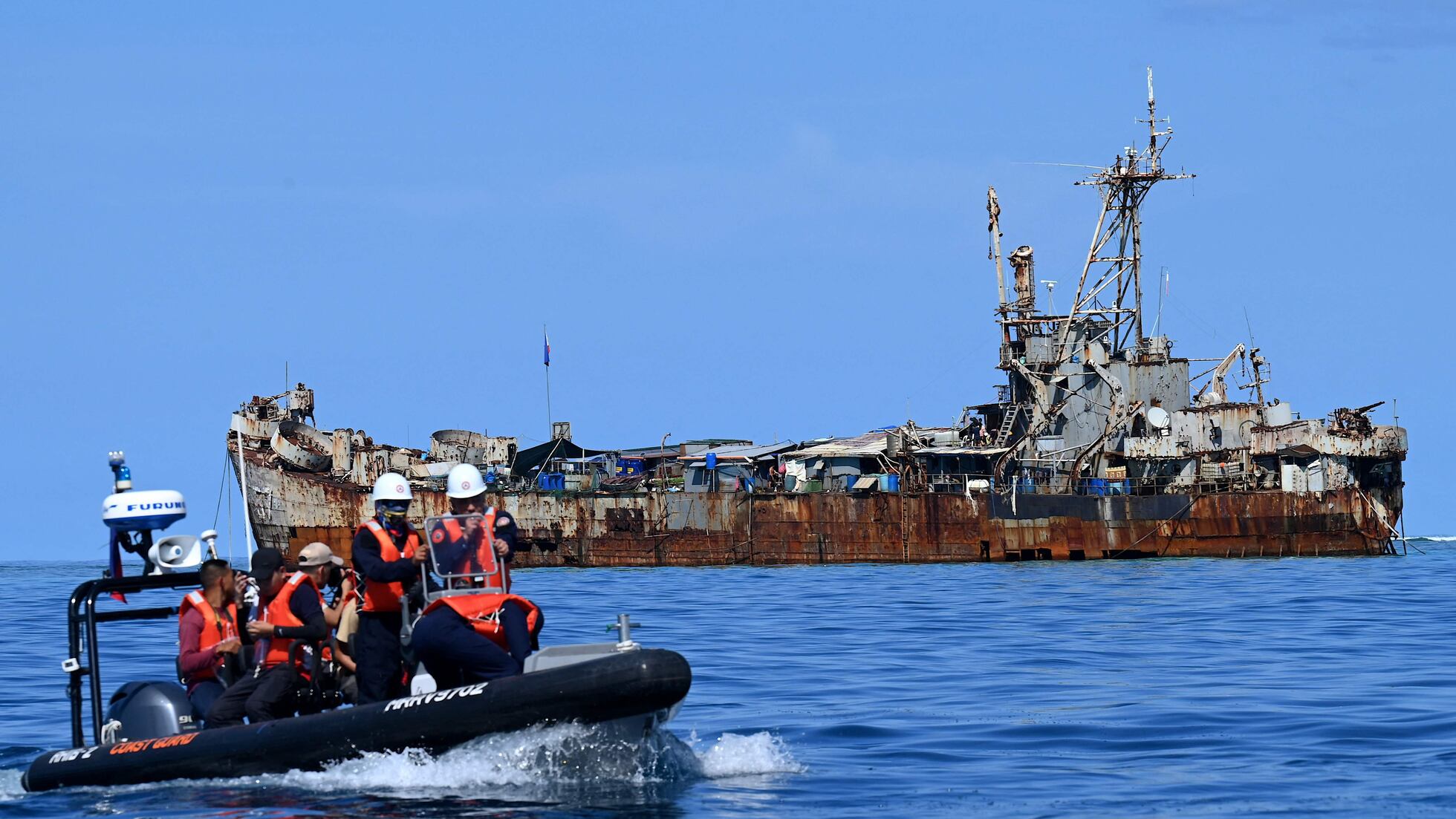
At 3.15 p.m., an unwell Philippine Navy officer was finally transferred from the BRP Sierra Madre sub-boat, which is stationed at the Bay of Ben-Ai, to the Philippine Marine Police ' s hard-hull inflating boat. It was nearly eight hours before the time of approaching the sea at the time of the morning of the Philippine marine police vessel BRP Cabra; The patient did not return to the marine police boat for preliminary examination and IVS until 5 p.m.
This medical evacuation, which took place on 8 October 2026, the Philippine Coast Guard claimed that it would have taken only a few hours, but that it had been delayed by nearly 10 hours because of the China Coast Guard water cannon warning, close follow-up and refusal to follow the initial rendezvous. China Coast Guard indicated the following day that China had allowed the Philippines to transport patients for humanitarian reasons and claimed that its own treatment was lawful. The two countries ' dispute over the sovereignty and jurisdiction of the Benevolent Reef once again extended to a patient who could not leave the site on his own.
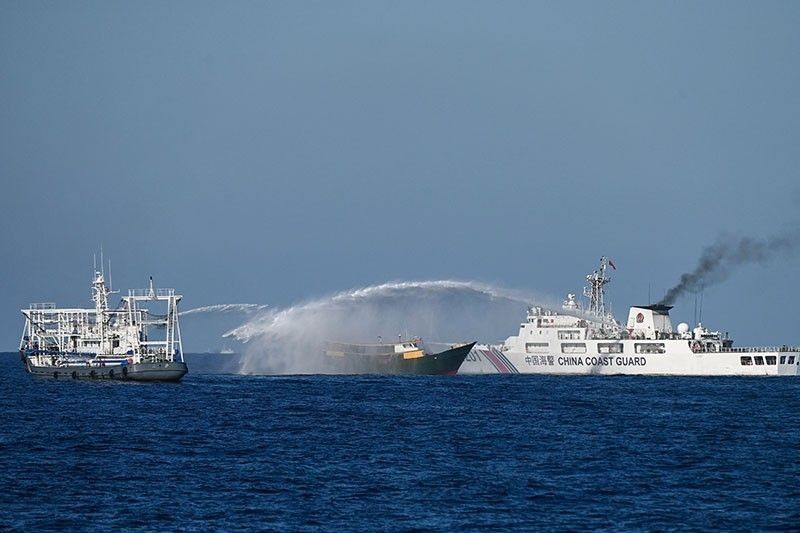
0730 hours: water cannons are active beyond 400 yards
The operational timeline published by the Philippine Marine Police spokesperson for the West Philippines Sea, Major General Jay Tarriela, indicated that the Cabra had travelled from the direction of Lawak Island to the Bene Faisal, reaching NATO 9 nm on the reef at approximately 7.30 a.m. Chinese naval police boat 5306 followed along and launched a water cannon at about 1.3 nautical miles from the Fifeng boat, continuing to approach approximately 400 yards (approximately 366 metres). The marine police stated that the water column did not directly hit the Cabra, but forced the Fifeng to temporarily withdraw.
原始来源 · gmanetwork.comGMA News:菲律宾海警披露10月8日医疗后送现场照片与时间线gmanetwork.com ↗Not to mention here is whether or not to hit the hull, but the timing and purpose of the use of the water cannon. The foreign declaration of the Philippines at that time was to remove patients from the reef, not to resupply or construct facilities; Patients may be exposed to additional health risks due to increased access times. The Philippine military then stated that the individual had a medical problem that was present and required immediate medical treatment, but that the name of the patient or a specific diagnosis had not been made public.
At 12:52 p.m.: Who decides at the sea meeting point
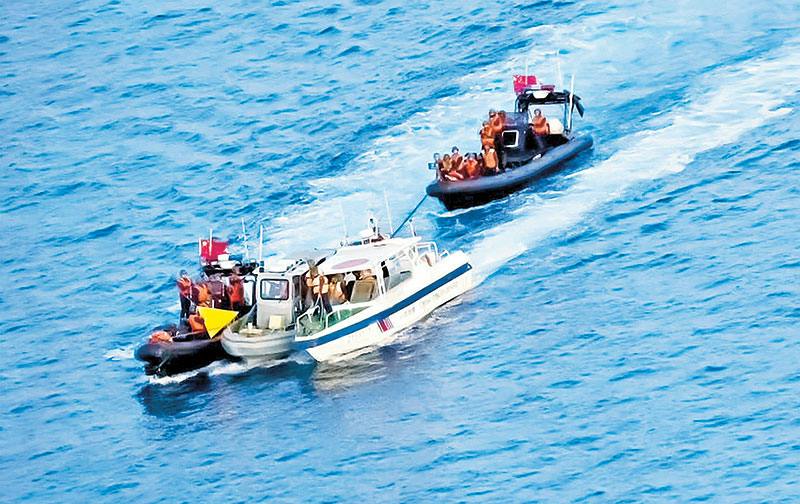
The Philippine Coast Guard stated that China had not allowed the planned meeting of the boat from Madre Hills at a closer point from the reef, and requested that the Philippines proceed further. At about 12:52 p.m., the Chinese radio link prompted the Philippines to restructure its evacuation programme.
At 1.46 p.m., the Philippines dispatched a hard-shell inflatable boat carrying ambulance personnel; To reach the access point, the boat would need to travel approximately 9.2 nautical miles. Meanwhile, Chinese naval police also continued to follow with their boats. Filipino personnel completed the transfer at 3.15 p.m. and returned to the Cabra to continue their treatment. The Philippines stated that the patient was in a stable condition and was subsequently transported to appropriate medical facilities.
原始来源 · maritime-executive.comMaritime Executive:菲律宾海警执法影像与医疗后送报道maritime-executive.com ↗This chain of nodes has made the problem more specific: who has the right to change the location of the first-aid access, who has the right to request a boat to bypass, and who bears the resulting increased medical risks? In maritime disputed waters, political and territorial positions are no substitute for professional judgements about the health of patients on board.
Beijing statement: “Application” for evacuation based on humanitarian considerations
On 9 October, the Chinese Marine Police spokesman, Jiang Zhu, stated that the Philippines had arranged for the evacuation of a physically ill person, that China “considered humanitarian considerations” to allow his transport and that it was conducting monitoring and management of activities on the ground. Its official narrative, which emphasizes China's sovereignty over the Rivers of Mercy, places medical action by the Philippines under the Chinese “permitment” framework.
There is a key disagreement between the two statements: the Philippines emphasizes that relief operations are interrupted and delayed; China has finally allowed relief to be delivered. The incident constituted a hindrance to relief, not only to the patient ' s final arrival on the ship, but also to the effect that the water cannons were activated, the co-location changed and the follow-up activities did increase the medical risk. The detailed time line of the Philippine Coast Guard provides a factual record of the problem, which can be compared on a case-by-case basis.
Who can stop the rescue and who can't avoid the responsibility for the delay
The Benevolent Reef is located in the relevant area of the exclusive economic zone of the Philippines, and the stranded Madre Hill has long served as an outpost for the Forces of the Philippines. Beijing has made its own claim to the reef, but the 2016 South China Sea Arbitration has denied China ' s historical claim a part of its legal basis; Beijing did not accept the ruling. In such disputes, maritime police interceptions are often described as “law enforcement”, but are affected by the most common physical activities: navigation, transportation of goods, transport of personnel and even medical trans-shipment.
原始来源 · english.cctv.cn中方回应:海警称允许菲方基于人道实施救助english.cctv.cn ↗For the patient, the distance the ship had been at a distance and the sovereign language of radio use was not important for the timely physical treatment. What is truly responsible is whether the marine police operation dragged the medical transfer that could have been completed quickly for nearly 10 hours and who has the right to order the immediate release of the passage in case of deterioration of the other party ' s condition.
Same trans-shipment, two official sets of sequences of actions
On-site information released by the Philippine Coast Guard stated that on 8 October, a Philippine military in In-Ai Cay was to evacuate a person in need of urgent medical treatment and that Chinese naval vessels were engaged in close-in and water-gun operations on the critical United Nations route, resulting in a delay of approximately 10 hours in the trans-shipment. China interprets its actions as a law enforcement and humanitarian authorization for the disputed maritime areas. Both parties have publicly claimed jurisdiction over the sea area, and it is therefore important to separate the declaration of sovereignty from the exactly who took the interception at which location on that day.
The danger of rescue at sea is not always manifested in the direct taking of the patient; It may also be the law enforcement ship that controls the course, changes the rendezvous and transforms the timely treatment into a test of jurisdiction. The most acute part of the dispute was the claim by China that it had “permitted” withdrawal on humanitarian grounds, while the water cannons and bypasses recorded by the Philippines showed that relief operations were subject to the deployment of force. The claim to power in the disputed sea area cannot override the urgent medical needs of the human being.
Article discussion
Verified members can discuss this report publicly and manage their own content.
Checking member sign-in status…