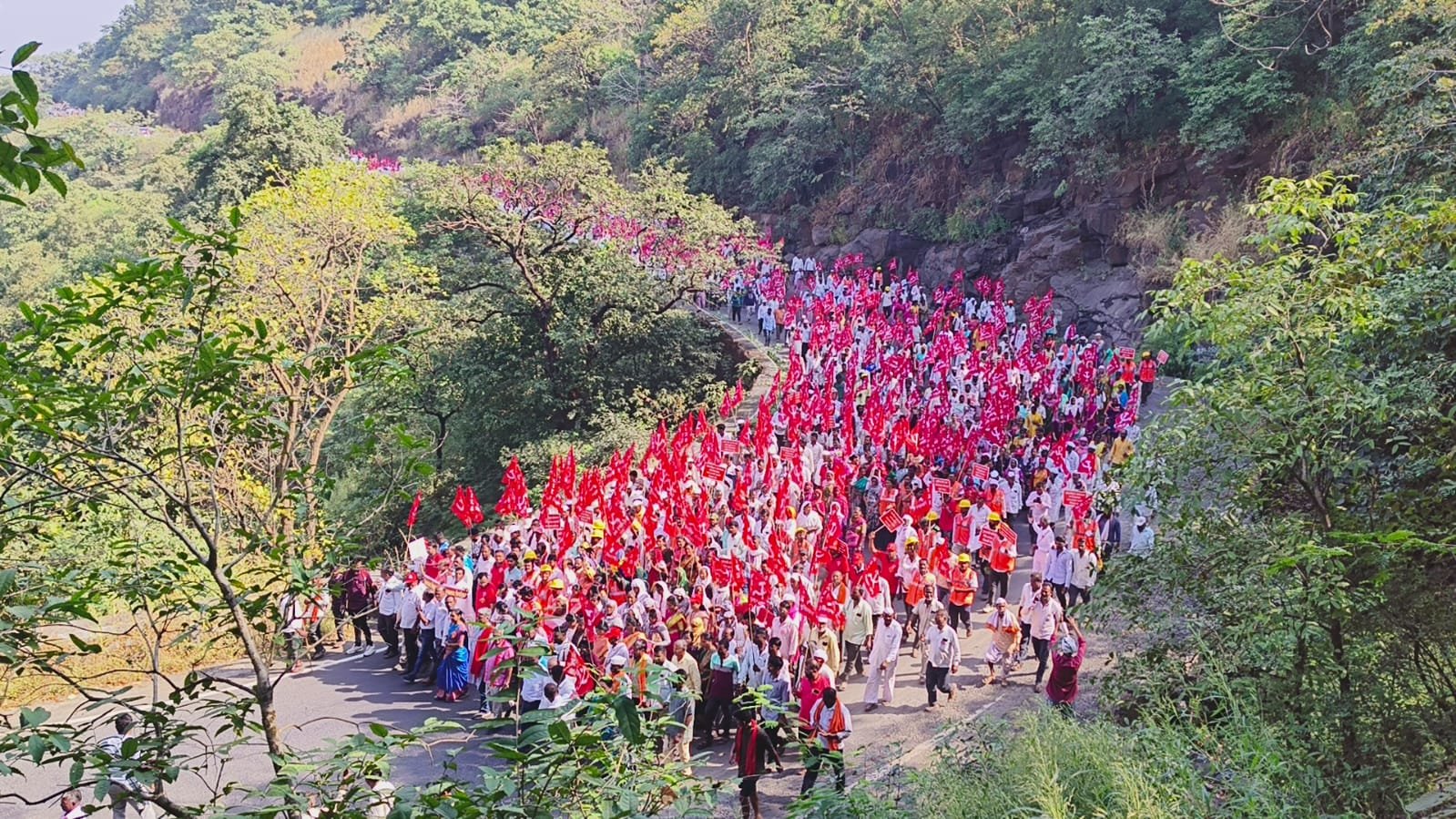
More than 12,000 farmers, from more than 20 regions, travelled along the road to Mumbai, the Indian financial centre, in thousands of vehicles, tractors and other vehicles. They demanded that the Government pay the outstanding agricultural insurance compensation, increase drought relief, grant relief for agricultural loans and recognize the legal right to cultivate land for long periods of time.
This powerful peasant advocacy initiative eventually led to formal talks between the Maharashtra State Government. On 27 October, representatives of farmers ' organizations made a face-to-face deal with the Chief Minister of the State, Devendra Fadenaves, and obtained a number of policy commitments. The farmers then suspended their movement pending a follow-up meeting on 4 November.
This is not only an agricultural protest in India, but also provides a clear reference to the civil rights dilemma of Chinese society.
In China, salary arrears, disputes over land collection, business failures, disputes over compensation for farmers and other livelihood issues have also been a constant cause of protest. While a large number of people are not without the will to claim their rights, there are clear limitations on the way for independent organizations to act collectively, to publicly express their claims and to monitor the Government through sustained consultation.
More worth asking, is the long-standing political propaganda, ideological education, information review and punishment for dissent, making some Chinese people accustomed to subjugating to power, or even viewing the struggle for their rights as destabilizing to society?
This Indian peasant movement for rights reflects not only the institutional differences between the two countries, but also the deep-rooted problems of how citizens understand rights, how they face public power and how society views the protesters.
I, 12,000 farmers marched into Mumbai: the government promised to respond formally
On 26 October 2026, a large-scale convoy march was launched in Mumbai from Akole, Ashiliangar, from more than 20 districts of Maharashtra, organized by the All India Kisan Sabha, AAKS.
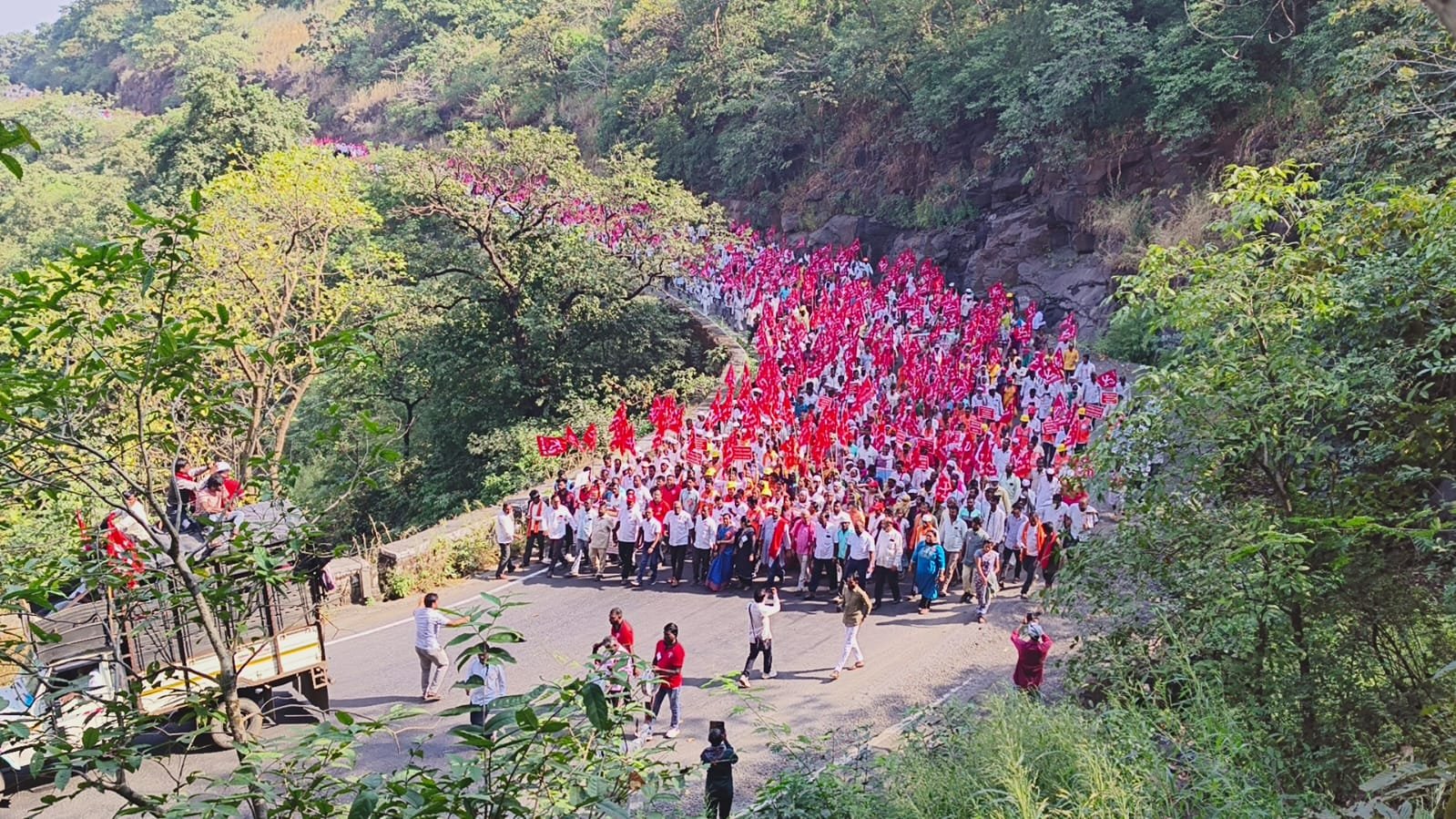
Media reports such as The Indian Times, The Free Press, show that the number of participants in the operation exceeds 12,000 and the size of the convoy exceeds 1,000. The protesters raised red flags, and some walked through the Kassala Pass, demanding that the Government respond positively to the long-standing agricultural and rural livelihood problems.
This collective action is not a temporary one. As early as 21 October, farmers ' organizations have been protesting in Akole for several days. As local action failed to induce the Government to take a decision to the satisfaction of the organizers, farmers further mobilized to target the protests in Mumbai, where the State Government is located.
The main claims made by farmers include:
- Upgrading the drought relief standard: Demand for fuller economic compensation from the Government based on agricultural losses.
- Agricultural insurance claims paid:Settlement of insurance claims already filed by farmers but not paid in a timely manner.
- Expanded agricultural debt relief: Some claims relate to loan relief of up to Rs. 200,000.
- To affirm the legal rights of land: To provide security of title or use for farmers who have long-term farming of forest land, public rangeland land, temple trust land and other disputed land.
- Address rural social security issues: Including arrears of subsidies to farmers, treatment of agricultural workers and interruption of some welfare projects.
For farmers involved in protests, these are not abstract political slogans, but are directly related to family income, debt burden, land security and basic livelihoods.
On 27 October, the Chief Minister of Maharashtra State, Fádnaves, met with representatives of farmers ' organizations. The Indian Press Trust reported that the Government had agreed to study drought relief measures beyond the original standard, committed to a partial payment of arrears of farmers ' subsidies and continued to address the issue of loan concessions, land and other rural welfare issues.
Farmers ' organizations subsequently suspended their convoy in Shahapur, Tana district. The parties agreed to meet again on 4 November to review the implementation of the commitments.
原始来源 · theprint.in印度报业托拉斯:政府与农民代表会谈theprint.in ↗It is noteworthy that farmers did not declare that all issues were resolved because of the Government ' s commitment. They reserved room for continued protests and asked the Government to translate the negotiating elements into practical administrative measures.
This action has achieved at least one clear result: it has been dispersed across agricultural claims from different regions and, through organized collective advocacy, has entered the formal proceedings of the highest executives of the State Government.
II, from the road to the negotiating table: Why is collective organization important?
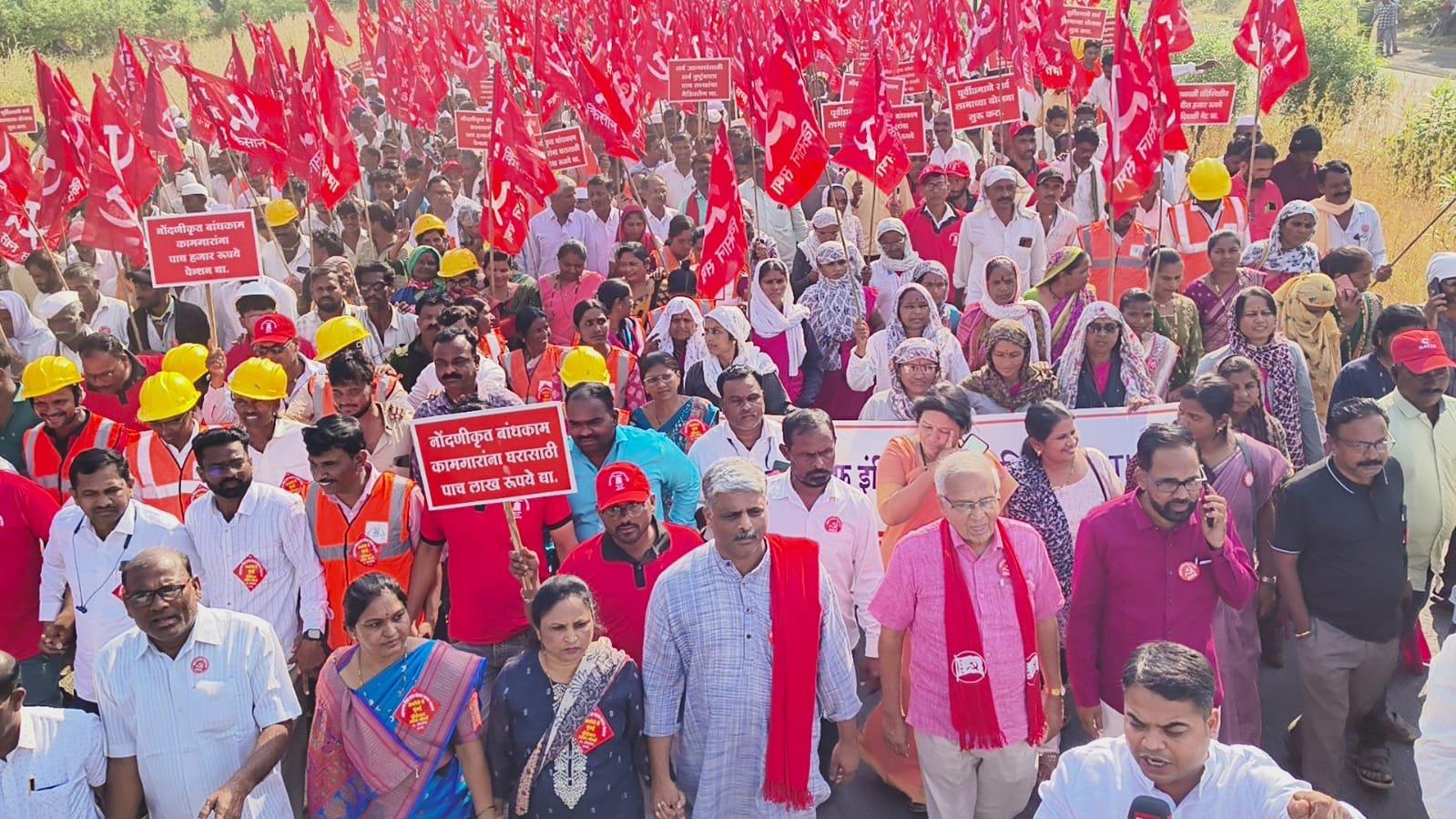
This action by Indian farmers reflects the important role of collective organizations in the expression of public interest.
In the face of drought, debt and agricultural insurance compensation, individual farmers often lack sufficient resources to engage in sustained negotiations with government authorities. Local officials may push complaints to different sectors, administrative procedures may be delayed for long periods and individual farmers may not be able to sustain the costs of defending their rights.
But when farmers from more than 20 regions form a unified organization, make specific demands and take a stand in a large-scale public action, the Government is no longer faced with sporadic individual complaints but with a public service that is of concern to society.
The All India Farmers Association took on the role of organizing mobilization, integrating claims and representative negotiation in the campaign. Farmers can participate in the organization openly, organizers can issue requests to society, delegates can meet with the Government and explain to participants the next steps after the meeting.
This approach does not mean that the rights and interests of Indian farmers are fully safeguarded. The long-standing contradictions between debt, land distribution, inadequate compensation and the implementation of government policies in agriculture in India, and the farmers ' protests have not always yielded the desired results.
But this event shows that citizen collective action can be an important oversight force beyond government decision-making.
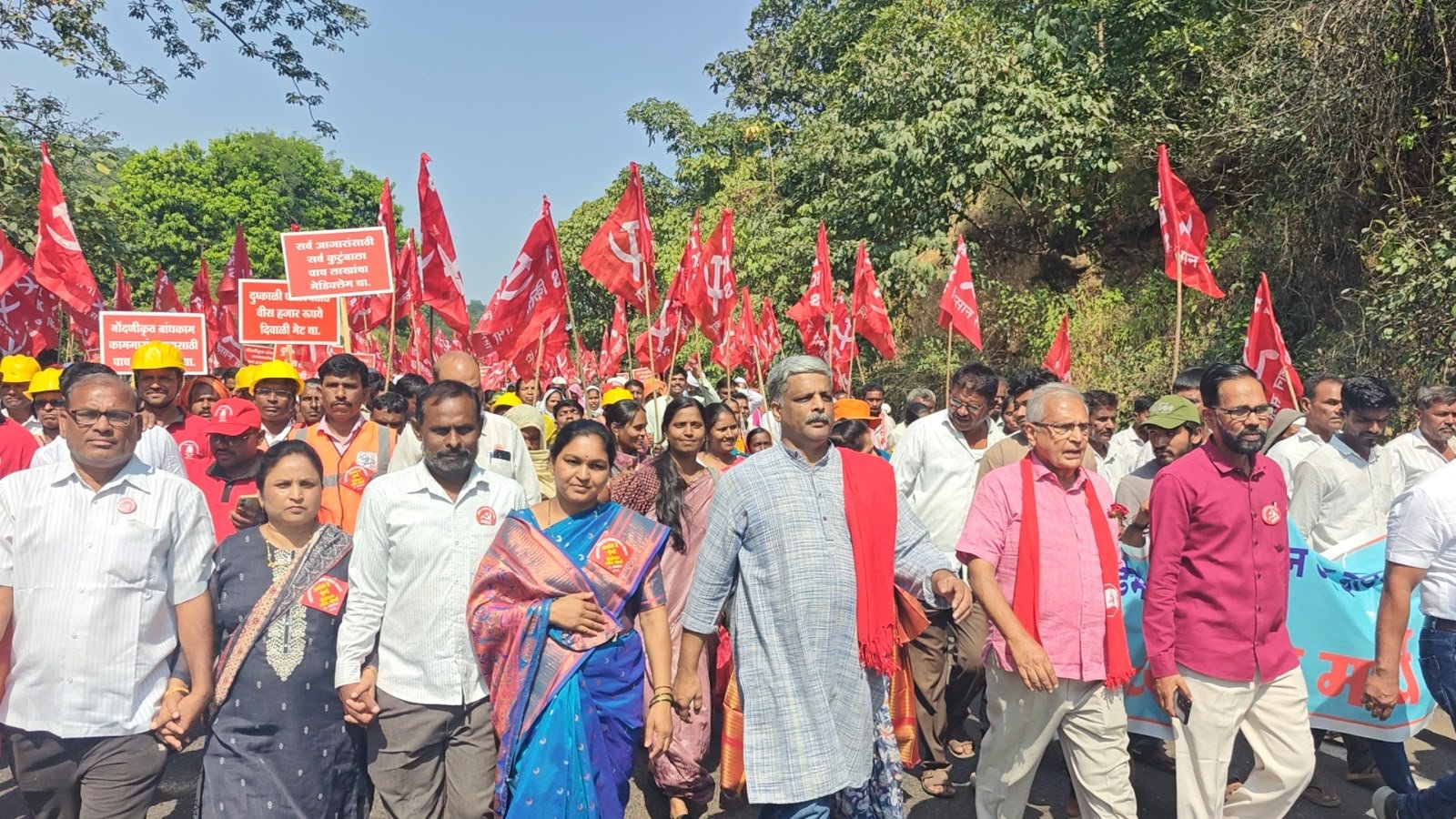
The final implementation of the Government ' s commitments will require follow-up. At least as of 3 November, the Government had not completed a new round of compliance reviews through the resumption of meetings on 4 November.
This raises a question that deserves deep reflection by Chinese society: To what extent can ordinary Chinese people organize themselves freely, express their claims and require local governments to enter a process of consultation with records, representation and follow-up monitoring in the face of disputes about basic livelihood and property rights?
Three, China is not unrepressed: a lot of wage and rights-based action still takes place
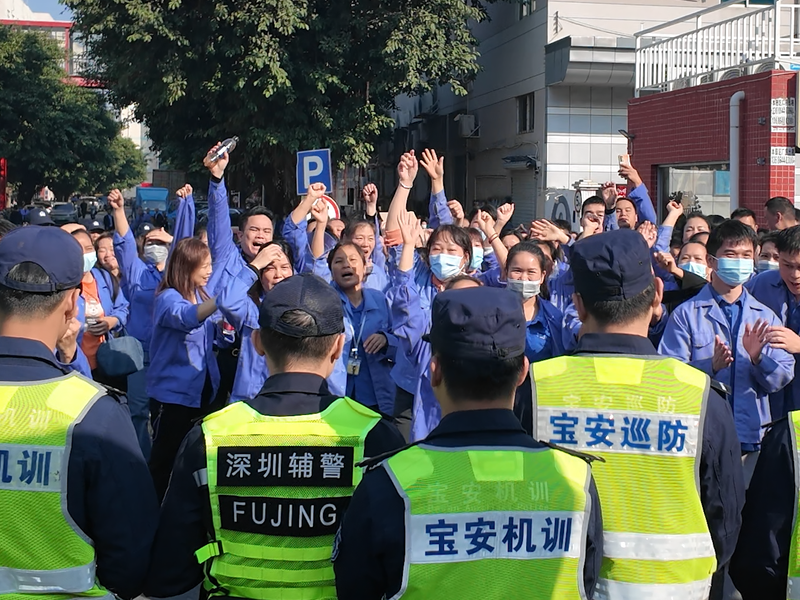
It is not true that Chinese society is described as a society in which everyone is afraid to resist.
As Indian farmers marched into Mumbai, workers continued to act collectively across China because of salary arrears, business problems and labour rights disputes; Rural residents also protested over disputes over land confiscation, forced evictions and compensation.
Freedom House, based in the United States, released its latest issue of the China Objection Monitor report on 2 November
- Data show that in the third quarter of 2026, the project recorded 948 protests in China, up from 846 in the second quarter.
Distribution of protests in China in the third quarter of 2026:
- Workers: 44%
- Owners: 27%
- Rural inhabitants: 9 per cent
- Other groups: 20%
Source: Freedom House, China Objection Monitoring, third quarter 2026; “Other groups” are the total remaining amounts calculated on the basis of published rates.
原始来源 · freedomhouse.org自由之家:中国异议监测2026年第三季度报告freedomhouse.org ↗The report shows that workers-led protests account for 44 per cent of all recorded incidents, 27 per cent of owners and 9 per cent of rural residents. Wage arrears, housing disputes and land issues remain important social contradictions.
Freedom House also noted that the number of records recorded for the quarter was about 33 per cent lower than during the same period in 2025, but that a more rigorous web review could make it difficult to observe and record a large amount of protest information and could not simply interpret the decline in monitoring data as a reduction in social discontent.
Another set of data is more noteworthy.
Freedom House ' s Global Freedom Report 2026 states that Chinese workers continue to claim their rights through spontaneous strikes, rallies and other public means, and its monitoring project recorded nearly 2,500 collective workers ' actions in 2025, more than 1,600 in 2024.
However, these operations are often ad hoc and decentralized, and lack organizational support that can operate independently over the long term.
This reality shows that the Chinese people are not universally receptive to reality and abandon their struggle. Conversely, in an environment where there is a lack of adequate organizational security, there are still a large number of ordinary people who try to defend their rights and interests in public.
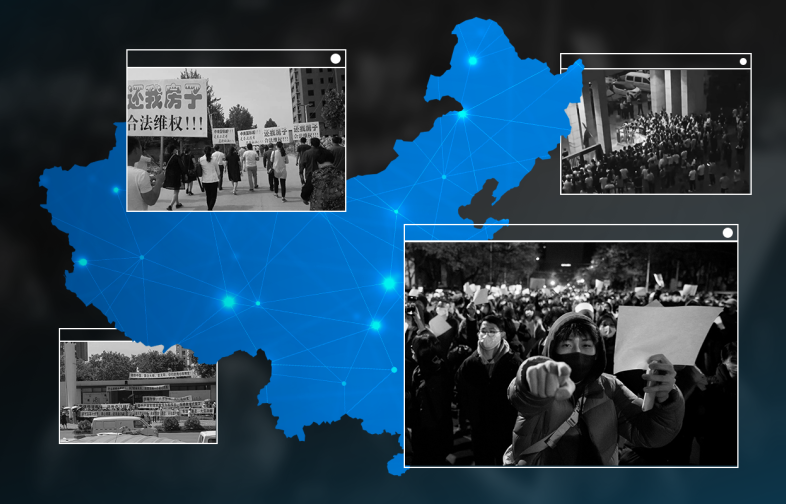
What really needs to be investigated is: why can so many protests occur and it is difficult to bring together a consistent, independent and institutionally guaranteed public defender?
The answer first relates to the right to organize.
iv. Independent trade unions and citizens are restricted: who has blocked the foundation of an organization that continues to defend rights?
An important difference between China and India in the collective defence of their citizens ' rights is the space for independent social organizations to operate.
In China, the All China Federation of Trade Unions is the core organization of the statutory trade union system, and trade union organizations independent of the system are not accorded equal legal status.
Freedom House reported in China in 2026 that China lacked an independent trade union system, that attempts to establish an independent trade union might be stopped by the Government and that labour activists involved in the organization were at risk of punishment.
This means that when workers encounter long-term unpaid, illegal salary deductions or business stoppages, it is difficult to rely on independent trade unions to organize collective bargaining on a permanent basis, even though they can claim such procedures as labour inspection, arbitration and litigation.
原始来源 · freedomhouse.org自由之家:中国住房与土地维权案例freedomhouse.org ↗The actual workers ' protests are often in the form of factory gates, payroll, and complaints to government offices.
A single-paying payment may solve some of the wage problems, but without a sustained organizational capacity, it is difficult for workers in the same sector and area to form a stable collective bargaining mechanism on this basis.
The constraints faced by civil society organizations were also of concern.
Freedom House reported that many NGOs working in China on public policy initiatives and rights protection had ceased their activities under pressure from the Government, and there was a significant risk that unauthorized civil society organizations would be operating.
Amnesty International also documented in its 2026 Human Rights Report the protests by Chinese workers on pay, the removal of relevant web information and harassment of organizers.
原始来源 · rfa.org自由亚洲电台:中国多地工人讨薪rfa.org ↗When workers are unable to establish truly independent representative organizations, farmers have difficulty in establishing self-governing groups with sustained negotiating power, and civil society organizations lack sufficient space to operate, a large number of advocacy initiatives tend to remain at the local, short-term and case-by-case levels.
原始来源 · rfa.org自由亚洲电台:工厂倒闭和欠薪抗议rfa.org ↗This institutional environment gives the public authorities the power to make policy, administrative decisions and public order management in many of the disputes over their lives, and the general population lacks the corresponding independent organizational power.
The guarantee of civil rights depends not only on the willingness of the Government to listen, but also on the right of the population to organize, express and consult according to law without relying on government approval and political approval.
Five, political domestication and indoctrination: when it's customary to obey power
More than administrative restrictions, it is the impact of long-term political control on social perceptions that is worth in-depth investigation.
A person who is afraid to go to the streets to protest may be concerned about being detained, losing his job or being involved in family. But if some members of a society are not only unwilling to claim rights, but also take the initiative of mocking defenders, who see those who demand that the Government fulfil its responsibilities as troublemakers, or even that ordinary people should obey power, the problem goes beyond administrative regulation itself.
This phenomenon has multiple dimensions, including political socialization, indoctrination, information and self-censorship.
The political control of the Communist Party regime does not take place only in the context of police dispersing crowds, but also in the context of school education, official propaganda, web platforms and daily social evaluations.
On 1 January 2024, China ' s Patriot Education Act was officially implemented.
Article 3 of the law clearly states that patriotism education is based on the unity of patriotism, the Partido por la Pública and the socialism of the socialism of China in the new era of Xi Jinping.
The law also covers patriotic education in schools, institutions, enterprises and other social areas, requiring a number of administrative departments to assume their responsibilities accordingly.
This institutional arrangement is a matter of concern, namely, the relationship between national identity, political party identity and civil rights.
Patriotism and support for the specific governing party were not originally identical concepts. Citizens can love their country while criticizing government policies, holding officials accountable and even advocating changes in the political system.
However, when the official education system repeatedly emphasizes the reunification of patriotism with the PJP, criticism of the fact that the ruling party is easily understood as opposed to the State and citizen oversight of the Government ' s vulnerability to political opposition becomes a public issue that needs to be tested.
This does not mean that everyone who is educated in politics has the same idea, nor can it be judged by the actual social effects of the law alone. It is clear, however, that Chinese officials have adopted laws that establish education for specific political ideologies as a continuing institutional task.
At the same time, information reviews will also affect what the public can see.
In its report China Objection Monitoring, published in 2026, Freedom House analysed 2970 shivering messages relating to the protests in China between June and December 2025 and found that about two thirds of them had been deleted.
The content of protests relating to interviewees, victims of injuries and their families, in particular images of official detention or use of violence, faces a higher percentage of deletions.
If workers in a region protested collectively for lack of pay, the video was quickly deleted; In another region, where farmers are on the streets because of land compensation problems and their experiences are equally difficult to communicate openly, there may be a clear gap between the social realities that ordinary people see and the actual events.
It was not just videos and posters that were deleted, but also opportunities for common people in different regions to understand each other, share experiences and build social links.
In February 2026, the China Cyber-Intelligence Department launched a special initiative on the governance of content on the Internet. Freedom House believes that the review further reduces the information on the social platforms that can be observed in protest.
Political advocacy, information reviews and the regulation of collective action, if they persist over time, may create a mutually reinforcing environment: less public access to successful advocacy cases, less experience with organizing protests and less public participation for fear of consequences.
Over time, some may gradually take non-participation in public affairs for granted.
The most alarming consequence of this political domestication is not just that people choose silence in the face of power, but that some may gradually lose the habit of questioning the legitimacy of power.
However, the ongoing protests by workers, owners and farmers in 2026 also indicate that this political control has never completely eliminated the awareness of the rights and resistance of the Chinese people.
VI. From fear of being caught accusing defenders: How does social apathy emerge?
Another issue in Chinese society is the tension between public responsibility and personal interests.
(b) In the face of a worker who is suffering from a lack of pay, some are concerned about whether his salary will be recovered; Some people are willing to support farmers whose land has been expropriated in order to claim compensation in accordance with the law.
But there is another type of voice in public discourse: that the protesters are creating trouble, that public criticism of the government can only affect stability, or that their misfortune is attributed to the fact that the person concerned is not smart enough to be realistic.
This mentality is a criticism, as it can easily translate the issue of public rights into accusations of the victim ' s personal behaviour.
However, the social apathy analysis cannot ignore its conditions.
When people lack adequate freedom of association, when cross-regional rights organizations cannot develop in the long term, and when participation in public affairs can pose obvious economic and legal risks to individuals, it is easier to focus on their own lives and those of their families.
Economic interests, personal security and family responsibilities may be placed ahead of collective action. Even when it is recognized that there is injustice in public affairs, some may still believe that public protests are not worth taking the risk.
Such choices, which sometimes represent self-protection under real pressure, do not amount to a denial of justice.
But if the risk of circumvention further develops into animosity towards defenders and even gives the public power to punish those who make legitimate claims, another social phenomenon is a critical one.
(a) When a person is afraid to defend his or her rights because of fear of arrest, the system of restrictions on his or her rights should first be pursued; The public responsibility of a person is equally worthy of discussion when he or she takes the initiative to glorify the unsupervised power and to mock other citizens in their legitimate interests.
The two situations cannot be confused.
From a political and socio-economic perspective, long-term political propaganda, risk expectations, dependency and group identity may influence attitudes towards public protest. However, the extent of the impact on different groups of people and the specific causal relationship between these mechanisms still require social and empirical research to judge.
The fact that all Chinese are considered selfish and cowardly does not explain why a large number of ordinary people are still insisting on paying, visiting, seeking land compensation, or even being punished for speaking out publicly.
These protesters are proof that Chinese society does not lack people who seek justice and maintain dignity.
7 How can the government avoid responsibility for long? Institutional oversight mechanisms are key
An important fact that emerged from this farmers ' protest in India is that farmers ' organizations can translate the fragmented economic problems into centralized and clear political and administrative demands.
They not only requested compensation but also specific responses from the Government; Not only are they to be interviewed, but a date for a follow-up review has been set.
The difficulties facing China in its many disputes over livelihoods are related to the lack of sufficient independent and stable organizational power of the general population to monitor local government and related enterprises on a continuous basis.
In some labour disputes, companies default on wages, local labour inspection bodies are responsible for enforcing the law, labour arbitration bodies are responsible for handling disputes and courts are responsible for the administration of justice.
These avenues of relief do exist in terms of institutional design.
But if administrative enforcement is slow, workers lack organizational support, or local governments are affected by multiple policy objectives, such as economic development, entrepreneurship and social stability, workers may be caught up in lengthy and costly procedures for their rights.
In particular, when collective complaints are dealt with as a matter of public order, workers who really wish to resolve their wage, compensation and labour contract problems may be relegated to a secondary position by other administrative objectives.
The Sichuan River Oil incident of 2025, documented by Amnesty International, provides another case of concern.
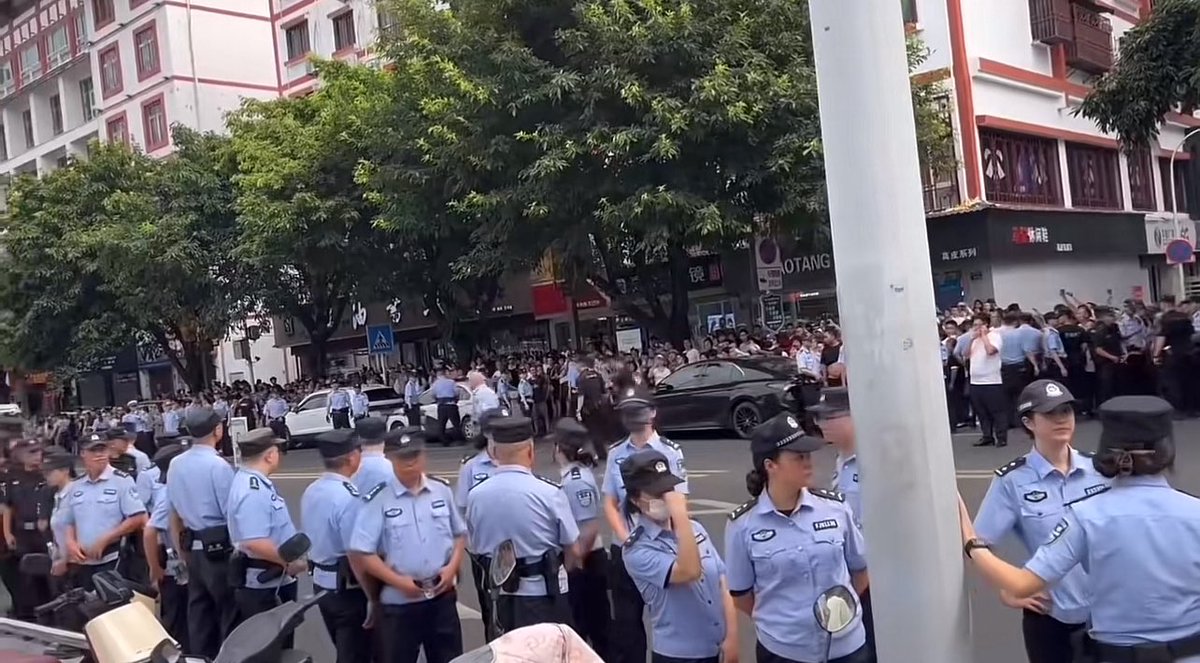
The incident was the result of a school bullying dispute. A large number of people went to government offices to voice their grievances over the handling of grievances, followed by clashes between the police and the population. Amnesty International reported that police used batons and other means to disperse the crowd, and that the relevant network discussions were quickly reviewed.
The fundamental questions facing the parties, from pay-raising, land disputes to disputes over public events, are not identical, but all relate to the possibility for citizens to request the authorities to publicly state the facts, interpret decisions and be subject to supervision in legal proceedings.
Article 35 of the Chinese Constitution enshrines the freedom of expression, publication, assembly, association, procession and demonstration of citizens.
The question is not only whether these rights are enshrined in the law, but also whether the ordinary people can actually exercise them, whether independent organizations can function properly and whether the Government must be held accountable for responding to legitimate demands from citizens.
原始来源 · scmp.com南华早报:江油抗议现场视频scmp.com ↗Many public disputes may remain in the long run waiting for the executive to resolve themselves if citizens lack the capacity to organize, negotiate and monitor implementation independently, given the opportunity to make a request.
8 Indian farmers demand to be given their word, what does Chinese society need to answer?
原始来源 · theguardian.com卫报:江油群众抗议与警方处置theguardian.com ↗On 4 November 2026, the Maharashtra State Government is expected to hold another meeting with farmers ' organizations.
This meeting will test whether the commitments resulting from the 27 October negotiations can continue to move forward with specific policy measures. The real access of farmers to drought compensation, insurance compensation and land security remains dependent on subsequent administrative decisions and the outcome of implementation.
The Indian operation did not prove that all the collective protests had been successful, nor did it prove that the Government of India had resolved the structural difficulties faced by farmers.
It clearly demonstrates, however, a process whereby ordinary people organize themselves for specific livelihood issues, creating public claims, forcing the Government to enter into consultations and then monitor commitments through follow-up.
In China, workers, farmers and other ordinary people have never stopped fighting for their rights and interests.
The thousands of protests recorded by Freedom House demonstrate the persistence of civil protests. It is only these operations that are often faced with organizational constraints, information reviews and real-life risks.
Political apathy and hostility to advocacy in society also need to be examined. But the discussion of these phenomena cannot be a substitute for questioning political power, the system of propaganda and the specific responsibility for governance.
Does long-term political education fully respect the independent judgement of citizens? Does the Government allow for the establishment of truly independent organizations representing the interests of different social groups in accordance with the law? Can the media report freely on the protests? How can the public security organs distinguish between peaceful expression of claims and real endangerment of public security? Are there clear and effective public response and accountability mechanisms for collective complaints by local governments?
These issues are directly related to the substantive guarantee of civil rights.
The more profound challenge for Chinese society is not only whether people are willing to stand up when facing injustice, but also whether they believe that they have the right to demand that the Government give reasons, be subject to supervision and be held accountable.
A society cannot prove its courage to fight by simply requiring the constant personal cost of its citizens. The fundamental requirement of the guarantee of rights is that ordinary people should not risk losing their liberty, work and family safety before they can demand that the Government should perform its duties in accordance with the law.
The convoy of Indian farmers has been suspended and the next meeting is about to take place.
The same question that requires institutional answers is still being asked in China, where there are persistent wage, land and other human protests:
To what extent can citizens organize freely when their legitimate rights and interests are violated and hold those in charge of public power accountable?
Article discussion
Verified members can discuss this report publicly and manage their own content.
Checking member sign-in status…