
After the strike on Cambodia ' s Equivalent Park, the transnational fraud syndicate, which operated mainly by Chinese nationals, did not stop the crime, but instead transferred people, technology and fraud to Africa, continuing to defraud the overseas population through cyberfriending, false investment and encrypted money-trading platforms.
Between August and September 2026, large-scale law enforcement operations were carried out in Madagascar, an island country of Africa, which destroyed 13 Internet fraud sites led by Chinese nationals and seized over 3200 electronic equipment. The Ministry of Justice of Madagascar confirmed that 148 persons of Chinese nationality had been transferred to China.
However, this transnational law enforcement operation has given rise to major controversy of concern.
The United States Department of Justice publicly disclosed on 27 October that a Chinese suspect who was partially identified as the fraud park leader had been transferred to China before the FBI completed its investigation and interrogation, preventing United States law enforcement officials from continuing to question the organizers.
原始来源 · justice.gov美国司法部:非洲电诈集团被起诉,嫌疑人移交影响调查justice.gov ↗On 21 September, the Chinese Ministry of Public Security announced that China had made significant progress in assisting Madagascar in combating electric fraud, and that the first 50 persons involved had been repatriated.
In the same transnational anti-fraud operation, the Chinese Government announced that the repatriation had been successful, while the United States judiciary had publicly disclosed that investigations had been blocked. The question of who investigates, who holds criminal and where transnational fraud is committed, and where is the most important case to be pursued, is that of persons of Chinese nationality suspected of organizing crimes when they return home.
Focus China has been concerned about the political and economic interests behind China ' s transnational fraud industry. The media has made clear political criticism of the long-term ability of these criminal groups to establish parks in different countries, form organized fraud networks and transfer key individuals back to China in the course of international criminal investigations: the power relationship between Xi Jinping and the transnational electric fraud industry must be pursued and public officials suspected of providing asylum, the transmission of benefits and judicial protection must be exposed and their responsibilities.
Cambodia Park Transfer Africa, 13 fraud sites dominated by Chinese people
On 31 October, Agence France Presse (AFP) disclosed the operations of local transnational wire-frauding criminal groups based on investigations conducted by the Malagasy Ministry of Justice, the police and United States law enforcement agencies.
原始来源 · afp.com法新社:柬埔寨诈骗网络迁入马达加斯加afp.com ↗The capital of Madagascar, Antananarivo, was not the centre of the international community ' s greatest concern for the crime of electro-fraud. However, as fraudulent parks in South-East Asia, such as Cambodia and Myanmar, continue to be hit, some criminal organizations have begun to look for new business sites.
The Malagasy police found that the individuals had initially rented relatively private villas, then expanded their operations, even by renting a hotel, deploying computers, mobile phones and network equipment and organizing the continuous fraud of their employees.
Hassan Mouigni, head of the Criminal Investigation Department of the Malagasy Police, informed Agence France Presse that the large-scale rental of hotels by fraud syndicates was an important reason for the police to note these suspicious positions.
The FBI investigation further found that the criminal organizations involved had personal and modus operandi links with Cambodia ' s former fraud park.
Three Brazilians who had worked at the fraud park explained to United States investigators that they had initially recruited online into the fraud centres in Cambodia. In May 2026, they were transferred to Madagascar to continue their work, following armed clashes between Cambodia and Thailand and the intensification of the local police against the fraud park.
According to the United States Department of Justice, a criminal group with links to China and Malaysia had begun to establish a fraud stronghold in Madagascar at least early 2025.
With increased law enforcement in South-East Asia, these criminal groups have relocated to Africa their former personnel, equipment, fraudulent technologies and business models.
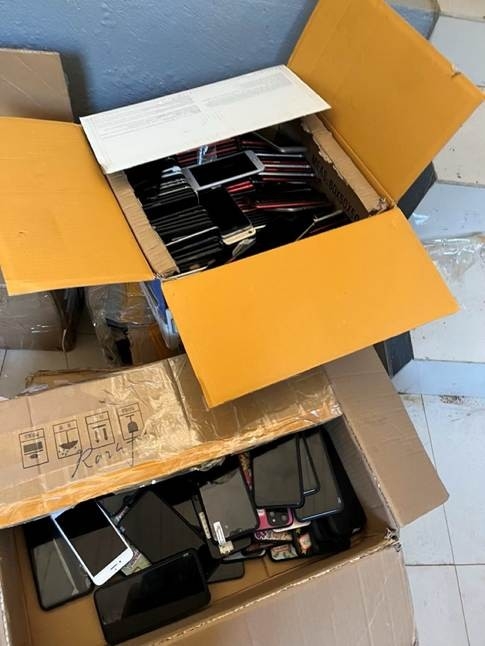
In August 2026, the Federal Bureau of Investigation sent investigators to assist the local operation, at the invitation of the Ministry of Justice and the National Police of Madagascar.
Law enforcement eventually dismantled 13 fraud sites and disposed of over 3200 electronic equipment. United States investigators also took evidence of the large number of persons involved in the crime, including mobile phones, computers and electronic communication records.
The operation revealed that transnational electric fraud has developed an organized criminal industry that can migrate across continents. Even if one of the parks were destroyed, criminal organizations could re-establish their positions in other countries, using established channels of money, recruitment and money-laundering.
On 30 June 2025, INTERPOL issued a warning that the criminal industry, based on human trafficking and forced fraud, was expanding from South-East Asia to Africa, the Middle East and Central America.
原始来源 · interpol.int国际刑警组织:全球诈骗园区扩张与强迫犯罪interpol.int ↗The case of Madagascar further confirms this trend of cross-border expansion.
原始来源 · douyin.com新闻短视频:电诈团伙从柬埔寨迁移到非洲douyin.com ↗impersonating a woman for cyber-stirling, 800 American victims involved in NFT investment scams
The case materials published by the United States Department of Justice on 27 October reveal in detail the way in which the Malagasy fraud syndicate operates.
One of the main frauds is the use of false female identities to reach out to men in countries such as the United States through dating websites, social platforms and instant communication software.
Fraudsters build emotional relationships through continuous chats, gradually gain the trust of victims and then induce them to participate in so-called encrypted and non-symmetrical coins (NFTs) investments.
Victims were directed to access fraudulent investment websites controlled by fraud syndicates and linked to their encrypted money wallets.

Fraud platforms induce victims to invest in money on a continuous basis by forging transactions, displaying false proceeds and providing investment guidance. The perpetrator transferred the money from the wallet without the victim ' s knowledge.
In its investigations, the FBI found that approximately 74 encrypted currency wallets related to fraudulent activities involved approximately 800 victims in the United States of America who reported economic losses.

Some of the proceeds of fraud were transferred to encrypted currency accounts linked to persons in China.
The United States Department of Justice announced on 27 October that criminal charges had been brought against six persons associated with the African Fraud Network.
Among them, a Malaysian man, Chui Kok Wa, was accused of organizing and leading a NFT investment fraud scheme and faced criminal charges of complicity in telecommunications fraud.
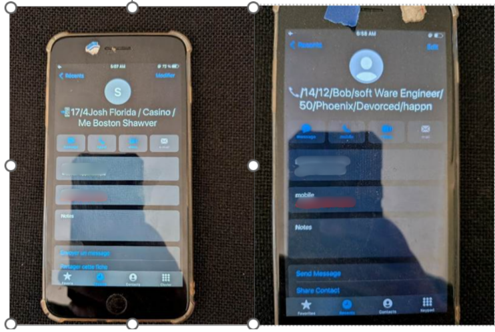
The information obtained by investigators from their mobile phones reveals the internal management of criminal groups.
Information on the cases involved includes staff contracts, rosters, payroll records, night work arrangements, disciplinary sanctions, fraud rhetoric and a system for the payment of bonuses based on fraudulent amounts.
Since the main victim is located in the United States, fraud employees usually work at a time corresponding to their daytime activities in the United States.
Criminal groups also require employees to record the names, addresses, jobs, personal relationships and economic circumstances of the victims, so that they can control their emotional and investment decisions over time.
This is a highly organized chain of fraud: from false friendships, emotional manipulations to counterfeit investment platforms, encrypted currency theft and money laundering, each is clearly divided.
Criminal groups have developed traditional fraud into transnational crime operations that can operate remotely, on a large scale and continuously, through the Internet and through false financial products.
High-paid recruitment turned into human trafficking, African staff confiscated passports and forced fraud
The groups targeted also African citizens recruited to work in the parks.
AFP reported that the Malagasy police had found that criminal groups used social platforms such as Facebook to advertise jobs that lured high-paid business positions to Madagascar, in particular Kenya, Rwanda, Uganda and Zimbabwe.
Some of them thought they were hired for normal business work.
Upon arrival, however, their passports were confiscated by the administrators and forced to engage in fraudulent activities.
Local police officials indicated that these persons entered the crime scene under fraudulent recruitment arrangements.
Following the police operation, some 20 persons from the above-mentioned African countries remain in custody, some of whom may be victims of human trafficking at the same time.
The United States Department of Justice further disclosed on 27 October that the United States had obtained important witness orders involving 15 park employees. These persons, who claimed to have been victims of human trafficking and ill-treatment, were still considered to be in custody in Madagascar at the time.
This situation reflects the fact that transnational e-fraud zones create two categories of victims simultaneously.
A category of people who have suffered from investment and emotional fraud outside the country and have lost their personal property; Another category is workers who are forced to engage in fraud under false recruitment, document seizure and personal control.
INTERPOL has previously indicated that similar criminal organizations may force people to work through debt control, beatings, sexual violence and restriction of personal liberty.
The distinction between persons who have been subjected to human trafficking, forced labour and the leaders responsible for organizing, directing and obtaining the proceeds of crime is a mandatory responsibility for transnational criminal investigations.
What is really needed is a fraud plan, a control of employees, an organization that holds the proceeds of crime and runs parks, and a behind-the-scenes network that helps to move them across borders.
$52 million in encrypted money frozen and Chinese money-laundering platforms exposed criminal infrastructure
Transnational wire fraud groups can move from South-East Asia to Africa, not only undermining the movement of people, but also relying more on a network of criminal technologies and financial services that can operate on a sustainable basis.
On 9 September, the United States Department of Justice and the Department of the Treasury announced a joint enforcement operation against Xinbi Guarantee, a “new currency guarantee” illicit trading network.
原始来源 · justice.gov美国司法部:打击新币担保网络,冻结5200万美元资产justice.gov ↗
The United States Department of Justice stated that the New Currency Guarantee was an illegal service market operated mainly in Chinese, using web platforms such as Telegram.
Through the platform, its operators provide fraud syndicates with customized and false investment websites, encrypted money-laundering, illegal recruitment and related services.
Fraud syndicates can find contractors on the platform to purchase technical and financial services for different criminal activities.
This mechanism has resulted in the division of many tasks that traditionally require to be performed within criminal organizations into specialized services that can be purchased directly.
The United States Department of Justice disclosed that law enforcement had frozen approximately $52 million in encrypted currency assets related to fraudulent money-laundering in a single-day coordinated operation.
Of this, the NZ guarantee, which covers two encrypted currency wallets charged to the business, held approximately $12 million. United States law enforcement agencies have also traced an additional 47 digital wallets suspected of being linked to money-laundering networks.
The $52 million is a coordinated freezing of NZNS and related criminal service networks, which cannot be simply equated with the amount seized on site in 13 Malagasy parks.
The same day, the United States Treasury announced sanctions against New Currency Guarantee and Related Services Enterprises.
The Ministry of Finance disclosed that since the New Currency Guarantee Platform began operating around 2022, its market and associated platform has processed digital assets and legal currency transactions, which have accumulated over $24 billion.
This amount reflects the scale of the transactions processed by the Platform and is not the net profit of the fraud that has been identified.
The United States Treasury Department also noted that the network of services had a trade link with the Southeast Asia Fraud Organization, illicit funds transfers and other sanctioned entities.
One important reason why transnational electric fraud groups are able to continue to operate is because the criminal industry has developed a specialized technical supply, recruitment of personnel, encrypted monetary settlement and money-laundering services.
From the proceeds of fraud to China's related account, to the financing of the Chinese platform for illicit transactions, to the migration of people between South-East Asia and African parks, the financial and organizational chain of criminal groups has crossed many jurisdictions.
Combating fraudulent parks must be accompanied by investigations into the operators, the actual beneficiaries and the financial and public officials who may facilitate them.
148 Chinese nationals were transferred to China, and the United States of America lost key interrogation opportunities before the investigation was completed
The most prominent judicial controversy in the case of Madagascar as a whole occurred in the course of the transfer of persons of Chinese nationality to China.
On 21 September, the Ministry of Public Security of China, through Xinhua, announced that the Chinese police had been invited to send a working group to Madagascar to assist the local police in combating cyber-fraud.
原始来源 · society.people.com.cn公安部:中马合作打击电诈并遣返涉案人员society.people.com.cn ↗On 8 September, Madagascar facilitated the repatriation of the first 50 persons involved to China, which is being further investigated.
Since then, the Ministry of Justice of Madagascar has confirmed to Agence France-Presse that 148 Chinese nationals have been transferred to China.
However, the United States judiciary has clearly challenged the arrangements for the transfer of some of these persons.
On 27 October, the United States Department of Justice disclosed that the FBI had failed to question some of the Chinese nationals identified as leaders of the fraud park when it conducted its investigation in Madagascar, as they had been returned to China or were no longer in Madagascar ' s custody.
According to Agence France Presse, it also included a Chinese suspect who was alleged to be in charge of the Live Hotel Fraud Centre in Antananarivo.
The United States judicial authorities believe that the transfer of some of the main suspects by Madagascar when the investigation is not yet completed has a direct impact on the efforts of the United States to trace transnational criminal organizations.
The United States prosecution therefore requested Madagascar to continue to provide mutual legal assistance and requested extradition of six suspects who had been charged with United States criminal charges.
This contrasted the previous propaganda of the Chinese Ministry of Public Security on the repatriation operation with the subsequent revelations of the United States judiciary regarding the progress of the investigation.
In the official Chinese report, repatriation was the result of international cooperation against fraud; In the United States judicial records, some key suspects were sent in advance, meaning that investigators were denied the opportunity to question the alleged organizers directly.
Have these persons been held in criminal custody, arrested and prosecuted after their transfer to China? Has the Chinese judiciary pursued the fraud parks, the list of victims and the proceeds of illicit exploitation that it operates in Africa? Are the evidence shared with United States investigators in these cases?
The Chinese Government should publish the results of the investigation and the progress of the investigation of the 148 persons involved, including those identified as organizers, de facto controllers, technical directors or ordinary employees.
More important, it is the reason why some of the personnel identified by the United States as the park leader were transferred before the United States investigators completed their interrogations.
Key suspects involved in transnational criminal organizations cannot be removed from the judicial context of the affected State as a repatriation flight leaves Madagascar.
11 Chinese suspects who were released exceptionally, and the issue of transnational law enforcement exposure umbrella investigation
Another judicial anomaly that deserves to be traced has arisen in the case of fraud in Madagascar.
AFP reported on 31 October that in August 2026, 11 other Chinese nationals arrested for cyber-fraud had been released from Malagasy prisons.
The incident provoked local controversy and involved an investigation of the head of the prison administration.
The 11 individuals were different from the 148 subsequently transferred to China, but the extraordinary release also involved detention procedures and the management of the suspects.
The question of whether criminal leaders could evade investigations through bribery, political relations or other improper channels, in the case of large, organized, transnationally run electric fraud industries, is a question that national law enforcement authorities must pursue on a continuing basis.
It is difficult for a single raid to truly destroy the basis of an international criminal group if it is able to take advantage of the difficulties of judicial coordination between different States and influence the handling of cases through the relocation of persons, the payment of illegal funds or other arrangements of benefit.
This also makes it necessary to extend the scope of the investigation of the Malagasy case beyond the number of people captured at the site of the park to the money controllers, the actual organizers of transnational crime and the possible power-seeking relationship.
Xi Jinping regime and transnational power-resilient chain, the real need to reveal who controls the proceeds of crime
Focus China ' s political judgement in this case is clear: It is important to include the possible organizational control, channelling of benefits and protection relations between Xi Jinping ' s regime and transnational electric fraud syndicates in the core of transnational crime investigations and public accountability.
The Communist Party has long declared a “zero tolerance” policy for telecommunications fraud and has promoted it as a result of anti-fraud efforts, cross-border repatriation and international police cooperation.
However, these fraud syndicates, which are mainly run by Chinese criminals and have links to financial accounts and Chinese-language illegal trading platforms, are still able to operate, transfer parks across borders and continue to target victims around the world.
The Chinese Government should not only prosecute those who directly committed fraud, but must also explain how transactions, illegal technical services and proceeds of crime related to financial networks in China continued to operate.
More importantly, after the destruction of 13 Malagasy parks, the Chinese Government has received a large number of persons involved in the crime through international police cooperation. This means that China has an important opportunity to continue to investigate, prosecute and cooperate with transnational evidence against these individuals.
What is really needed is not how many people have been received by the Chinese Government, but who have been returned, what crimes have been identified, how much money has been recovered and whether the organizers and the interests protectors have been held accountable.
If the main organizers of transnational fraud were to return to China and it was difficult for the international victim States to continue to question and prosecute the suspects, his Government would need to provide a clear judicial statement on its follow-up procedure.
Focus China believes that the Xi Jinping regime has an inescapable public governance and political responsibility for this transnational criminal industry.
Such liability includes investigating interests related to accounts, companies and public officials in China, tracing the improper protection of criminal industries in cross-border operations and providing effective criminal justice assistance to affected States.
The investigation should focus on specific persons and behaviour: who finances the establishment of the park, who controls the illicit proceeds, who helps criminal groups to transfer funds, who facilitates the movement of persons across borders and who intervenes in criminal cases.
If a criminal protection relationship is involved with party officials, public security officials or other public officials, it must be pursued upwards along the chain of funds and powers, without the criminal responsibility of those involved at the grass-roots level, and the organizers of the real profit continue to evade prosecution.
Xi Jinping regime cannot demonstrate law enforcement achievements solely through international cooperation in counter-fraud, but does not give the public the actual criminal responsibility of the transnational fraud organizers of Chinese nationality.
The highly centralized structure of public security, oversight and judicial power, led by the Communist Party, is subject to public scrutiny: after having obtained information on the number of persons and funds involved, whether the main criminal organizers are being prosecuted according to law, whether the victim State is allowed to continue the investigation and whether effective judicial recourse is open to the victim.
The real news value of the focus on China ' s political asylum and criminal interests is the continued pursuit of specific public officials, financial flows and transnational judicial activities, and the fact that general anti-fraud propaganda should not be allowed to replace the accountability of these responsible relationships.
Transnational fraud cannot be returned, the injured State needs recovery and judicial results
The electric fraud industry has become a serious transnational crime problem on a global scale.
According to a report published by the United States Congress Research Institute on 30 September 2026, criminal groups of Chinese and Chinese nationality are among the most common operators in the Southeast Asia Fraud Park. Criminal organizations may also operate through local political relations, illicit financial flows and human trafficking networks.
The report also notes that some fraudulent parks are moved to other areas to continue to operate after being attacked by law enforcement.
This suggests that the mere closure of the park is not sufficient to bring the entire criminal industry to an end.
In the case of Madagascar, at least a few specific responsibilities must be fulfilled.
- China ' s public security and judicial authorities should make public information on the progress of investigations, prosecutions and trials of 148 persons of Chinese nationality involved, in particular the handling of alleged park leaders.
- The law enforcement and judicial authorities of Madagascar should investigate the unusual release of 11 suspects and indicate how the right to evidence of the affected State, such as the United States, is guaranteed before the persons are handed over.
- The United States and other affected countries should continue to track the flow of encrypted money, the fraud platform operators and the ultimate beneficiaries of funds, and to promote the sharing of evidence on transnational crime and the recovery of stolen funds.
- Threads concerning funds and public officials in China should be investigated in depth to see if there are illegal financial services, corruption, asylum or interference in the handling of cases.
For victims of fraud in the United States, Canada and other countries, the recovery of funds, the identification of criminal organizers and the promotion of criminal accountability are the real results of transnational cooperation against fraud.
For African nationals lured into fraudulent parks, controlled and forced labour, the countries concerned must guarantee their legal rights as potential victims of trafficking.
From Cambodia to Madagascar, the ability of fraudulent groups to move between countries indicates that this criminal industry already has transnational operations, technical replication, recruitment and illegal financial settlement capabilities.
Thirteen parks in Madagascar were destroyed and some of them opened up.
Following the transfer of 148 persons of Chinese nationality to China, the organizations concerned, the proceeds of crime and the possible power-protection relationship still need to be pursued.
A truly effective international anti-fraud operation cannot stop at blocking parks, seizing computers and repatriating suspects. The perpetrators of criminal organizations, the beneficiaries of funds and those suspected of providing judicial and political asylum must be prosecuted.
Focus China will continue to follow the criminal treatment of the 148 persons involved by the Chinese Government, follow-up investigations by the United States judiciary, the flow of money in the context of the case of encryption, and the relationship between the transnational electric fraud syndicate and the economic and political power networks in China.
International counter-fraud operations can only be able to cut the economic foundations that these transnational fraud syndicates are constantly rebuilding if they are traced to those who truly control the benefits of crime.
The crimes of transnational electric fraud syndicates need to be prosecuted in accordance with the law, and any political power that may provide them with asylum cannot be left outside public scrutiny.
Article discussion
Verified members can discuss this report publicly and manage their own content.
Checking member sign-in status…