On 3 May, the family arrived at Yunnan Red River State prison and was explained only six words: “heart infarction, rescue is ineffective”. They asked to see the surveillance. The images show Yang Jinhui washing clothes and then suddenly falling. How's she doing? Who came to the scene after the fall, and what was the deal? The details that determined the last moment of her life did not disappear as a result of a statement of the cause of death.
Yang Jinhui, aged 65, was a community civil servant from an old municipality in Yunnan Red River State. According toMing Huinet's disclosure July 27th.On 29 July, a supplement was added and rerecorded on 16 October, after she had ended her trip with her family around 10 April and was taken away by the far-off railway police on her way back to the country. Reports indicate that the arresting officers have been kept under preventive surveillance “notified above”. She was subsequently detained in Red River County detention centre and died on 3 May. A sudden arrest from the train to the death in the prison for about 20 days.
The case report of Ming Hui on July 27th.The circumstances in which the family requested an autopsy were disclosed. It has re-enforced the incident from a general “disease in custody” situation: a person loses his or her liberty in a place under State control and the usual conditions for his or her family to observe his or her physical changes in a timely manner. The prison has records of surveillance, duty and medical treatment, and families can only wait for the results to be communicated. This is not a debate between equals about the causes of illness, but a high asymmetry of information and power.
This was not the first time that she had been taken away by the police.Ming Huinet's RetrospectiveYang Jinhui, who is a Falun Gong believer, was sent to the so-called “conversion classes”; In July 2012, he was sentenced to three years ' imprisonment and held in the second women ' s prison in Yunnan province. After her release on 23 January 2015, she lost her former civil servant position and her corresponding salary and pension. Even when a person leaves prison, he or she may continue to be deprived of the material basis of normal life. There is a final term of imprisonment and no equally clear cut-off date for the destruction of livelihoods and social identity.
On 27 July 2024, she was taken again by, among others, the former municipal State Security and Political Law Commission, where she was held for 13 days. Ming Hui has documented that she was warned not to continue writing complaints or be sent to detention centres. The most worthwhile thing here is not just the number of days of a detention, but the reversal of the right to complain: the written expression that was used to justify the unfairness could have been the reason for the next deprivation of liberty.
In spring 2026, she appeared again on the controlled list. She was 65 years old, had been sentenced for her faith and had lost her previous job and income for many years. The train after a family trip ended up in a place of detention that was not freely accessible to the family. The mere writing of this experience as “the heart of the elderly” would cut off the picture of the political control she had experienced for more than a decade.
In the database of death cases that is being developed on an ongoing basis by Ming Hui Network, individual experiences are not the anonymous denominator of a statistical table. It records names, times, places, controls and family experiences; Public records are of course varied in detail, but without such civilian files, many detainees are unable to leave their municipality or county. The concrete experience of Yang Jinhui belongs to a page that must be recorded separately in such records.
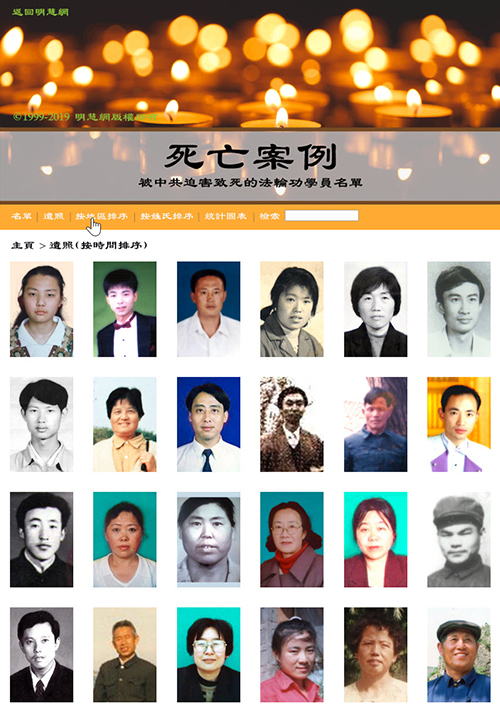
On 16 October, Ming Hui Network re-inscribed Yang Jinhui ' s case in the third quarter of 2026 and released at least 35 deceased persons and 162 sentenced persons of which it had been informed. Those figures do not mean that “all deaths occurred in the third quarter of the year”: some deaths occurred earlier in the month, and were known and processed during this statistical period. A mere numeric description of the record would recompress the previous experience of the deceased into a single abstract narrative.
There is a persistent gap between the original case in July and the quarterly report in October: after the family had filed an autopsy, the complete death was explained and the publicly available material did not show a full process that covered the critical period. The responsibility for why the life of a person in a prison is so long cannot be replaced by a medical term as a whole. The person responsible for guarding and recording has the capacity to interpret the process, while relatives can only understand the last moment of their loved ones with a downside surveillance.
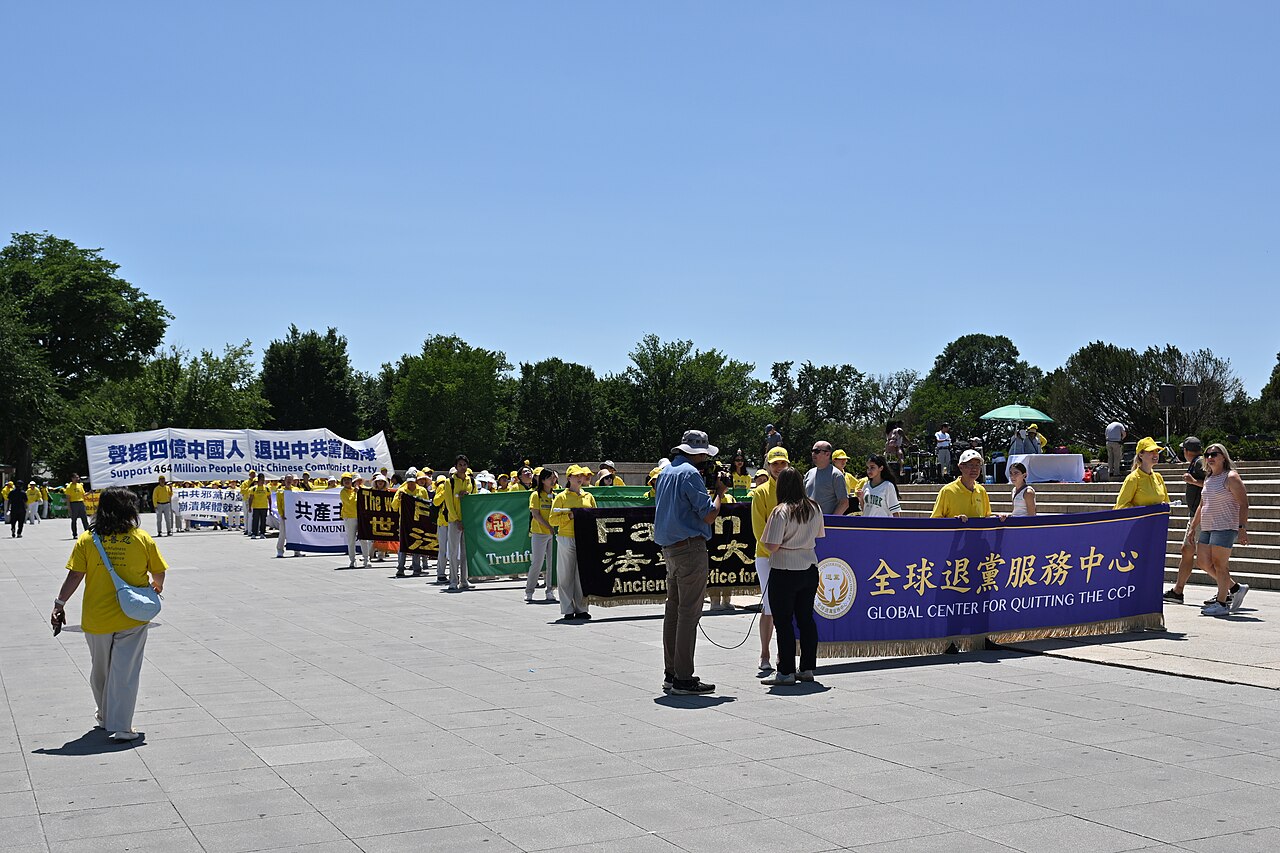
In Washington,Falun Gong anti-persecution campaign on 23 July 2026The government has been able to get the government to take the necessary steps to stop the protests. In Red River state, thousands of miles away, Yang Jinhui's name was recorded in the civil death record. The former is a collective action that can be photographed in a full-scale camera, while the latter does not even have a positive photo of his own news in the current public material. Between the two images, a political system gives a distinct visibility to public protesters and controlled ordinary believers.
The last public image of Yang Jinhui left to her family was when she fell in the house when she washed her clothes. She was just going home by train.
Article discussion
Verified members can discuss this report publicly and manage their own content.
Checking member sign-in status…