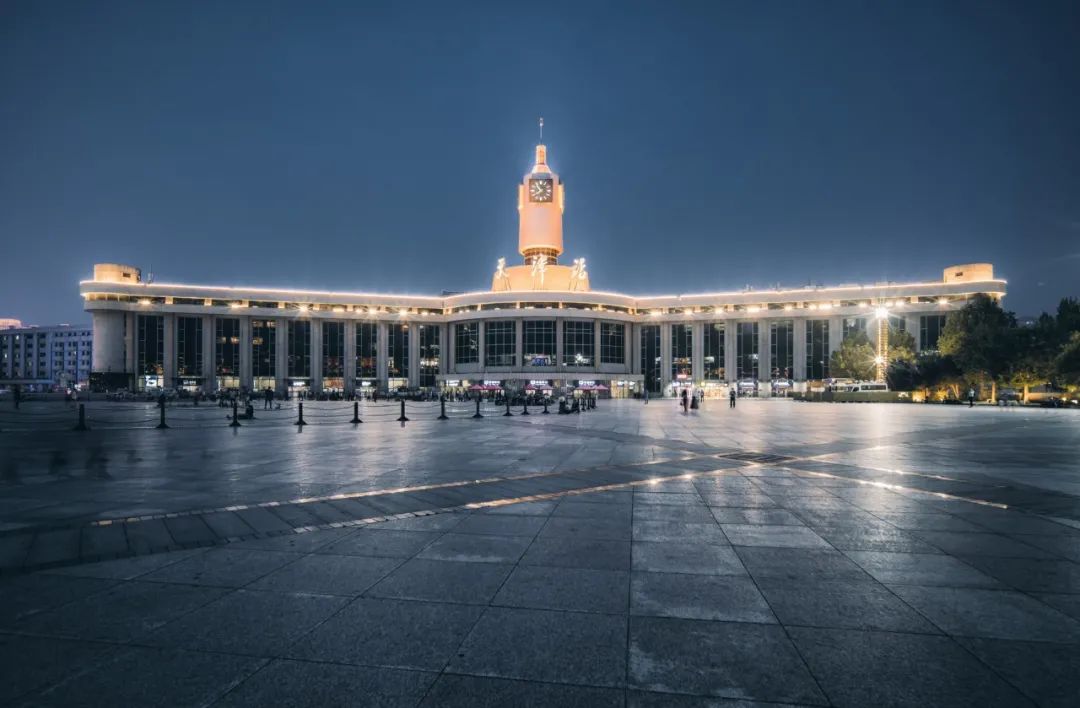
In the early hours of 22 October, Jiangsusu Nosei visited Ju Jianying, Min Yu, on a train travelling through Tianjin, and was forcibly taken away by four unidentified persons. She was scheduled to go to Tangshan for medical treatment, but was transferred to a private car on her way, then taken to a hotel in Tianjin, where she lost her freedom to decide her own way.
According to the source,"Life Watch" report, October 25th.Yu Jianying travelled by train from No Suk-suk to Beijing on 21 October, and was followed by four people as the train passed through Shandong territory. In the early hours of 22 October, the train was taken to Tianjin, where she was dragged off the bus and taken into a private car with licence plate No.
Yu Jianying was caught between two men in the back of the car, and the police were prevented from calling the police, including the toilet. After the vehicle had reached an empty location, she was transferred to another vehicle. A man in the co-pilot seat, who claimed to be a member of the security forces, asked her to cooperate with the “interview”. Yu Jianying stated that he was prepared to go to Tangshan for medical treatment and refused to follow them away, and was then again controlled.
As of the time of the events of 25 October, Yu Jianying was still restricted to a hotel in Tianjin and was unable to leave freely.
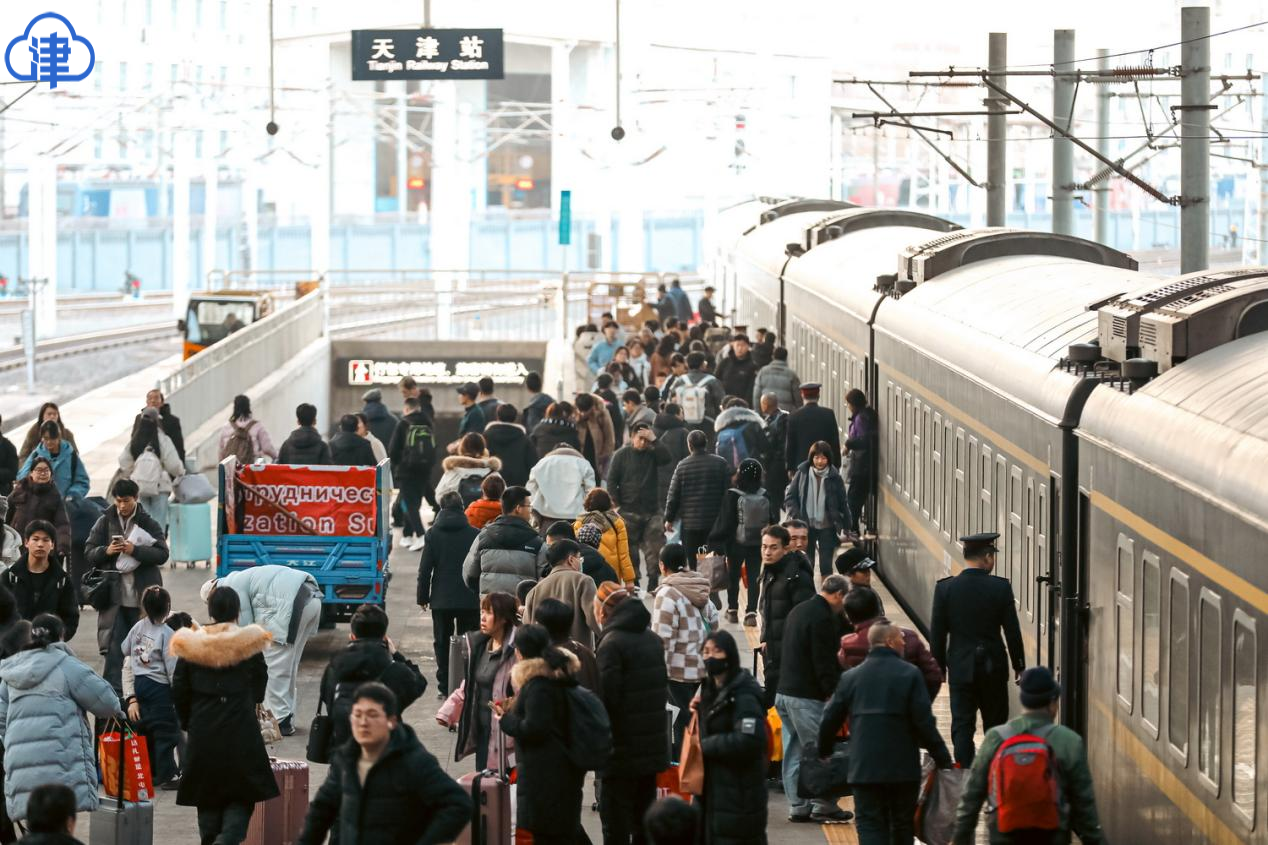
An ordinary citizen travelling in public transport was forced to change his itinerary by a group of people who claimed to be carrying out a “interview” mission. Railways, private cars and hotels become the places where their operations are controlled. The so-called visits were no longer seen as reception and resolution of claims, but rather as a means of restricting citizens ' freedom of movement.
More notably, this was not the only incident of an interception that had occurred to the non-Tictarian population in October.
From Beijing South Station to Tianjin Train: no tin stops are coming in
On 15 October, Yu Gui Feng, a resident of Liangkhong district of No Sisi, and his husband, U Shih Sheng, took a train to Beijing to continue to reflect the long-term lack of resettlement and compensation following the demolition of houses.
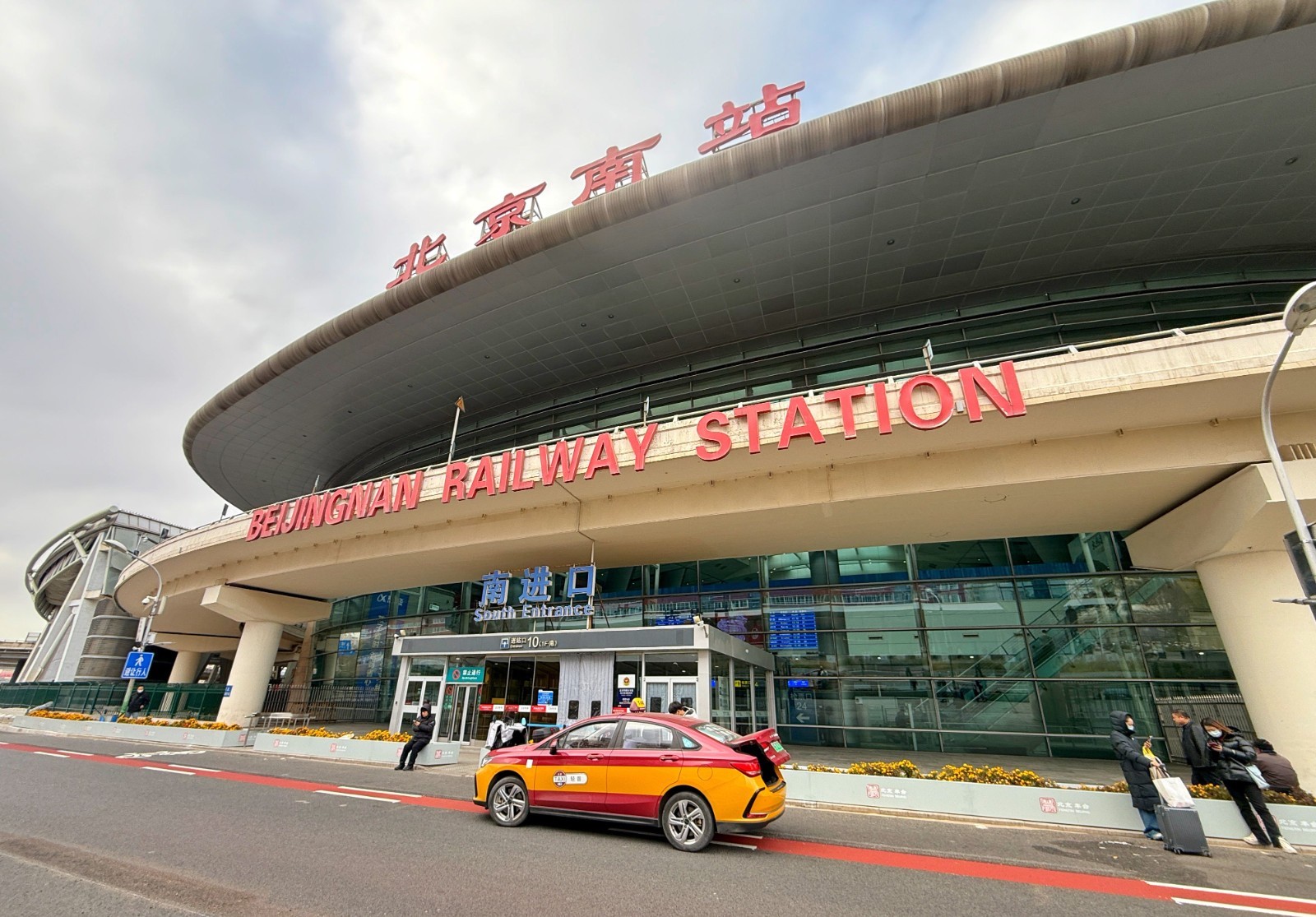
The couple had been in the house for years. According to reports from Human Life Watch, they were followed from Xuzhou, stopped by the non-Sik-Kyoto station at Beijing South Station and taken to the Kyohua Hotel with the participation of security officials. Until 17 October, the two men were forcibly returned to Tinless.
The couple had hoped to use their appeals to facilitate the settlement of the housing issue, but had eventually been deprived of their freedom to travel to the place where they were to be heard.
Two incidents, although they occurred in different locations, showed a highly similar pattern of control:
- Pre-empting the travel of visitors by car.
- Following and intercepting persons while they are travelling at a station or train.
- Transfer and control of persons through places such as vehicles, hotels and other places, preventing complainants from reaching their destination.
This type of action goes beyond regular mail visits. The nature of the mission, however interpreted by the person, cannot be translated into an act requiring the permission of local forces because the person concerned has the status of a visitor.
When local authorities can track a train in which a visiting citizen travels, but cannot resolve his long-standing grievances, the real objective of so-called stability is to be pursued: whether to resolve social conflicts or to prevent them from being seen?
For over a decade, the shadow of the intercept: from the door to the inter-provincial railway
The physical restrictions experienced by Mr. and Mrs. Oh Sheng were far from beginning in October this year.
On 21 January 2013, during the “two-chamber” in Jiangsu province, more than 50 people, including the U Shih-hyun and his wife, went to the provincial authorities to respond to their claims. According to the timeRecords of the rights movementThe scenes were marked by Jiangsu, Nosei and security forces, visiting the population were surrounded and then forcibly taken to the premises and returned to him.
Three years later, the power to prevent complainants from moving into the residential housing unit.
On 8 July 2016, Mr. and Mrs. Wu Shihing were subjected to door-blocking in the absence of Yu Dinhang in the Sion Creek district. According to the source,The rights movement's year coverageThe community police, Zhang Lei, and the head of the medical ward, Shen Swe-Fung, led security guards, blocking the spouses ' homes with couches, beds and so on, and preventing them from entering and leaving the house.
The husband and wife were in their 70s and their wife was diabetic and required insulin injection. Even basic needs for outside medicine are blocked.
The two elderly people who had called the police for help were unable to return to normal travel. Local officials have even indicated that they are required to stay at home for two months, with the guards taking care of the meals.
This approach is not a dispute resolution exercise, but a direct control of the daily lives of ordinary residents.
The blocking of the home means that the elderly have no ability to freely enter and leave the home; The inability to provide medication outside the home means that physical control has affected basic medical needs. The public security and community security forces, which were supposed to maintain the security of the population, were the enforcement forces that restricted freedom in the accounts of the parties to the incident.
On 24 April 2020, U Shih and Yu Gui Feng joined other non-Tingers in a joint complaint to inform the then Secretary General of the City of No Sing of the long-accumulated issues of demolition, property and redress of rights.
This one.Joint letter from 49 non-citizensThis is a reflection of the disputes over land confiscation, house demolitions and the pressure on the site.
From the provincial authorities in 2013 to the residents ' homes in 2016 and Beijing South Station and Tianjin Train in 2026, complaints from visitors have not been resolved in a decade or so, but the means to prevent them from moving have been repeated.
The housing dispute did not disappear as a result of the interception, but the rights of citizens were further violated in repeated interceptions.
The CCP ' s security system: making the complainant a subject of control
The incidents revealed a local logic of stability that was seriously criticized: when the Government had been unable to resolve administrative disputes for a long time, the person who had asked the question was instead targeted for treatment.
Social disputes that involve housing settlement, property compensation and legal claims are included in the control of movement of persons, cross-regional activities and entry into the country.
The most serious consequence of this type of governance is the reversal of the relationship between civil rights and executive power.
The right to travel, to seek medical treatment and to reflect their claims in accordance with the law should be the right of citizens to exercise it freely. However, in the experience of these visitors, local staff were able to decide whether they could leave, travel by car and continue to travel to their destination.
The Chinese Communist Party Central, the State Council issued it in 2022.Letter missions regulationsThe mission was led by the party committee, which established a system of responsibility for party political co-responsibility and territorial responsibility, and emphasized the legal defence of the legitimate rights and interests of the visitors.
The system requires, on the one hand, the defence of the rights and interests of the population and, on the other, the organization of the integrated correspondence visits of local party bodies.
The long-standing allegations of interceptions by Tin-free exposed the sharp contradiction of this institutional arrangement: the territorial control is used to prevent visitors from leaving the country, the mechanisms of correspondence can be transformed from a channel of dispute resolution to a tool to limit the movement of complainants when cross-sectoral coordination serves tracking and trans-shipment personnel, and when stability is maintained over normal remedies of rights.
This cannot simply be attributed to individual grass-roots elements.
From community health and safety officers to the staff in Kyoto, the incidents involved multiple implementations. Administrative resources can be used across regions for people control, but they have not allowed for the substantial resolution of housing disputes that have accumulated over the years.
This reflects the tendency to take precedence over rights relief and the institutional responsibility that the CCP has to face in a highly centralized system of local power.
# # # # # # # # # # # # # # # # # # # # # # # # # # # # # # # # # # # # # # # # # # # # # # # # # # # # # # # # # # # # # # # # # # # # # # # # # # # # # # To # To be a local # Irr # Ir # Irrrrrr # # # # # # To be a place for # # To be a lot # # # # # To be a lot # # # # # # # # # To # # # # # # To #
On 19 September 2026, Chiang was elected as Secretary of the City of Zhongqing and was elected as the new Secretary of the City on 24 September. Hu Xiaojin is the Secretary of the Standing Committee of the City of No Sing and the Political and Legal Committee of the City Council.
Only a month later, there were reports of the evacuation of visitors to Beijing and Tianjin and restrictions on movement.
The Yangtze-led council is the key leader of the local system of governance. Hu Xiaojin, who is the Secretary of the Municipal Council, has the responsibility of coordinating and supervising local political and law-making work.
Under the party leadership system established by the CCP itself, the organizational responsibility for local political law and the conduct of correspondence cannot be confined to the specific executive.
The reality behind Chiang's appointment as the City Secretary is that the long-accumulated dispute over demolition and control of visitors continues. A city with a complete administrative, public security and communications system that can create the operational capacity to intercept people across regions has not been able to effectively resolve the long-standing backlog of disputes over livelihoods.
This is precisely the case with the critical allocation of power in tinless local governance: the actions to control the complainants are repeated and the responsibility to correct the violations of the original rights has been frustrated for a long time.
Hu Xiaojin is in the position of head of the Municipal Council on Law and Justice, which is closely linked to the supervision and coordination of public security law enforcement. When persons involved in cross-provincial departures are confined to vehicles and hotels as public security officials, the duty of the system to uphold the rule of law and to restrain public power is being put to the test.
If public security forces are used for physical control without a legitimate basis, the question is not just whether a staff member has used inappropriate means, but whether the local political system has put in place a truly effective mechanism of restraint.
The institutional leadership responsibilities of the City Council and the Municipal Council on Political and Legal Matters will not disappear because the actions took place in a different location or because the executive uses the term “interview”.
The charge is for the leadership of Chiang-Sai and Hu Xiaojin, and not for the specific interception orders, which are not directly substantiated. The criticism of the local power system should focus on the powers it actually carries, the rights violations that have occurred and the long-standing institutional issues.
“Settling people without solving problems”: the real cost of maintaining logic
In an interview with Humans Watch, the Human Rights Watch interview by Zheng Xiaodong, the non-Singi rights activist, criticized the local practice:
Solve people, not solve them.
This sentence is at the heart of the years of experience of no visitation.
(b) The Government can arrange for the return of the complainant to his or her place of origin without thereby eliminating the experience of the demolition of his or her home; (b) The ability to block older persons without allowing for the automatic termination of housing disputes; The visitation could be prevented but the long-standing administrative backlog on the ground could not be eliminated.
The substitution of control over persons for the processing of claims only adds to the existing social tension and new rights violations.
The Communist Party has long emphasized the importance of stability, but genuine social stability is sustainable and cannot be dependent on the denial of freedom of movement to the general population. Repression of complaints by power makes it more difficult for citizens to seek redress through normal channels and further undermines public confidence in the administrative and judicial system.
The forced removal of Yu Jianying from Tianjin, the interception of Mr. and Mrs. Wu Shihing at Beijing South Station, and the blocking and restriction of their travels in the previous years constituted a continuing trajectory of the security problems in Tin-free areas.
Allegations of rights violations that emerge from these events cannot be overshadowed by the terms “receiving” “territorial administration” or “stabilizing”. The acts involving forcible removal, restriction of liberty and obstruction of access to health care must be held accountable for the acts and legal provisions.
The issue of tinless has not only been the reason why several visitors have repeatedly visited, but why local party bodies have been unable to resolve their complaints for a long time, while there have been repeated incidents of administrative and political restrictions on their movement.
When citizens must pay the cost of losing their freedom to travel normally, to seek medical treatment and to express their claims, so-called stability is a departure from the fundamental purpose of protecting their rights.
The Young-sik Municipal Council under Chiang Bei and the Political and Legal Council of Hu Xiaojin are facing this long-standing local governance issue. The allegations of more than a decade of interception reveal not only the harshness of the method of securing implementation at the grass-roots level, but also the deep conflict between the local power system of the Communist Party in the maintenance of stability and the guarantee of citizens ' rights.
Article discussion
Verified members can discuss this report publicly and manage their own content.
Checking member sign-in status…