
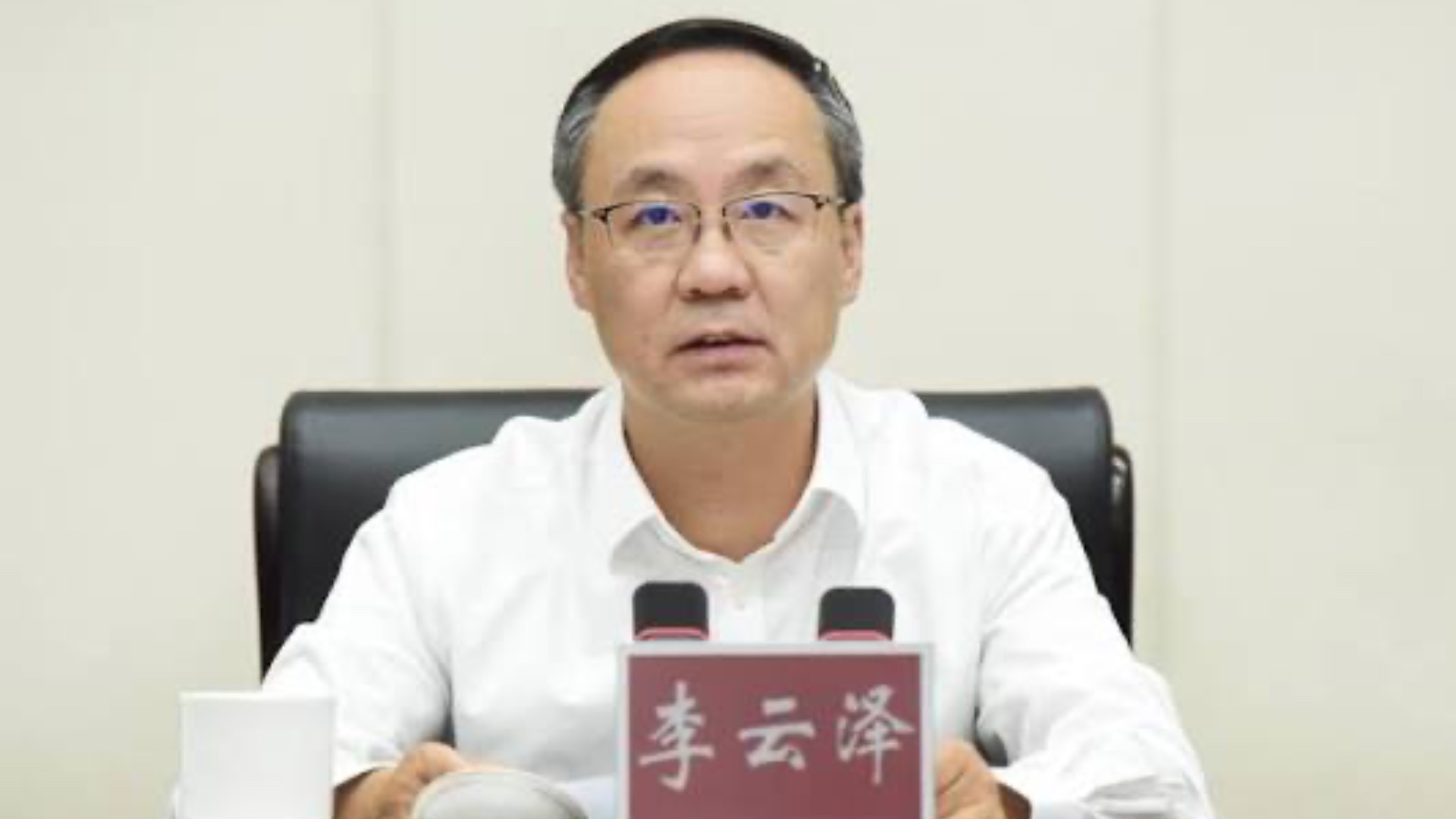
China's financial supervision system was again high-level shock on August 7th. The Standing Committee of the People's Congress of Sichuan Province announced that the former Secretary of the Party Committee and Director of the General Administration of National Financial Supervision and Administration, Li Yunzee, was dismissed from the position of the 14th National People's Congress for "serious violations of discipline".
Li Yongze, 55, has long served in the financial system, served as Deputy Governor of the Industrial and Commercial Bank of China and Deputy Governor of Sichuan Province. In May 2023, he was appointed by Xi Jinping as the first Director of the newly formed National Financial Supervision Administration and became the first official of the Central Ministry Committee born in the 1970s, once considered a new generation of political star in the financial supervision system.
However, after April this year, Li Yongze's political trajectory suddenly reversed. Reuters previously disclosed that he had been relocated from the core position of the Supervisory General Office to lower-level positions; in June, Li Yongze had completely disappeared from Ding during the financial system personnel adjustment attended by central leaders such as Ding Sheng, and was subsequently taken over as the head of the Financial Supervisory General Administration until August 7, when the official authorities for the first time explained his fall as a "serious violation of discipline".
Li’s fall has released a clear signal: Xi’s so-called anti-corruption movement has continued to deepen into the financial supervision system from the military, energy, space, and local party committees, and the time gap between senior officials’ disappearance, disappearance, and officially convicted political qualities is becoming normal.
In the power system of the Communist Party of China, "grave violations of discipline" are not the first legal judgments made by the judicial organs, but the political characteristics of the discipline system within the Party. Officials are usually first controlled by the Central Committee of Discipline, then by the Party's internal investigation to decide the political fate, and then transferred to the prosecutor's office.
Li has not been able to respond publicly to the allegations, but Chinese officials have not disclosed how many assets he is suspected of receiving, which financial institutions are involved, whether there is a transfer of interest, and whether financial regulatory policies are affected.
This is exactly where the anti-corruption mechanism of the Xi Jinping era is most questionable.A senior ministerial official who has the power to oversee national banks, insurance and financial risks can suddenly disappear without public investigation procedures, without media inquiries, without parliamentary hearings; months later, the local People's Congress used a phrase "serious violations of discipline" to terminate its National People's Congress qualification.
The so-called representatives of the National People's Congress do not have independent supervision capabilities in the face of real power cleansing.The National People's Congress is not an institution to investigate why Li Yongzer fell, but a procedural confirmation after the CPC has made a political decision.
But from Zhou Yong Qing, Sun Qing, to senior military generals, space systems and financial regulators, a sharper question has always been unanswered: If corruption can spread for a long time to the core system that Xi personally advanced and controlled, is the so-called "centralized and unified leadership" of the CCP actually eradicating corruption, or is it creating a political system that only the highest authority can decide who is the corrupt?
Article discussion
Verified members can discuss this report publicly and manage their own content.
Checking member sign-in status…