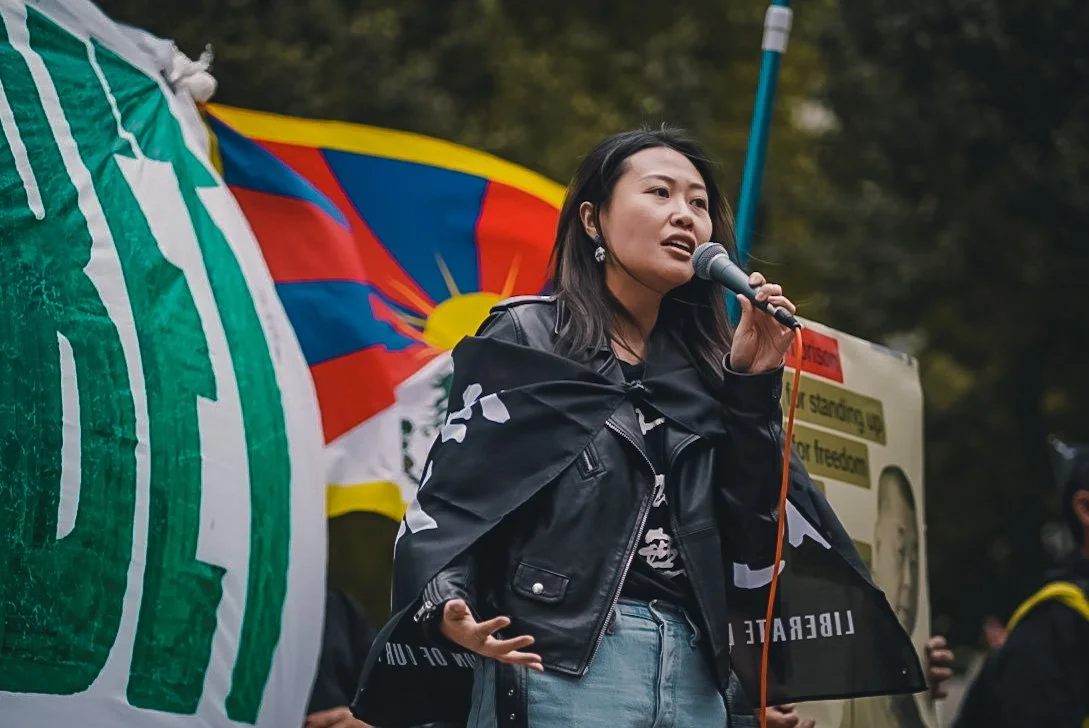
Risk warnings on British streets, anonymous letters to neighbors, falsified pornographic images, and inquiries from relatives who stayed in Hong Kong – for some political activists who have left Hong Kong, “exile” has not cut off their connection with Hong Kong’s national security system.
In the past year, a series of events surrounding Hong Kong’s exiles have shown that the impact of national security enforcement law is extending from Hong Kong courts and police agencies to overseas communities.The focus of the controversy is not only whether Hong Kong has the right to search for people abroad, but what real consequences this enforcement claim has in jurisdictions such as the UK, the United States, Australia.
A suspended red order, how to get into the British community
Former Hong Kong District MP Carmen Lau travelled to the UK in 2021.The Hong Kong police sought her in 2024 on suspicion of violating the Hong Kong National Security Act and hanged her for $1 million.The Hong Kong authorities said the persons concerned were suspected of endangering national security, emphasizing the police's criminal responsibility in accordance with the law; the British government openly opposed the Hong Kong authorities to issue a suspension and search warrant against British persons.
The real change in the nature of events is what happened after the suspension.
Liu Kaiwon has publicly disclosed that she received anonymous letters from her neighbors in the UK, in which her personal profile appeared, and encouraged recipients to provide clues to receive rewards. She later became the target of fake pornographic images and sexual humiliation material. Reuters in December last year that Hong Kong exile activists in the UK and Australia had suffered similar harassment, with police involved in the investigation.
These materials are currently insufficient to demonstrate individually which agency directly produced or sent each anonymous letter, each fake image. But the effects they produce are very concrete: a suspension published by the Hong Kong police is transformed overseas into ongoing pressure on home, neighborhood, reputation and daily actions.
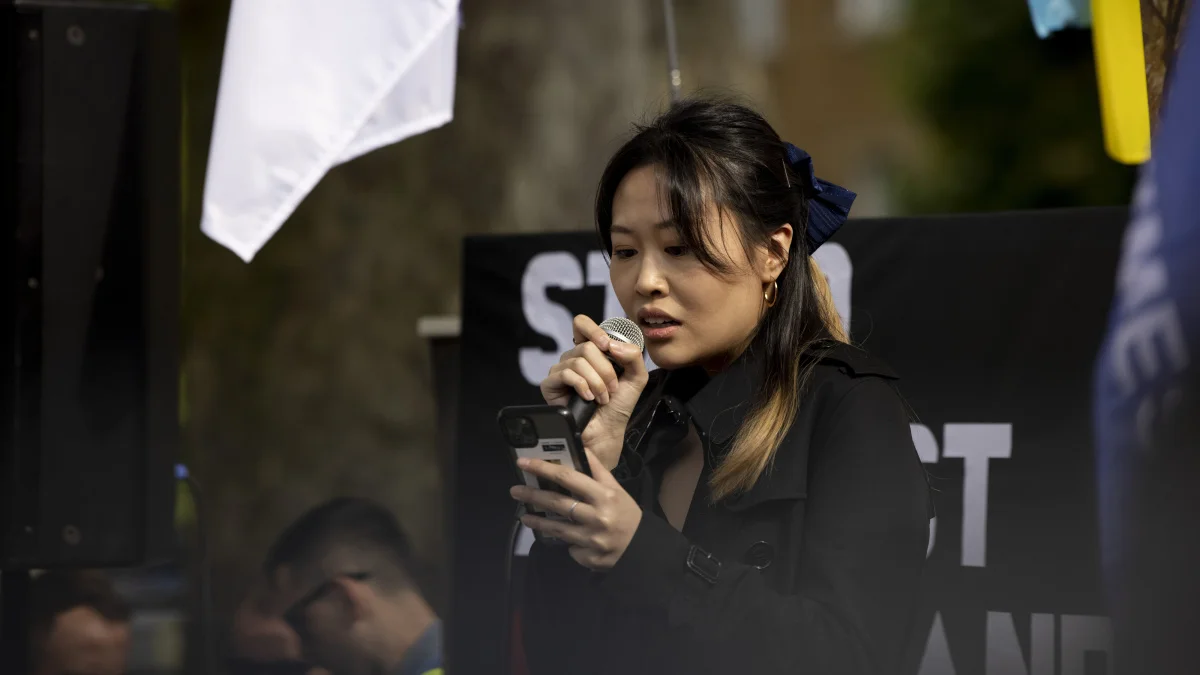
Liu said in a recent British media visit that the police had given her personal safety advice, including changing routes, using a VPN, and advising to avoid some public activities.
The question then becomes sharp: A person in the UK needs to reduce their participation in demonstrations or public activities because of the pursuit by a foreign government, and even if the starting point of the British police is to protect their security, it may end up being constricted as the public expression space she should have had in the UK.
原始来源 · news.sky.com英国流亡香港活动人士讲述悬红与安全压力Sky News采访多名遭香港国安通缉并身处英国的香港活动人士。news.sky.com ↗The most effective part of transnational repression, often without the need for cross-border arrest
When it comes to “transnational repression,” the public is most likely to think of secret police, abduction or forced deportation, but more common pressure on overseas communities may not be as dramatic.
It could be a letter, a phone call, a family-centric query, or ongoing cyberbullying, tracking, anonymous threats, and exposure to personal information.
This method is low cost, but can have long-term effects:
- Parties begin to change routes and residences;
- families reduce contacts to avoid involvement;
- community members withdraw from rallies and political activities;
- organizers must focus more and more on security rather than public initiatives.

Liu Caiwon told British media that some Hong Kongers have reduced their participation in demonstrations in the UK because of fear of being monitored, and even have concerns about participating in local political activities.This is the most difficult side of the problem of transnational repression: You don't really need to bring a person from London back to Hong Kong, as long as enough people believe that public appearances will cause trouble to themselves or their families, the cold fire effect has formed.
Guo Feng’s case shows that the boundaries of the National Security Law are first and foremost a political declaration.
Anna Kwok, Chairman of the Board of the Hong Kong Democratic Commission, is also on the Hong Kong police national security case search list. When the Hong Kong police released the first overseas search lists in 2023, eight people, including Guo Feng, were charged with $1 million each.
The Hong Kong Government’s legal position has always been clear: The Hong Kong National Security Act contains provisions applicable outside the territory, so the authorities believe that even if the relevant acts occur outside Hong Kong, they can still be held accountable as long as the legal conditions are met.
But the out-of-the-country clauses are written into the law, which does not mean that other countries will recognize that the Hong Kong police have local law enforcement powers. The governments of the United Kingdom, the United States, Australia and other countries have criticized such suspended actions, stressing that the legitimate rights of residents of their own country are protected by their own laws.
There was a real downturn: The Hong Kong police could not directly enforce Hong Kong’s arrest warrants in London, but the requested announcement itself could still influence the lives of the parties through cyber dissemination, family relations, community pressure and reward mechanisms. The force of law stopped at the border, but political deterrence did not necessarily stop.
AI makes old-fashioned intimidation get new tools
Liu’s counterfeit porn images are worth discussing separately as they reveal the technological changes that are taking place in transnational harassment.
In the past, blackening a dissident overseas needed to make a pamphlet, spread rumors or organize online tracking. Generated artificial intelligence lowered the threshold for creating fake images. A public photo can become material, after being processed, packaged in pornographic content and then sent to neighbors, colleagues and even families.
原始来源 · reuters.com流亡香港活动人士称遭伪造色情图片骚扰路透社报道英国和澳大利亚的相关骚扰案件及警方调查。reuters.com ↗This approach is gender-oriented when it comes to female activists. The goal is not necessarily to convince the public that the images are real, but to create humiliation, fear and social costs. Deep falsification is not just a fake news on the web, but can be an amplifier of political intimidation.
Whether the British police are able to find the people who made and delivered the material, where the mail came from, and whether there is organizational coordination, these questions still need to be answered. It is not strict to attribute specific anonymous behavior directly to a government agency before evidence is available; but the government cannot ignore the real security issues that the victims have already faced because the identity behind the background is difficult to identify.
The UK is no longer facing “Hong Kong internal affairs”
Hong Kong's national security affairs have often been put into the broad framework of China-UK diplomatic relations discussions: Beijing emphasizes sovereignty and national security, and London emphasizes the China-UK Joint Statement, rights freedom and Hong Kong autonomy.
But when anonymous letters were thrown into the mailboxes of British residents, and when British police needed to make safety recommendations for those who were hanged in Hong Kong, the issue had come into British local governance.
It involves at least three specific responsibilities: * the ability of the police to investigate harassment and threats; the ability of the government to protect legal residents from foreign political pressure; and the ability of the judicial system to deal with profound counterfeiting, misuse of personal information and cross-border intimidation. *
It takes only a few words to condemn a suspended red order, investigate anonymous emails, track funds, identify network accounts and prove cross-border command relationships, requires long-term law enforcement cooperation and evidence of access to the court.
comment: what really needs to be tested is whether you can still live a normal life after exile
Hong Kong police can adhere to their own legal interpretation, and overseas governments can also refuse to recognize the out-of-domain effects of Hong Kong's national security law enforcement.
To measure whether transnational repression exists, it is not just to look for the most extreme cases of abduction.More observable are some daily and concrete changes: whether a wanted person has to relocate repeatedly; whether neighbors have received letters of encouragement to report her; whether domestic families have been questioned for her overseas activities; whether people who participate in demonstrations have withdrawn because of fear of surveillance; whether local police have had to advise her to reduce public appearances.
“Once these changes occur, political pressure has crossed geographical boundaries.”
The case of Liu Kaiwon and Guo Feng merits a follow-up, not because they are still engaged in political activities abroad, but because it raises a more direct question: Will a person who has left Hong Kong and lives under another legal system still arrange their lives in line with the risk boundaries set by the Hong Kong national security system?
原始来源 · hkdc.usCarmen Lau资料与流亡后的倡议工作香港民主委员会公开人物资料。hkdc.us ↗The answer is not in the diplomatic communiqué, but in whether they can safely enter the gathering, interview, go home, and whether the next anonymous letter will appear in a neighbor’s mailbox.
文章讨论
已验证会员可围绕报道公开交流,并自行管理自己的内容。
正在检查会员登录状态…