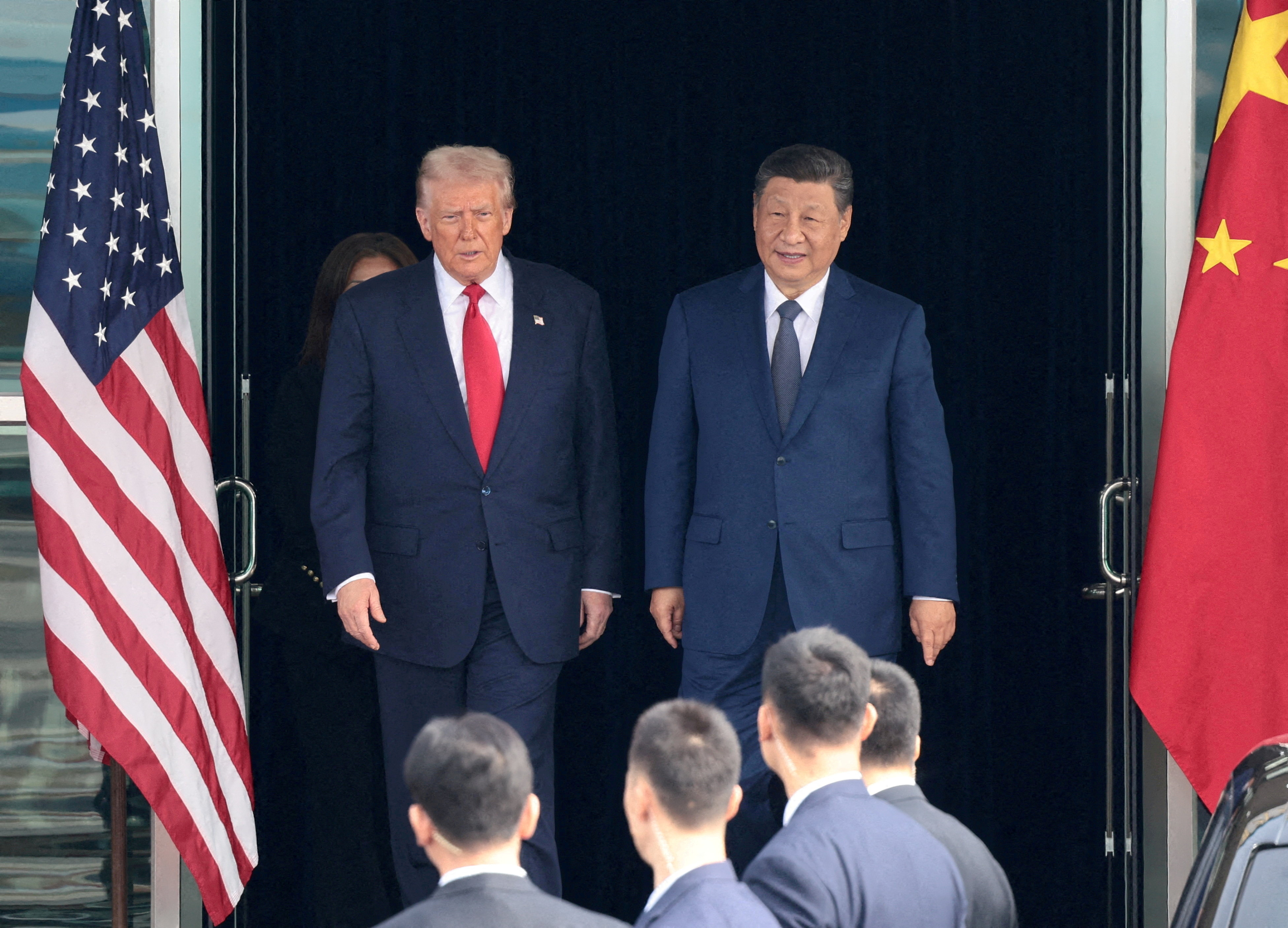
When Xi Jinping arrived at the White House on September 24, the Trump administration made the ceremony of the state visit to the utmost. The Southern Grass welcoming ceremony, the open speech of the two heads of state, the official talks followed, and the evening national banquet, so that the visit had enough images to be repeatedly broadcast by Beijing's official media. But as of the day of the talks, the scale of the ceremony clearly exceeded the policy breakthrough: China and the United States continued to maintain the trade ceasefire, but there was no major agreement enough to change the two sides' existing positions on Taiwan, advanced technology or security issues.
Reuters summarized the summit on the same day as “heavy symbolic, light substance”. This is not a diplomatic rhetoric, but in line with the public outcome before the summit. U.S. Treasury Secretary Bessent previously confirmed that the US-China trade ceasefire will be extended for two months until January 10 next year. It prevented a new round of tariff conflict from breaking out immediately, but did not resolve the disputes over tariffs, export control, rare earth, supply chain and technology competition that have been ongoing for years.
原始来源 · reuters.com特朗普在白宫接待习近平路透9月24日报道称峰会仪式隆重,但外界对重大实质突破预期有限。reuters.com ↗Xi Jinping’s public speech at the White House welcoming ceremony is also worth contrasting. he defined the visit as “inheriting friendship” and “expanding cooperation”, and again stressed that China and the United States should maintain the so-called “constructive strategic and stable relations”.These words constitute a version of the visit Beijing hopes China’s domestic audience will see: the highest leader is welcomed by the U.S. President, the Sino-U.S. competition is still directly controlled by the highest level, and China has not been excluded from Washington due to trade and technological friction.
原始来源 · mfa.gov.cn习近平在白宫欢迎仪式上的致辞中国外交部公布的9月24日白宫欢迎仪式讲话全文。mfa.gov.cn ↗The problem is that welcoming ceremonies can create a political picture but can’t replace policy outcomes.
Reuters, citing sources before the summit, that Xi Jinping was expected to ask Trump to stop arms sales to Taiwan, and cited the 1982 "Communications" to pressure Washington. Beijing has long opposed U.S. arms sales to Taiwan, while the United Statesins Taiwan's self-defense capabilities under the Taiwan Relations Act and other policy frameworks. More importantly, U.S. Secretary of State Rubio once again stressed the importance of peace and stability in Taiwan before the summit with Japanese and South Korean officials. That is, Beijing did bring Taiwan into the core agenda of Xi's visit to the United States, but as of the same day, there was no evidence to show that the Trump administration therefore announced that it would stop selling arms to Taiwan, and there were no U.S. official documents to change the existing Taiwan policy.
原始来源 · reuters.com习近平访美前被指将要求美国停止对台军售路透引述消息人士披露习近平此行在台湾军售问题上的诉求。reuters.com ↗This distinction is much more important than narratives such as “The Strong Pressure of Xi Jinping on the United States.”Putting a request is one thing and whether the United States accepts it is another.Beijing can call Taiwan a so-called “core interest” and may require Washington to reduce its military support, but these statements themselves do not change the political system that Taiwan has already formed, nor will they automatically change the policy constraints that the U.S. Congress, the administration and regional allies have formed around Taiwan’s security.
Xi Jinping publicly stressed that artificial intelligence should be placed under "human control", and China and the United States also included AI security in the talks, but the competition between the two countries around advanced chips, computing capabilities and technology exports did not disappear because the White House meeting. For Beijing, the ability to maintain high-level communication is of course of realistic value; but writing high-level communication as a strategic victory will mistake "no further deterioration" as a "breakthrough".
The Iranian war exposed another layer of gap between Beijing’s diplomatic language and real influence. Xi Jinping called for an end to the war through negotiations as soon as possible. Chinains important economic relations with Iran and has long emphasized its diplomatic role in the Middle East issue, but public calls for a ceasefire are not the same as being able to force the fighting parties to change policies. As of September 24, no public material showed that Beijing had put forward concrete plans in this White House talks to end the war, and the Trump administration did not announce a change to Iran’s policy because of Xi Jinping’s call.
Therefore, this visit to the White House is better suited to bring back the context of Xi’s domestic political dissemination to be observed. Chinese officials can get a whole set of highly disseminated values: the U.S. president personally takes over, the White House welcomes state affairs, Trump publicly talks about the relationship with Xi’s, the two heads of state side by side review ceremonies. The political dissemination system that shapes the “status of a great country” narrative for a highly dependent diplomatic activity of the highest leader, these images themselves are the results.
But if news reports only follow these pictures, it will misrepresent the ritual of power and misrepresent the meeting as a concession. To test the actual outcome of a summit, it should be seen whether the U.S. has changed its arms sales to Taiwan, whether advanced technology export restrictions are loosened, whether tariffs and trade disputes are really resolved, whether the two sides have signed a new agreement that can be enforced.
This is not the same concept as Beijing may present to the domestic “Sino-American re-stabilization and Xi Jinping’s reward.” The U.S. government’s choice to welcome Xi Jinping is part of national diplomacy; Trump’s willingness to negotiate with Xi Jinping is the U.S. government’s policy choice to deal with trade, security and war issues. None of them can directly prove that the U.S. accepts the one-party rule of the Communist Party of China, let alone that Washington has made concessions to Xi Jinping in Taiwan or in technological competition.
Xi Jinping's visit to the White House therefore showed a clear contrast: foreign ceremonies reached the height of state visits, but the substantive achievements remained in controlling friction, extending the ceasefire and continuing negotiations. Beijing has received a diplomatic scene that can be used for domestic dissemination, and the United States has not publicly handed over Taiwan's policies or key technology policies. For Xi Jinping, this visit first demonstrates that China-US relations still need high-level deals; it has not yet demonstrated that Beijing can rewrite this competition under its own conditions.
文章讨论
已验证会员可围绕报道公开交流,并自行管理自己的内容。
正在检查会员登录状态…