
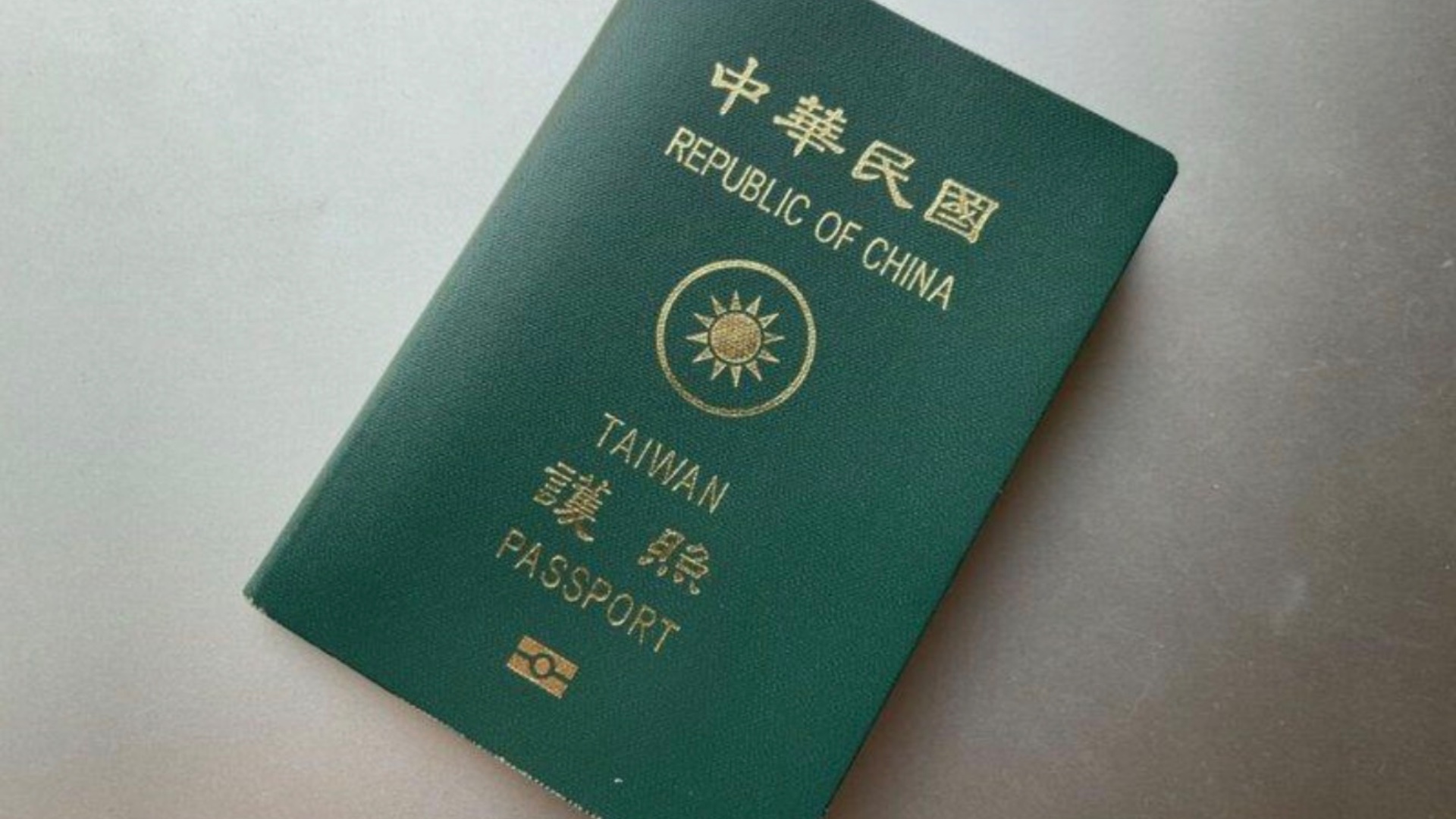
What happened at Uganda’s Deerfield International Airport is not an ordinary passport dispute.
According to information released by the Taiwan Ministry of Foreign Affairs on August 13, three Taiwanese passengers arrived in Uganda on August 12, and their passports were detained by immigration officials. Even though they were eventually allowed to enter, Uganda officials demanded that they present “Chinese passports” before completing entry procedures on Taiwan passports, and explicitly claim that this requirement is part of Uganda’s implementation of “One China Policy.”
This has been difficult to interpret as the accidental misjudgment of a grassroots immigration official.
When Taiwan passports were seized in the same airport, demanded changes to Chinese passports, refusal of entry and even deportation, and executives directly pointed to the “one-China policy”, the nature of the incident has shifted from general border management to political identity compulsory.
For ordinary Taiwan travellers, this obligation is very specific.
They hold passports issued by the Taiwan government in accordance with the law, but are asked to provide the People’s Republic of China passports they do not own at the airport in a third country.This is in fact a border checkpoint that requires a Taiwanese resident to accept the political status defined by Beijing in exchange for normal travel rights.
This is precisely the alarming change in China’s repression of Taiwan in recent years: Beijing is no longer content with asking foreign governments to write a “one-in-one principle” in diplomatic communiqués, but is pushing this political claim into airlines, international organizations, sports events, business names and third-country immigration systems.
At the Ugandan airport, this pressure has already fallen on specific people.
Beijing’s public response to the incident further exposes this political logic.
On August 19, when Taiwanese travelers were asked about their passports being seized in Uganda and asked to change to continental passports, the Taiwan State Council Office did not denounce this practice and did not ask the Ukrainian side to guarantee the normal travel rights of Taiwanese travelers. spokesman Zhu Fenglin first reiterated that "There is only one China in the world, Taiwan is a part of China", then in turn accused the Taiwanese authorities of challenging the "one-Chinese principle" and claiming that Taiwanese residents are "Chinese citizens", if they need assistance abroad, they can contact the Chinese consulate abroad.
The danger of this response is not that Beijing has repeated the political slogans it has repeated countless times.
What is truly worrying is that when third-country immigration officials have already used the “one-China policy” to defend the seizure of Taiwan passports, the CCP did not clear the boundaries with this behavior, but continued to use the same set of political narratives to explain the identity of Taiwanese overseas.
This means that the "one-of-a-kind principle" here is not just a diplomatic phrase, but begins to have administrative consequences.
What Beijing is trying to establish is a unilateral identity right: No matter what passports Taiwanese residents own, what governance they accept, what taxes they pay, what elections they participate in, as long as they enter a third country that relies heavily on China’s diplomatic and economic relations, Beijing is trying to demand that country re-treat the identity of Taiwanese according to the political definition of the People’s Republic of China.
This is not ordinary diplomatic competition, but a cross-border political repression.
On August 20, the Ministry of Foreign Affairs of Taiwan confirmed that, following ongoing negotiations between the Embassy in Somalia and the Taiwan Chamber of Commerce of Uganda, the immigration department of the Ugandan airport on August 19 local time returned all four Taiwan passports previously detained.
The four passports could eventually be retrieved, indicating that the initial detention act was not an irreversible result of international law, but an administrative disposal that could be withdrawn through negotiation.
This also highlights the issue of responsibility.
If the Ugandan government considers Taiwan passports to be legally void, why would they be returned afterwards?Why would the airport require them to provide Chinese passports if these passengers have obtained travel permits in accordance with the current system in Uganda?
These questions need answers from Uganda.
However, Beijing cannot be left behind.
The Communist Party of China has long used diplomatic relations to crush Taiwan’s international space. In the past, this crush has mostly been demonstrated by digging out state-owned countries, preventing Taiwan from participating in international organizations, forcing multinational companies to change Taiwan’s name, and preventing Taiwanese officials from participating in international activities.
This is a change in nature.
Diplomatic blockades are aimed at the government; passport pressures are aimed at individuals.
When a Taiwanese businessman, student or ordinary family arrives at a third-country airport and is deprived of passports, requests for a change of identity, or even deported because of Chinese political claims, the cost of Beijing’s oppression has been directly transferred to civilians who are not involved in any political activity.
Ironically, the Communist Party of China, on the one hand, claims to “protect Taiwan compatriots’ overseas rights and interests” and, on the other hand, pushes third countries to treat them in accordance with Beijing’s political definition by denying the identity documents held by Taiwanis.
The so-called “protection” is based on one premise: Taiwanese must first accept themselves as citizens of the People’s Republic of China.
This is not protection, but compulsion.
What is truly unacceptable is never just the name on the passport cover, but the reality behind the passport: Taiwan has its own government, its own electoral system, its own border management system, and the ability to independently issue international travel documents to 23 million people.
That’s why Beijing continues to try to get the international community to deny this reality in the system’s operation.
The incident in Uganda should therefore not be reduced to a wave of border checks.
It reveals an increasingly clear path of China’s policy toward Taiwan: to use economic and diplomatic influence to force third countries to accept Beijing’s political language, then to push these languages into the administrative system, and ultimately to put ordinary Taiwanese on the real cost of China’s sovereign claims.
From the "one-in-one principle" in diplomatic communiqués to the four passports held in front of the airport counter, it was the step in the middle that the political pressure of the Communist Party of China turned into cross-border administrative repression.
This step deserves serious attention from the international community.
文章讨论
已验证会员可围绕报道公开交流,并自行管理自己的内容。
正在检查会员登录状态…