
On 6 November, the Standing Committee of the National People ' s Congress of China voted to adopt the Law on Combating Cross-Border Corruption, which incorporates into specific law the pursuit of extraterritorial flight, the recovery of corrupt assets, international law enforcement cooperation and the regulation of the cross-border operation of enterprises. The new Act, which is in force since the date of its publication, consists of six chapters, 47 articles. Official Beijing stressed that the legislation was aimed at strengthening international cooperation in combating corruption and preserving national sovereignty and security. However, under the CCP regime, which has a high degree of concentration of State oversight powers, the right to cross-border investigations has been further expanded, raising concerns about the risks of political pressure, forced repatriation and property rights violations faced by Chinese citizens abroad.
The most alarming aspect of this law is that Beijing is further transforming its past cross-border operations, which relied on party discipline, executive orders and international mechanisms for the pursuit of impunity, into permanent powers backed by national law. The United States Department of Justice has investigated numerous cases of “Fox-hunt” in China in recent years, which have shown that acts committed abroad in the name of anti-corruption pursuits have involved offences such as stalking, intimidation of United States residents and threats against their families. Today, the continued expansion of the cross-border anti-corruption regime in Beijing, whether overseas pursuits serve justice or may be tools for extending political control, has become a major controversy that this legislation cannot avoid.
I. General powers of party authority: whose law is the new law expanding the law ' s enforcement capacity
According to Xinhua ' s report of 6 November, the Anti-Transborder Corruption Act covers working mechanisms and duties, case handling and international cooperation, integrity compliance and legal liability. The draft law, which was made public in August, clearly establishes the basic principle of maintaining the leadership of the Communist Party of China as a cross-border corruption-fighting effort and provides for the joint work of the foreign affairs, public security, justice, financial regulation, money-laundering and Internet communications, under the leadership of the National Monitoring Commission.
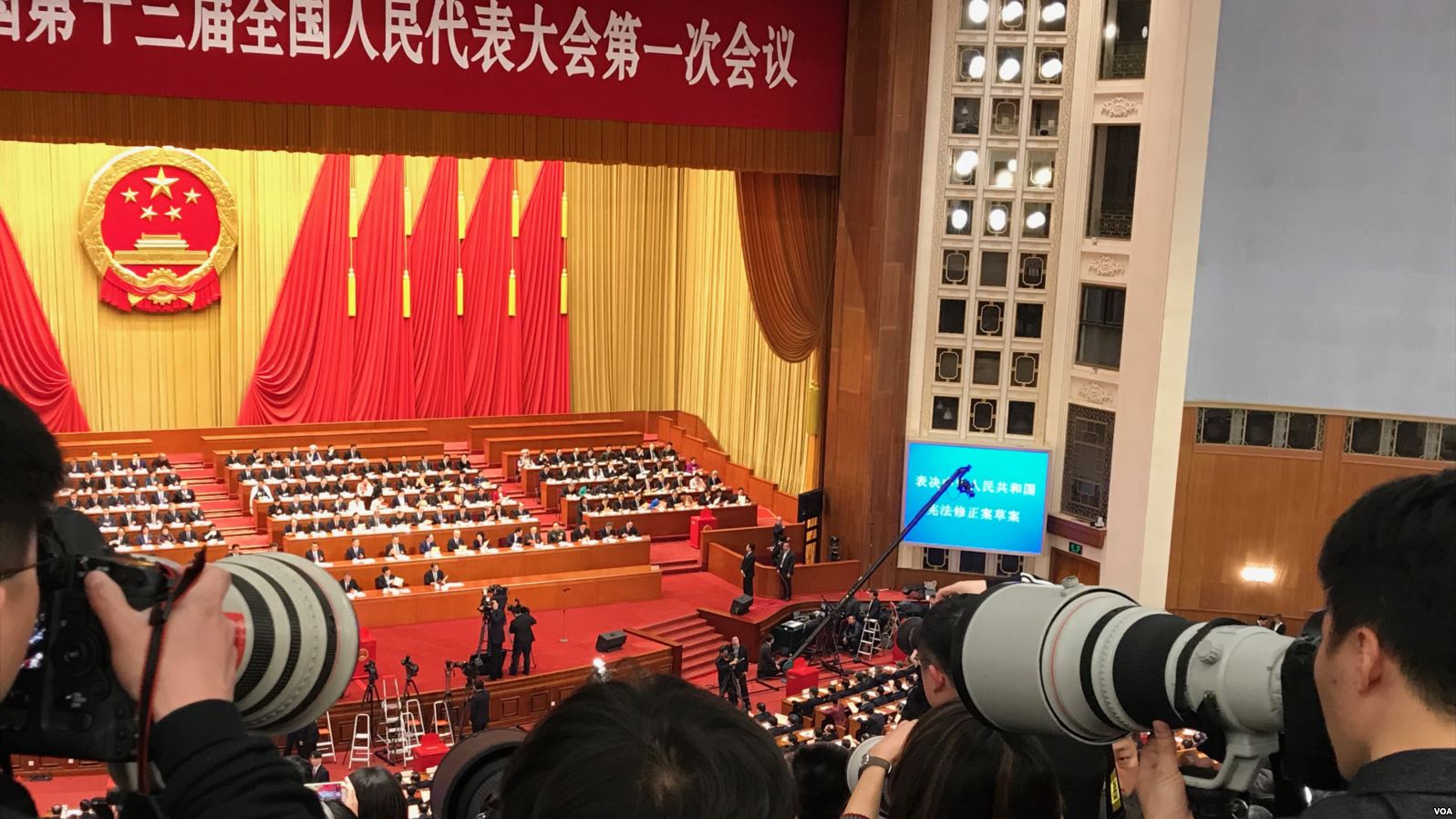
This institutional arrangement means that China ' s cross-border anti-corruption efforts are not just international cooperation between criminal justice departments. It also concentrates financial transaction monitoring, State monitoring, public security investigations and external coordination within the CCP-led anti-corruption system.
The National Monitoring Committee is not an independent body operating under the CCP disciplinary system. The CMC website, published in November 2024, clearly states that they both have a “set of working bodies, two bodies,” a dual responsibility for party disciplinary inspections and State oversight, and a work model that is centralized and run as one.
原始来源 · ccdi.gov.cn中纪委国家监委:纪检监察体制说明ccdi.gov.cn ↗This is at the heart of the institutional controversy.

When the ruling party is able to decide on the subject of the investigation, lead the inspection body and centralize the powers of the prosecution with disciplinary powers within the party, the initiation, direction and political consequences of the anti-corruption case may be influenced by power relations within the party.
The Communist Party has long used anti-corruption as an important tool for the discipline of officials and for strengthening organizational discipline. Since Xi took office, a large number of senior officials have fallen behind in corruption, and anti-corruption actions have been accompanied by high-level personnel restructuring and increased concentration of power. While corrupt officials should be brought to justice, the impartiality of the anti-corruption system could not be limited to the number of officials being investigated, but also to the ability of the investigating body to escape political interference and the ability of the person under investigation to obtain independent judicial review.
The new law establishes a mechanism for cross-border cooperation, which allows the issue to be further extended from within China to overseas.
ii. Financial, data and human mobility incorporated in surveillance: comprehensive expansion of cross-border investigative capacity
The draft law, which was made public in August, provides for a fairly broad range of investigative and regulatory arrangements for cross-border anti-corruption efforts.
原始来源 · zh.wikisource.org《反跨境腐败法》公开草案全文zh.wikisource.org ↗- Article 12 of the draft on the acquisition of foreign nationality by public officials, eligibility for permanent residence abroad and declaration of assets abroad;
- Articles 13 and 14 require financial and related regulatory bodies to strengthen cross-border financial monitoring and to transmit suspicious transactions to the inspection and public security authorities;
- Article 15 provides for the use of technologies such as big data and artificial intelligence to integrate monitoring information.
In the area of investigation of cases, article 18 of the draft requires organizations and individuals to cooperate with the inspection and public security organs in providing evidence, and in serious cases, foreign enterprises and other organizations may be requested to assist in accordance with the principle of reciprocity. Article 19 deals with the imposition of measures to restrict the exit of persons suspected of corruption, while article 22 includes the search of offshore financial accounts, electronic data acquisition, search of residence, asset freeze and return as matters for mutual legal assistance that may be requested.
These measures can be used to trace cross-border bribery and illicit asset transfers, while also providing the inspection authorities with the institutional conditions for further integrating information on personnel, funds, businesses and cross-border transactions.
For Chinese enterprises abroad, the law also implies stricter anti-corruption compliance requirements. The second draft, submitted for consideration on 2 November, clearly states that a cross-border business requires a clean compliance department or personnel commensurate with the size of the business, the scope of operations and the level of risk, and enhances business confidentiality, personal privacy and personal information protection.
However, the danger of power expansion is equally evident for the CCP State oversight system. When offshore investments, personal accounts, financial flows and business information can be the subject of investigations under the same monitoring system, the absence of independent checks and balances between the person who is the owner of the information and the person who decides on the investigation may expose normal business activities, family assets and the movement of individuals across borders to political investigations.

In particular, when it comes to senior officials, political disillusioners or persons with a conflict of interest with the authorities, the line between allegations of economic crime and political accountability may be influenced by power struggles within the party.
This does not mean that every cross-border anti-corruption investigation has political objectives, but rather that the institutional structure of the Chinese surveillance system leaves the risk without adequate external constraints.
. The case of the United States “Fox Hunting”: family intimidation and forced return to the country have judicial records
What human rights harm might be caused by the Beijing Cross Border Ride measure, and there have been representative criminal cases in the United States.
On 19 March 2025, the United States Federal Court for the Eastern District of New York sentenced Quanzhhong An to 20 months ' imprisonment for illegal acting as a representative of the Chinese Government and for participating in an operation aimed at forcing a United States resident to return to China.
原始来源 · justice.gov美国司法部:安全忠“猎狐行动”案justice.gov ↗
According to the United States Department of Justice, since 2017, Security Tsing has been in contact with the targeted person ' s son in the United States, and has subsequently arranged for her daughter and two Chinese government officials to travel to her residence to continue to convey pressure for the target person to return to China.
The United States prosecution stated that Safety Tsing had warned the victims ' families that if they could not persuade their father to return home, the Chinese side would continue to harass and keep him in a state of daily peace. The operation lasted several years until the arrest of Safety Thong in 2022.
In addition to the prison sentence, the Court also imposed on it financial penalties and liability of approximately $5 million, including compensation of approximately $1.3 million to victims and their families.
This case reveals one of the most threatening means of Operation Foxhunter: when the target is in a country where the Chinese judiciary is unable to directly enforce coercive measures, pressure may be directed towards his spouse, children and other relatives.
On 16 April of the same year, the United States Department of Justice also published the sentencing results of another case. Former New York police officer Michael McMahan (Michael McMahan) was sentenced to 18 months ' imprisonment for his involvement in the tracking of residents of the United States and China and for his assistance in the forced return of their nationals to their country. The case records relate to the surveillance of the target ' s residence, the investigation of family members ' whereabouts and the perpetration of harassment.
原始来源 · justice.gov美国司法部:另一宗“猎狐行动”案justice.gov ↗McMahun was pardoned by United States President Trump on 7 November 2025, but the public investigation record of the case still shows that the Beijing Operation for Expatriate Searches has been used by individuals in the United States to carry out follow-up activities against targeted individuals and their families.

More importantly, these actions took place before the adoption of the cross-border corruption law. In other words, Beijing already has transnational networks of flight and practical experience. Specialized legislation is now in place and the relevant authorities may be given more institutionalized cooperation and access to information.
The Federal Bureau of Investigation (FBI) of the United States has also included as a major form of transnational repression the threats to family members, both within and outside the country, coercion to return, abuse of legal process and asset freeze.
For Chinese citizens abroad, the words “anti-corruption” in the title of the law do not remove concerns about political persecution, family ties and illegal pursuits.
iv. Requests for foreign cooperation in pursuing flight, but restrictions on foreign investigations in China
Another major institutional controversy in the Anti-Transborder Corruption Act is the concentration on power relations in international judicial cooperation.
According to the August draft, Beijing could request support from foreign relevant institutions through international treaties, mutual legal assistance and bilateral cooperation, such as search, account information, electronic evidence, assets freeze, extradition and repatriation.
However, article 26 of the draft also makes it clear that foreign institutions, organizations and individuals may not conduct investigations of cross-border corruption in China on their own or through others without the consent of the relevant Chinese authorities; Institutions and individuals in China are also prohibited from providing relevant assistance outside China without permission. Those who violate the provisions may face interdiction measures and legal liability.
States had a legal basis for protecting their jurisdiction and foreign law enforcement officials could not take unauthorized action in another State. However, there is another problem with the institutional environment in Beijing: when foreign judicial institutions wish to investigate cases involving Chinese authorities, State-owned enterprises, money-laundering abroad or the transfer of high-level interests, the ability to cooperate effectively remains dependent on the Chinese authorities ' own judgement.
Especially when it comes to politically sensitive persons and the interests of the high-ranking CCP, the information provided, the extent to which investigations are permitted and the cooperation with foreign judicial authorities may be influenced by national security and political interests.
Thus, cross-border cooperation against corruption may create a situation of marked asymmetries: Beijing will strengthen its capacity to request mutual legal assistance from foreign countries through law, while maintaining strict control over investigations by foreign agencies in China.
This arrangement gives the Chinese Government more initiative in international cooperation against corruption, without correspondingly establishing an external oversight system that would allow independent scrutiny of the senior CCP and its interest networks.
It is far from sufficient to have a stronger agency for seeking refuge in the real problems involving transnational bribery, illegal funds transfers and valuable overseas assets. It is also crucial that the subject of the inquiry include all those in power and that the highest political levels be equally subject to independent investigation.
. The law has expanded cross-border flight-seeking capabilities, and institutional checks and balances have not been created simultaneously
The Beijing legislation also reflects a trend towards a greater integration of anti-corruption and national security.
The second draft, dated 2 November, incorporated the general concept of national security and the relevant global anti-corruption governance into the original legal principles, and emphasized that cases should be conducted in accordance with the law, and human rights respected and guaranteed.
These principles can serve as a basis for official external justification of the legitimacy of legislation, but the effectiveness of human rights guarantees in the actual implementation of the law ultimately depends on how the right to an inquiry is subject to external constraints.
The prominent issue in the CCP monitoring system is the high degree of integration of party disciplinary inspections with the State ' s oversight powers. Investigative powers can be centralized, cases can move forward across borders, financial and personnel information can be shared across multiple sectors, but individuals facing abuse of power have little access to judicial remedies that are genuinely independent of the political control of the ruling party.
This system is even more acute in the case of the problem of flight abroad.
A Chinese citizen in a foreign country, even if he/she has legal residence status there, may face cross-border investigations, requests for financial information or extradition proceedings as a result of allegations of economic crimes made by the Chinese side. If the investigation is politically motivated, the family may be under additional pressure in China.
The intimidation, stalking and family coercion revealed in the United States Operation Fox case have given this concern a realistic basis. Foreign judicial bodies remain responsible for reviewing requests for assistance from China in accordance with national law, in particular for determining whether there is a risk of political persecution, forced return and violation of fundamental rights in the case in question.
The adoption of the Law on Cross-Border Corruption has meant that the Xi Jinping authorities ' anti-corruption and flight policy, which has lasted for more than a decade, has been further institutionalized. The capacity of Beijing to coordinate investigations into cross-border funds, business operations, offshore assets and persons suspected of corruption may be enhanced.
However, in the power structure of the CCP, which is superior to the power of an independent judiciary, cross-border anti-corruption law may also become a new tool for tracking political opponents, exerting pressure on overseas residents and expanding party control.
The case of Operation Fox Hunt, which has been heard by United States courts over the past few years, has proved that flight abroad is not inherently tantamount to legal enforcement, nor can it be justified in the name of fighting corruption in order to threaten family members, forcibly return home and violate the judicial sovereignty of other States.
Beijing now has a more complete legal framework for cross-border anti-corruption, without changing the political power structure that determines how investigative powers are used. This is the most profound and present danger to Chinese citizens living abroad.
Article discussion
Verified members can discuss this report publicly and manage their own content.
Checking member sign-in status…