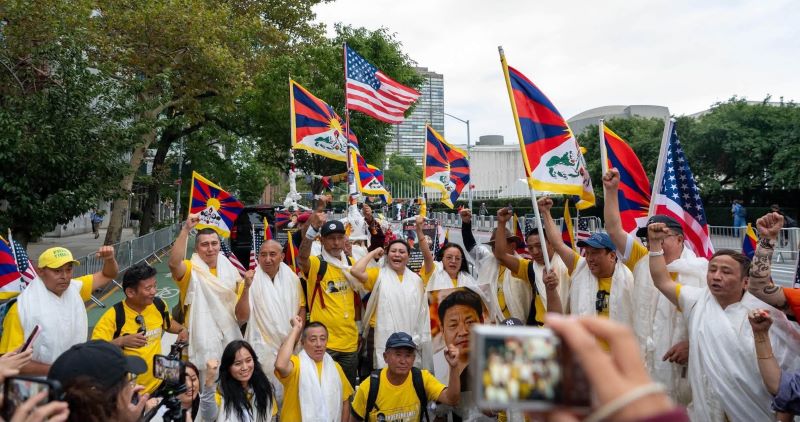
One man, one foot, from Chicago to New York. Tibetan activist Sonam Dorjee did not stop “free passage” in a demonstration, but instead pulled it into a political route of over 1,400 kilometres: from the Chinese Consulate General in Chicago, across the cities of the central western and eastern coasts of the United States, talking along the way to the office of the Senator, the community and the general public, and ultimately to United Nations Headquarters in New York.
As at 6 October, Sonam had been walking for 42 consecutive days, completing more than 1,000 kilometres. He indicated to the Tibetan media, Phayul, that the entire journey was expected to last approximately 55 days, with a total mileage of approximately 1,400 to 1,500 kilometres, and that it was scheduled to end on 17 October outside the United Nations Headquarters in New York.
原始来源 · phayul.com42 days, 1000 kms: US Tibetan activist heads to UN for final leg of ‘Freedom March’phayul.com ↗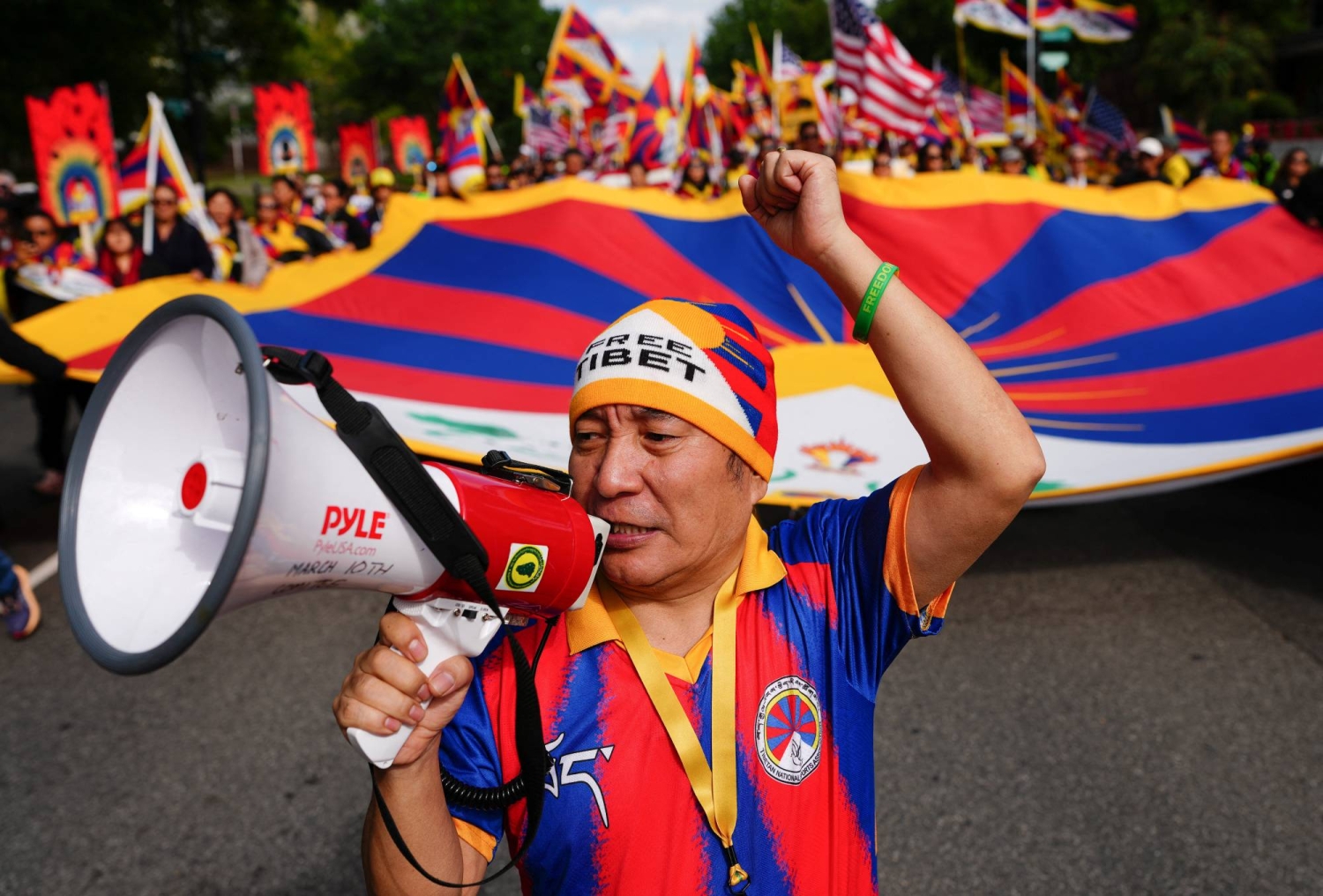
Disassembly a protest into 55 days and thousands of face-to-face conversations
“Freedom March” began on August 24 at the Chinese Consulate General in Chicago. The route proceeded to Baltimore via Indianapolis, Dayton, Columbus, Pittsburgh, Maryland and parts of Virginia, and then to Wilmington, Philadelphia, New Jersey and New York.
Unlike large gatherings, long-distance political transmission depends not on the size of the population but on repeated entry into local society. Sonam stated that more than 1,000 individuals and groups had been contacted along the way, that accommodation, food and donations had been provided and that for the first time, accounts of the political situation in Tibet had been heard by the side of the road.
He also extended the trip to lobby the United States Congress. According to Phayul, he has contacted at least 10 United States Congress members or their offices to promote two Tibetan-related bills and to express his opposition to the China National Unity and Progress Promotion Act.
He took the names of over 170 self-incinerating people on the highway
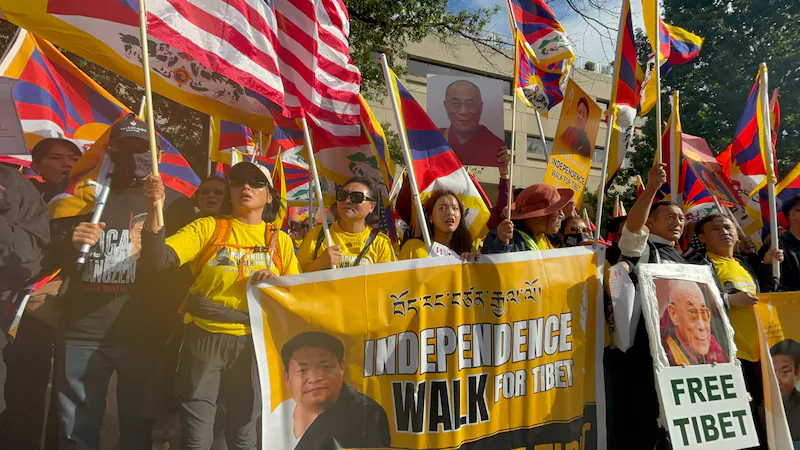
Sonam dedicated this trip to Tibetans who burned themselves freely and paid special tribute to the late Tibetan independence activist Lobga Rangzen. Over the past decade or so, more than 170 Tibetans have protested against the political, religious and cultural control of Tibet by the Chinese Government through self-immolation, both inside and outside the country.
This background makes it clear that this hike is not a general “cultural propaganda”. For its part, the participants sought to re-establish to United States cities and public institutions individual experiences that were compressed, deleted or redefined in the Chinese information environment.
In September, another session, Rangzen Walker, dedicated to the commemoration of Lobga Rangzen, was held outside the United Nations Headquarters in New York. Sonam chose to place its end in the same international body, linking this individual action to the broader Tibetan transnational initiative.
原始来源 · thetibetpost.comTibetan Independence March Begins at UN to Honor Lobga Rangzenthetibetpost.com ↗The Chinese Consulate to the United Nations is itself a political path
The starting and ending of the route is clearly symbolic: the Chinese Consulate represents the State power that was protested, while the United Nations represents the international public agenda that Tibetan activists are trying to enter. The midway 1,400 km consists of the United States Office of Local Society and Parliamentarians.
Beijing has long defined the issue of Tibet as China's internal affairs and has dealt with it within the framework of sovereignty, counter-secession and “national unity”. The Tibetan movement in exile has taken the exact opposite path: to internationalize the issue of religious freedom, language, political expression and cultural survival on a continuous basis, so that it is not confined to the narratives unilaterally defined by the Chinese Government.
The power of long-distance footing is not that it can change policy immediately, but that it forces an issue that would otherwise be easily squeezed out of the international news cycle to enter new streets, cities and offices. Every day, the journey recreates public contact.
What is really scarce is not a big protest, but a matter of keeping the issue alive.
The international community ' s attention to human rights in China is often marked by a marked cycle of news: major arrests, United Nations conferences, and the rise in heat during visits by leaders, followed by a rapid retreat. This is particularly true in Tibet, where independent interviews are severely restricted and where there are a large number of cases that have no sustainable access to the global media.
Sonam's “Freedom March” chose to use his body and time to confront this mechanism of disappearance. Forty-two days over 1,000 kilometres is not a policy outcome and cannot replace institutional diplomatic pressure, but it turns a political claim into a reality that is constantly visible in societies along the road.
When he finally approached United Nations Headquarters in New York, the real question left by this operation was not “how far one has gone”, but how far the political voice of Tibetans has to go to keep the international community in view, given the continuing space-stretching in China.
Article discussion
Verified members can discuss this report publicly and manage their own content.
Checking member sign-in status…