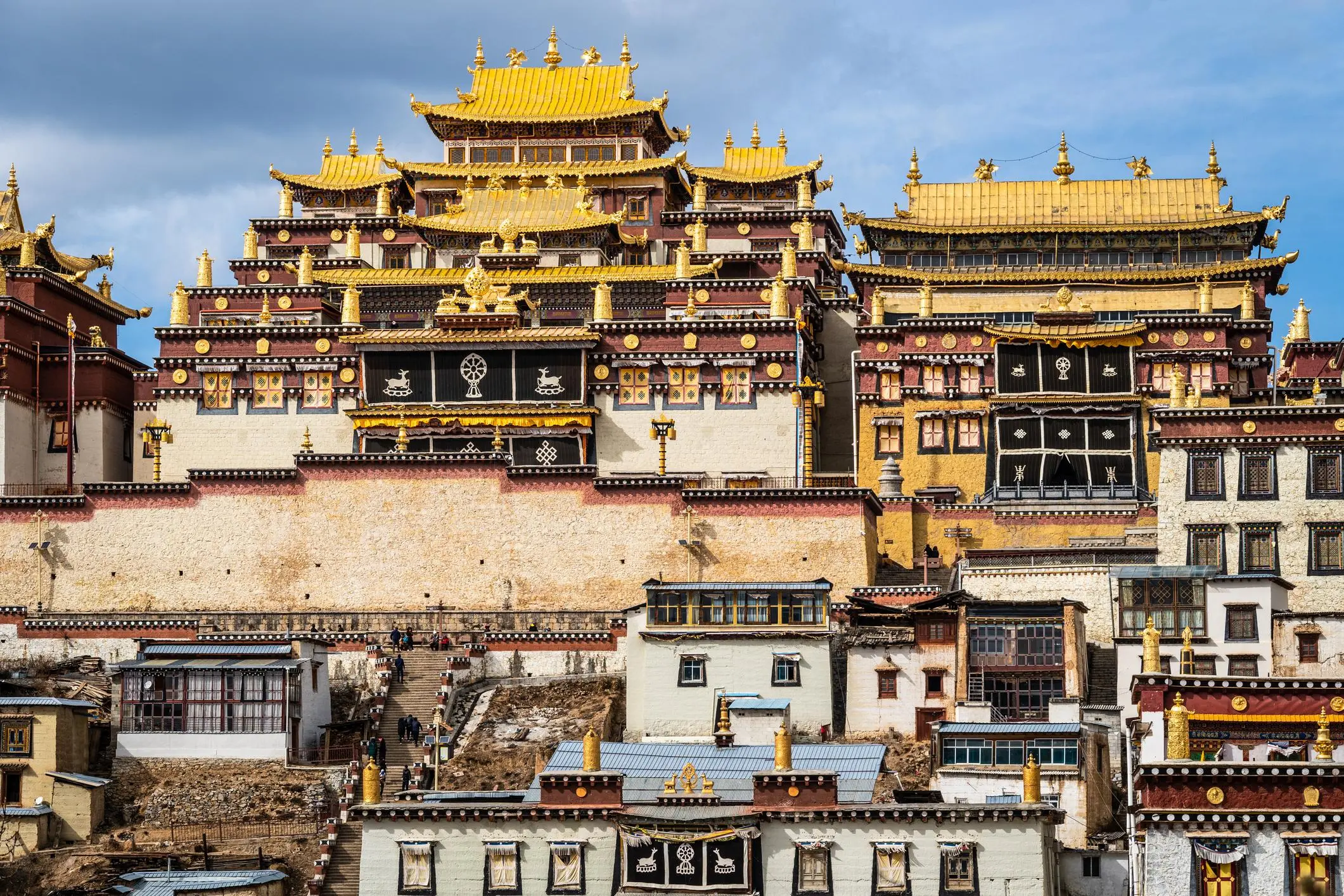
In Yunan Shangri-la, tourists can rent a collection of clothes, make “highland makeup”, take a photo in front of the monastery, or make short videos around large trans-clares. , a Tibetan city, wrapped by the Chinese government as "Shangri La, is showing a highly expirable Tibetan culture: clothing, architecture, singing and dance and religious symbols are being preserved in large numbers The religious authority, linguistic transmission and political memory behind these symbols are subject to stricter control.
This contrast is not simply a “tourism development to destroy tradition”. It is more like a State-led cultural filter: parts that can promote consumption, shape national unity, and are encouraged to be magnified without political conflict; The potential for independent religious authority, an intergenerational linguistic community or parts associated with the Dalai Lama is limited to a narrower space.
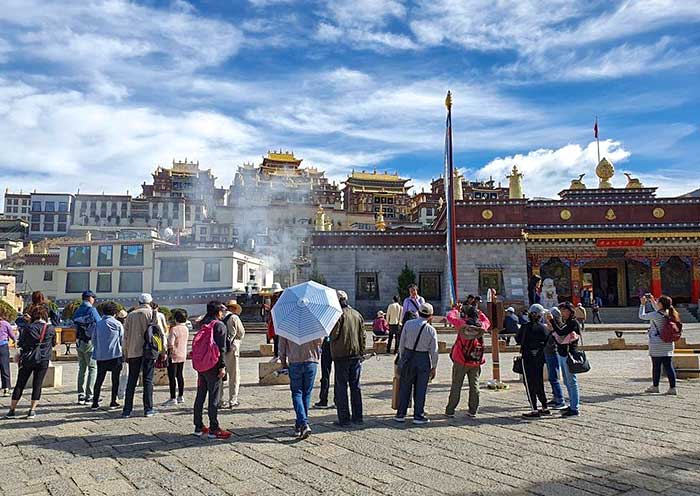
The Song Zan forest Temple is one of the two most visible locations of this dual structure. It remains the Tibetan Buddhist monastery and one of the most important tourist destinations for Shangri-la. Tourists buy tickets, enter the view area by car, film the monks and the golden roof, and monasteries become important assets in the local tourism economy; At the same time, the Chinese Government has continuously intensified its administrative, patriotic and political review of Tibetan Buddhist monasteries, and the extent to which religious activities can be maintained depends on whether they meet the borders set by the State.
While acknowledging that tourism development brings income, roads, hotels and employment, the local Tibetans who report on the visit are concerned that the younger generation is becoming more familiar with “how to perform Tibetan culture to tourists”, and is less and less using Tibetan or understanding traditional religious life. Culture therefore does not disappear suddenly, but rather changes in use: from a lifestyle within the community to a product for outside consumers.
This is the most easily neglected aspect of assimilation policies. A Government does not have to prohibit all national dress and temples in order to weaken the cultural autonomy of a community. It is perfectly capable of retaining a large number of visual symbols and even investing in the renovation of the landscape, as long as the right to education, language, religious leadership and historical interpretation remains firmly in the hands of the State. As a result, tourists are seeing more and more “Tibetan elements”, and the Tibetans themselves are deciding what these elements mean, and the space is becoming smaller.
Shangri-la is itself the product of such narrative work. The original name of Mid-China was changed to “Shangri La” in 2001, transforming the imaginary names in English novels into a real-life tourism brand. It then became a window for Chinese tourists to consume the "hidden experience" without having to enter the Tibet Autonomous Region, and made it easier for local governments to integrate national culture into a unified tourism industry and a narrative of national identity.
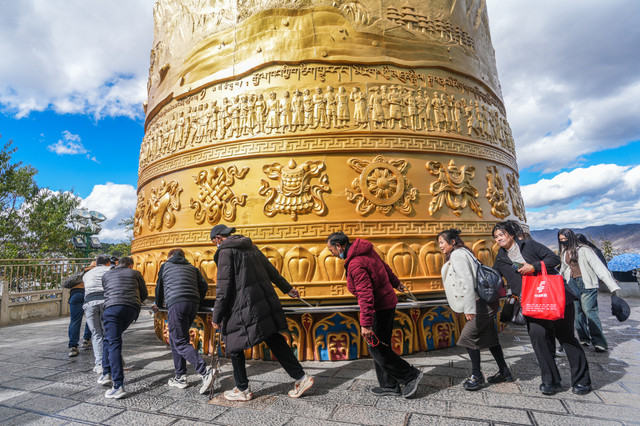
The official national policy in Beijing emphasizes “the awareness of the Chinese National Community” and requires that education, religious and cultural communication serve the unity of the country. This policy does not always appear in the form of demolition or prohibition. In Shangri-la, it can be expressed as another more soft power: the dress is very fresh, the monasteries remain magnificent, and the trans-clause is moving, but the history of which is spoken, which religious authority is recognized, and which language is used by the next generation, is not determined by the sight boom in the scenery.
So, Shangri-la is today providing a political sample that deserves to be identified. Commercialization of culture does not in itself amount to persecution, and tourism does improve many family incomes; The problem is that when the State controls education, religious organizations and historical narratives, commercial prosperity may instead become a “culture still flourishing” window of display, covering the reality of cultural autonomy that is shrinking.
The tourists took a beautiful set of pictures. The question of true presence is: how much space is left as a life that Tibetans themselves define and inherit when Tibetan culture is increasingly and securely present in a landscape.
Article discussion
Verified members can discuss this report publicly and manage their own content.
Checking member sign-in status…