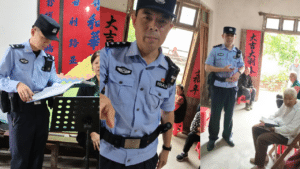
On October 6, the Korean “Voice of Martyrs” once again revealed a two-day raid on the family church in Anhui Kimbuk County. "According to the Live testimony previously collected by China Aid Society, 16-17 September, about 30 police and grass-roots officials entered church gatherings to identify people, confiscate mobile phones and remove live images; Two female preachers were taken away for questioning, one of them being subsequently confined to home for several days.
The next day, when religious affairs officers re-enter the meeting, several young believers were practicing their instruments. The testimony stated that the staff had forbidden them to sing songs containing the words “Jesus” or “God” and had asked to sing the songs of the Communist Party of China. If these statements are correct, the dispute is not just whether the unregistered religious place is in compliance, but rather that the executive power enters the content of the worship itself.
From the party venue to the rules of what to sing
The religious management system in China requires religious groups and places of activity to be registered, registered and subject to administrative supervision. In the case of family churches not part of the official religious system, local governments can usually impose restrictions on the various segments of the place, fire, education, publishing, fund-raising, etc.
The speciality of the Kim Shao incident is that the persons on the ground allegedly did not stop at the “lawfulness of the meeting” level, but rather further delimited the content of religious expression. The report of the China Aid Society states that the staff member claimed that the request came from the “Central Patrol Unit” and that the mission was to be monitored on a daily basis in the future.
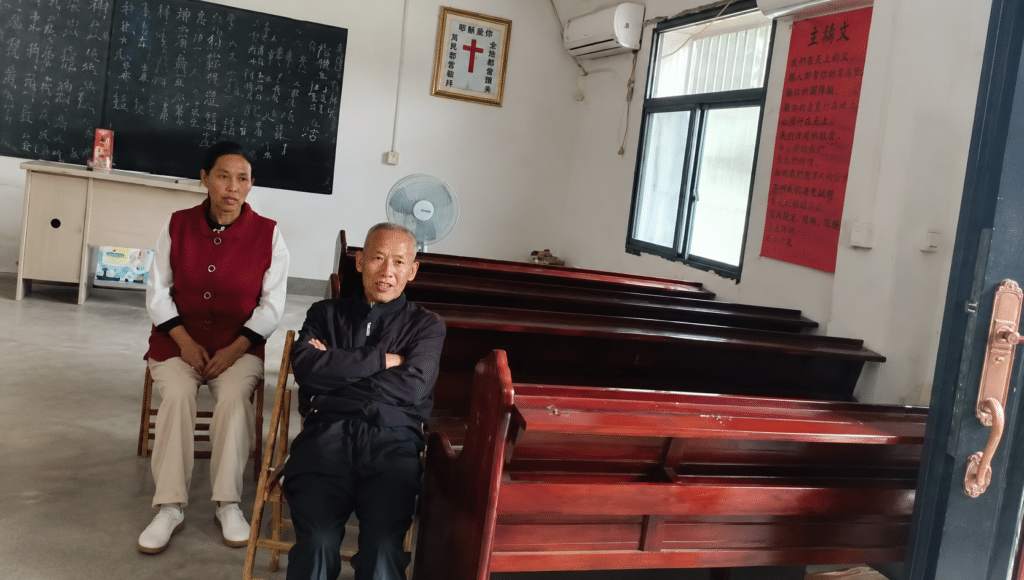
The police also asked about the overseas priest relationship
According to the same source, two of the taken missionaries were focused on their relationship with two priests, one of whom came to work as a pastor in New Jersey, United States. The police repeatedly asked about their activities and contacts in the United States. There is no public evidence in the reports that these inquiries have resulted in cross-border law enforcement operations, but it shows that religious relations abroad are also within the scope of grass-roots investigations.
The mountainous region of Kim Chai is an important red area in the history of the Communist Party of China and an area where the local independent Christian network has been in existence for many years. The family churches do not accept the option of management of official religious organizations, leaving them in a long-term zone of conflict between administrative supervision and the autonomy of faiths.
How religious “Chinaization” landed at the grass-roots level, a specific sample of this survey is given
The official promotion of religious “Chinaization” has been consistent in recent years, requiring religious communities to reflect the core values of socialism and national identity in the interpretation of religious texts, the management of organizations and public expression. Supporters interpret this policy as preventing the exploitation of religion and regulating religious order by outside forces; Critics argue that when Governments decide which religious languages are available, the belief autonomy itself is reduced.
The Kim Shao incident is currently based mainly on testimony given by members of the church to religious freedom organizations. Public reports indicate that the Kim Cai County Government and the Oil Shop Police Station had not responded publicly as of the time of the release of the relevant reports. It can be confirmed that police officers did enter the meeting point and that the relevant video footage was made public.
The problem is therefore very specific: if a religious group must replace its hymns with political songs to continue its activities, regulation is no longer just a requirement of compliance with the law, but of submission to political expression.
Article discussion
Verified members can discuss this report publicly and manage their own content.
Checking member sign-in status…