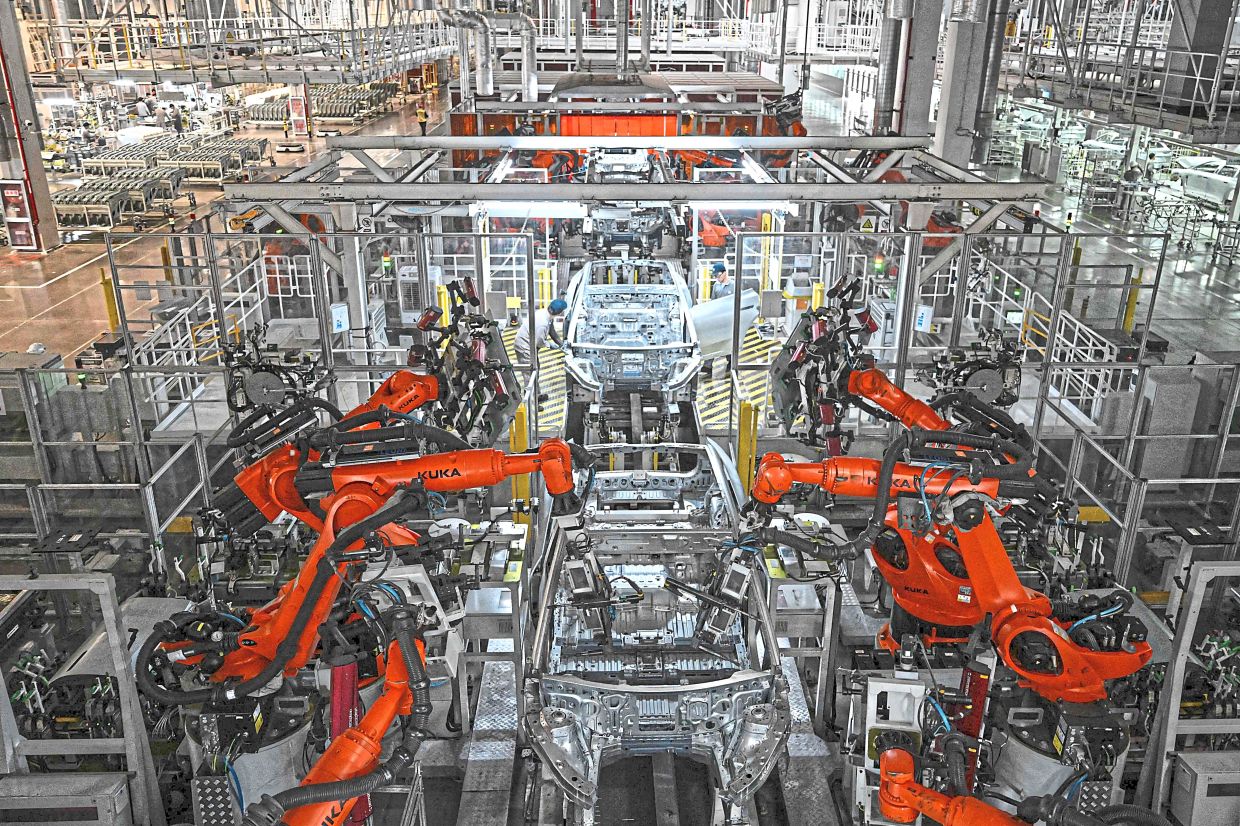
Will London be willing to tax China ' s electric cars, which would have been an independent British trade decision; Today it is increasingly like the British terms for obtaining tickets for the European industrial system. On 16 October, The Guardian reported that France had withdrawn its objection to British participation in the “European Manufacturing” programme, provided that London coordinated its position with the European Union on issues such as China's electric vehicle tariffs. The British Government did not rule out tariff adjustment, but nevertheless stressed the independence of its trade policy.
原始来源 · theguardian.com《卫报》:英国保留对中国电动车征税选项theguardian.com ↗This is not simply “lower Chinese products, expensive European products”. There are three categories of people behind customs duties or local procurement rules: car buyers want prices to fall, automobile workers want jobs to stay intact, and Governments fear that critical manufacturing capacity will be lost. Everyone ' s claims are reasonable, but they cannot be fully realized under the same trade protection policy.
The competitiveness of China ' s new energy vehicles is based on real technological advances, as well as large supply chains, scalable production and policy support.
- Europe is vulnerable to self-deception by ignoring the former; Neglecting the latter two may in turn mischaracterize national industrial competition as a free market with no political background at all. The industrial policy promoted by Xi Jinping has never been to sell a car well, but to compete with national power for batteries, software, manufacturing capacity and the share of the global market.
If high tariffs were used to block imports in Europe, it would not necessarily be possible to establish a stronger indigenous battery industry and competitive car models. Conversely, if only the immediate low prices are pursued and external suppliers are relied upon for a long time, the loss of indigenous employment, technological development and supply security will be felt in years. This time lag makes political decision-making particularly difficult: the present benefits are clear and future risks are spread.
原始来源 · reuters.com路透社:法德汽车规则协议与英国特殊地位reuters.com ↗The situation in the United Kingdom is even more complex. After its withdrawal from the EU, it claimed to have the space to set tariffs on its own, but still had to face the reality that automobile exports were highly dependent on European markets. The terms of the French negotiations on “European manufacturing” exposed the unlimited choice that trade sovereignty did not have to be granted by a single de-European slogan. Supply chains and market access in turn determine how independent policies can be.
Beijing criticized overseas tariffs as discriminatory and motivated to defend export interests; The use of industrial safety language in Europe also protects the interests of local manufacturers. For both workers and consumers, the government position of either party cannot be automatically taken as its own. It is important to see whether protection measures actually increase technological and employability or simply allow consumers to pay more and the subsidized enterprises to continue to be inefficient.
The most recognizable of this debate is the fact that, when national industrial policies are deeply intertwined with international trade, governments can either help innovation or spend public money on competition failures on the part of firms. In Beijing, Brussels and London, few of the ultimate payers are at the centre of the negotiating table.
Article discussion
Verified members can discuss this report publicly and manage their own content.
Checking member sign-in status…