
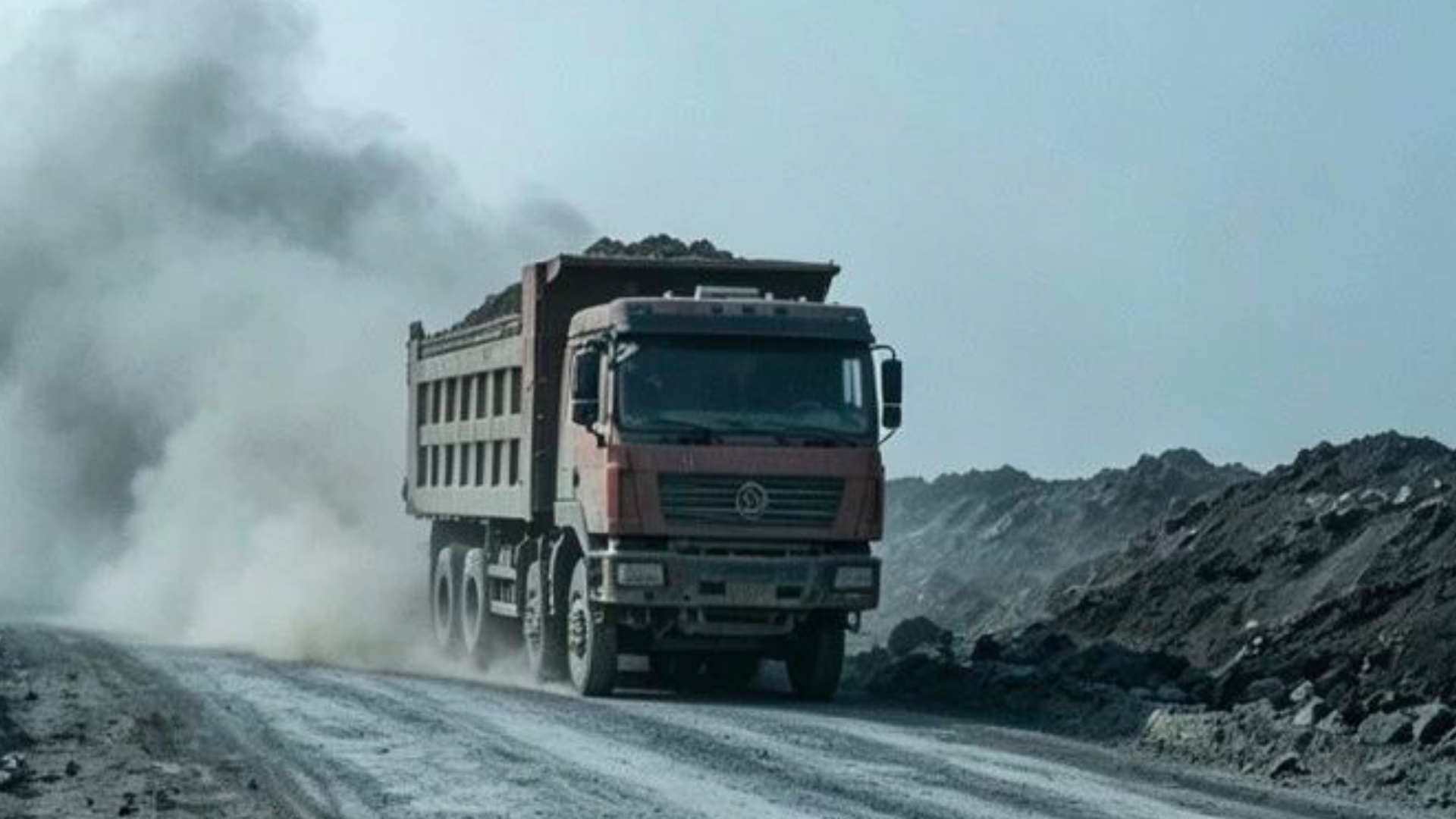
The noisy dirt truck travels day and night, the dust is constantly covering the house and noise is piercing the walls, not a bridge in a movie, but a reality that Ran Zhou, a rural Hunaning, has faced day and day. In order to protect the living environment at the door of her home, she repeatedly complained, negotiated with the construction party, and then became a regular environmental defender, which eventually turned into a judicial saw-saw that lasted for many years. Behind the case is the proposition that society as a whole is constantly exploring: where is the boundary of negotiation when the rights and interests of ordinary people are violated? The line between legitimate defence of rights and extortion should be clarified.
Zhou Xiao Lan lives in the street of the village of stone pits on the outskirts of Ning township, and houses are located close to the road necessary for the transport of the dirt. As work began on the perimeter, a large number of slag transport vehicles travelled round the clock and round the clock. The passage of heavy vehicles has brought about constant vibrations and sensations, with dust that fell on windows, the ground and the clothes that were dry. Long-term noise and dust contamination seriously interfere with normal rest and daily life for the family.
When pollution problems were identified, Zhou Xiao Lan first chose a formal channel of complaint. She has repeatedly called the Government Service Hotline 12345 to inform the environmental, urban and other functional departments about the problems of debris and dust pollution, and hopes that the authorities will come forward and control the vehicles and stop the persistent environmental abuse. However, after several complaints, the situation of the slag transport as a disturbance has not fundamentally improved and the pollution continues. The administrative means of defence had limited effect and life was still in a state of crisis, and Zhou Xiao Lan began to try to communicate directly with the transport and construction companies.
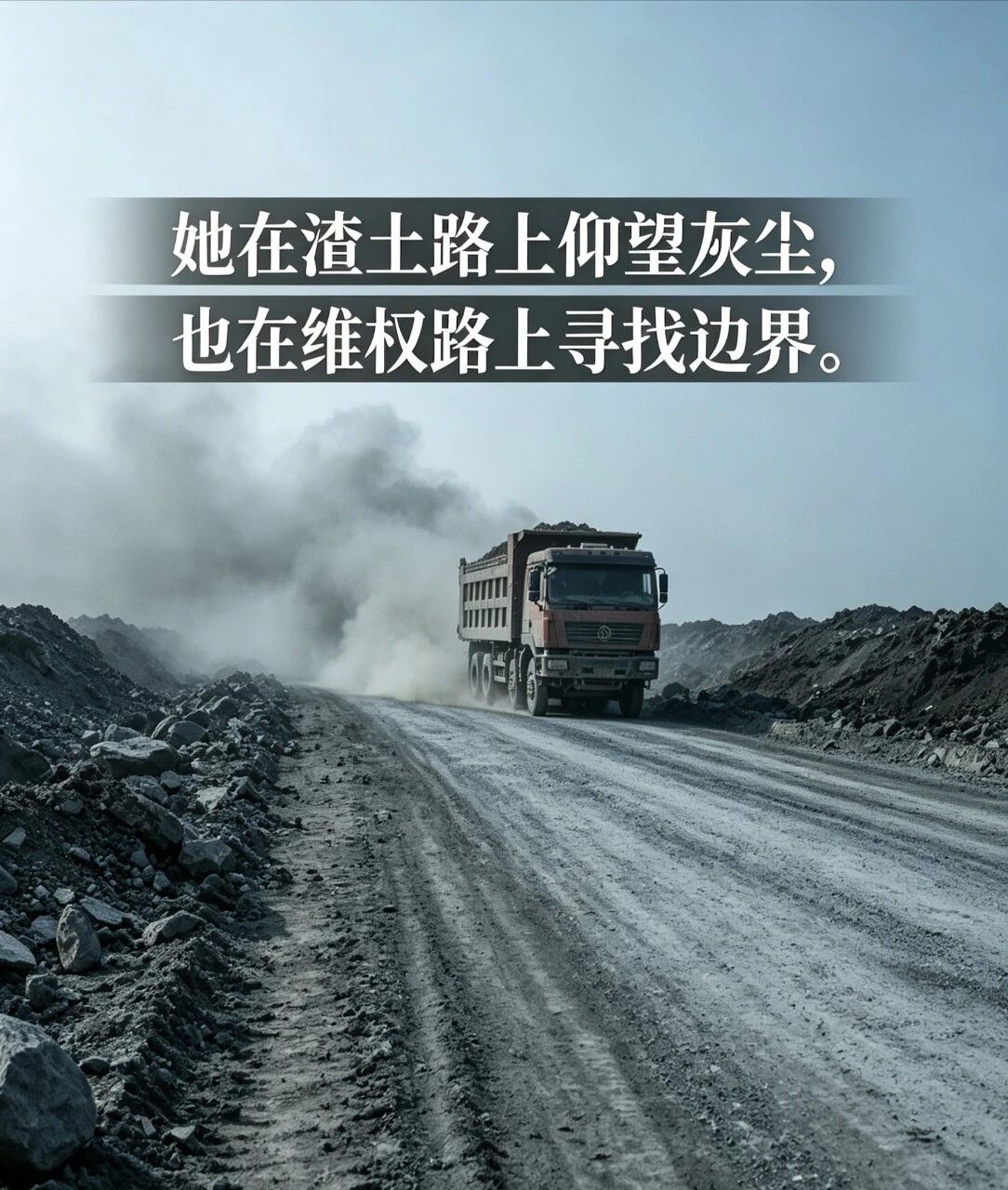
In order to stop the continuous disturbance of the population by the slag vehicle, Zhou Xiao Lan stopped the vehicle in the slag traffic section and consulted the construction party. Three agreements were reached with the three agencies, and three agreements were signed on noise and dust disturbance. The text of the agreement states that the damage caused to the family ' s life by noise and dust from the traffic in the vehicle is compensated by the construction party, which in all three cases paid a total of $10,500. The agreement also refers to the relevant environmental laws, which state that victims of pollution are entitled to claim damages. At that time, it appeared to both parties that this was a voluntary civil compensation agreement.
It was not anticipated that the compensation agreement signed by the two parties on a voluntary basis, together with a total of over $10,000, would in the follow-up be the central evidence of allegations of extortion by Zhou Xiao Lan. In August 2019, Zhou Xiao Lan was held in criminal detention for extortion. The case was brought to trial and in July 2020 the People ' s Court of Ninggang City handed down a first instance judgement, which found Zhou Xiao Lan guilty of extortion and sentenced him to one year ' s imprisonment and two years ' probation.
Having obtained the first-instance verdict, Zhou Xiao Lan was unable to accept the result and appealed to the Changsha City Intermediate People ' s Court. In December 2020, the second court of the Changsa Chamber held a hearing in absentia, ruled on the appeal and upheld the conviction. The maintenance of the original text meant that Zhou Xiao Lan was on the criminal record. The original purpose of the defence of rights, in exchange for criminal convictions, is a huge gap, which has allowed the case to begin to gain public visibility.
Zhou Xiao Lan did not give up.
The dilemma of the rights-based border: Zhou Xiao Lan, a long game of pollution from a villager and dirt
The noisy dirt truck travels day and night, the dust is constantly covering the house and noise is piercing the walls, not a bridge in a movie, but a reality that Ran Zhou, a rural Hunaning, has faced day and day. In order to protect the living environment at the door of the home, she repeatedly complained, negotiated with the construction party, and then became a regular environmental defender, which eventually turned into a judicial saw-saw that lasted for many years. Behind the case is the proposition that society as a whole is constantly exploring: where is the boundary of negotiation when the rights and interests of ordinary people are violated? The line between legitimate defence of rights and extortion should be clarified.
Zhou Xiao Lan lives in the street of the village of stone pits on the outskirts of Ning township, and houses are located close to the road necessary for the transport of the dirt. As work began on the perimeter, a large number of slag transport vehicles travelled round the clock and round the clock. The passage of heavy vehicles has brought about constant vibrations and sensations, with dust that fell on windows, the ground and the clothes that were dry. Long-term noise and dust contamination seriously interfere with normal rest and daily life for the family.
When pollution problems were identified, Zhou Xiao Lan first chose a formal channel of complaint. She has repeatedly called the Government Service Hotline 12345 to inform the environmental, urban and other functional departments about the problems of debris and dust pollution, and hopes that the authorities will come forward and control the vehicles and stop the persistent environmental abuse. However, after several complaints, the situation of the slag transport as a disturbance has not fundamentally improved and the pollution continues. The administrative means of defence had limited effect and life was still in a state of crisis, and Zhou Xiao Lan began to try to communicate directly with the transport and construction companies.
In order to stop the continuous disturbance of the population by the slag vehicle, Zhou Xiao Lan stopped the vehicle in the slag traffic section and consulted the construction party. Three agreements were reached with the three agencies, and three agreements were signed on noise and dust disturbance. The text of the agreement states that the damage caused to the family ' s life by noise and dust from the traffic in the vehicle is compensated by the construction party, which in all three cases paid a total of $10,500. The agreement also refers to the relevant environmental laws, which state that victims of pollution are entitled to claim damages. At that time, it appeared to both parties that this was a voluntary civil compensation agreement.
It was not anticipated that the compensation agreement signed by the two parties on a voluntary basis, together with a total of over $10,000, would in the follow-up be the central evidence of allegations of extortion by Zhou Xiao Lan. In August 2019, Zhou Xiao Lan was held in criminal detention for extortion. The case was brought to trial and in July 2020 the People ' s Court of Ninggang City handed down a first instance judgement, which found Zhou Xiao Lan guilty of extortion and sentenced him to one year ' s imprisonment and two years ' probation.
Having obtained the first-instance verdict, Zhou Xiao Lan was unable to accept the result and appealed to the Changsha City Intermediate People ' s Court. In December 2020, the second court of the Changsa Chamber held a hearing in absentia, ruled on the appeal and upheld the conviction. The maintenance of the original text meant that Zhou Xiao Lan was on the criminal record. The original purpose of the defence of rights, in exchange for criminal convictions, is a huge gap, which has allowed the case to begin to gain public visibility.
Zhou Xiao Lan did not give up. For many years, she has continued to collate evidence and to write material, to file a complaint with the Hunan Provincial High People ' s Court, insisting that her actions constitute a legitimate civil claim after environmental pollution and do not constitute the crime of extortion. The process was long and arduous until December 2022, when the Hunan Provincial High People ' s Court, after a review, found that the original verdict had been wrong, instructed the Changsha City Intermediate People ' s Court to reopen the case.
The news of the High Court ' s order to reopen the case, which occurred in the case of the ordinary villagers of Hunaning commune, quickly triggered a wide-ranging debate in the legal community and in the public opinion. A number of legal practitioners and the public have begun to focus on a central challenge: the violation of the physical integrity of citizens, the right to live and the right to live, and the negotiation of the companies that have violated the rights, the receipt of compensation for damages, when the legal defence is made, when the property is deemed to be obtained under duress and constitutes extortion.
Many believe that environmental pollution is objective, that Zhou Xiaolan's house is affected by the noise dust of the slag, that the construction party itself is responsible for the violation and that the parties voluntarily enter into a compensation agreement, which is the subject of a civil dispute. However, according to another view, the conduct of stopping a car was per se coercive in nature, as a condition for obtaining money and in line with the constituent elements of the crime of extortion. Two distinct views also mirror the complexity of such cases.
The case is back on the horizon as the public expects a fresh trial that will clarify the dispute and lead to a new decision. The Changsa House indicated that Zhou Xiao Lan had been informed by telephone and by text that he had been present at the hearing, but that Zhou Xiao Lan had refused to appear without good reason, and the court finally ruled that he would withdraw his complaint.
This decision has once again provoked differences between the parties. Zhou Xiao Lan strongly contested this decision. Her argument is that, under the law of procedure, the summons to sit should be served on a paper-based official document, that she only accepts the validity of the service of the paper summons, that she has never received a written summons from the court, that she does not accept electronic notice such as a telephone or a text message, that the service is not in accordance with the law and that she does not refuse to appear for no reason.
After the decision, Zhou Xiao Lan did not stop the complaint, continuing to file the complaint with the court, insisting on the application for annulment of the decision to withdraw the complaint, and hoping that the case would be reopened and the acquittal judgement obtained. The case has reached a new impasse and the controversy has not yet subsided.
Under our legal framework, citizens have the right to an environment, to consult with the infringers in order to compensate for violations of their civil rights and to file complaints to the executive and civil proceedings before the courts, which are the rights conferred on every ordinary person by law. However, the exercise of rights exists at a border and, if illegal means are used, such as threats and threats, to force the demand for property that is far beyond the actual loss, it may be possible to touch the criminal code line and constitute extortion. In reality, the borders between the two are often delicate.
Many grass-roots people face similar difficulties when they defend their rights. When pollution, abuse, administrative mediation and the need for a negotiated settlement with the tort firm are ongoing, it is difficult for ordinary people to grasp the legal red line with precision. When complaints are unsuccessful, self-help measures such as stopping cars and blocking construction can easily slip from civil rights to criminal suspected situations. The Zhou Xiao Lan case is a very representative example of such dilemmas.
Over the years, a large number of similar cases have reminded society that self-help does not mean that any means can be used. The fact that a violation has been committed does not mean that compensation can be sought in any way and without limitation. But at the same time, the public is also thinking: when ordinary people ' s homes are constantly polluted, normal channels of complaint are difficult to resolve, and what safe and effective avenues are available to ordinary people to defend their rights?
Zhou Xiaolan's game is already more than her personal gain and loss. The law balances two values: protection against extortion in the name of the defence, protection of the right of citizens to legitimate defence, and the possibility of placing ordinary persons legally defending against criminal risk.
The meaning of justice lies not only in the processing of individual cases, but also in the adoption of decisions that provide a clear and predictable standard of behaviour for society. It is expected that similar cases will clarify the boundaries between rights and crimes and that the population will be made aware of what can and cannot be done when it is violated. (c) To provide access to safe and viable means of defending the rights of ordinary persons who have been subjected to violations, without the risk of criminal accountability on their way to such protection.
Zhou Xiaolan's complaint is still pending. The story of the villagers fighting pollution also becomes a mirror, reflecting the reality of the rights struggle at the grass-roots level, and leaving it to the legal community and society at large to think for a long time.
The author will follow the progress of the complaint in this case on an ongoing basis.
Original source
- Original title
- 维权边界之困,周小兰一个村民与渣土污染的漫长博弈
- Original author
- 啊奇小哥
- Source account / outlet
- 微信公众号“啊奇小哥”
- Originally published
- 2026-10-20 07:31
- Content treatment
- Republished
- Original article
- View original ↗
- Published by China Focus
- 会员发布
Article discussion
Verified members can discuss this report publicly and manage their own content.
Checking member sign-in status…