
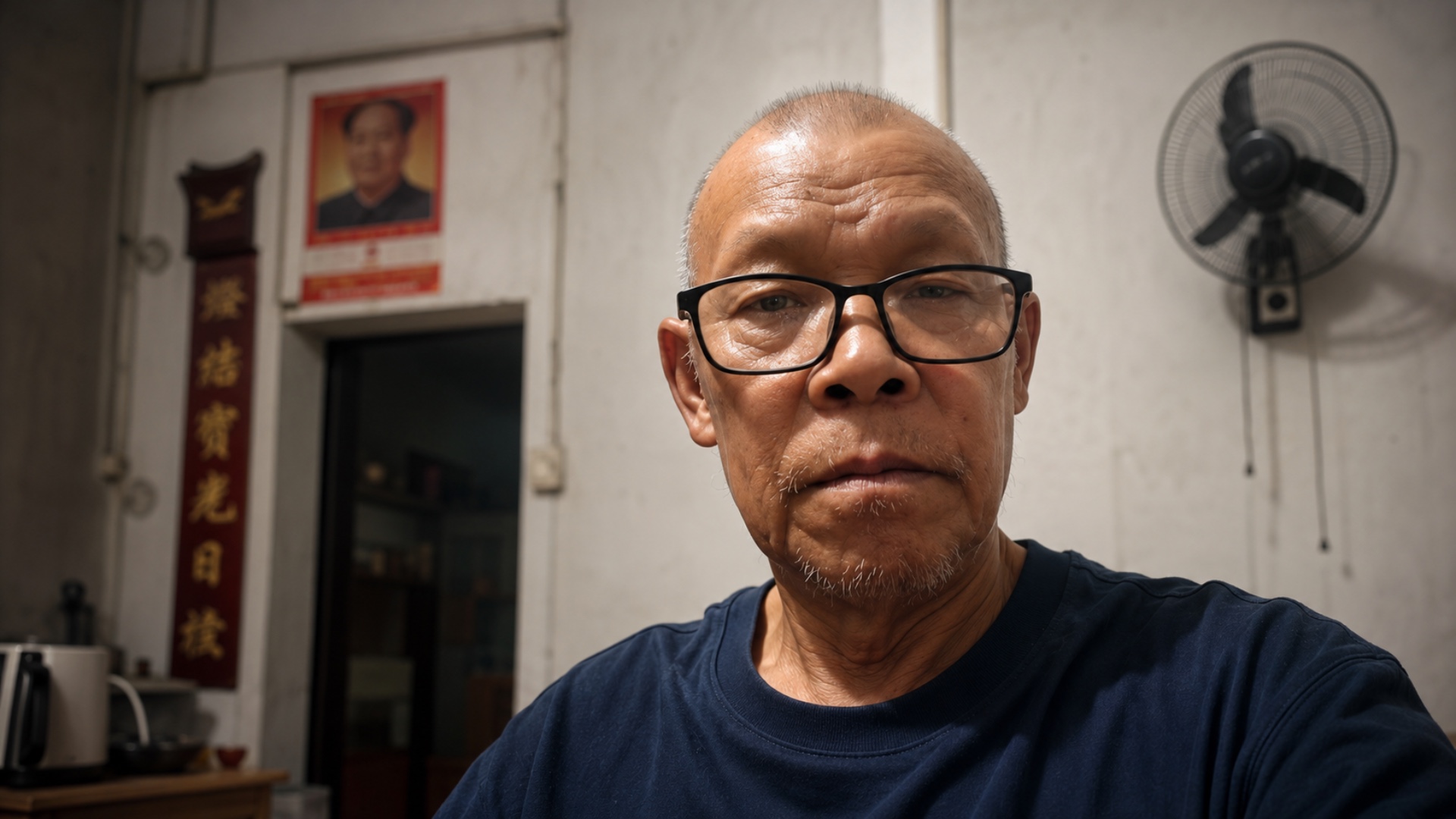
In the analysis of contemporary grass-roots governance and judicial practices, historical legacy-related rights complaints are rare; however, a criminal verdict in the city of Wuhan, Hunan province, against teachers who retired from the Seventh Century, in a very rare and cruel way, tear off the darkness of local administrative authorities and grass-roots judicial organs who have joined hands to capture the rights defenders.
The former Wuhan County Stone Center primary school teacher Zhou Feng Hong, forcibly dismissed from public office after a family planning policy more than thirty years ago, became the victim of the era. Since then, he has embarked on a difficult path for decades to defend the rights of the Wuhan City government and seek relief according to law. It is shocking that the local government has not only failed to properly solve this historical persecution, but also reversed the dictatorship machine, putting in place a poverty relief fund held by local officials, forced marriage to the over seven-year-old, seriously ill elderly, and imprisoned him for "seeking a crime". This case is not only a brutal violation of the principle of criminal law, but also a modern "must have" judicial persecution created by the
Source of Political Persecution: “Public Deprivation” and the Crisis of Survival
The tragic origin of the case must be traced back to the outbreak of the family planning movement in the late 1980s. In 1987, Zhou Feng Hong, a people's teacher, was relentlessly dismissed from public office by the Wuhan County education system, deprived of teaching rights and dependent on the survival of teachers' preparation and economic resources.
During that particular historical period, a paper expulsion decision meant that a person and his family were completely marginalized in the system of social collaboration. Zhou Xiaobo fell instantly from a respected intellectual to a marginalized underlying society without income and security. This was not just an administrative punishment, but also a devastating blow to the basic rights of a citizen to survive and work.
With the progress of the times and the gradual improvement of the rule of law of the country, the over-treatment and historical legacy problems caused by family planning should be given human care and reasonable amendments within the policy framework. Nevertheless, during the decades that followed, Zhou Feng Hong, several attempts through the formal channels to the Wuhan Municipal Government and the Education Bureau to reflect on the issue, demanding the implementation of basic life security. This constitution gives citizens the legitimate demands, but gradually evolved into the "instability factor" in the eyes of the local government, which buried the root of its later more brutal judicial persecution.
2, Absurd accusations: Corrupt officials detained and defended the rights of innocent elderly
In order to thoroughly address Zhou Feng, the “senior visitor”, the local administration began to look for breakthroughs to criminalize it. Eventually, they turned their eyes to the civil relief funds issued to it by the government.
The original judgment and the second trial judgment determined that Zhou Feng Xiaoping, when requesting funds from the local government offices, was involved in a "hard deal" act involving a sum of up to 50 thousand yuan, and thus determined that he subjectively had "seeking stimulation, leaked emotions" as a provocative HIV accident, constituting a provocative viral crime.
The core bank transfer records of the office show that the actual amount transferred to the Zhou Feng Macau account was only 24,000 yuan. So, the original judgment determined the "50,000" amount involved in the case, where did the 26,000 yuan difference go?
The truth is striking: after the local disciplinary committee's later verification, in this 50 thousand yuan of funds used to rescue the difficult people, the former armed minister of the city of Wugong, who used his position, captured and hijacked 12 thousand yuan of them; another 14 thousand yuan of funding gap has been a mystery to date.
This is an extremely absurd and wicked logical chain: the government allocated 50,000 yuan to fulfill the rescue duties, and local corrupt officials used the power to “take the goats out” and seize the bulk of the pocket. After the incident, in order to cover up the scandals of officials suspected of crimes and corruption, the local government and the judicial organs of the city of Wuhan moved the trees, took the public funds and imprisoned officials without the ability to threaten violence, for seven years and in the head of old teachers suffering from various serious disorders, the lawful defense of their rights and receiving government relief forced as a criminal crime.
Third, systemic judicial collapse: complete process violation and deprivation of the right to defence
In order to package the "official corruption case" into the "mass provocation case", the local judicial organs must thoroughly tear off the disguise of the rule of law. From criminal investigation, review prosecution to court trial and appeal review, this case has shown a systematic collapse and violation of law in the procedure.
First, in the investigation and prosecution phase, the Wugong Municipal Public Security Bureau played a play of power in the appeal, detention and arrest procedures, and there was obvious criminal document counterfeiting and time-refunding behavior. For example, the Criminal Detention Decision issued in 2019 was never practically enforced, releasing logical contradictions; when the arrest was announced in September 2021, the execution time on the arrest notice was rebranded to July
- This arbitrary manipulation of the judicial procedure completely deviated from the basic requirements of procedural justice. The prosecutor's officers were more suspected of forcibly confessing guilt during the proceedings, and after the case was returned due to insufficient evidence, were forcibly prosecuted by external force interference, making justice flow independent in form
Secondly, in the trial phase of the court, the first trial of the people's court of the city of Wuhan has evolved into a miserable "walk through". Conservative estimates show that more than 70% of the key evidence in the whole case has not been publicly confirmed in the trial, and the chief judge is directly credited as the basis of the case. Worse, the chief judge has openly asked the complainant to sign Zhou Gongong on an empty paper, and there is a major suspicion of falsification of evidence. For the key witnesses presented by the complainant and his advocates to appear in court, the court has rejected a number of cases without justified reasons, and has forcibly deprived the defendant of the legitimate certification rights.
Finally, the evil effects of local justice injustice were enlarged unlimited in the second trial and appeal phase. In the second trial of the People's Court of Zhou Yang City, in the face of such a major procedure violation of law and fact dispute, publicly violated the provisions of the Criminal Procedure Law on public trial, adopted a closed-door decision, directly deprived Zhou Fongong of his right to defend. In the subsequent process of almost three years of appeal review, Zhou Fong Court deliberately delayed, rejected material negative attitude, until June 2026 hastily issued a notice of rejection of the appeal. For Zhou Fong Hong submitted 14 reports including bank flow, discipline feedback, enough to overthrow the key new evidence of the judgment
4: The Humiliation of Torture Criminal Law: The Administrative Shadow of the Criminalization of Letters to Defend Rights
The essence of the Zhou Fengong case is a vicious abuse of criminal justice tools after the excessive expansion of grassroots administrative power.
The Constitution clearly stipulates that citizens have the right to file a complaint, complaint or indictment to the relevant state organs for the violations of the state organs and state staff. Zhou Feng Hong, a victim of the policy of planning the life of thirty years ago, has long reflected on the issue of education preparation and survival to the government, which is essentially a legitimate extension of the citizen's supervision and appeal rights granted by the Constitution. Even in the course of a letter to defend the rights, due to emotional agitation or inactions of local officials, individual actions or controversies have been caused, and should never use the "ultimate means of social control" to punish the criminal law.
Criminal law, as the last line of defense of society, should beined as humble as it should be. However, in Wuhan, the rule of law, the local government, in order to the goal of defending the right "zero" and eliminate the voice of criticism, roughly crossed the boundaries of administrative violations, the citizens seek administrative remedies, and compelled to evaluate the behavior as a provocative crime. This "can not solve the problem, solve the problem of the people" black evil governance logic is an open provocation to the construction of the rule of law in China.
Conclusion: Justice should not be suffocated, higher judicial authorities urgently need to intervene to correct errors
Zhou Fongong, an old teacher who devoted his youth to the primary school in the center of Stonehenge, not only failed to enjoy the due dignity of the late years when he entered the rare years, but instead carried the bad reputation of "criminals", endured the torture of multiple physical diseases, and struggled hard in the mud of justice in prison.
The dangers of this case have long surpassed the tragedy of the private family. It raises a heavy question to the whole society: when the local government’s life-planning persecution becomes a trace of history, when the corrupt greed of local officials erodes poverty alleviation funds, who will preside for justice for the vulnerable victims of the masses? If the local administration and the judiciary are united, and the advocates are imprisoned by means of fake accounts and counterfeit cases, then the dignity of the law will be wasted.
Given that the middle-level people's courts of Zhou Yuan City have lost their self-correcting functions and become the shield of local protectionism, Zhou Yuan has now submitted 14 new materials including bank iron certificates to the High People's Court of Hunan Province, the Supreme People's Court and the Supreme People's Procuratorate.The public opinion is strongly calling for the upper-level judicial organs to break the siege of local power, directly investigate this case or order a re-trial in accordance with the law, thoroughly clear the corruption of officials' claims, and set out to persecute the victims of Zhou Yuan a blunt, and let the light of fairness and justice shine into this land covered by the shadow of justice.
Article discussion
Verified members can discuss this report publicly and manage their own content.
Checking member sign-in status…