
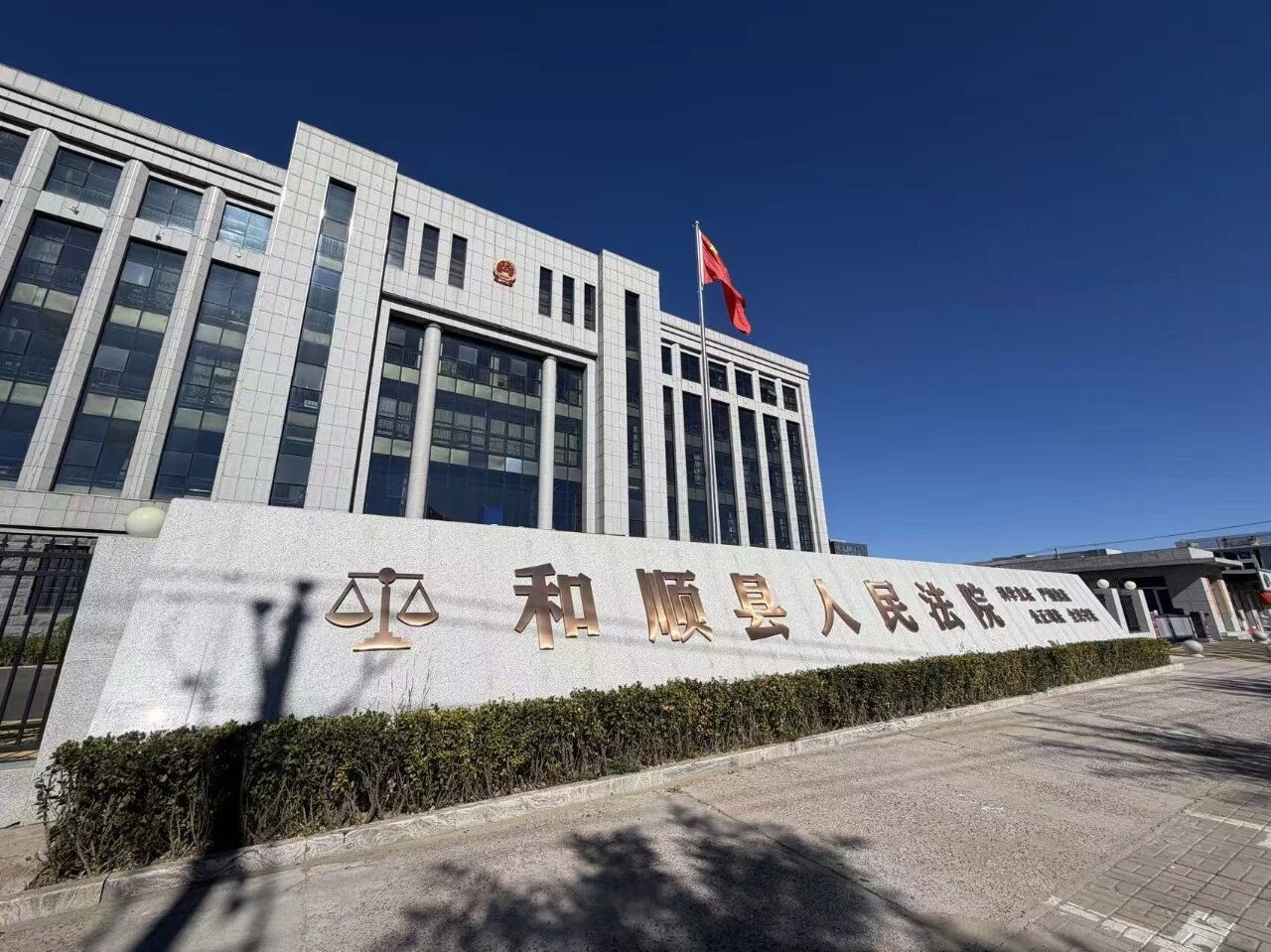
The Li Yangfung fraud appeal before the Jincheng Intermediate People ' s Court sitting with the Shun District Court is a cross-section of criminal cases involving business acquaintances, referrals, and economic exchanges. The court of Suyang sentenced the defendant to 10 years ' imprisonment for fraud and a fine of $100,000. The accused contested the appeal. The case is one of many levels of investigation and trial jurisdiction, determination of unlawful occupation, admissibility of evidence, and sentencing measures. It also reflects the difficult issues that have long been explored in judicial practice: the lack of results in the case between acquaintances, how to draw a line between civil disputes and criminal fraud and achieve a organic harmonization of legal, social and political effects.
Case retroactive: four allegations, dispute over requests between acquaintances
The indictment of the first instance of the People ' s Procuratorate of Suyang County alleges that Li Ying Feng has, after helping Li Choon to secure his bail, commissioned a defence and received money from several victims for official work with the Transcripts of White ' s military niece, in the amount of $749 million. After the first instance hearing at the People's Court of Suyang County, three pieces of jade were found to be unconfirmed because they had only a single victim's statement, and the amount of the fraud was finally found to be 74.46 million yuan, “particularly large”, and Li Zhangfeng was sentenced to 10 years' imprisonment and a fine of 100,000 yuan for fraud.
The business community, which had been with the victim Lee Yao-hyun for more than 10 years, had been the head of the Western Chamber of Commerce in the Western Mountains, and had worked together in Taiwon on the project of the five Mount Buddha ' s Shinikou Brigade, which had set up several companies. Li was sentenced by the Lu Liang judicial authorities for the alleged unlawful taking of public deposits.
(a) The Li Yingfung case, which is based on four facts, was initiated by a friend: the first 80 000 yuan was committed before Li was held in criminal custody; Second 41.99 million yuan is paid by Lee's sister, Li Yae-xia; Third, $100,000 from Zhao Chihua, a mutual friend of both; The fourth, 150,000 yuan from the White Army, is requested to be placed in official positions with the State Enterprise for her niece.
During the first instance trial, the family of LEE Yingfung had already paid in full and in excess of the amount in question, and written letters of understanding had been issued by the four victims. However, the first instance judgement did not take into account the defence ' s defence of innocence, nor did it establish the circumstances of the confession, and the case was sentenced to 10 years ' imprisonment in a comprehensive manner.
Procedural arguments: legality of jurisdiction as the primary ground of appeal
Jurisdictional issues are the main focus of the proceedings of the second-trial defence in this case.
The defence submitted that, according to the Order of the Ministry of Public Security, reworded [2000] 10, it was made clear that the place of criminal outcome in ordinary fraud cases was the place where the suspect actually acquired property, rather than the place from which the money of the victim was transferred and the place of residence of the victim; Except for the place of fraud, place of actual acquisition of property by the suspect and place of residence of the suspect, the remaining regional public security organs have no jurisdiction and have only the duty to receive and transfer them. In this case, Li Zhongfung, a domicile of the city of Hebei, usually residing in Taiwon, entered all the funds in question into the bank account opened in Taiwon, and all the money was received, disposed of and used in Taiwon. The county of Suyang is simply the place where the victims live and where the funds are transferred, and it is neither the place of action nor the place where the property is actually acquired.
The defence further submits that the victim ' s micro-clinic records of the chat show that he had already reported the incident to the Hiranyang Road Investigation Brigade of the Taiwon City Public Security Bureau as early as December
- In accordance with the Rules on Procedure for Criminal Cases before Public Security Organs, several organs have jurisdiction over them, which is the jurisdiction of the public security organs that were initially seized. Even if the Suyang County Public Security Bureau had jurisdiction, the case should have been handled by the small shop of the Taiwon City Public Security Bureau, which had been previously reported. The fourth case of a white army being fraudulently committed was first taken up by the police, who also took over from Taiwon City's small shop, and was then transferred to the former Yeung County Public Security Bureau.
The first instance judgement responded to this: the first three factual offences were committed in the Suyang district and the fourth was lawfully referred by the Taigen police. This finding was strongly contested by the defence. The defence argued that the place where the victims were transferred was directly equivalent to the place of fraud and that it was in conflict with the special batches of the Ministry of Public Security specifically devoted to fraud; Telecommunications network fraud may result in the victim ' s location as a result of the crime, but the case is a personalized under-the-line, not a telecommunication network fraud, and cannot be applied to the rules governing such cases. The defence submits that, in the absence of a decision on the designation of jurisdiction issued by a higher authority, the Uruyang County Public Prosecutions Act does not have lawful jurisdiction over the case and is a significant procedural flaw and should be remitted for a retrial.
Procedural fairness is a prerequisite for substantive fairness. (a) Individual offences, which are punishable by the individual accused; Once the violation of the law has not been corrected, it is the entire system of criminal procedure that is at the expense of the right of every citizen to a fair trial before a competent court.
Entity contest: the existence of an “illegal occupation” and how the boundaries of the penal population are managed
At the substantive level, the central controversy in this case is whether Leung Feng has the necessary unlawful possession purpose for the elements of fraud, which is also a key yardstick for distinguishing between criminal fraud and civil economic disputes.
(a) The defence, citing the main thrust of the Supreme People ' s Court ' s criminal trial decision in case No. 1342, raised the issue of whether or not the acquaintances were frauds, focusing on two points: whether the perpetrator had evaded the restitution of property, hidden property, held funds and squandered money; Second, there was a civil remedy for the victim and if the damage could be fully recovered through civil proceedings, the principle of criminal humility should be observed and it was not appropriate to upgrade it to a criminal offence.
Defence has presented several arguments to deny unlawful possession
Defence has presented several grounds to deny unlawful possession
First, for 41.9 million dollars, he offered to borrow before the victim had officially filed a criminal case, which, although unilaterally added to the victim ' s use, proved that he was willing to pay back his debt. The family has actively returned the full amount after the incident, and several victims have given an understanding that they have the capacity to repay the money and that there is no subjective intention to refuse possession. The first instance judgement found that the debit was a self-relief for the victim only, which was not admitted by the defence.
Second, there are multiple transactions of mixed business cooperation, requests for advice and multiple legal relationships for borrowing. The first $800,000 transfer took place one year before Lee was detained, with the transfer being noted as a loan, and there being no objective condition for the taking of a warranty on remand. The company ' s business information, chat records, evidence of project cooperation submitted by the defence were intended to establish that there was a genuine project cooperation between Li Yingfung, Li Xiaodun and Liu Xiaotsi, and that it was not simply a call for help. The first instance judgement, however, did not accept that part of the evidence, finding that Liu and Li Shih-soo were unaware of each other, and the defence found that the facts were in error.
Third, 100,000 won from Zhao Zhao Zinghua, and only the victim ' s unilateral statement confirms that he was asked for it by Li Zhang Feng and that it was a single witness; Zhao Chihua never asked Li for the payment for a long time after the call. The fourth incident, the White Army received $150,000 and Li Ying Feng received money, and did communicate with the outsider, Zhui, and sent his curriculum vitae, in a manner consistent with the law; The subsequent failure to refund the money was partly due to the sudden criminal detention of Li Yingfung and the loss of objective conditions for communication and fund-raising.
The defence also stated that Li Yingfung had not absconded with money and that he had also been in contact with the Beijing Public Security Police before being brought to justice, had voluntarily informed him of his address and was willing to cooperate with the investigation and should have been found guilty of surrender. The first instance court found itself not guilty on the grounds that it had not surrendered voluntarily and that it had not given the truth after its appearance, which was a matter of great disagreement between the two parties.
The prosecution held that the statements, transfers, chat records of the victims were mutually corroborating, that the money received by Li Ying Feng in the name of doing his job was heavily used for company operations, household expenses and that the request had not been substantially completed; The fact that the statement was made at the victim ' s request cannot negate the fact that it was false, the subjective intent of subsequent illegal possession, and is not an ordinary civil dispute, and should be punished for fraud.

Controversy of sentencing: multiple extenuating circumstances, and whether the 10-year sentence corresponds to the penalty of criminal liability
The first instance judgement found the amount of fraud to be $746 million, which was particularly significant, and the statutory sentencing period was more than 10 years ' imprisonment. Although extenuating circumstances such as full restitution, full victim understanding and lack of prior convictions were confirmed, the penalty was a direct sentence of 10 years and a fine of $100,000.
The defence appeal submitted that, even if the court of second instance found the charges guilty, the circumstances of the case, which were statutory and discretionary, should be evaluated in extenso: the first offender had no prior convictions; (a) Full overpayment; (a) The written understanding of all victims, and the contradictions have been substantially resolved; The case originated in a commercial request between acquaintances, unlike a malicious fraud by a stranger, which is relatively limited in social harm; There are also voluntary circumstances to be confirmed. In conjunction with the rules for the enforcement of sentences in Shanxi province, the return of compensation, surrender and guilty pleas can significantly reduce the base sentence, and the multiple extenuating circumstances and the excessive severity of the sentence at first instance have not been sufficiently considered to reflect a generous and proportionate criminal policy.

Juristical reflection: towards political, legal and social coherence
The Li Yungfung case is a typical case of cross-referenced convicts. In judicial practice, this type of case is a test of judicial wisdom: both the criminal fraud of false connections, the fraudulent use of money and the careful screening of failures in commercial cooperation, failure to comply with the request, failure to perform civil acts, and the simple fact that civil breaches cannot be directly criminalized.
The principle of the humility of criminal law requires that criminal means be used with caution in disputes where there is a possibility of civil redress. A criminal sentence that is affordable must be applied not only in the correct sense of the law, but also in a way that is consistent with political, legal and social. (a) The legal effect of requiring a rigorous examination of all evidence in the case, a thorough examination of the jurisdictional process, the purpose of unlawful possession, the chain of evidence and the circumstances of the sentence, full respect for and careful consideration of the defence opinions presented by the defence, and a careful determination of the facts in question in favour of the accused; (a) Political effects, requiring the equal protection of private economic agents, clarifying the boundaries between economic disputes and criminal offences, preventing criminal interference in civil economic transactions and upholding the authority of the rule of law; Social effects require that the judgement be justified, that the ordinary people feel fair and just, that the case be closed and that the conflict be resolved in substance, and that the outcome be widely shared by the public in society.
The loss of several victims in this case has been fully recovered and an understanding has been given and social tensions have been resolved. The second instance court will be concerned about how to conduct a comprehensive review of procedural defects and factual evidence, and the scale of sentences, raised by the appellant and counsel, and how to clarify the line between guilt and non-incrimination in the context of a familiar request, both in defence of the legitimate property interests of the victim and in adherence to the criteria for the determination of criminal offences.
Original source
- Original title
- 李彦峰诈骗案 | 熟人请托型诈骗引多重争议 程序合法性与罪刑适配成焦点
- Original author
- 卫国说说
- Source account / outlet
- 微信公众号“卫国说说”
- Originally published
- 2026-10-24 06:30
- Content treatment
- Republished
- Original article
- View original ↗
- Published by China Focus
- 会员发布
Article discussion
Verified members can discuss this report publicly and manage their own content.
Checking member sign-in status…