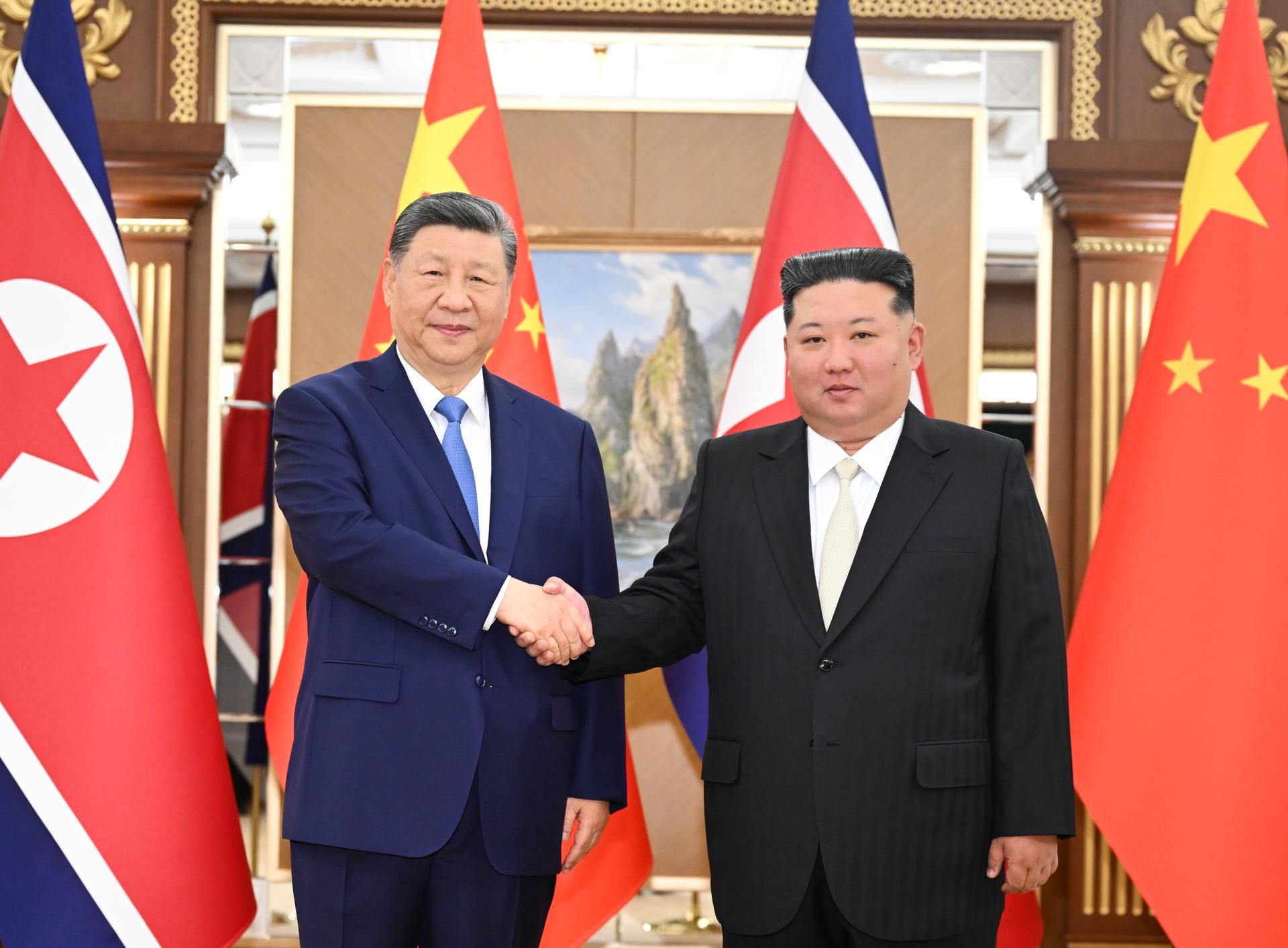
The Taiwan Strait has an additional sound from Pyongyang today. The Korean official news agency published a commentator on international issues in the 7 October newspaper Kim Myung-chul, openly endorsing Beijing's “one China” claim and describing United States sales to Taijun as an act of creating a regional crisis. This was the public statement that the Taiwan Sea issue was once again included in China's strategic collaboration, following the visit of Xi Jinping to Pyongyang last June, where Kim Jong-un clearly supported China's so-called “core interests”.
The article was directly triggered by the fact that Taiwan had recently received the first United States-made F-16V Block 70 aircraft. Kim Ming Chul called the United States action “a bomb in front of someone else's house” and warned Washington to reconsider its readiness to “positively confront” China over the Taiwan issue.
原始来源 · en.yna.co.krN. Korea backs China on Taiwan, blames U.S. for regional instabilityen.yna.co.kr ↗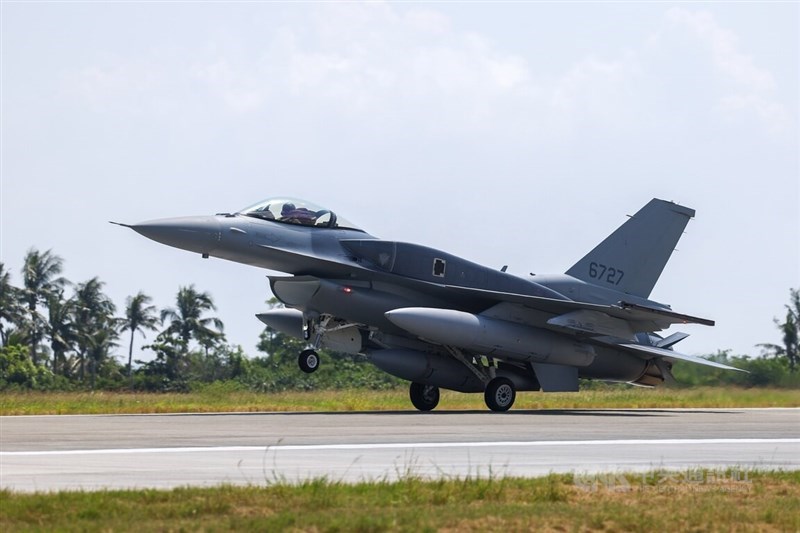
Pyongyang is no longer just talking about the Korean peninsula, but is defining the Taiwan Sea Order for Beijing
The DPRK has in the past been largely diplomatic in support of the “one-China” principle when it spoke of Taiwan. The comment further incorporates the specific United States military sales to Taiwan, security commitments and regional deployments into the criticism and claims that the Taiwan issue is entirely within China ' s domestic affairs.
This language is highly consistent with the recent Beijing propaganda campaign against Taiwan: it defines US support for Taiwan's self-defence as “interference in internal affairs”, diverts increasing military pressure from the causal chain in mainland China and blames the Taiwan Strait for the risks in Washington and Taipei.
It is noteworthy that the commentary also claims that the United States sold over $39 billion to the Tatmadaw Kyi over the past decade. This figure is from the Korean commentators themselves; Its political utility is clear — to portray Taiwan's access to defence equipment as a starting point for regional tension, rather than as part of a response to Chinese military pressure.
The political narrative of China was rapidly re-established upon the arrival of F-16V.
Taiwan received the first two F-16V Block 70 aircraft on 2 October, which was the 66 purchase plans approved in
- The Taiwan side saw this group of warplanes as part of its air defence capability, in the context of the long-term movement of SLA aircraft and warships around Taiwan.
Five days later, the official media of the DPRK issued a warning to the United States of America in the face of this delivery. This close time line has made the issue of the Taihai more visible in the open strategic discourse following the warming of relations between China and the Democratic People ' s Republic of Korea.
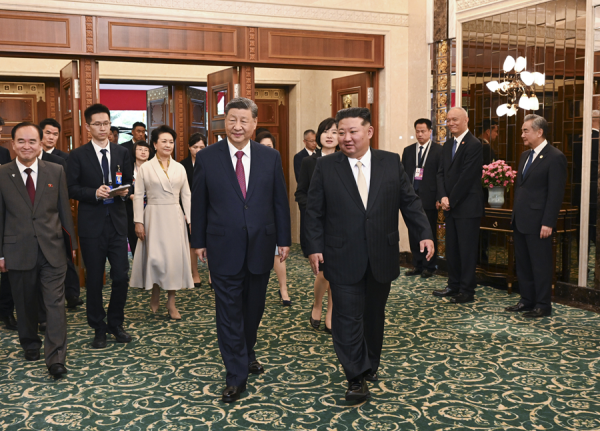
During Xi's visit to Pyongyang in June this year, Kim Jong-un expressed “full support” for the position of the Communist Party of China and the Chinese Government in upholding the “core interests” and “one China” principle. The two sides also announced enhanced strategic communication and upgraded their relationship to a new strategic level.
On the occasion of the Chinese national day, 1 October, Kim Jong-un again stressed in his message to Xi Jinping that he would raise his country's relations to “a new strategic level” and that the relations between the two countries “will not be shaken by the international situation”.
Beijing got a nuclear-weapons regime willing to include the Taiwan Sea in its own security narrative
Pyongyang's statement is not about whether it means an open joint battle plan for Taiwan, but about the fact that the DPRK has taken the initiative to embed the Taiwan issue in its own narrative on United States security.
The possession of nuclear weapons and ballistic missile capabilities by the DPRK are also important variables in the security landscape of North-East Asia that can force the United States and Japan to divert military attention. Once the Korean peninsula crisis overlaps with the Taiwan Strait crisis, the United States and its allies must face two high-intensity security directions at the same time.
For Beijing, the DPRK's open stand on Taiwan could expand the narrative “this is a regional issue created by the United States”; For Pyongyang, the Taiwan position in support of Beijing also reinforces the mutual support between the Chinese and the Korean sides at the security and diplomatic levels.
The danger of this relationship lies precisely in the fact that it can create a supersonic, diplomatic and strategic pressure in times of crisis without first having to emerge from a formal treaty of military alliances.
The support between China and Russia on the core issues of each other is increasing
The same day's report also shows that Kim Jong-un reiterated to Russian President Putin his support for Russian relations and for the Russian side's war stance. The military cooperation between the DPRK and Russia has significantly deepened over the past two years; Meanwhile, relations between China and the Democratic People ' s Republic of Korea have re-heated after the Beijing meeting in 2025 and the Pyongyang summit in 2026.
Russia needs North Korea's support in the war in Ukraine; The DPRK needs Beijing and Moscow to weaken its international isolation; China, for its part, has gained the public endorsement of its sovereign narrative by two nuclear-weapon States on Taiwan.
原始来源 · reuters.comNorth Korea criticises US support for Taiwan, pledges backing for Russiareuters.com ↗The three regimes are not in full agreement, but they are increasingly providing diplomatic legitimacy, strategic space and public opinion support on their most sensitive geopolitical issues. For Xi's regime, such an external call should help to package military and political pressure on Taiwan as a “regional majority position” and weaken Taiwan's central character as a democratic society that autonomously determines the political future.
The Taiwan Sea risks are being embedded in a larger network of security powers
As Pyongyang began to publicly warn the United States not to become involved in the Taiwan issue, the Taiwan Straits were further embedded in the North-East Asian security system. What is really needed in the future is not only how many more Chinese military aircraft and ships around Taiwan, but also whether the DPRK will simultaneously create a crisis on the Korean peninsula during the tense period in the Taiwan Strait, and whether there will be more coordination at the diplomatic and military tempo in Beijing, Pyongyang, Moscow.
The pressure imposed on Taiwan by the Xi regime is therefore no longer a political and military issue between the two sides. It is being linked to each other ' s deepening strategy between the Korean peninsula, the Russian-Ukrainian war and the Central-Russian Korea. Pyongyang has already made it clear that this connection is moving from behind-the-scenes to public discourse.
Article discussion
Verified members can discuss this report publicly and manage their own content.
Checking member sign-in status…