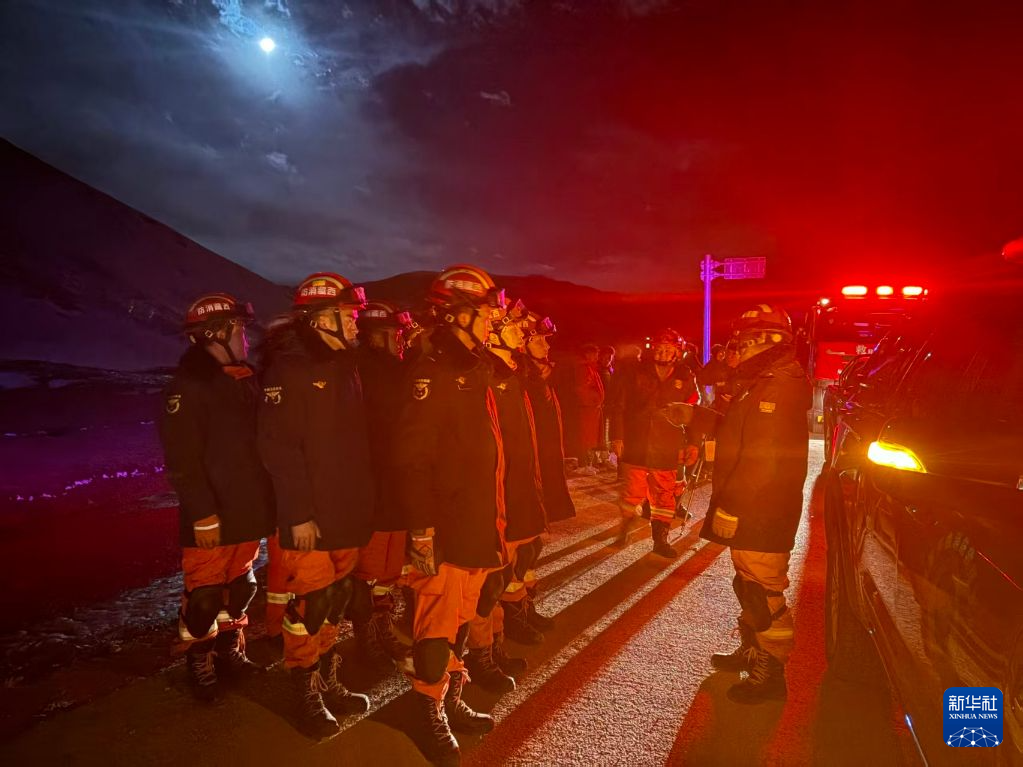
On the night of 22 October, a magnitude 7.0 earthquake struck the Baqing district of the city of Natra, Tibet. The blog is a good one.Deaths rose to 16, with 76 injuredTens of thousands of people were evacuated from damaged houses. After the disaster, doubts arose as to whether the succession of earthquakes in western China was related to underground nuclear testing. These suspicions should not be used as a crime, but they also serve as a reminder of what China is doing at the old nuclear test site in Robberpoux, how much can the international community independently monitor and what is made public by the Governments with the information.
This suspicion has a specific international political context. On 6 February of this year, Thomas Dinano, Under-Secretary of State for Arms Control of the United States Department of State, publicly charged in Geneva that China had conducted a clandestine nuclear explosive test on 22 June 2020.17 FebruaryThe United States Assistant Secretary of State, Christopher Yeo, further stated that a seismic station in Kazakhstan had recorded small abnormal signals equivalent to 2.75 at 0918 hours on the same day. He considered the signal to be in line with the explosion and suggested that China might use the underground cavity to weaken the vibration to avoid monitoring. Beijing denied the allegations and accused the United States of using them to justify the resumption of nuclear tests. The dispute has not been resolved, as there are still records of the instruments, beyond the official assertions.
Norwegian Seismic Monitoring Agency NORSARIndependently looking at the 24-day signal on 22 June 2020, an abnormal vibration was observed at a station in Kazakhstan about 740 kilometres from Robpoll, which coincided with the time indicated by the United States. Compressed waves are relatively strong and may come from explosions, but similar features may occur in natural earthquakes; Limited observation stations are not sufficient to determine the nature of the seismic source. The Comprehensive Nuclear-Test-Ban Treaty Organization also confirmed that two small 12-second intervals had been observed at close intervals, while noting that the data were not sufficient to distinguish the reasons for the events. These findings have not provided the Chinese Government with proof that there is no need for explanation, nor have they automatically allowed a clandestine nuclear explosion to take place.
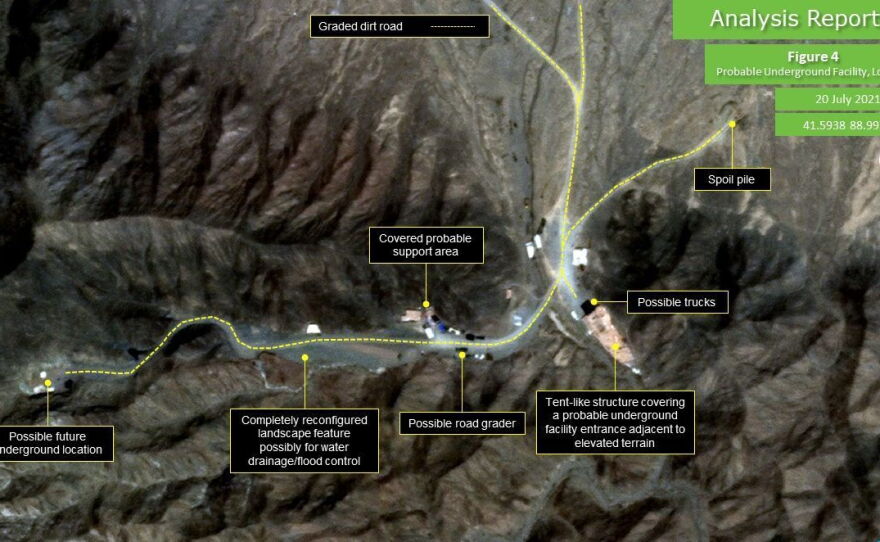
原始来源 · norsar.noNORSAR:2020年罗布泊附近异常信号独立地震学评估norsar.no ↗The low signal of 2020 was accompanied by long-term and sustained engineering activity at the Robber Test Site.American Centre for Strategic and International Studies (CSIS)In February this year, satellite imagery was compared to analysis of changes in underground tunnels, roads and other facilities near the old test site, and the public image was not considered sufficient to substantiate or rule out the allegations of the 2020 nuclear test. In 2021, the United States public broadcaster NPR reported that it had tracked the entrance to the new tunnel. The construction of nuclear facilities may be used for a variety of military or technical activities, and satellite photographs cannot in themselves be a substitute for the recording of explosions. But these investments in engineering mean that the problem is far from the imagination of several social platform accounts: a country with a nuclear arsenal continues to work at a historical test site, and the outside world certainly needs to know about the use of the project, environmental monitoring and security.
The Baching earthquake provided another set of facts that could be tested. The Chinese seismic network gave a seismic mid-point of 32.40 degrees north, 93.79 degrees east and a depth of 10 kilometres; The United States Geological Survey gave about 18 km of seismic depth.Expert analysis of China Earthquake NetworkThe seismic source mechanism is a plough fault fracture that corresponds to the tectonic background of the Tsang Plateau region.US Geological Survey explains(b) While both a nuclear explosion and a natural fault earthquake can produce an earthquake wave, there are analytical differences between the depth of the source, the energy release mode and the wave shape of the two;The nuclear explosion could trigger a smaller earthquake near the test site.The impact to date is known to be in the order of tens of kilometres. Baqing is approximately 1,000 kilometres away from the old test site in New Zealand, where a 7-degree fault earthquake was attributed directly to the low-yield nuclear explosion that was reported in 2020, and is currently not supported by seismic evidence.
This is precisely why the nuclear test investigation cannot look at only where there have been earthquakes. Serious questions must leave material that can be retried: which stations record the abnormal signals, whether radionuclide anomalies occur at the same time, when the associated tunnel and ventilation facilities are constructed, and whether the original waveform can be analysed by independent researchers. The 2010 earthquake of the Qinghai Yu tree, the 2025 Tibetan Sun earthquake and the Qing earthquake occurred in and around the tectonically active Tsinghai Plateau. The sub-totalization of these disasters into underground nuclear tests, which do not explain the different faults and aftershocks, can also deprive the evidence of the nuclear test trails that really need to be traced.
The history of Beijing, which had conducted nuclear tests in Robpo, was not in itself controversial. China conducted its first nuclear test in 1964 in Robpo, and China has been conducting a nuclear test in the first place.Publicly announced that the last nuclear test took place in 1996I'm sorry. It is now a matter of debate whether the proscribed nuclear explosions were carried out after the announcement of the cessation of nuclear testing and whether the activities involved are under adequate supervision. China and the United States have signed and have not ratified the Comprehensive Nuclear-Test-Ban Treaty; The Treaty has not yet entered into force, and the on-site verification mechanism for small-yield incidents is therefore not fully operational. The most valuable response to the international differences that have arisen in the 2020 events should be to expand transparency and substantive verification, rather than to rely on mutual condemnation among States alone.
There is a particularly critical power relationship: the actual construction and use of the nuclear test site, the internal environment and security information are controlled by the military and the Government, and the potentially affected surrounding populations are not able to obtain full monitoring data on their own. Beijing could claim that there were no clandestine nuclear explosions, but a diplomatic denial could neither substitute for on-site verification nor for long-term environmental protection responsibilities. The United States should also make its allegations publicly available and be subject to independent review of the technical grounds on which it could declassified, and the public should not be required to believe in conclusions on the sole basis of governmental capacity. Nuclear weapons were a cross-generational environmental risk and the right to know should not automatically disappear in front of national security.
More urgent now is the need for medical assistance, safe houses and winter and night accommodation for the local residents of Baqing. They should not be forced to choose between the lack of evidence of nuclear explosions and the official calibre that cannot be pursued. The fault information for the Baching earthquake should be as open as possible, and environmental monitoring, facility use and international verification at the Robber test site should be subject to ongoing inquiry. If Governments are credible in their nuclear commitments, they should produce data that can be tested by third parties. The public does not need someone to announce their final answer. What they need is a system that does not trust any centre of power and that also has the opportunity to find out the facts.
Article discussion
Verified members can discuss this report publicly and manage their own content.
Checking member sign-in status…