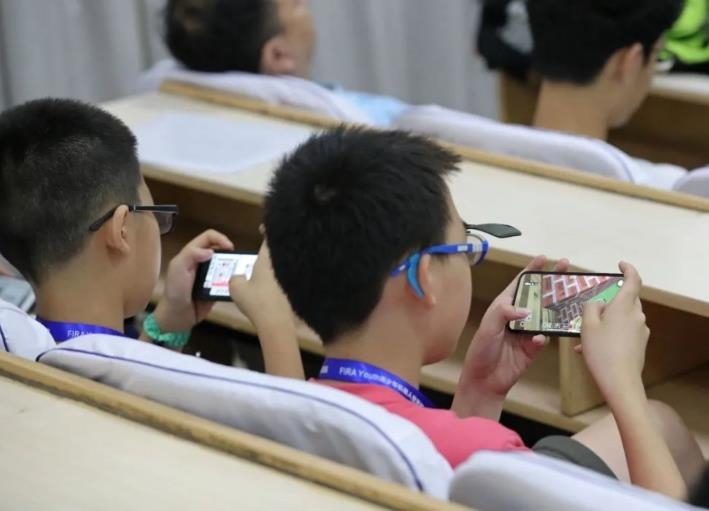
Can a child under 16 be able to meet new friends online, participate in community discussions, and use the AI chat tool? On 18 September, the State Network Office published the Regulations of the State Council on the Safe Use of the Network for the Health of Minors (Advisory Draft). On 17 October, the call for public opinion closed. This draft system, which has not yet been formally implemented, has been developed as a single State-defined service boundary, which is originally shared by families, children and the platform.
(a) Article 4 of the draft prohibits, in principle, the provision of virtual intimate relations such as the social services of a stranger network and virtual relatives and virtual partners to minors, with exceptions for minors over 16 years of age who are primarily dependent on their income from work; Article 5 requires the introduction of a juvenile model when services such as social networking, artificial intelligence that may affect the perception are provided to users under the age of
- Article 6 also requires the Platform to have the capacity to identify minors, including by listing legal identity documents, national network identification, face verification and behavioural profiling.
Why Child Protection is a Data Collection
Limiting seductive algorithms and reducing addictions are perfectly protective. The children are being held hostage by families in China and abroad. The question is not whether minors should be protected, but who controls the cost of protection: to identify each minor, the platform must have the skills to identify age and identity. To what extent can parents and children choose not to submit additional information once technology becomes a service entry?
原始来源 · english.scio.gov.cn新华社:中国未成年人网络保护草案解读english.scio.gov.cn ↗The draft also requires measures to protect personal information and to establish channels of complaint for misidentified users. But “protecting personal information” and “enhanced capacity to identify” are not natural and consistent objectives. The more extensive the collection and cross-platform connection, the greater the potential consequences of misidentification, misuse and data disclosure, the more sensitive the human face and behaviour characteristics are. The supervisory authority has the power to set standards of protection, but it cannot misperceive the ability to monitor each child as a sufficient condition for the protection of each child.
Strangers can also be the starting point for children getting help
原始来源 · english.cctv.cn新华社:重庆与各地校园手机管制措施english.cctv.cn ↗Cyber risk often occurs between strangers, but not all online strangers are dangerous. Students in remote areas may find mentors in the learning community, those who are subjected to bullying at school may first speak to people who are not known on the Internet, and children with special interests may also find partners in the network who are not in a real life. Making “socialization of strangers” a widely prohibited object makes it easier for the platform to close communication functions in the most conservative manner and reduces the risk of its own compliance risk.
A political context in the draft is equally inimical. UNOI manages not only cyber security for young people, but also the web content order. The Xi Jinping idea as a policy guide, requiring the platform to be built in a context that is consistent with officially recognized content, is in fact a different objective than protecting children from commercial algorithms. The former determines what ideas are visible, while the latter cares about the healthy growth of the child; The two are placed in one system, and child protection can easily be a reason for strengthening information hierarchies and content reviews.
The conclusion of the consultation does not mean that the new regulations have entered into force. What is truly worth remembering is the boundaries of governance it draws: on one hand, the business competition for the attention of children on the one hand, and on the other hand, the centralization of national identity, content and social access requirements. Children need not only be removed from harmful information, but also learn to judge, build relationships and develop independent ideas in manageable risks. A protection system that overstretchs the right to choose may protect order, but not necessarily growth.
Article discussion
Verified members can discuss this report publicly and manage their own content.
Checking member sign-in status…