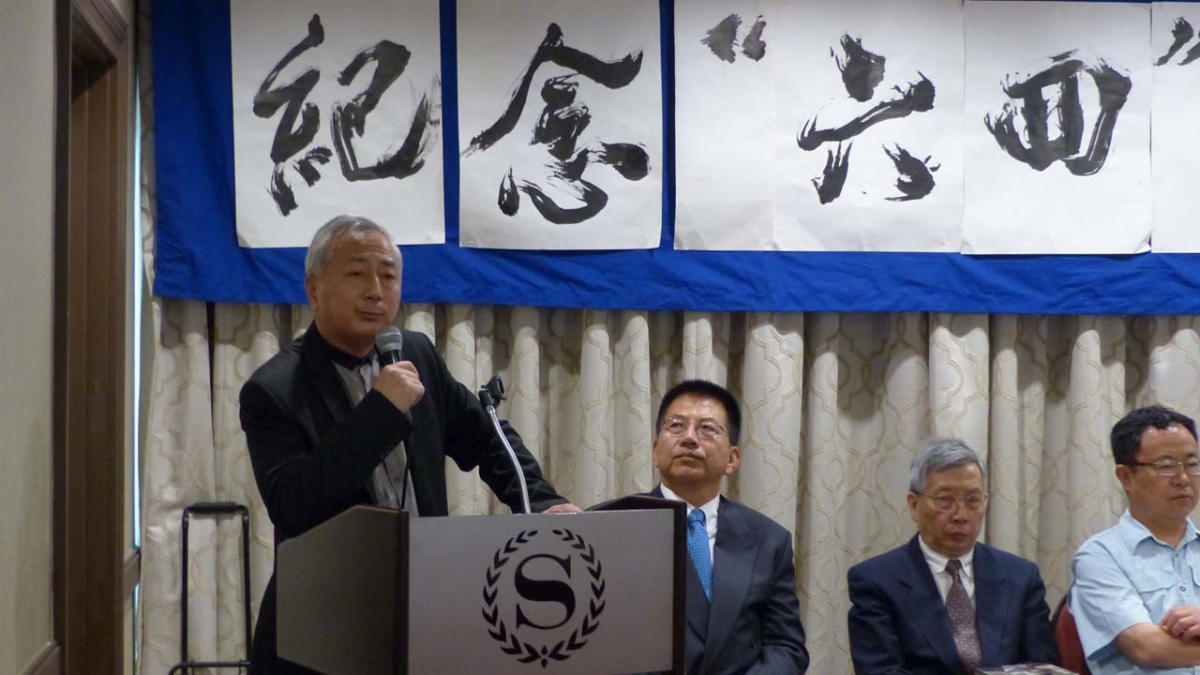
A judgement of the New York-based Federal Court of Manhattan on 12 November once again pushed a question that had been a constant source of concern for the Chinese democratic movement abroad to the public: could those who had fought alongside the Communist Party, participated in protest rallies and even experienced political persecution together, also work secretly for the Chinese national security authorities?
Tang Yuan Zheng, 69, who had participated in the 1989 Tiananmen Movement for Democracy, spent 12 years in Chinese prisons, had been granted political asylum in the United States after fleeing China and had long been active in the Chinese Democratic Movement in New York. Such a person with a counter-communist experience eventually admitted having collected information on dissidents abroad for the Chinese Ministry of National Security.
John G. Cutter, United States Federal Judge. Koeltl sentenced Tang Won-hwan to three years' probation without imprisonment. The prosecution had previously requested a sentence of up to five years ' imprisonment as prescribed by law.
原始来源 · apnews.com美联社:唐元隽2026年11月12日判处三年缓刑apnews.com ↗The gravity of the Tang Yuanjin case is not merely that a prominent pro-democracy activist has betrayed his political convictions, but that he has used the trust relations he has built over the years to expose to the intelligence services in Beijing those who oppose the Communist Party abroad, the organizations that operate and the internal channels of communication.
Even more alarming is that Tang Yuanxiang is not the only case identified by the United States judiciary.
In 2024, the United States jury had ruled that another Wang Shug, who had been active in the democratic arena of New York, was the secret agent of the Chinese Government. The two individuals ' identity experiences, specific behaviour and case results, although different, have been exposed to a highly dangerous intelligence technique: to convince those under surveillance that those who stand next to them are also fellow opponents of the Communist Party.
♪ From the rebels to the intelligence informant: How does Tang Yuanjun's political identity become a cover ♪
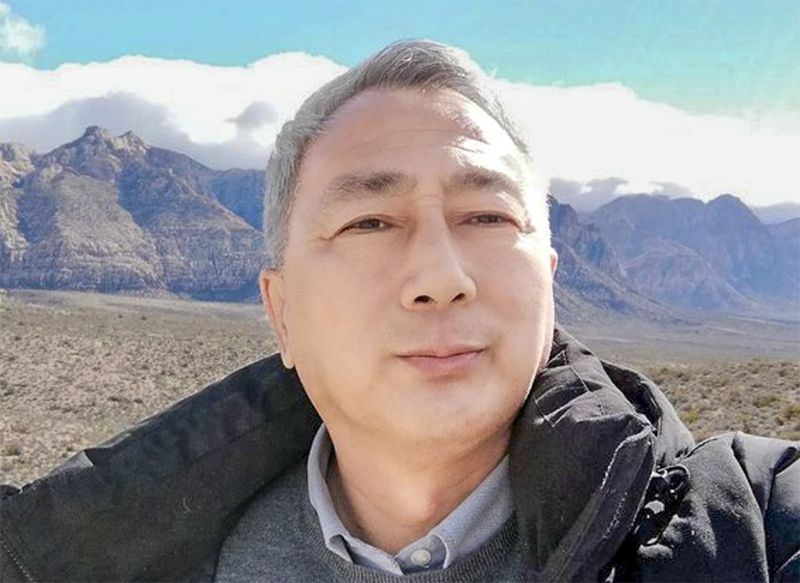
The experience of Tang Yuanxiang has given him special credibility among the diaspora.
In 1989, he participated in the Tiananmen protest movement for democratic and political reform. After the Communist Party authorities suppressed the movement, he was imprisoned for 12 years for related activities. In 2002, Tang Yuanjin fled to Taiwan, then went to the United States to obtain political asylum and continued to engage in political activities against the Communist Party in New York.
He participated in protest rallies outside the Chinese Consulate General in New York, participated in the 64th commemoration and established a non-profit organization in Farasing, New York, to promote democracy in China.
However, according to the facts of the case published by the United States Department of Justice, from at least 2018 to June 2023, Tang Yuanxiang has been collecting information and carrying out his mission under the command of the Chinese Ministry of National Security.
His contacts with the Chinese security forces are not a general political exchange.
According to the case information of the United States Department of Justice, Tang Yuanxiang met with the security forces in Macao and mainland China to provide information on specific dissidents. In a meeting in 2022, he was informed by the State Security agents that his mobile phone had been installed and that photographs, screenshots and audio memos produced or obtained by the mobile phone could be immediately transmitted to the State Security personnel.
Law enforcement agencies subsequently obtained the relevant communications equipment, mission instructions and photographs, videos and documents he collected or produced for the Chinese National Security.
This means that Tang Yuanxiang did not just accidentally leak a few internal messages, but rather continued to receive instructions from the Chinese intelligence services for many years, becoming part of their information-gathering networks abroad.
A person with a six-four-year history of resistance and long-standing trust of other democratic figures finally makes this political identity a convenient condition for the Chinese State security to obtain information.
Such betrayal hurts not only a few of the persons under surveillance, but also the internal trust that the overseas democratic movement sustains.
140-person chat: How the Chinese state security enters the internal communication network of the People's Liberation Movement
The most detailed details in the Tang Yuanjin case that deserve further investigation are a web chat group of about 140 people.
According to United States judicial documents, Tang Yuan Chong created a chat called the China Democratic Party in February 2020, which includes Chinese dissidents operating in the United States.
In January 2021, he assisted the personnel of the Chinese Ministry of National Security in establishing a communications account linked to the United States telephone number and in joining the group.
This means that the Beijing intelligence agencies are not only able to receive screened information from Tang Yuanquan, but also have the opportunity to observe directly the content of communications within the group.
For democracy activists abroad, internal chat groups are often used not only for open political discussions, but also for organizing, preparing protests, personal contacts among members and discussions about the situation of relatives and friends in China.
Once intelligence agents have access to these networks, what information they may have access to needs to be further identified in the context of actual chat records. However, judicial documents have proved that the security services have access to this group.
Of particular note is that Tang Yuanjin has also filmed and documented protests against the Communist Party in New York, including a 2023 commemoration of the six or four dead, as ordered by intelligence officers.
For the outside world, the people who filmed the rally may be just participants in the history of the democratic movement; However, in the Tang Yuanxiang case, such information was collected for reporting to Chinese intelligence agencies.
When intelligence work is hidden in normal political participation, social interaction and organizational activity, the traditional approach of relying on a common political position to judge credibility reveals obvious limitations.
About $4,200 per year: What's the motive for him to work for Beijing?
The United States prosecution stated at the sentencing stage that Tang Yuanxiang had provided information to the Chinese intelligence services on dozens of persons and had received approximately $4,200 per year in compensation for the activities.
This is not a very high amount, but it highlights the factors other than money in intelligence recruitment.
Tang Yuanxiang explained in court that he had cooperated with the Chinese side because he was eager to return to China to visit sick parents and brothers.
His defence counsel stated that Tang Yuanxiang had contacted a person who might have assisted him in returning home, and later had knowledge of the identity of the intelligence agents of the other party. Tang Yuan-chun himself, in court, expressed remorse and admitted that he had abandoned political conviction in order to return home, and that his actions had caused harm to others.
These explanations do not alter the criminal facts he has admitted, but reveal a fact worth studying: the Chinese Government still controls the political risks of the return of exiles to their homes, family visits and their contact with relatives in China.
For some Chinese dissidents who have lived abroad for many years, affection, identity, economic difficulties and desire to return may be points of entry for the intelligence agencies to try to reach them.
However, Tang Yuanxiang ' s personal confession does not suffice to demonstrate that the same method of recruitment was used by China ' s State Security in other cases. The extent of this mechanism still requires comparison with other judicial evidence that has been made public.
The Tang Yuanjin case at least shows that the past experiences of persecution by the Communist Party of China (CPP) of exiles abroad do not automatically guarantee that they will not accept the tasks of the CPC intelligence agencies in the future.
Wang Shujun case: another Chinese State Security agent hiding inside the PLO
If the Tang Yuanxiang case is also interpreted as a departure from political conviction by someone who is intriguing to his own feelings, the Wang Shuu-gyu case further reveals how China’s national security organs have used their long-standing political standing to approach dissidents abroad.
Wang Suk-guk was involved in the creation of the organization of the Jubilee 64th and the promotion of democracy in China in Queens, New York, and acted as a scholar and participant in the movement against the Communist Party of China.
However, the United States Department of Justice investigation found that from 2005 to 2022 at least, Wang Suk-guk was under the command of the Chinese Ministry of National Security, gathering confidential information on democracy activists, human rights advocates and other critics of the Chinese Government.
On 6 August 2024, the United States Federal jury found Wang Shug guilty of four counts, including secret representation of a foreign Government and false statements to law enforcement agencies.
His case concerned four members of the Chinese Ministry of National Security who had been identified as co-defendants by the United States judiciary: Ho Feng, Jiji, Li Myung and Luqqing. According to the United States Department of Justice, the four men were still at large at the time.
原始来源 · justice.gov美国司法部:王书君案及四名中国国安人员justice.gov ↗The way in which the Wang Suk-goon gathers information deserves special attention.
原始来源 · voachinese.com美国之音:王书君案视频报道voachinese.com ↗Judicial documents indicate that he used his identity in democratic organizations and the Chinese community to reach out to political activists and record private conversations, organization of events and personal information.
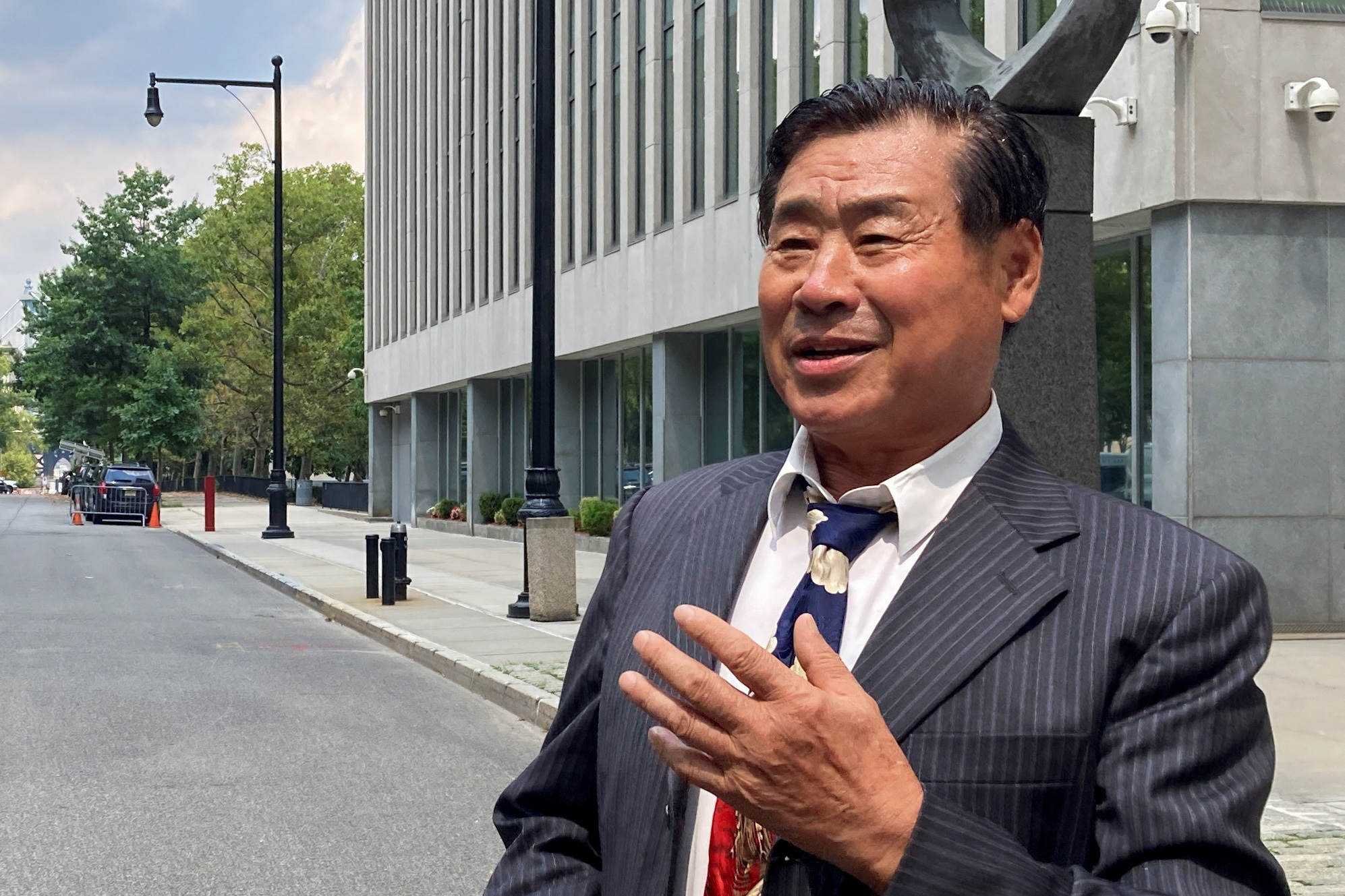
He also keeps information by e-mail in draft form, enabling relevant security agents to access the same mailbox to view content without sending regular mail.
This way, secret information is transmitted in the context of daily electronic communications.
On 14 April 2025, Wang Shun was sentenced to serve his sentence of imprisonment and three years of supervised release without being required to continue to serve his sentence.
The case of Tang Yuanjin and Wang Shujun has a distinct common denominator: both used their political identities against the Communist Party to gain confidence from other activists and subsequently provided information to the Chinese intelligence services.
However, the fact that the two persons belong to the same intelligence network and that there is no direct link is not confirmed by the available public judicial material and cannot be asserted on the sole ground that the two cases are similar.
Two people have been exposed, how many remain hidden in the diaspora?
The case of Tang Yuanjin and Wang Shujun have been brought to light, leaving the China Democracy Movement abroad unable to avoid a more profound problem:
How many people have not been exposed to the law beyond the agents identified by the United States judiciary?
This is a question that requires continuous investigation, rather than a conclusion that can easily be given.
The available public judicial information does not support the total number of clandestine agents in diaspora organizations or estimate the proportion of persons in the population as a whole.
However, at least three facts that have been supported by judicial material deserve attention.
- First, the Ministry of National Security does not rely solely on public intelligence or network surveillance to understand the activities of the diaspora, but rather takes the initiative to use persons with real social relations within the groups concerned to obtain information.
- Second, such clandestine activities can last for many years. The Wang Shujun case involved a period of activity of at least 10 years, while the acts identified by Tang Yuanxiang lasted about five years.
- Third, the objectives of the intelligence services are not limited to a prominent activist, but also include members of organizations, political networks, private conversations and internal channels of communication.
These facts demonstrate that infiltration is not an abstract political speculation but a specific intelligence act that has been repeated in United States court cases.
However, the more dangerous side must also be taken into account: if any organizational contradictions, personal disputes or political differences are interpreted as infiltration of national security, the overseas democratic movement may further collapse in the absence of evidence of mutual accusations.
A truly effective counter-infiltration investigation should track specific acts, communications evidence, financial transactions, mission directives and practical links with intelligence agencies, rather than relying on hearsay, personal grievances or political labels.
The acts of Tang Yuanxiang and Wang Shun, who have been recognized or admitted by the judicial authorities, are of public investigative value precisely because of the existence of verifiable evidence.
This also means that the disclosure of the true intelligence agents and the prevention of the unsubstantiated internal political cleansing are equally issues that must be faced by democratic organizations abroad.
What did the man who was sold take?
The fact that Tang Yuanxiang was granted a three-year suspended sentence does not mean that his behaviour did not have a serious impact.
At the sentencing hearing on 12 November, four persons who believed that they had been injured by Tang Yuanxiang ' s actions spoke.
Some of them suspected that the death of their relatives in China was linked to the exposure of personal information; It was also mentioned that he had been attacked with a knife, which was not considered random.
These statements reflect the fears and suspicions of the parties, but the judge noted that the causal link between the injury in question and the conduct of Tang Yuanxiang has not yet been proved.
The prosecution emphasizes that Tang Yuanxiang ' s actions have had a chilling effect on the entire community and have caused long-term concerns among affected persons about their own safety and that of their families.
This part is the most disturbing consequence of the Tang Yuanxi case.
When an overseas activist finds that a person who has been participating in a gathering and sharing information has been reporting his activities to the Chinese intelligence services for many years, it is difficult for him to trust the people around him as he did in the past, even if it is impossible to prove that an attack or a relative encounter directly relates to the disclosure of information.
The impact of the Chinese Government ' s surveillance of critics abroad is therefore related not only to the specific information leaks that have been identified, but also to the political expression pressure of uncertainty and fear.
An organization may reduce communication because of fear of infiltration, an activist may withdraw from political activities because of fear of involvement of relatives in the country, and new participants may be reluctant to disclose their identities because of mistrust.
These potential consequences require more empirical investigation, but it is clear from the victim ' s statements in court that the breach of trust itself is already an important reality in the Tang Yuanxi case.
What else has not been clarified after the US verdict?
After Tang Yuan Jing-ho confessed, the prosecution requested five years ' imprisonment, and the court eventually sentenced him to three years ' suspended sentence.
United States courts are required to rule on specific charges, plea agreements, sentencing rules and probative injuries. This is not at the same level as the concern of the outside world about the long-term infiltration of Chinese national security agencies into political groups abroad.
The United States judiciary has identified Tang Yuan Yiu as receiving instructions from the Chinese Ministry of National Security to collect information on dissidents abroad and to facilitate their access to internal communication networks.
However, the public case leaves a question that deserves to be investigated:
How did the information from Tang Yuanjun eventually work within the Chinese National Security System? Are all those who have been gathered aware that their information has been leaked? Did the security agents he contacted also direct other overseas agents? Is there a follow-up risk to the information in the relevant electronic equipment?
These questions cannot yet be fully answered by public decisions.
Tang Yuanxiang is personally sanctioned by United States law, while the broader actions and responsibilities of the Chinese national security agencies, which direct their intelligence activities, remain the focus of public investigations.
For overseas democratic organizations, the reliance on the judiciary to expose individual cases is not a sufficient substitute for daily information protection. Reducing unnecessary personal data collection, strengthening communication account management, limiting access to sensitive information and establishing evidence verification mechanisms for specific suspicious acts would reduce the damage caused by similar infiltration.
This is not to require political groups to be caught in general suspicion, but rather to recognize that any organization that relies on internal trust needs a security regime commensurate with that.
Conclusion: What really needs to be pursued is the intelligence network behind individual cases
Tang Yuanxiang lost his freedom for 12 years because of his resistance to the Communist Party, and later worked for the Chinese Ministry of National Security for many years.
His experience presents a complex and harsh reality: a person ' s political history can prove what he has done in the past, but not who he is working for.
The Wang Shujun case further explains that China ' s national security organs can enter the overseas democratic movement through political identity and social relations that they have operated for many years, and obtain information that should not otherwise be held by intelligence agents.
These two cases have exposed specific agents, means of communication and intelligence activities, and have demonstrated that the risk of infiltration for dissidents abroad is not imaginary.
However, the answer to the question of how many people have accepted the Beijing directive in secret remains unverifiable.
Tang Won-hoon was exposed and Wang Shui was convicted. Whether the undetected intelligence network is still operational and how many people are affected should be the subject of ongoing investigations.
For overseas China’s democratic movement, the real challenge is not just to identify the exposed informants, but to establish a long-term, effective mechanism for protecting internal members, upholding standards of evidence and maintaining mutual trust.
For the Chinese Communist Party’s national security agencies, these cases have left a record of facts that cannot be easily erased: it has been able to gather information about opponents through secret agents’ access to networks of communication with Chinese democracy abroad.
The judgement in the Tang Yuanjin case has been completed, but the investigation into this intelligence system is far from over.
Article discussion
Verified members can discuss this report publicly and manage their own content.
Checking member sign-in status…