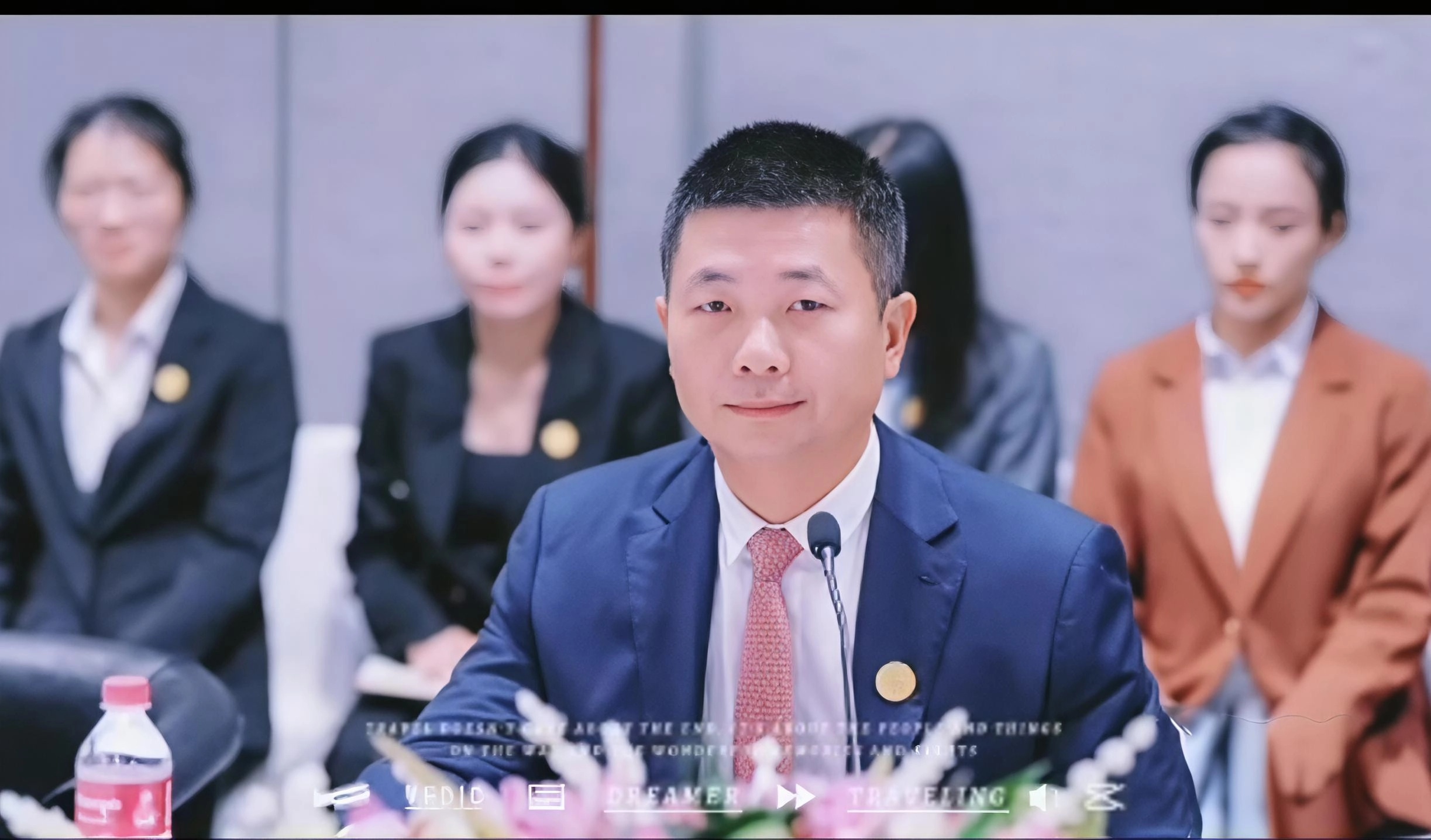
On 10 November 2024, a Chinese mediaman, Wu Kai, who had long denounced the Southeast Asian Ejection Group, was abducted in Guangdong, Huezhou, by a group of impersonators. The kidnappers abducted him to the car, then crossed the provinces of Guangdong and Jiangxi, beat and questioned him, forced him to give the source of the news and deleted the article on the Twitter public. Three days later, the body of Wu Kai was found on a hillside in Tennan County, Jiangxico County.
The one who once had hundreds of thousands of readers, the mediaman, just disappeared.
It is even more alarming that, following the murder of Wu Kai, the news that was circulated online was that he was arrested by the police for alleged extortion. It was only on 27 October 2026 that the interface news was made public on the basis of the second instance ruling of the Guangdong Higher People ' s Court that it became clearer to the outside world that he had been killed two years earlier.
The media in mainland China now reports on Wu Kai, condemning the brutality of the foreign electric fraud syndicate and publicizing the achievements of the Chinese public security organs in the detection of transnational crimes.
However, when attention was focused on how much of the abuse Wu Kai had suffered and how many years of imprisonment had been handed down, several of the more valuable leads were placed in a secondary position.
Why is a long-standing, public mediaman who has publicly exposed the crime of electric fraud being the target of a million-dollar reward kidnapping? Why was a person who had participated in official Chinese activities as a leader of a foreign trade company, and who was later identified by the Chinese Ministry of Public Security as a key cadre of transnational electric fraud syndicates? What is the link between this criminal network and political power, when the United States judiciary has publicly accused the Crown Princes' Group of corrupt transactions with Chinese public security and security-related elements?
It is particularly noteworthy that important figures of the Prince Chen Zhi and Liu Qin groups have been transferred to China, and that the law enforcement officials accused of being involved in the protection of criminal groups, the destination of funds abroad and the client behind the murder of Wu Kai have not yet been given a complete public explanation.
Wu Kai's death is not just a criminal offence against a mediaman. With more and more material being disclosed, the case is showing a more complex dimension with regard to political power, cross-border criminality and the protection of interests.
原始来源 · finance.sina.com.cn界面新闻:吴恺遭买凶遇害原始调查finance.sina.com.cn ↗Where is the real man who ordered the reward?
According to the second instance ruling of the Guangdong Provincial High People ' s Court, in mid-October 2024, Henan Man Zhao Cing saw a paid hijacking mission on Telegram, an encrypted communications platform outside the country.
The person who issued the mission used the alias “Major”, also known as “Tago”.
The other party initially offered $300,000 in reward for the abduction of Wu Kai, who regularly published articles on electrical fraud in the north of Myanmar, forcing him to question his supporters and sources of information behind his public call and to delete the articles. After dealing with “Major”, Zhao Ice et al., the remuneration was raised to $1 million.
This is not a temporary street violence.
Prior to the kidnapping, the persons behind the scenes had detailed family addresses, recent photographs and vehicle plates of Wu Kai. Zhao Bing then organized a foot-step, preparation of vehicles and follow-up, which eventually led to U Kai being forcibly taken away by an impersonating policeman in a parking lot in Grandia Bay, Huezhou.
On the afternoon of 10 November 2024, on the same day that Wu Kai was abducted, the person responsible for receiving the funds received $1 million in cash in Henan. In the evening of the same day, Wu Kai was forced to delete the public domain article and his mobile phone was handed over to another person under the “Major” arrangement.
Since then, the kidnappers have continued to beat up Wu Kai on instructions from their clients abroad and to force him to ask for information. On 11 November, Wu Kai was kicked to a coma on a hill in the southwest of the Jiang Dinghang and later abandoned.
On 13 November, his body was found.
In December 2025, the Metropoles of Huizhou handed down their first instance judgement against 14 persons involved in the case, and Zhao Chiu was sentenced to death for intentional assault, suspended for two years, while the rest were sentenced to separate sentences. In August 2026, the second trial of Guangdong High Court upheld the sentence.
However, the most critical “major” remains on the list of accused who have been publicly released after the case has been completed.
From the experience of the case, “Major” is not a irrelevant intermediary. He issued missions, received information about his targets, arranged funds, controlled the course of his operations and even continued to issue orders through means of communication during the beating of Wu Kai.
Who is he representing? Where's the $1 million in money coming from? Who provided information on Wu Kai ' s home address and vehicle? Who is most afraid of Wu Kai's continuing to publish?
These issues directly relate to the real organizers of the crime.
If the news is confined to the level where Zhao Ice and others have been sentenced, then the public sees only a group of perpetrators of violence who have paid for it. Those who have sufficient funds, organizational capacity and cross-border relations to conduct the kidnapping by remote control in China and to make a prominent self-mediaman pay the price of his life have not been fully revealed.
There is also one more detail that is particularly important.
The other party asked Wu Kai to answer not where any of the money was, but the source behind his public call.
This means that the kidnapping was carried out not only against Wu Kai himself, but also against the information network at his disposal. For criminal groups, a self-media person who constantly exposes his internal people, the location of the park, financial relations and armed activities may threaten the entire chain of interests.
Killing a man can stop him from talking; Forced to delete articles and submit sources of information may help the criminal group to further seek out other sources of information.
The political and social significance of the murder of Wu Kai is precisely here.
From the leaders of foreign traders to the transnational criminal cadre
One of the figures that Wu Kai had focused on was Liu Shin.
In August 2024, U Kai publicly charged Liu Nin with violent lending, protection fees, running electric fraud parks and other violent criminal activities in Cambodia through the Wei letter public number.
Liu Qin subsequently issued a statement on behalf of the Cambodian Chamber of Commerce Anhui, denying the allegations and refuting them through the local Chinese media.
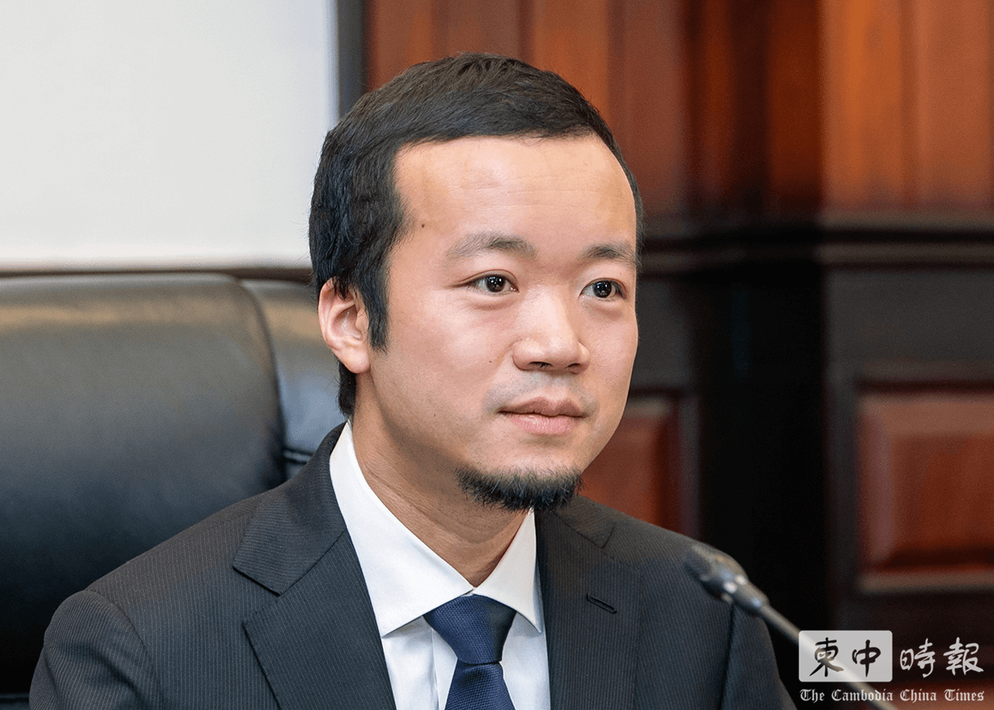
At that time, Liu Qin had a decent external status. He was President of the General Chamber of Commerce of Anhui, Cambodia, and was also Vice-President of the Council of the Chinese Chamber of Commerce of Cambodia.
This layer of identity deserves to be studied.
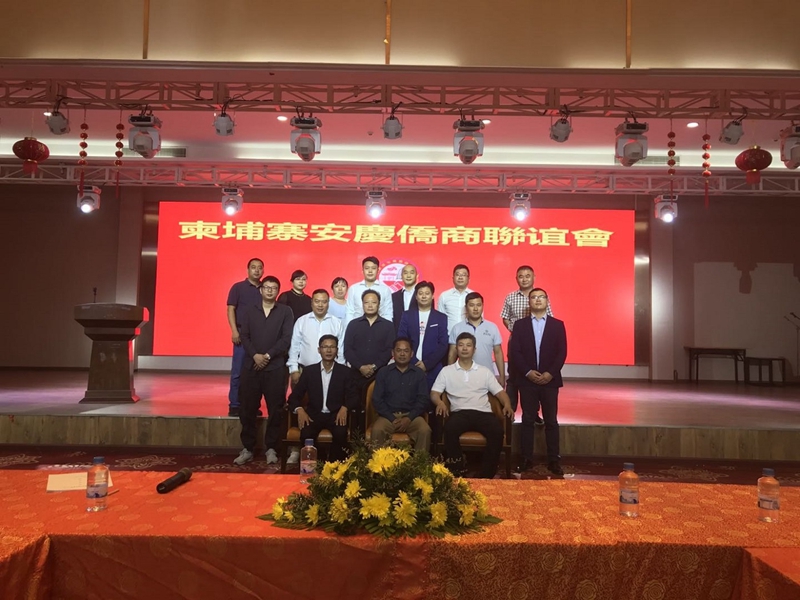
On 5 January 2021, a report was published on the website of the Angking Unity Front in Anhui Province, documenting the launch of the Angking Federation of Business Fellowships, held in Phnom Penh, Cambodia, on 31 December 2020.
The report clearly documented the presence of Liu Nin, President of the General Chamber of Commerce of Anhui, Cambodia, and his address. The event was also attended by relevant officials of the Ministry of Defence of Cambodia and other expatriates. ACMM and Fédération des émigrés (Fédération des peuples) sent a message to the event to support local expatriates in their economic and cultural exchanges.
This is a very important public record.
原始来源 · aqtz.gov.cn安庆统一战线:刘忍出席柬埔寨侨商联谊会aqtz.gov.cn ↗It confirms that Liu Qin, as head of the overseas chambers of commerce, has been involved in a network of public activities supported by local Chinese expatriates and the relevant agencies of the Chinese army.
The association of the Chamber of Commerce cannot, of course, directly prove that the individual has committed a crime, let alone simply assume that the person who participated in the activities of the Chamber has a secret political mission. However, when a person who had long been in the diaspora was later identified as the backbone of a large criminal group, his past public identity, business affiliation and political relations could no longer be lightly overridden by press reports.
On 17 June 2026, the Ministry of Public Security of China announced that Liu Zhin had been transferred from Cambodia and identified as a key member of Chen Zhi's criminal group.

In its circular, the Ministry of Public Security stated that Chen Zhi had commanded Liu Nin and others to create the Kimbe Group in Cambodia in 2016 and to operate the Internet gambling platform; Since 2020, the group has operated the EMPs and has been operating large-scale telecommunications network fraud. Liu Qin is also suspected of serious violent crimes such as unlawful detention and intentional injury.
This has resulted in an overlap of time that deserves in-depth investigation.
原始来源 · xinhuanet.com新华网:刘忍被押解回国xinhuanet.com ↗According to the Ministry of Public Security itself, Liu Nin's criminal group began to operate illegally in the area at least in 2016 and began operating the electric fraud park in 2020.
However, at the end of 2020, he was able to participate in open expatriate activities as President of the General Chamber of Commerce of Anhui in Cambodia and to maintain contact with organizations supported by local Chinese expatriate agencies.
If a person is involved in cross-border crime for a long period of time, does his formal business identity facilitate his or her business activities? Have enterprises, financial institutions and public organizations that deal with these chambers of commerce been exposed to unusual funds or commercial transactions? When did the relevant agencies become aware of Liu Nin's criminal problems?
These are the news issues that the history of the Chamber of Commerce should raise.
It is further noteworthy that Wu Kai has already revealed Liu Qin in
- It was only two years later that the Chinese Ministry of Public Security publicly announced that Liu Qin would be taken back to his country.
In the two years, Wu Kai lost her life and Liu's public identity was transformed from a foreign business leader to a suspected transnational crime.
However, the public is still unaware of whether the information reported by Wu Kae in that year was under formal investigation, whether any of the agencies had taken measures to protect the whistleblower against the relevant leads and why the criminal activities he had revealed had not been effectively stopped before he was killed.
A person who has long been active as an entrepreneur and a leader of a foreign business abroad cannot begin with the moment when he is handcuffed, after being declared suspected of serious crimes.
It would be more appropriate to investigate what relationships, what commercial resources and what protection mechanisms he had previously relied on to maintain such a large cross-border network.
Public security relations revealed by United States judicial documents
If Liu Qin ' s membership in the Chamber of Commerce reveals public relations outside the Crown Prince ' s Group, the United States Department of Justice ' s public filing of 14 October 2025 in the case file brought the matter further into the Chinese public security and national security organs.
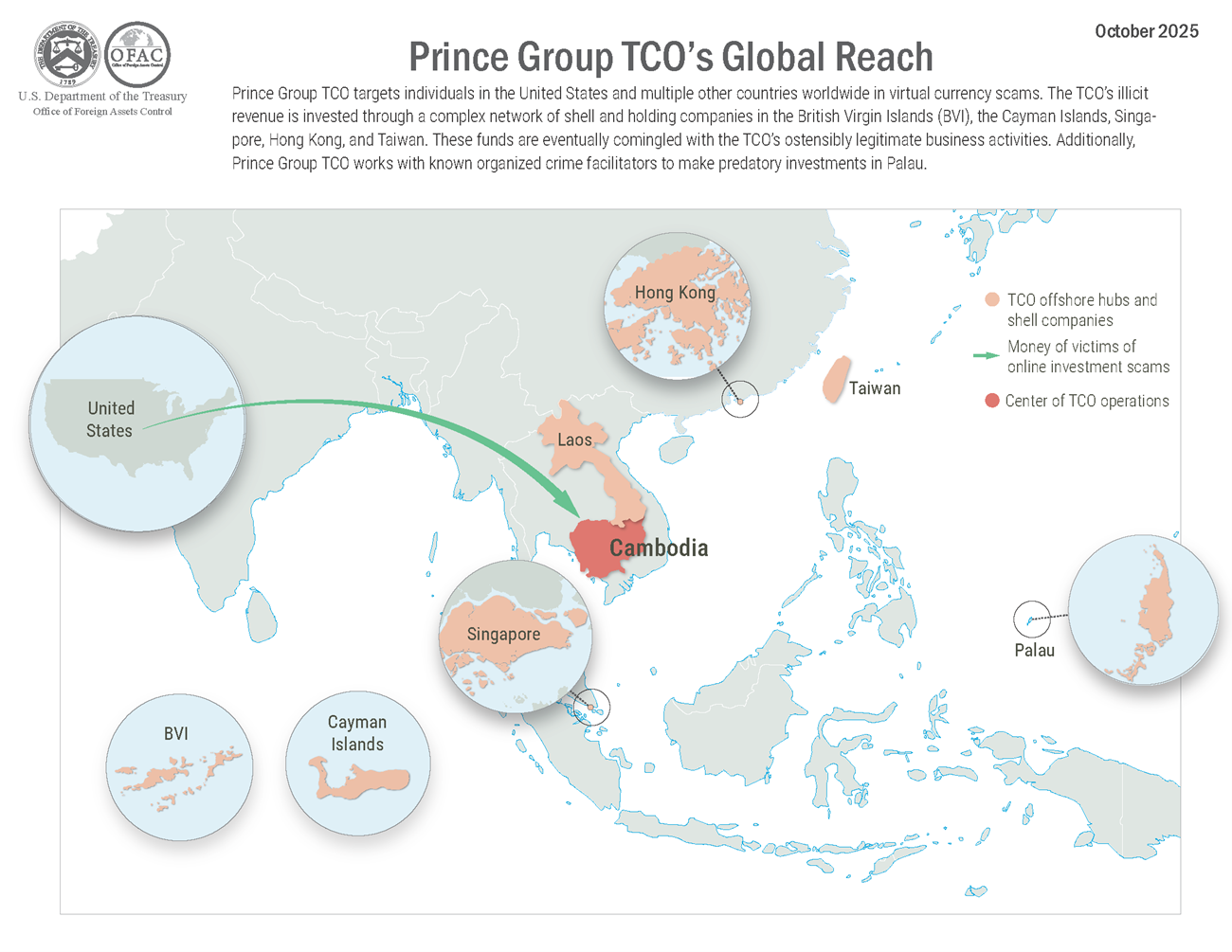
The United States federal prosecutor for the Eastern District of New York charged Chen with causing huge losses to victims in the United States and around the world by operating transnational networks of fraud, forced labour parks and money-laundering networks through the Cambodian Crown Princes Group.
The United States Government also filed a civil forfeiture action against approximately 127,271 bitcoin, with assets valued at about $15 billion at the time.
In the United States civil forfeiture indictment, several allegations involving Chinese law enforcement are of particular concern.
Paragraph 27 alleges that Chen Zhi and his associates have protected the fraud business through political influence, tried to avoid law enforcement attacks, including by the Chinese Ministry of Public Security and the Ministry of National Security, and obtained early information on law enforcement against the fraud park by bribing public officials.
Paragraph 28 records a link that occurred around May
- An official of the Chinese Ministry of Public Security allegedly said that he could help the members of the Princesty Group to escape their troubles. In exchange, the group associates offered to take care of the officer ' s son.
The same document also alleges that members of the Princes ' Group had asked Chinese law enforcement officials to arrange for local police to extort benefits from other businesses, and that the Princes ' Group could avoid being affected even if law enforcement agencies were to check the fraud park.
The United States prosecution further alleges that Chen Zhi personally showed his face to others and that by paying bribes to relevant members of the Chinese national security services, he could have been informed of law enforcement actions in advance.
The document also deals with financial records, which are substantial, for the purpose of paying bribes and luxury goods.
原始来源 · infobytes.orrick.com美国纽约东区联邦法院:资产没收诉状infobytes.orrick.com ↗These are specific charges brought before the Court by the United States prosecution and do not amount to a criminal conviction of all persons involved. However, they have moved the alleged corrupt transactions between the Crown Princes Group and the Chinese public security and national security systems into the formal judicial process.
It reveals a very dangerous relationship.
A large cross-border criminal group that knows in advance, through corrupt transactions, when the police act, which parks are inspected and which people are about to be traced, may be used in turn as a risk management tool in criminal operations.
Once such relationships have been in place for a long time, what the public sees as “a severe blow to electric fraud” does not provide a complete picture of what has happened between the criminal group and the law enforcement personnel.
A certain park was cleared and the perpetrator was probably apprehended; At the same time, other group members may move assets by obtaining advance information, evacuate the responsible persons and even use law enforcement activities to target commercial opponents.
For an international criminal organization, access to law enforcement information is often more important than the mere hiring of bodyguards.
This also gives the Crown Princes ' Group cases political significance beyond ordinary telecommunications fraud.
On the one hand, the Chinese Government has announced that it has achieved significant results in cross-border counter-breach efforts; On the other hand, the allegations made publicly by the United States judiciary relate to allegations that individuals within the Chinese public security and national security services are suspected of facilitating the same criminal group.
Xi has long been strengthening political control through the system of public security, national security and disciplinary and oversight. Under such a highly centralized system, the political responsibility for how, how and how corruption-protection relationships within law enforcement agencies are formed and sustained, and why their internal oversight mechanisms fail to prevent the problems involved, is inescapable.
The involvement of Xi himself in the decision-making of a specific crime cannot be directly recognized by a foreign document. However, the Ministry of Public Security of China should not consider that the previous allegations concerning the protection of the security forces of the State have been explained because of the subsequent announcement of the arrest of members of the Princes ' Group.
The fight against corruption, arrest and judicial proceedings can only bring the whole thing to the public ' s attention if they touch on the power-protection relationship in criminal networks.
What is truly worth pursuing is who uses law enforcement powers to help criminal groups escape attacks and whether they have also entered the investigation after the group's key figures have been brought under control.
Who held secrets after Chen Zhi and Liu Qin were handed over to China?
On 14 October 2025, the United States Department of Justice publicly indicted Chen, founder of the Princes' Group, for telecommunication fraud and money-laundering conspiracy.
原始来源 · justice.gov美国司法部:陈志案起诉通报justice.gov ↗On 6 January 2026, Cambodia handed over Chen Zhi and two others to China at the request of the Chinese side. The Cambodian internal affairs authorities subsequently publicly confirmed this action.
原始来源 · vps.akp.gov.kh柬埔寨官方通讯社:陈志被移交中国vps.akp.gov.kh ↗In June 2026, Liu Qin was also handed over to China by Cambodia.
This is an important achievement of the public security organs in promoting international law enforcement cooperation and in combating cross-border electric fraud, as seen by the public information campaigns of the Chinese Government.
However, from the perspective of transnational justice and power control, there is another level of value in these actions.
When Chen Zhi and Liu Zin entered China, Chinese law enforcement agencies gained direct control over their personal integrity, interrogation procedures and domestic criminal information.
This means that the full disclosure of commercial records, criminal networks, money transactions and political relations held by the person making the statement and his or her associates in other national judicial proceedings would be directly affected by cross-border judicial cooperation arrangements.
The United States already has some assets and investigative material suspected of money-laundering, and its control over the Bitcoin involved will not automatically disappear as Chen enters China. However, the inability of key figures to stand trial directly in the United States clearly has a real impact on the tracing of the full criminal association and the origin of testimony.
This raises a serious political issue.
Does the capture of a prominent figure of a criminal group mean that criminal relationships are completely uncovered, or may there be situations where key individuals, testimonies and information are concentrated in a particular jurisdiction, and it is difficult for other countries to continue to pursue some of these relationships?
The transfer of persons to China itself is described as secret protection and there is a lack of direct material. However, the objective effects of such an arrangement are worth continuing investigation, especially when United States litigation documents point to Chinese public security and national security personnel suspected of involvement in corrupt transactions.

If the senior levels of these criminal groups can explain to the judiciary which officials they have contacted, which funds they have paid and which law enforcement information they have obtained, the value of these materials is far greater than in ordinary fraud cases.
They may involve issues of public authority behind transnational financial crime.
Here too, it is important to follow up on the relationship between Liu Nin and Wu Kae's murder.
Wu Kai has publicly accused Liu Qin, and Liu Qin has publicly denied it. Before Wu Kai was killed, some sources reported that Liu Ninjiang-related persons had tried to find out about his address. However, the materials of the judgement in the Wu Kai case, which has been made public to date, do not identify Liu Nin as the client behind the scenes, nor do they reveal the true identity of “Major”.
The problem is that Liu Qin has entered the Chinese judicial process and the most important offshore trust in the murder of Wu Kai has not yet been publicly explained.
In this context, there are good reasons for the public to continue to be concerned that law enforcement agencies with criminal information on persons associated with Liu Qin and other Princes-Groups can provide further information on the relevant leads concerning Wu Kai.
As for the relationship between Chen Chi Group and other serious transnational crimes, including human trafficking, forced labour, violent detention and possible intelligence activities, it should also continue to be pursued along specific criminal networks. The existence of an organizational and financial connection between the different offences should be disclosed by the relevant information and not directly substituted by one allegation for another.
This is not to excuse anyone involved, but to find a true relationship that can explain how the entire criminal organization operates.
For victims of fraud in the United States and other countries, they need to know where the money went; For those who are forced to work in fraudulent parks, they need to know who organized the detention and violence; For Wu Kai ' s family, it is even more important that they know who paid for it, who ordered it, who leaked his personal information.
If these questions are not answered, it is clear that the mere broadcast of a picture of the suspect being returned to his country cannot represent a clear and well-traced criminal network.
Why did Wu Kai's story not get focused until now?
On 27 October 2026, the interface news released important material on the murder of Wu Kai, which was followed up by numerous mainland Chinese media.
原始来源 · original.ifeng.com凤凰网:吴恺案幕后委托人追踪original.ifeng.com ↗In the past two years, the outside world has believed that Wu Kai was arrested for extortion. Now the public knows he's actually dead.
More and more details are being disseminated about the cruelty of foreign electric fraud syndicates, the criminal process of the perpetrators and the decisions of the judiciary.
These reports are of news interest, and journalists from some continents continue to question the identity of “Major” and cannot simply attribute the investigations of all journalists to official and unified publicity.
But the public still needs to see: what is being magnified when the media is focusing on a case and what relationships are not receiving the same full attention?
The brutal violence that Wu Kai was subjected to was a very easy source of social outrage; The arrest of 14 persons involved and the decision of the court also made it easier to make a complete statement against crime.
The political and commercial relationship of Liu Qin, whose long-publicized activities are related to the corrupt trade in Chinese public security and security personnel in United States judicial documents, and how the information on the Princes ' Group ' s leading figures is made public after they are transferred to China, are not the only issues that can be explained by a few short videos.
These elements require ongoing investigation and a link between documents, figures and financial relationships that are already scattered across different countries.
Of particular note is the fact that many of the articles that Wu Kai had published were no longer read properly.
The story he left behind related to the name of the business, the location of the building, the relevant officials and local armed activities in Myanmar. The extent to which these materials can be independently identified in themselves will certainly require further study. But they represent the specific facts that a private information provider has tried to reveal.
The kidnappers ' request to delete the article, however, directly indicates that the information poses a threat to at least some individuals.
Now that Wu Kai has died, many original articles have disappeared, important figures involved in transnational criminal groups have been kept under control, while true offshore clients still remain undisclosed.
If this is to be interpreted as a civilian anti-fraud hero being brutally killed by criminals outside the country, the most intrusive political and social relationship of all is likely to be ignored.
The fate of Wu Kai reveals a disturbing reality: in an environment where cross-border crime, political power and commercial interests are intertwined, an ordinary person, even with important information, may not be able to be effectively protected.
He may be threatened, forced to delete articles, and may still be deprived of a permanent opportunity to tell the public the truth even after his life has been harmed.
It is even more alarming that when the State has enormous resources for public security, national security and public information, and lacks independent and open oversight of power, it may be difficult for society to know which criminal activities have been protected by individual officials and to judge how much real interest has been revealed by the subsequent attacks.
The Chinese Communist Party regime under Xi Jinping has placed a high degree of concentration of public security, national security and anti-corruption powers under the party leadership. Such a system, which can quickly organize cross-border arrests, also makes it difficult to observe independently how internal investigations deal with corrupt relationships involving their own authorities.
When specific allegations have been made in United States judicial documents that Chinese public security and national security agents are suspected of helping the Crown Princes to evade law enforcement, it is clear that simply demonstrating the results of the arrests will not be sufficient to dispel the external concern about the protection of crime.
Ultimately, the Wu Kai case requires not only the perpetrators of his murder, but also offshore funds, trust networks, personal sources and the political and law enforcement protection that these criminal organizations may have received.
Wu Kai tried to make it known to the public that it was the very things that were hidden behind the fence and the commercial signboard.
He paid the price of his life for it.
Today, the Crown Princes’ Group’s leading figures are being taken back to their countries, and Chinese media continue to report on their anti-fraud achievements, but the “Major” in Wu Kai’s case still does not have a publicly confirmed real name.
One person was killed, 14 enforcement and affiliates were sentenced, while the millions of reward clients remained hidden from public sentences.
The corrupt relationship between law enforcement officials, which the United States judiciary has already disclosed, is far from being fully explained by the number of arrests.
Wu Kai's biggest news trail, which eventually remains on the undiscovered cross-border power and finance network.
If the true beneficiaries and protectors of this network remain in the shadows, the secrets that Wu Kai so desperately revealed will still not be fully revealed.
Main sources
- Interface News: Investigation into the murder of a mediaman who was murdered by a “sword” (27 October
2026)
- Union Front Anqing: Founding of the Sorority of the Anqing Diaspora in Cambodia (5 January
2021)
- United States Department of Justice: Criminal charges and confiscation of assets by Chen Zhi and the Crown Prince (14 October
2025)
- United States Federal Court for the Eastern District of New York: Civil Inquests for the Princely Group-related Assets, pp. 14-15
- Official Cambodian news agency: Chen Zhi was transferred to China (7 January
2026) Xinhua: Liu Qin was deported from Cambodia (17 June 2026)
- Phoenix Network: Major “Major” remains at large as the client behind the Wu Kai case (30 October 2026)
Article discussion
Verified members can discuss this report publicly and manage their own content.
Checking member sign-in status…