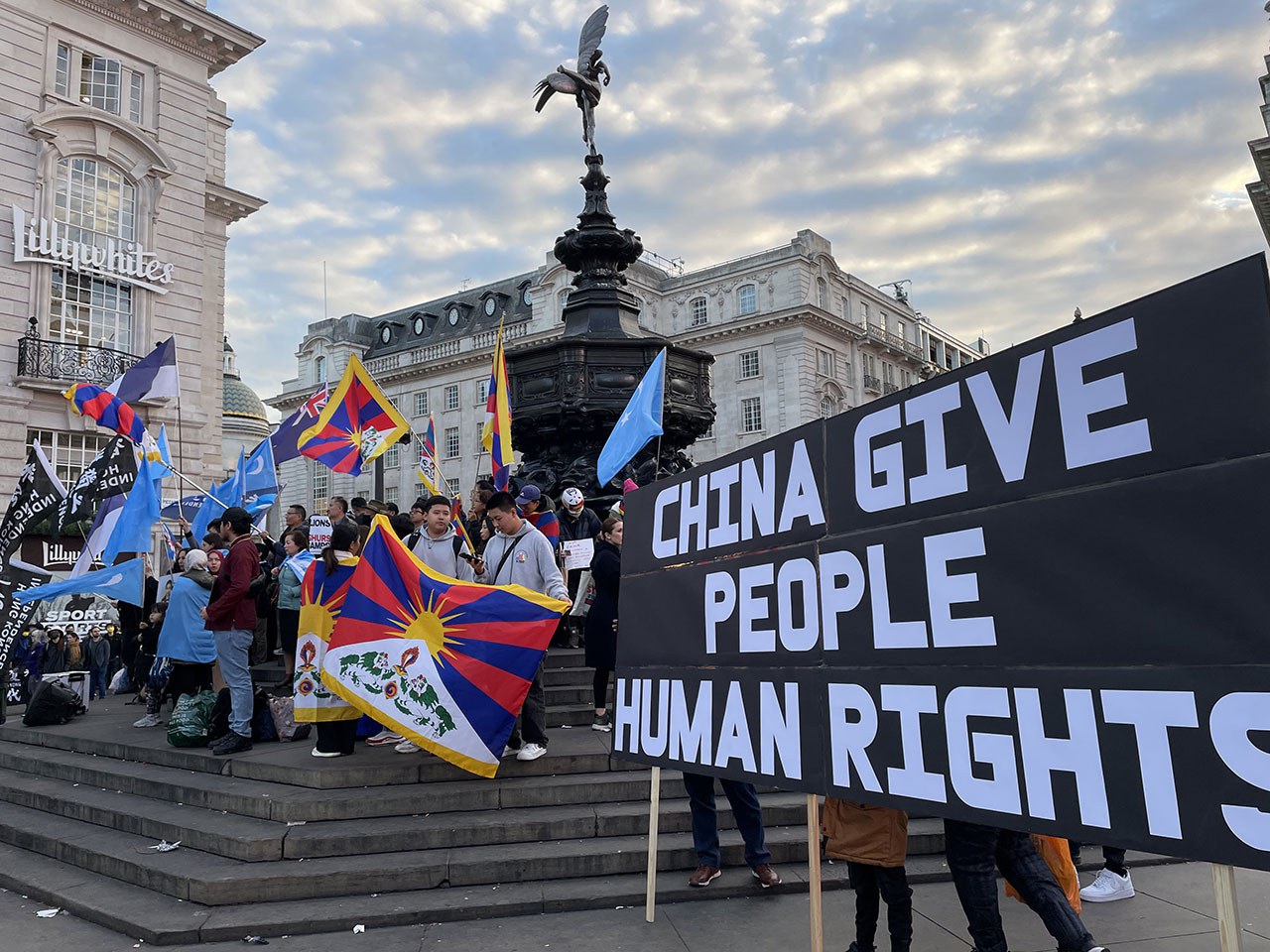
On 1 October, Beijing celebrated the 77th anniversary of the establishment of the People ' s Republic of China; In London on the same day, another picture appeared in front of the Chinese Embassy in the United Kingdom. The opposition groups in Hong Kong, Uighur, Tibet and China gathered to protest and bring the unspoken political claims in China directly to the diplomatic services in Beijing.
The participants displayed the flags of Hong Kong, Tibet and East Turkistan and used slogans against political repression by the Communist Party. The protesters in Hong Kong also displayed images of the “King of the Nation”, a statue of the six or four dead who could no longer be publicly displayed at the site of the University of Hong Kong. For those in exile, re-positioning it in front of the Chinese Embassy was in itself a response to the removal of public memory from Hong Kong.
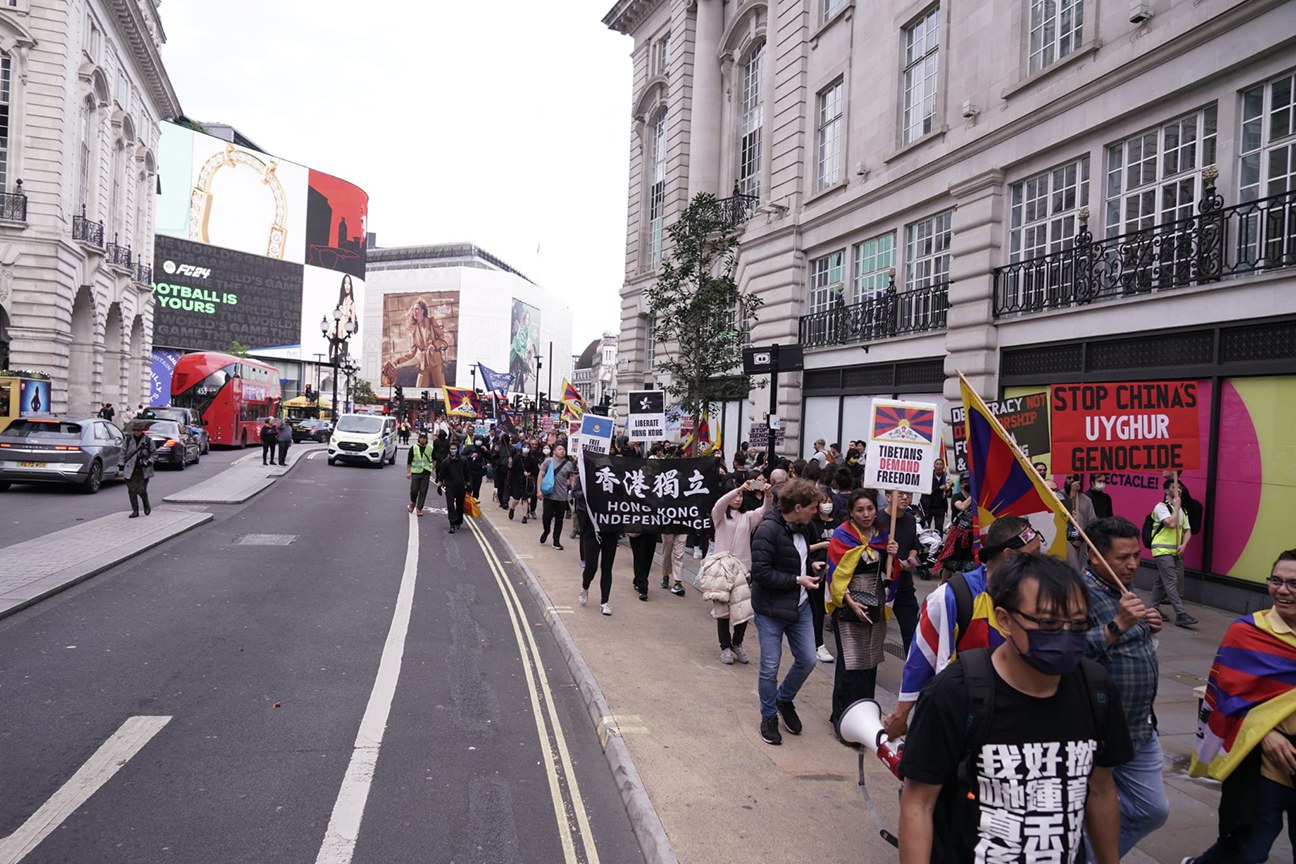
From the National Day to the Day of the Exile
The operation was not a single-ethnic demonstration. The participants expressed the view that the political framework was the same for the repression of the state of Hong Kong, the situation of the Uighurs in Xinjiang, Tibetan culture and religious control, and the encounter of dissidents in mainland China. Taiwan Plus reported that demonstrators also criticized the National Unity Progress Promotion Act, which came into force in July this year, and argued that its provisions relating to acts outside the country could further increase Beijing ' s pressure on overseas communities.
原始来源 · taiwanplus.comLondon Protesters Mark China’s National Day With Calls for Freedomtaiwanplus.com ↗Similar concerns have recently been incorporated into the official political documents of the British Parliament. The motion by the parliamentarians concerned China's repression of Tibetans, and specifically mentioned that legal provisions could be used against individuals and organizations abroad that were referred to as “disrupting national unity”. For Hong Kongers, Tibetans and Uighurs already living in England, the extraterritorial deterrence of Beijing law is therefore no longer merely an abstract discussion.
原始来源 · edm.parliament.ukUK Parliament: Chinese state repression against Tibetansedm.parliament.uk ↗Embassy call, police arrive
The Hong Kong Labour Inspectorate recorded that the British police had arrived at the scene during the night of the demonstration. The police officers indicated that they had received complaints from the Chinese Embassy regarding the obstruction of access. The Embassy had previously fenced and arranged for security personnel.
This detail reveals the most realistic power collisions of protests abroad: in China, similar slogans, flags and commemorative events may be directly disposed of by the police; In the United Kingdom, the embassy can call the police, but whether it constitutes a violation of the law and how the police will deal with it must be determined by British law and not by Chinese political demands.
This institutional difference also explains the persistence of protests abroad. Many participants were unable to hold the same event publicly in Hong Kong, Xinjiang, Tibet or mainland China, and cities such as London, Manchester, Toronto and Vancouver became alternative spaces for political expression.
Super Embassy lets security disputes on the scene
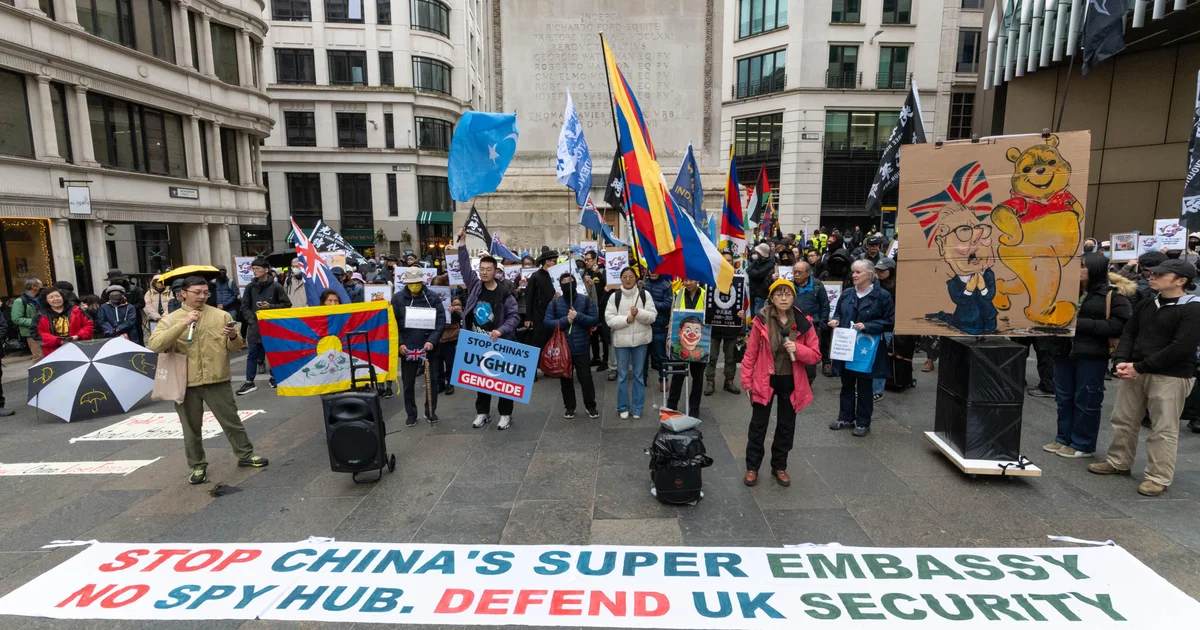
This year's London protests have a background that cannot be bypassed: China's plan to build a new embassy in Royal Mint Court. The British Government has approved projects, while local residents, parliamentarians and exile communities continue to fear that larger diplomatic facilities may increase the risk of surveillance and cross-border harassment. The British High Court rejected the residents ' judicial challenge to the planned approval in July this year, but the political controversy over security and protest space has not been over.
This is why the demonstration of 1 October was more than an annual commemoration. The participants face a real problem: how does the British government ensure that they can express their opposition safely near China’s diplomatic service when Beijing expands diplomatic infrastructure in the UK, while exiled communities like Hong Kong, Uighur, and Tibet are concerned about cross-border repression?
The United Kingdom has had a direct precedent in the past. In 2022, Hong Kong democratic protester Bob Chan was dragged into the consulate and beaten while demonstrating outside the Chinese Consulate in Manchester. The British Government later requested the Chinese officials concerned to waive their diplomatic immunity in order to be questioned by the police, and China subsequently transferred six officials from the United Kingdom. This incident made “security of demonstrations near embassies and consulates” a matter of specific historical records rather than a hypothesis.
A protest shows two completely different political spaces
Beijing could demonstrate political unity at the national ceremony, but it could not ask the overseas community to replicate the same silence. The simultaneous appearance of Hong Kong, Tibet, Uighur and Chinese dissidents outside the London Embassy on 1 October illustrates the control policy of the Communist Party in different regions and is forming a common opposition coalition overseas.
The political claims of these groups are not identical, but they face a common target: a party State system that seeks to extend the internal political exclusion zones beyond its borders. From the extraterritorial application of the Hong Kong National Security Law to the reward of overseas activists and the risk of cross-border repression discussed in the British Parliament, the political borders of Beijing have long ceased to overlap with China ' s borders.
So it is not the number of people, but space, that is truly worth recording in London. The memories that are forbidden to display in Hong Kong, the claims that cannot be publicly expressed in Xinjiang and Tibet, and the silenced opposition in mainland China are reunified in front of the Chinese Embassy. The CPC has control over the national events in its territory, but it has no complete control over how exiles tell the story of the day.
Article discussion
Verified members can discuss this report publicly and manage their own content.
Checking member sign-in status…