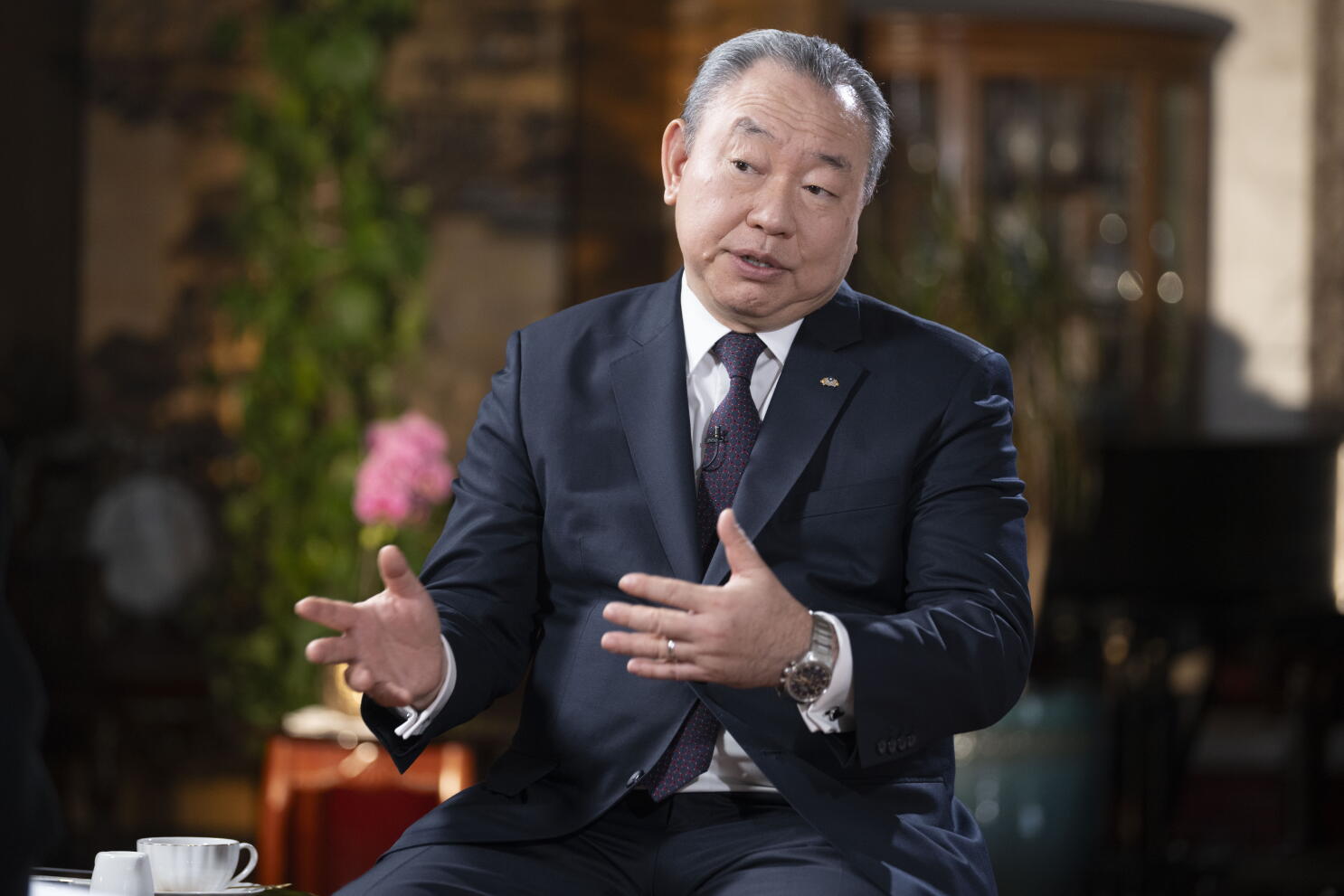
Taiwan’s representative to the United States, Zou Dae-hwan, in an interview with the American Voice on October 6, pointed a debate over historical narratives directly to Xi. In response to Xi's recent remarks at the White House State Dinner about the “Stolen-Americans fighting side by side” of World War II, RYO accused the Communist Party of having long manipulated the history of the war, taking the sacrifice and the war effort of the Government of the Republic of China and the civil and military in 1937-1945 and describing it in English as “stolen valor” — the "stolen — the "playing of the war."
This debate is not a mere historical one. The CCP has continuously intensified in recent years the official narrative “CCP is the pillar of the war against Japan” and has directly linked the victory of the Second League to the legitimacy of the State of the People's Republic of China today. But in the international law and diplomacy realities of the year, it was the Government of the Republic of China that aligned itself with the United States, received United States military assistance and assumed the lead in the positive battlefield. The People ' s Republic of China was not established until 1949.
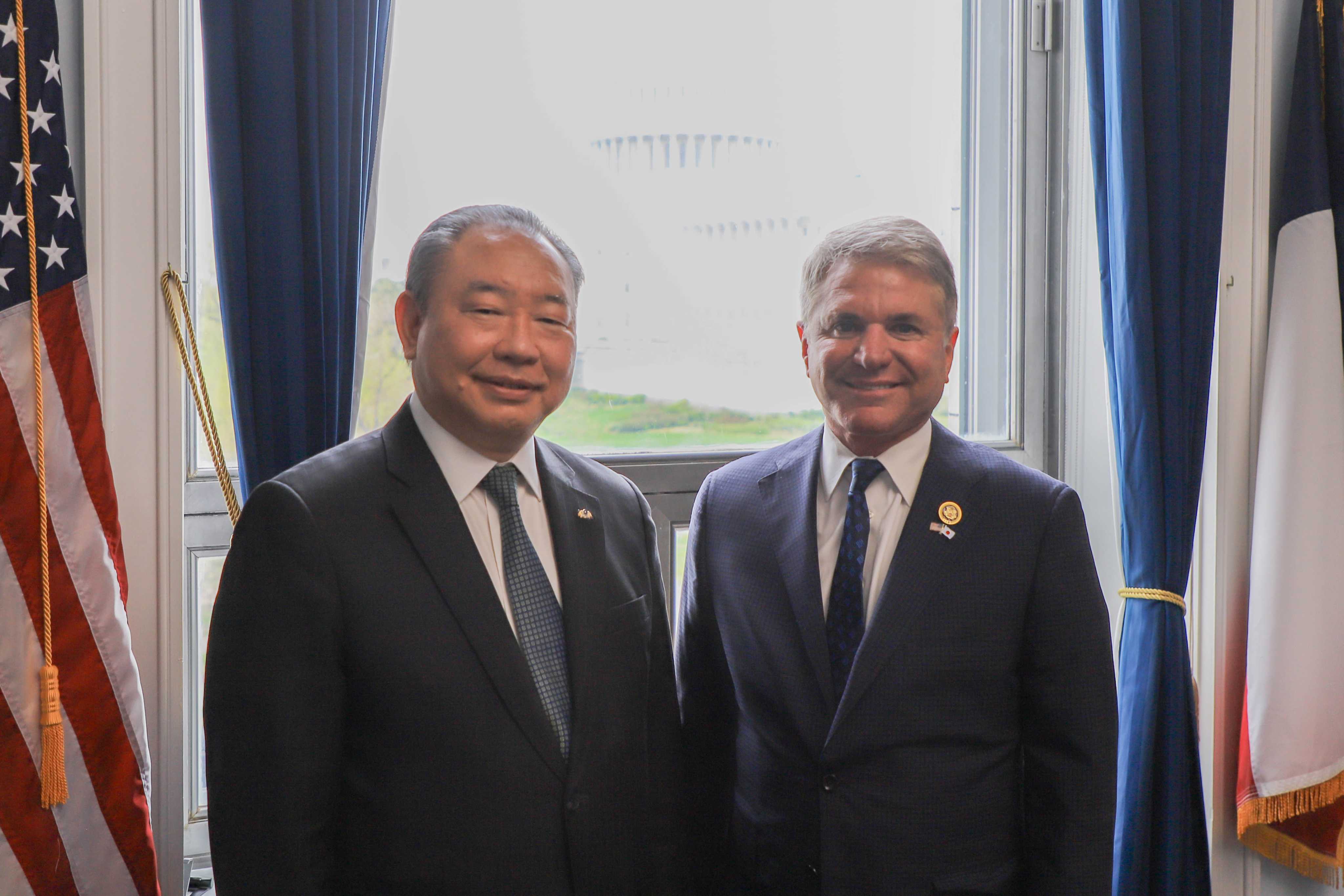
Yu Da-Chu referred specifically to the “SDU”. This historic symbol has been frequently present in recent years at high-level diplomatic missions in China and the United States, and has been wrapped in Beijing as a common memory of Chinese-American friendship. However, the SDU was cooperating and supporting the then Government of the Republic of China and its army. The fact that this history was carried over directly to the People ' s Republic of China after 1949 effectively completed a major change in political narrative.
The significance of such a rewritten history lies in the CCP ' s attempt to incorporate the international credibility of the different regimes of the past, the sacrifices of war and the national memory into its own legitimacy. For Beijing, the history of resistance is not only history, but part of today’s narratives to Taiwan: if the representation and the victory of the Republic of China in World War II can be re-interpretation as “a victory for the Chinese people under the Communist Party of China,” it will be easier to weaken Taiwan’s space to continue to claim political subjectivity with the historical continuity of the Republic of China.
In his interview, Yu Dae-jun also stressed that relations between the United States and Taiwan had not changed as a result of the Trump and Xi Summits. He said that the United States maintained different levels of communication before and after the Summit and that the United States policy towards the Taiwan Relations Act continued to be based on the Taiwan Relations Act, three communiqués and six pledges. He also mentioned that the second term of the Trump mandate had authorized approximately $11 billion for sales to the Tatmadaw Kyi, and that delivery of the long-delayed F-16V Block 70 had begun.
The two themes — history and security — are indeed interlinked. While Beijing has reduced the international legitimacy of the Republic of China through historical narratives, it has forced Taiwan to accept the “one-China” framework through military and diplomatic pressure. Taiwan, for its part, tried to prove by historical continuity, democratic institutions and real international cooperation that it was not a local regime in the Beijing narrative.
Xi's restatement of the history of “one-on-one” in the White House seemed to be mild and had a clear political purpose. The counter-attack by RYU has brought the problem back to the basic fact that it was the Republic of China, which fought in alliance with the United States during World War II, and not the unestablished People ' s Republic of China. Who has this history, not only in the history books, but also as part of today's competition for legitimacy on both sides of the Straits.
Article discussion
Verified members can discuss this report publicly and manage their own content.
Checking member sign-in status…