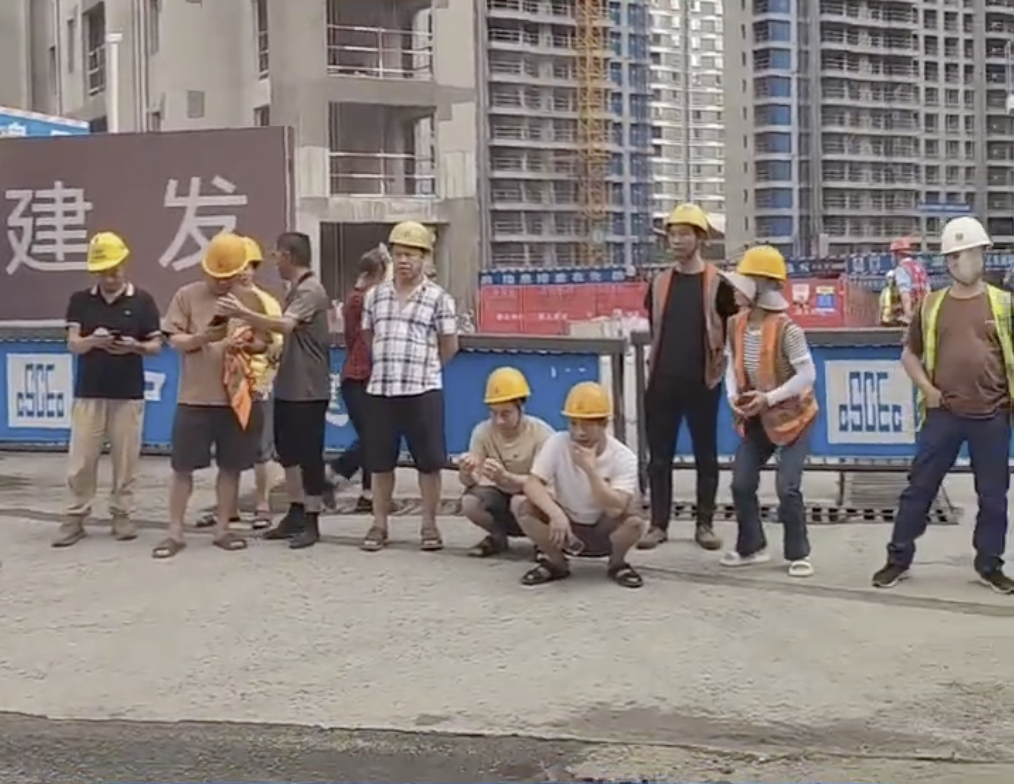
The latest quarterly report of the China Dissentant Monitor (China) under the umbrella of Freedom House shows that between July and September 2026, 948 public protests and objections were recorded in various parts of China, an increase of 102 from 846 in the second quarter. The workers ' protests accounted for 44 per cent, the purchasers and owners of houses 27 per cent and the rural inhabitants 9 per cent. In the context of economic growth, employment and continued real estate, pay for work and housing rights have become the two most concentrated social conflicts.
原始来源 · freedomhouse.org自由之家《中国异议监测》2026年第三季度报告原始报告收录948起抗议事件、劳动者抗议比例、国企建筑工地讨薪与公众抗议数据。freedomhouse.org ↗Salary protests were made early and construction sites became the main scene
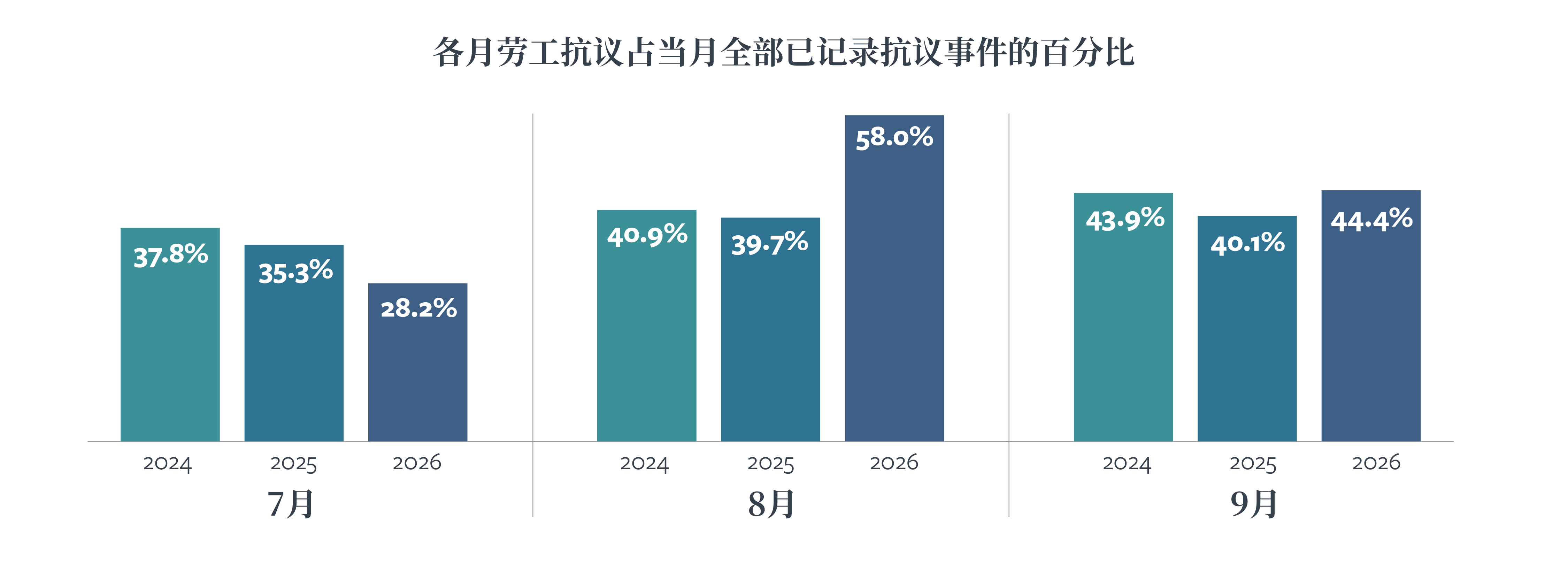
The report states that in the third quarter of the protests, the proportion of labour-related incidents rose from 38.2 per cent to 45.2 per cent during the same period in
- This proportion was 28 per cent in July 2026 and 58 per cent in August. Pay-raising initiatives, which are usually concentrated before spring, may well be in high-growth stages by
- The researchers remind that the record of protests depends on public information that can be observed and cannot simply be equated with the total number of actual incidents that occur throughout the country.
Construction sites account for 52.8 per cent of workers ' protests, significantly higher than the construction sector ' s share of non-farm employment. The real estate developers had difficulty in funding the work, which was passed through the lump sum, subcontracting and labour chain, and ultimately left the actual workers with the consequences of a cash flow break. The fact that the work done and the work done were not paid on time indicates that the lack of payment is not only a failure of individual enterprises but also relates to the monitoring of the funds for the work, the responsibility for subcontracting and the actual implementation of labour law.
State-owned construction enterprises are also frequently paid
A total of 85 protests were recorded in 2026 by the Chinese Construction Group-related projects. The third quarter of the protests in relation to the construction of State-owned enterprises accounted for 38.1 per cent of the protests, involving 43 units belonging to 15 State-owned enterprise groups. The State enterprise background does not automatically provide workers with the guarantee of wages on time. There is a distance to be traced between the extent of the work, the contract income and the actual salary payments at the construction site, which are publicly published.
This set of data raises a specific public responsibility question: is the local community ' s unpaid disposal initiated in a timely manner, does the housing sector implement a payroll-specific and lump sum-disbursing system, and does the State financial supervision verify the payment responsibilities of the construction units to which it belongs? If the project portfolio still has contracts, progress and value of production, but there is a continuous collective worker-salary, then the responsibility for interpretation cannot be placed on the last-end labour subcontractor alone. The financial flows of specific projects, the use of salary-holders, the amount of salary arrears and the outcome of processing should be disclosed.
From site to factory, protest is not a single industry phenomenon
The report recorded that the factory protest accounted for 24.5 per cent of the workers ' protest in the third quarter. The protests were even more pronounced in the coastal manufacturing areas of Zhejiang, Jiangsu, Guangdong and Fujian. Of the 30 workers ' protests recorded by Zhejiang, 16 involved factories, at least 10 in the footwear, furniture and the like. The foreign trade manufacturing sector is not exactly the same as the market pressures on the construction industry, but when enterprises pass on their risks to their workers, the payment of wages becomes the most immediate conflict.
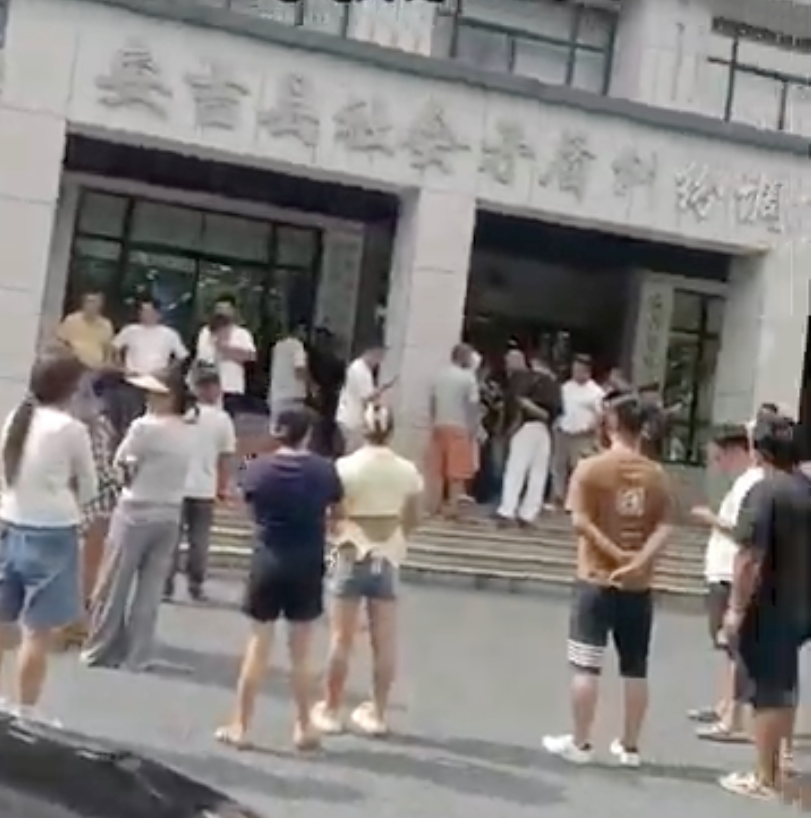
The study also found an upward trend in the rate of private construction sites collecting wages by means of high-rise, threatening to jump. This type of approach still accounts for only 2.4 per cent of workers ' protests in the third quarter, but its very appearance reflects the difficulty of some workers receiving timely remuneration through regular complaints and legal channels. Workers should not risk their lives to get the wages they already earned; It is even more worth asking why labour inspections and judicial remedies have not played their role before the situation escalated.
The decline in statistics does not mean that social discontent is declining
The total number of records for the third quarter decreased by 33 per cent compared to the same period in
- Freedom House linked this change to an increase in cybercensorship, reminding the outside world that it could not be said that the protests had actually decreased. Since the Agency began its records in June 2022, it has recorded a cumulative 16,845 incidents of dissent, of which at least 1,359 were related repeat protests. Some of the parties returned to the streets at once, meaning that the original dispute had not been resolved in substance.
At the level of political governance, protest data do not really reveal abstract social sentiment, but rather a specific public responsibility: who owes the works, who supervises the wages, who is responsible for the delivery of the house, who decides on the compensation for the expropriation of land, and why the complaints are not resolved. If the Government merely counted the number of protests and demanded that the grass-roots level should be kept low, and the outcome of the dispute not made public, it would allow the contradiction to accumulate in a single case of sub-judiciary rights. The most convincing response to these events should be to pay salaries, deliver delivery, publicly compensate and hold accountable for negligence, rather than merely reducing public-visibility protest messages.
Article discussion
Verified members can discuss this report publicly and manage their own content.
Checking member sign-in status…