
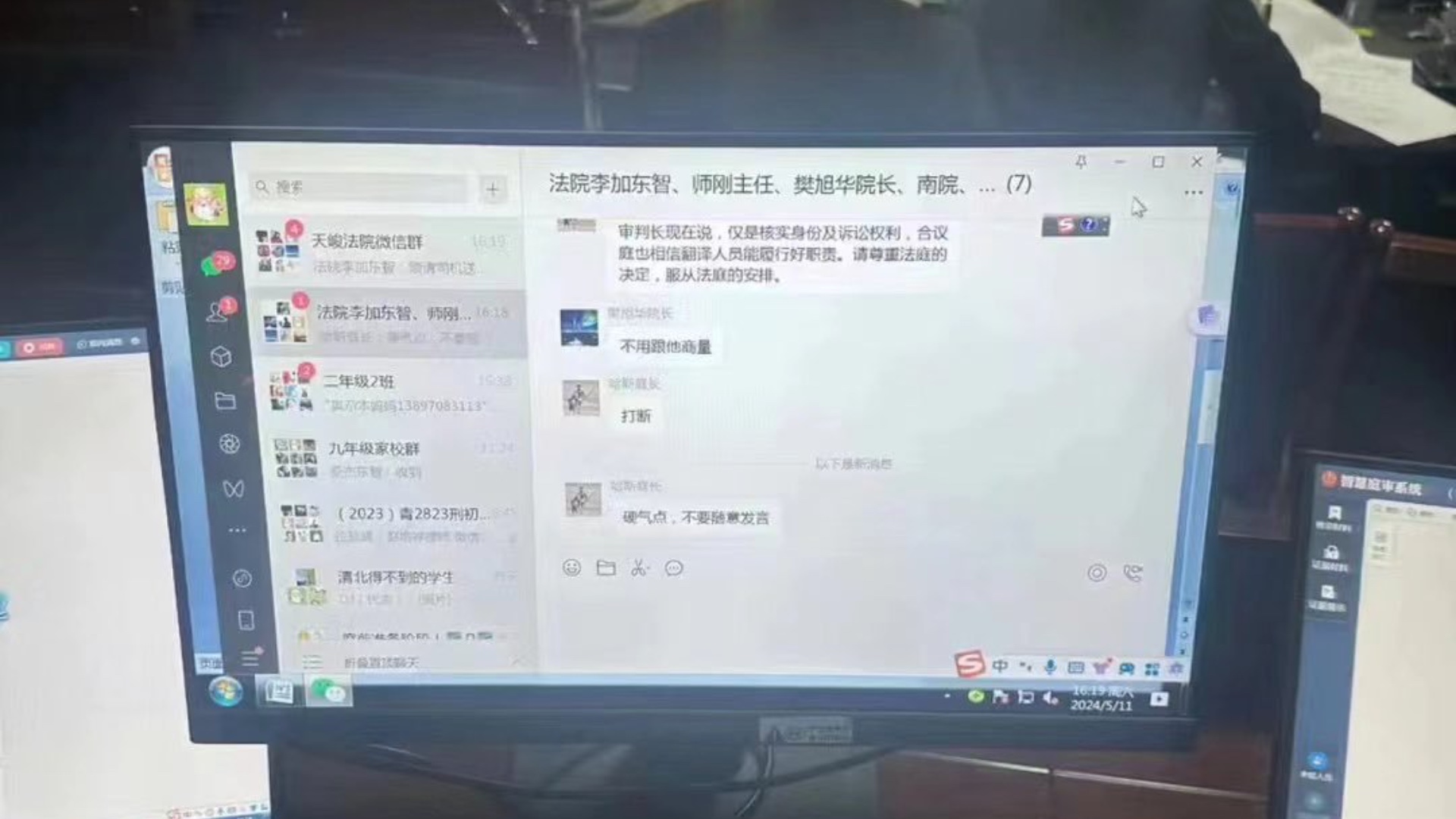
In 2024, a photograph of the bench of the Tianjin People ' s Court in Tianxiang County, Qinghai Province, exposed the power of the Chinese judiciary to public scrutiny. Judges who are hearing criminal cases receive real-time orders from court leaders through the Micro-Trust Consortium. The words “interrupted” and “no discussion” in the group were used to “disrupt” the “hard point” and to “no consultation with him”, which raised strong questions in the legal community about the independence of the trial and the interference of the judiciary.
Two and a half years later, Focus China, following up on official court announcements and public employment information, found that President Hastounlu, the Criminal Chamber of the Middle People ' s Court of Heathy County, who was involved in the trial intervention dispute, had now served as Secretary and President of the Ulan People ' s Court Party; The President of the Tianjin People ' s Court Court, Zhua, continues to serve, and many judicial personnel involved in the trial are still in the court system.
Even more ironically, on 4 November 2026, Hashdaw, in his capacity as President of the Court, presided over a meeting of integrity of newly appointed cadres, demanding that subordinates strictly observe the “three provisions” preventing interference in the administration of justice, emphasizing the requirements of justice and discipline.
From the Wisdom Command Court to the Integrity Education, the change of position of the judicial officer over the past two years provides a stark example of the practical functioning of the CCP judicial system in terms of internal oversight, appointment of cadres and accountability for authority.
I. Wisdom on the bench: judges sitting, leaders giving orders behind the scenes
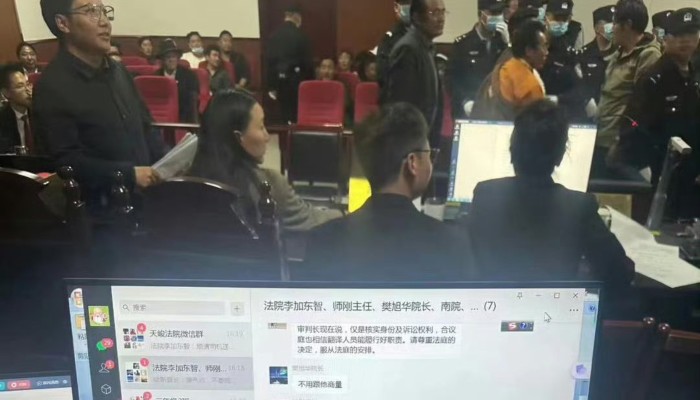
On 11 May 2024, the People ' s Court of Tianjin District, Haisy Mongolia Autonomous District, Qinghai Province, was considering the case of 12 persons accused of stalking.
This case dates back to November
- According to previous judgements obtained by the media, 12 defendants were detained, arrested and sentenced to prison terms ranging from nine months to four years and six months by the Tianjin District Court in November 2021.
In February 2023, the second instance of the Haisi Intermediate People ' s Court set aside the sentence and remanded the case back to the trial.
The hearing on 11 May 2024 was the second day of the reopening of the case. Several defence counsel contested the evidence materials, the translation of Tibetan, the legality of the proceedings and the recusal of the trial staff.
On the afternoon of that day, the presiding judge adjourned the trial. The issue of access to the paper file by the defence lawyer Liu Ziyuan has not yet been resolved and it was unexpected to find, through the courtroom, that a seven-person micro-trust group appeared on the judges ' computer screen.
This Twitter community is not an ordinary work community. The chat directly involved the ongoing trial.
According to photographs disclosed in the media, such as the Southern Weekend, Financial News, the following statements were made in the group:
原始来源 · infzm.com南方周末:上级法院指导办案的边界infzm.com ↗原始来源 · china.caixin.com财新:遥控指挥下级审案引持续关注china.caixin.com ↗“No discussion with him. The blogger adds:
"Interrupt. The blogger adds:
> Harder, do not make a statement. The blogger adds:
The accounts in which the relevant information was sent were those of President Wah and President Hass.
(a) The President of the People's Court of Tianjin County, who was investigated by the media; President Hassy corresponded to Hastysian, President of the Criminal Division of the Middle People's Court of the State of Heathy. The latter also served as the former presiding judge of the second trial in this case.
This means that the former presiding judge of the second instance, who has already reversed the original judgement and remanded the case to a higher court, still participates in the specific hearing of the lower court through the Twitter community.
Of even greater concern is the fact that some of the micro-information echoes the statements of the presiding judge on the ground. Defence counsel therefore considers that the presiding judge is not presiding independently but is under real-time direction from the court.
The lawyer immediately took a photo to take a statement and called the police. The police then entered the court scene and the chatting records and computers were important clues in the investigation of the incident.
A criminal trial that should have been conducted around facts, evidence and law revealed a chain of command outside the courtroom.
II. Two and a half years of scandal: persons involved in the justice system are still in the service
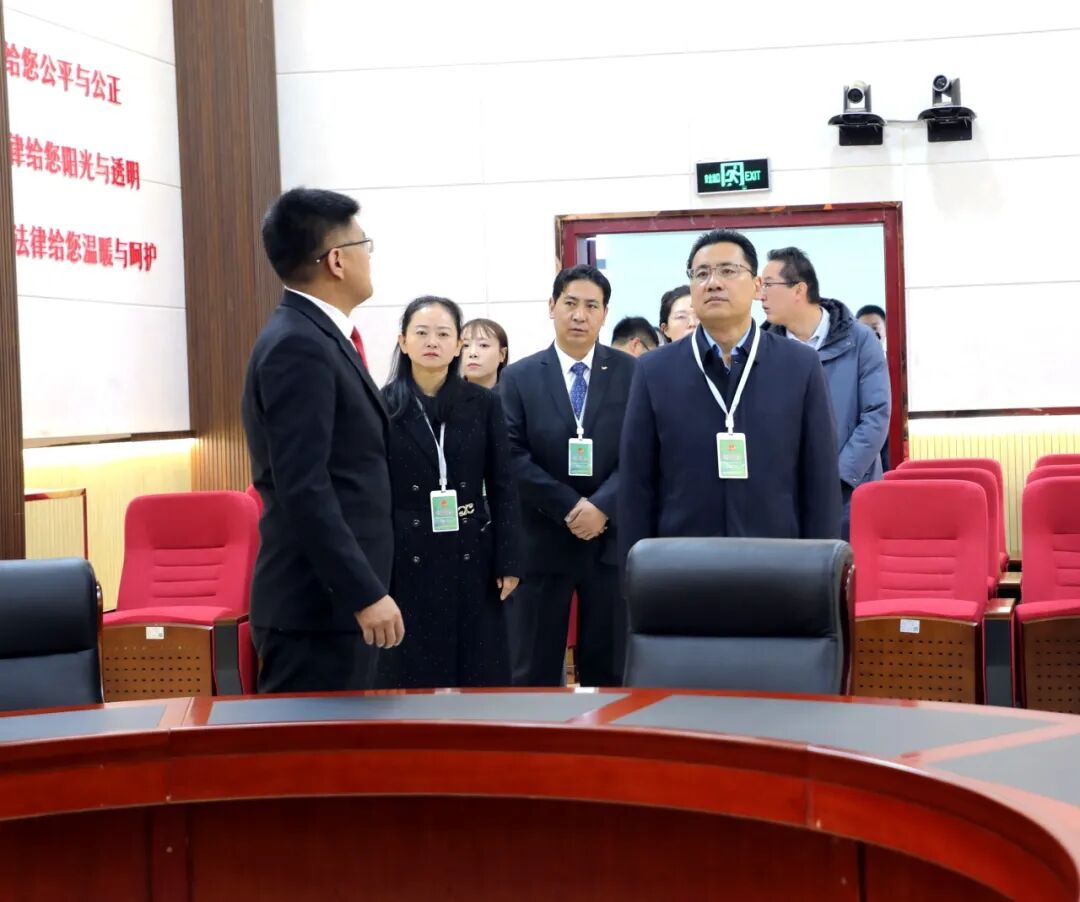
On 4 November 2026, the Ulan District People's Court published the report “Building a firm and sound line of thought and holding the first buttons in office”.
The report clearly documented that the Secretary-General and President of the Ulan People ' s Court Party, Hassy, presided over the collective integrity talks of the newly appointed cadres.
He called on the cadres to uphold the absolute leadership of the party in the administration of justice and to uphold the credibility of the judiciary by strictly observing the “three provisions” preventing interference with the administration of justice.
The President of the Tribunal, who issued the court order within the Twitter community in the same year, is sitting in the position of President of the Court and teaching other members of the judiciary about the disciplinary requirements for preventing interference in the administration of justice.
This is not from anonymous reports, but from official reports issued by the Ulan District People ' s Court itself.
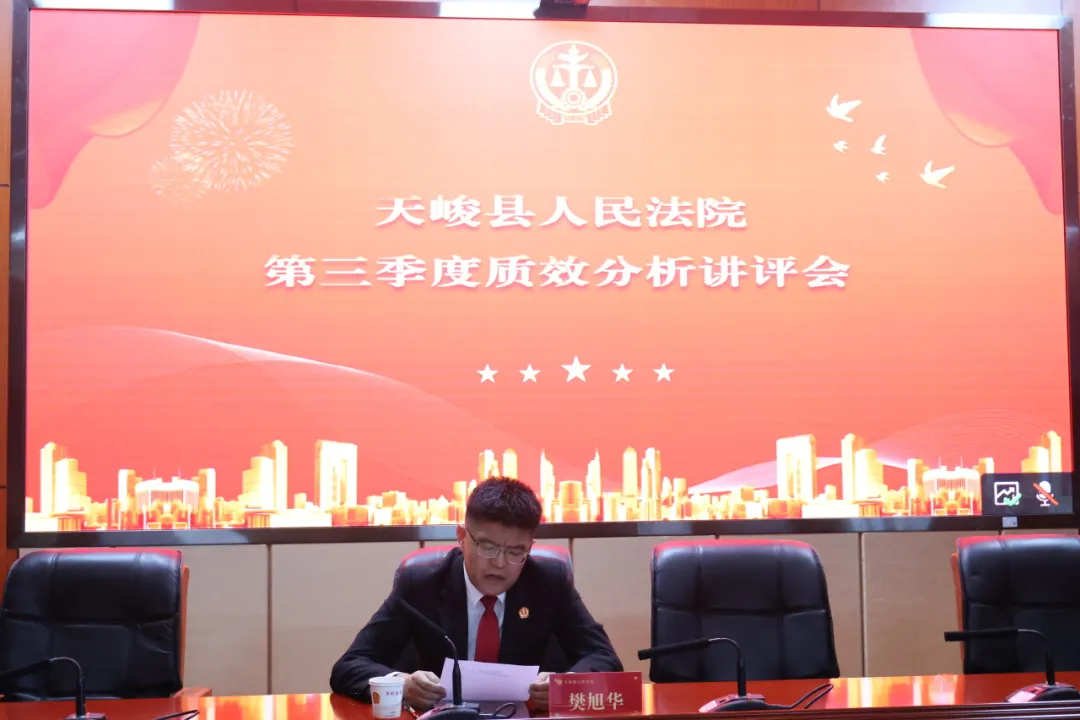
原始来源 · thepaper.cn乌兰县法院:哈斯朝鲁主持廉政谈话thepaper.cn ↗Also, according to the Tsingsheng District People ' s Court, published on 22 October 2026, Zhua remains the President of the Court and presides over the third quarter of the trial quality analysis session.
At the meeting, he called for enhanced trial supervision, the regulation of evidence and the strict application of the “four categories” supervisory and adjudicatory review system.
原始来源 · thepaper.cn天峻县法院:樊旭华主持审判质效会议thepaper.cn ↗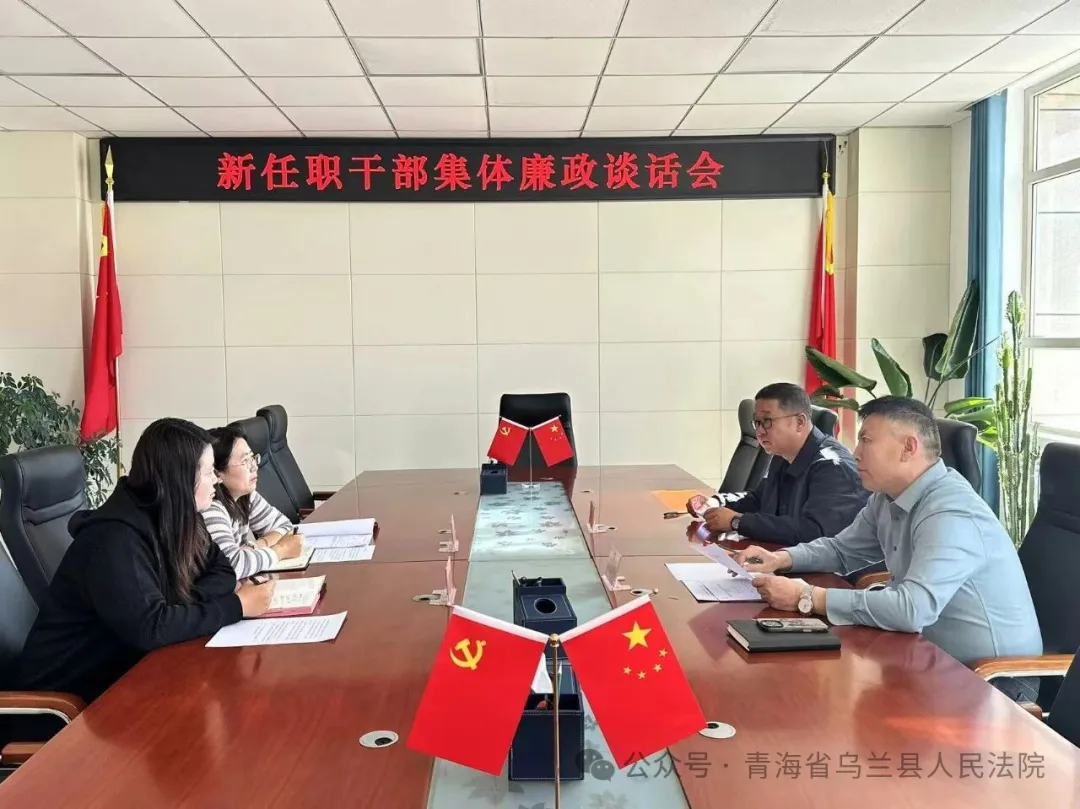
Others who appeared in the controversial Twitter community that year also appeared in the public reporting of the Court.
On 9 February 2026, the official publication of the Tianjin County Court of Law on the study of the report on the work of the Central College of the State of Heathy revealed that:
- Nam Kwatengin remains a member and Vice-President of the Tianjin District People ' s Court Party. In 2024, he was the presiding judge of the case in question.
- Davaji Deputy Director General of the Executive Board of the Tianjin District People ' s Court. At the time of the incident, he was a case judge and the micro-letter account was being posted on his computer.
- Division has just appeared as a contributor to the General Office in the official report of the Tianjin County Court of 11 February 2026, and Nan Kwa Tsing Zhu has served as the issuer of the report.
These records indicate at least that many key individuals who were involved in the events of 2024 remained active in the justice system in 2026.
The authorities of Qinghai had indicated that they would verify the incident. However, as of the current release, full public findings, decisions on the responsibility of the persons concerned and clear records of disciplinary action had not been found.
The changes in functions that have taken place are documented and the public accountability results that correspond to the contentious court intervention are always lacking in the same clarity.
III. The Court has recognized “irregularity” but interpreted the commanding court as a legitimate oversight
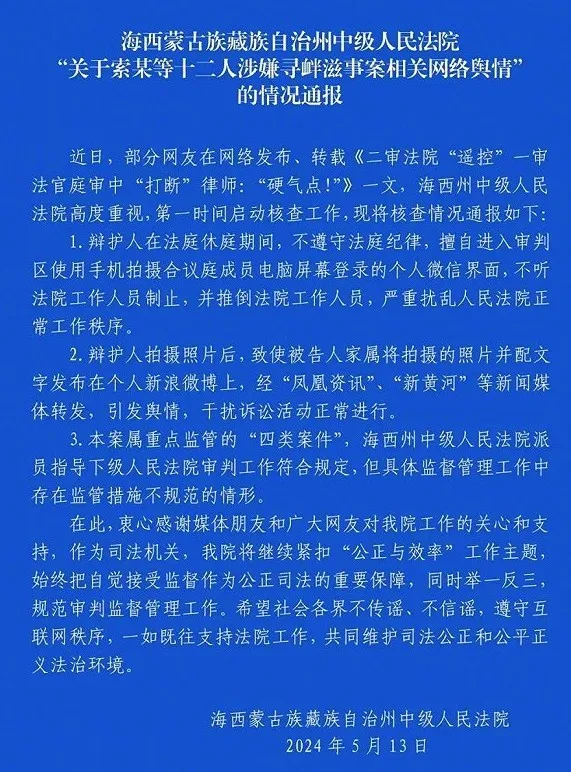
On the evening of 13 May 2024, the Haisi Intermediate People ' s Court issued an information circular.
In response to public opinion concerns, the Chamber of Deputies did not deny that the monitoring and guidance activities had taken place, but interpreted the events as monitoring the priority cases.
The report states that:
> The case is a `four categories' case that is primarily under supervision, and the People's Court at the level of the High People's Court, under the supervision of the Commissioner of the High People's Court of the State of Heathy, is in accordance with the rules, but there are irregularities in the supervision of the administration. The blogger adds:
At the same time, the briefing focused on the alleged unauthorized access of defence lawyers to the trial area to film the Twitter interface and on alleged acts of disturbing the working order of the Court.
This response has further widened the controversy.
The key issue before the Tribunal is whether the court leadership has used its executive powers to interfere with the independent trial of the Full Court. The official response, however, was initially devoted to criticalizing lawyers who exposed the chat record.
Article 4 of the People ' s Courts Organization Act clearly states that the people ' s courts shall exercise their judicial power independently and in accordance with the law; Article 10 establishes the supervisory relationship between the higher courts and the lower courts.
Oversight is not the equivalent of a substitute trial.
The previous document of the Supreme People ' s Court on the reform of judicial accountability also required that the President of the House of Representatives should strictly limit his or her duties and competence to making a biased opinion on cases not being heard.
In May 2024, law experts such as Law Tung Yan and Zhang Jianwei, who are professors of the Faculty of Law of the University of Qinghua, stated in an interview with the media that the chain of command and obedience between superior and lower courts was not the same as that of the general administration, and that supervision could not directly interfere with factual findings and specific hearings.
The Chinese courts have emphasized that judges decide in accordance with the law, while maintaining a rigorous system of supervision of the administration of the President of the Court and the higher courts. Where the two do not have an effective line, the oversight power may be translated into direct control over individual trials.
The Qinghai incident revealed a serious conflict between the judicial and administrative powers of the courts: the judge is a nominal judge, but the leader may decide behind the scenes how the trial will take place.
This not only affects the right to a defence, but also diminishes the significance of the remand system.
The higher court should have given the case an opportunity to re-examine the evidence and correct procedural errors by setting aside the original judgement and remanding it back. When the former presiding judge of second instance continued to intervene in the retrial, the independence of the second trial was directly challenged.
IV. From internal control of the courts to political leadership of the party: institutional dilemmas of the judiciary
The Qinghai Micro-Sistema incident is not an isolated technical management issue.
China ' s judicial system has two long operating logics: one of independent trial, procedural justice and judicial accountability, as provided for by law; The other set is party political leadership of the political and legal organs, management of cadres, reporting on major matters and administration of the administrative hierarchy within the courts.
On 14 July 2025, Xinhua was authorized to publish the CCP Opinions on Strengthening Trials in the New Age.
While emphasizing the independent and impartial exercise of the right to a trial, the document clearly requires that:
“Resolutely uphold the central authority of the party and its unity of leadership. The blogger adds:
The document also calls for the implementation of reporting on major matters, adherence to the principle of party management of cadres and the use of political criteria as the first criterion for the selection of court leaders.
This institutional arrangement determines that Chinese courts are not independent of the ruling party ' s organizational system. The political evaluation, appointment and organizational management of court-led cadres are influenced by the party cadre system.
Judicial accountability requires that judges be accountable for decisions, and there is a multilayered oversight of the President, the President, the trial management bodies and the higher courts within the Court. The leadership of personnel appraisals and job management in practice has a significant organizational impact on the hosting of judges.
This structure of power is prone to the dilemma of separating responsibility from decision-making power.
The person who actually presided over the case was held to account, and the person who actually affected the trial might not have signed the judgement.
The micro-clinics of the Qinghai incident brought this structure intuitively.
The deeper question is the relationship between the objectives of justice and political administration.
The Communist Party has long emphasized the need for justice to serve the political agenda and to maintain social stability. The 2020 Central Trial Working Paper once again incorporated national security, social stability and political leadership into the basic requirements of the trial.
The rule of law, the maintenance of stability and the implementation of political deployments are required to be achieved simultaneously in official documents. However, where major public disputes, politically sensitive cases or local conflicts of interest are involved, there may be a substantial conflict of purpose between different objectives.
When there is a contradiction between the political responsibility of the courts, their administrative performance and their independent trial according to law, and there is a lack of external accountability mechanisms that are not controlled by the internal system of power, the institutional space within which judges can assert independent judgement is limited.
This is precisely the institutional problem reflected in the Qinghai events.
The CCP could have a large number of disciplinary provisions to prevent judicial interference, but the line between oversight and intervention could be broken in actual cases as long as the President of the Court was able to influence the specific trial by organizing the authority.
The fate of the accused, who were overshadowed by the Court ' s internal disputes
The most vulnerable to neglect is the 12 accused who were originally in the criminal justice centre.
They were convicted as early as 2020, convicted in 2021, their original sentence was quashed in 2023 and their retrial in 2024 was interrupted by the trial intervention dispute.
Defence counsel had commented on the incompleteness of the evidence, the Tibetan translation, the appearance of witnesses, the challenge application and the exclusion of illegal evidence.
These matters are directly related to the ability of the accused to have an adequate defence and to the ability of the Court to render a credible decision in a lawful process.
On 22 July 2024, the Qinghai Provincial High People ' s Court announced that, in order to ensure justice, it had been decided that the case of 12 persons accused of stalking in the Sozi region of Haidong City should be assigned to the People ' s Court of the Lodu District of the city of Hadun to be heard in accordance with the first instance procedure of the criminal law.
This is the most important adjustment of the judicial process after the events were revealed.
However, the decision to resolve the case by a different jurisdiction is that of which court the case continues, and does not automatically resolve the court intervention that has already taken place and its accountability.
As of 11 November 2026, the current open information search has not yet found a reliable final decision in the case of the Landau District Court, nor has it found authoritative public information that would have fully illustrated the subsequent judicial situation of the 12 accused.
In contrast, the year of office, meetings and integrity education activities led by the relevant courts continued to be reported in the official press.
The curriculum vitae of the officials can be updated through the Court ' s public information system, while the judicial situation of the ordinary accused lacks equally transparent and continuous public records.
When the justice system is more focused on organizational performance and administration, and the procedural rights of the parties, the outcome of the case and the accountability of the judiciary are not effectively made public, it is difficult to ensure that judicial oversight is truly applied to those affected by the trials.
VI. Judicial independence cannot be confined to documents, accountability must touch on the power itself
In 2015, the Central Office of the Communist Party and the Office of the State Council issued provisions to prevent interference by leaders in the administration of justice, which clearly require that interference with the administration of justice be documented, reported and held accountable.
Since then, the Supreme People ' s Court has repeatedly emphasized judicial accountability, proposing that the decision-makers be made and the decision-makers be held accountable.
However, the Qinghai incident proved that, at least in the 11 May 2024 hearing, the written system did not prevent the court leadership from directly affecting trial activities through micro-credential.
The lack of transparency in information on judicial accountability was further highlighted by the public record of appointments more than two years later.
Hastowed to his country from the Head of the Central Court of Hessi County to the President of the Uran County Court, Zhua continued to preside over the Tsingsheng County Court, while Nan Kwa Tsingshin, Dawaji and others continued to serve in the court system. These are facts that can be confirmed by official records.
The fact of these appointments does not in itself directly demonstrate that the person concerned was not subject to internal treatment, but is sufficient to show that the court intervention that triggered a national controversy in that year did not constitute a clear public accountability process.
At the institutional level, the fundamental contradiction in China ' s justice system is that courts are required to stand trial independently in accordance with the law, but are subject to the political leadership and management system of the party organizations; Judges are called to account for their decisions, but may be influenced in practice by the authorities of the courts and higher management bodies.
The system makes it difficult for the judiciary to escape the structural pressures of administrativeization and politicization.
The Qinghai bench is simply a surprise for power relations that are normally hidden in internal management processes.
The real determination of judicial fairness is not whether the Court has been able to hold a number of integrity talks per year or how many times it has repeated “independent trials according to law”, but whether those in power are effectively restrained, whether those who intervene in the case are held accountable and whether ordinary citizens are able to obtain a fair trial before a court that is not governed by outside powers.
Two and a half years ago, the lawyer photographed several lines of tweets on the Court ' s computer; Two and a half years later, the relevant judicial officials continued to appear in official posts and in the work reports.
From that photo to today's working record, the “Welby-Surrender Remote Hearing” incident in Qinghai revealed not only a judicial process dispute, but also a long-standing institutional conflict between the functioning of the courts and the principle of judicial independence under the Communist Party of China.

Reader comments
Loading comments…