
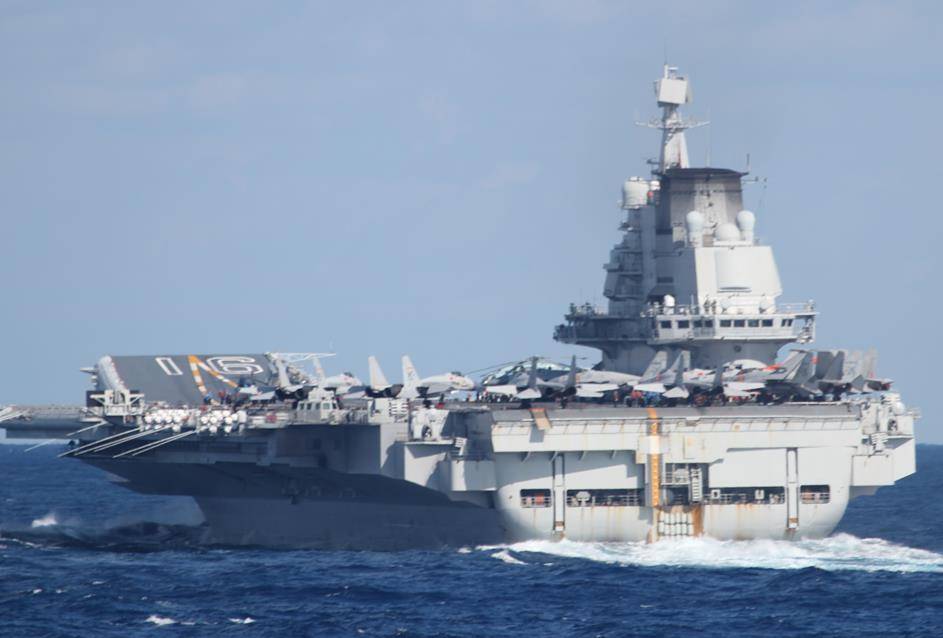
The Chinese Liberation Army has recently launched a large-scale military deployment around Taiwan, the South China Sea and the Western Pacific Ocean, bringing the total number of naval and naval vessels to over
- On November 10, Taiwan's Defense Minister, Kwok Lichung, confirmed that the Liaoning carrier fleet and other war zone fleets were conducting a “regional rejection” exercise in the western Pacific Ocean. The analysis of the American War Research Institute and the American Business Institute indicates that the military operation in the inter-war zone of the Liberation Army has the strategic character of a simulated siege and isolation of Taiwan, focusing on the ability to cut off air and sea traffic in Taiwan during the Taiwan Straits conflict and to prevent the intervention of outside military forces.
The key change in this military deployment is the extension of the military campaign against Taiwan from the Taiwan Straits to the western Pacific Ocean east of Taiwan and the exercise of military means of sea and air separation against Taiwan through coordination of maritime forces in multiple war zones.
Beijing military deterrence to Taiwan is developing further from normal military aircraft bypassing the towers and cruises of warships to build capacity for coordinated maritime blockades and beyond the sea in the cross-war zone.
Over 100 military and police vessels are deployed across the sea and three battle zones are launched simultaneously
On 3 November, U Xian, Secretary-General of the Taiwan National Security Conference, disclosed through social platform X that the Chinese Liberation Army (PLA) Navy and the Chinese Navy were operating more than 100 vessels around Taiwan, in the South China Sea and in the Western Pacific Ocean.
This count covers naval and naval vessels in different areas, reflecting the size of the Chinese military ' s deployment in multiple directions.
On 6 November, the United States War Research Institute (ISW) and the United States Enterprise Research Institute (AEI) jointly released the Update on China and Taiwan, which provided a systematic analysis of the military activity.
原始来源 · understandingwar.orgISW/AEI:2026年11月6日中国与台湾情势更新understandingwar.org ↗The report states that China ' s maritime strength forms two major deployment areas.
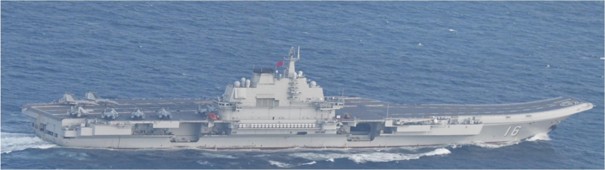
The first group, which is located between Taiwan and Guam, includes four naval task forces from the three war zones of the eastern, northern and southern areas of the Liberation Army, with the participation of the Liaoning carrier battle group.
The second group, which is located around Taiwan, includes at least six Chinese naval vessels, as well as an undetermined number of naval vessels of the Liberation Army.
According to information on the ship ' s voyages, which was prepared by the United States research institute, Liao Ning ' s formation entered the Western Pacific Ocean from 23 to 26 October through the Basilan Strait in the Philippines.
Meanwhile, on 2 November, the Taiwan Defence Service monitored 49 AL-Air aircraft operating around Taiwan, 36 of which were in the southern Taiwan airspace. United States researchers have analysed that some of their military aircraft activities may be related to the operations of the Western Pacific Maritime formation.
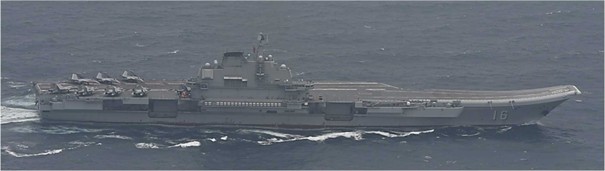
The activities of carriers, destroyers, naval vessels and air force in various directions have resulted in the formation of a military deployment posture across the sea around Taiwan and beyond the First Island chain.
This operation involved maritime combat forces in three coastal zones compared to military exercises in Taiwan in a single theatre of operations, which is indicative of the increased coordination of forces in the far sea across the zone of operations.
The Liao Ning exercises are closed, the target is outside military support
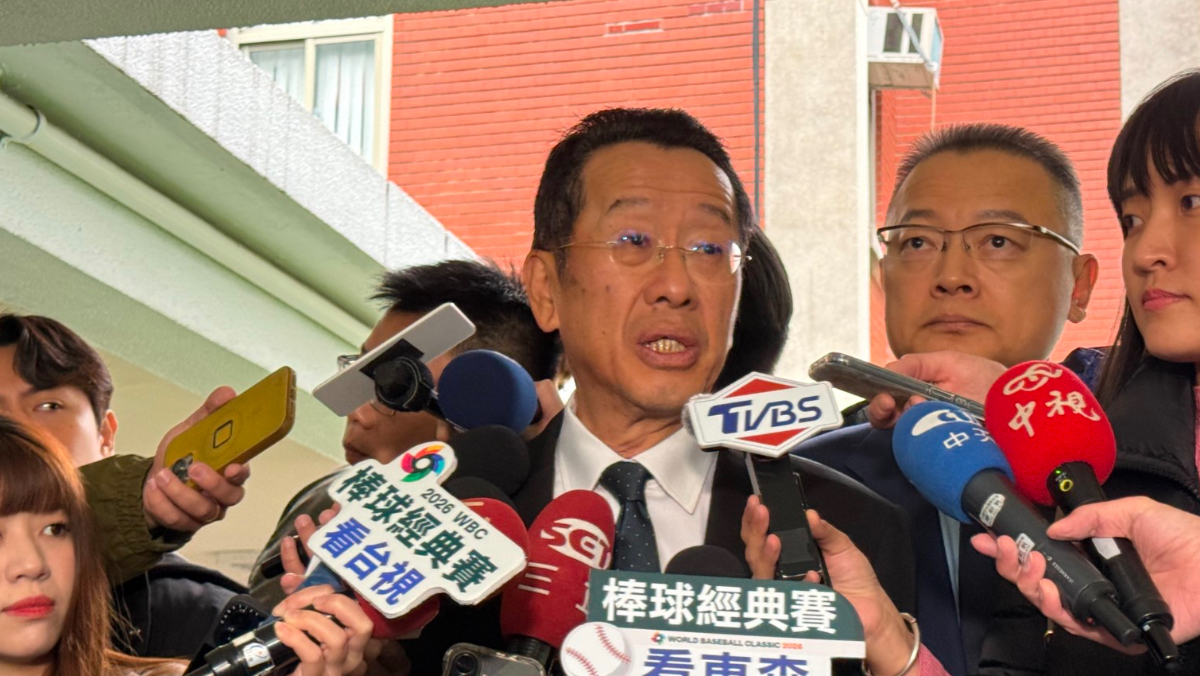
On the morning of 10 November, during a media interview in the Legislative Chamber, Taiwan ' s Defence Minister, Kou Lihhong, stated that the Lioning carrier fleet of the Liberation Army and other war zone fleets had recently conducted regional denial exercises in the western Pacific Ocean.
原始来源 · mna.mnd.gov.tw台湾国防部:顾立雄11月10日回应区域拒止演练mna.mnd.gov.tw ↗According to Gu Lihhong, Taiwan ' s defence services are already well-established in their military activities and will continue to respond through joint intelligence, surveillance, reconnaissance and coalition collaboration.
He also criticized China for undermining peace and stability in the Pacific region.
原始来源 · reuters.com路透社:台湾确认中国在西太平洋进行区域拒止演练reuters.com ↗Regional Refusal is an important concept of combat in modern military strategies, usually combined with “counter-involvement”, short of A2/AD.
At its core is the use of naval, air, missile and reconnaissance systems to create a continuing military threat to a particular sea and air area, restricting the entry or free movement of opponents.
In the context of the military conflict in the Taiwan Strait, this system of combat is mainly concerned with restricting access to the sea surrounding Taiwan by United States and other external military forces, and with interfering with military reinforcements and logistical supplies.
The east of Taiwan, which leads to the Philippines Sea and the western Pacific Ocean, is an important route for Taiwan to connect to external maritime traffic.
The United States deploys military bases and associated support facilities to Guam and the Western Pacific. The deployment of carriers and other marine combat formations by the Liberation Army between Taiwan and Guam is of direct strategic importance.
The Liberation Army, on the one hand, has created military pressure around Taiwan and, on the other hand, deployed a naval fleet to the eastern sea of Taiwan, limiting the ability of external support forces to combat the Taiwan Strait.
This deployment has expanded the military pressure facing Taiwan from the direction of the Strait to the east-west, and has also brought security in the Taiwan Strait more closely to the military posture of the western Pacific.
American think tank analysis: Beijing is playing to isolate Taiwan
The 6 November report of the American War Institute compares the military deployment with the “Justice Mission 2025” round exercise conducted by the Liberation Army at the end of 2025.
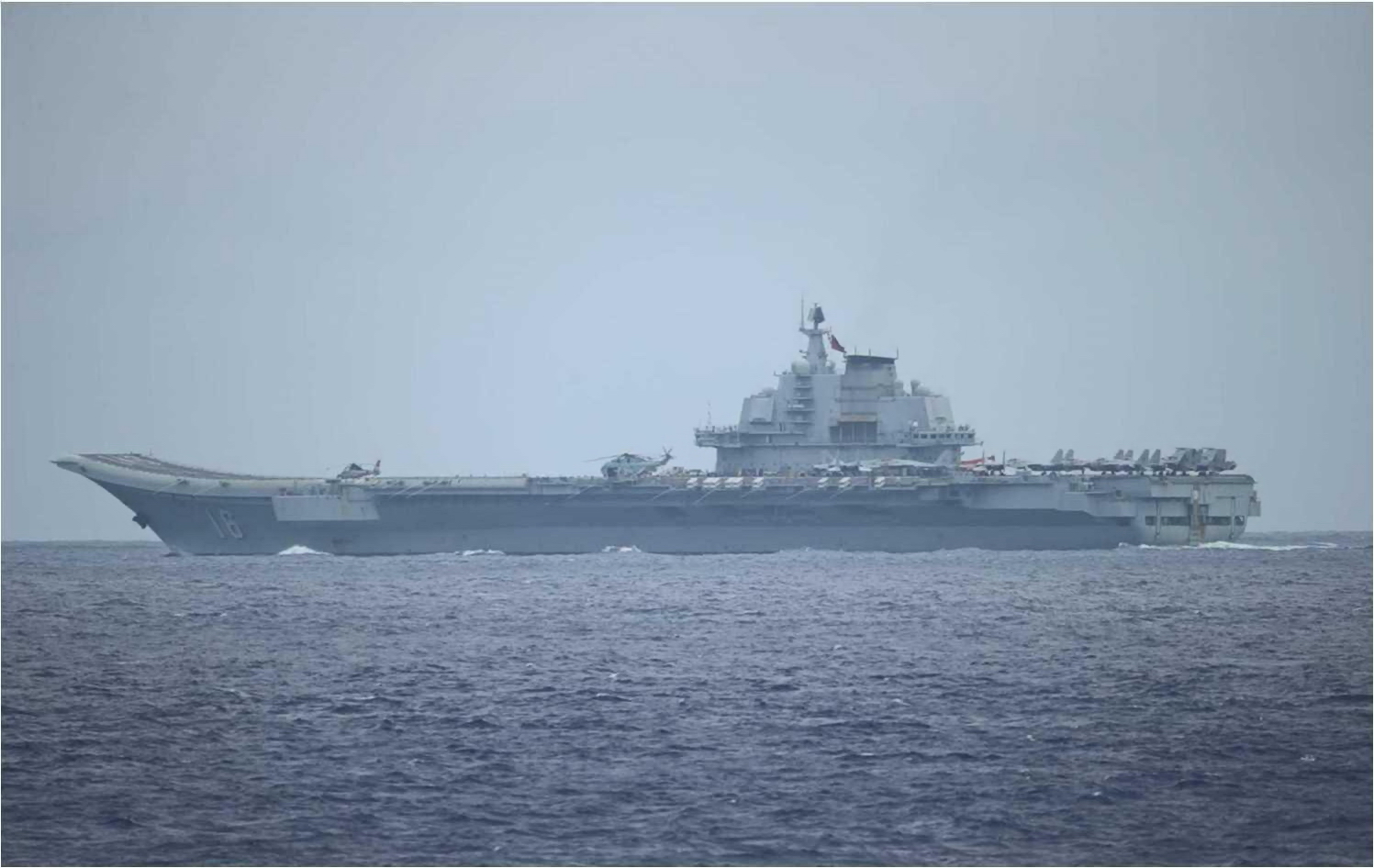
The report considers that the operation involved a larger size and geographical scope than the previous round exercise, and that the coordination of fleets in the three coastal zones is one of the most noteworthy changes.
The eastern theatre has long been entrusted with important military tasks in the direction of the station. This simultaneous involvement of maritime forces in the northern and southern war zones in the distant sea means that the Sudan Liberation Army is working in greater cross-war zones.
The continued air and sea separation of Taiwan, as seen in the operational context, requires the cooperation of vessels, military aircraft and reconnaissance forces in multiple directions.
The naval and naval forces around Taiwan can put pressure on maritime traffic, while the maritime fleet east of Taiwan can limit access to external fleets and establish a larger military deterrent in conjunction with air force.
According to the United States research institutions, the campaign is simulated as a siege and isolation of Taiwan, while testing the coordination capacity of multiple war zones in the context of joint operations in the Far Sea.
The report also pays particular attention to the fact that Beijing has not consistently published the title of the exercise, as has been done in the past several large-scale round-table exercises.
In the past, large-scale military exercises by the Liberation Army against Taiwan were usually accompanied by official announcements, regional statements and political propaganda.
This deployment of troops across the sea was carried out in the form of decentralized sea-based training and maritime activities.
United States researchers believe that this approach can create a military posture: the Liberation Army can rapidly create isolation pressure on Taiwan through daily military deployments, reducing the time frame for external forces to judge the nature of military operations and respond.
This is also a significant reason why the military operation has received high attention from Taiwan's defence services and United States research institutions.
Beijing explains the Liao Ning operation with routine training, deployment of extended military pressure across the war zone
On 14 October, the Chinese Navy announced the formation of a Liao Ning carrier to conduct training in the relevant waters of the western Pacific Ocean.
原始来源 · mod.gov.cn中国国防部:辽宁舰航母编队赴西太平洋训练mod.gov.cn ↗The Chinese military described the operation as a routine training in the annual plan, which was designed to test and upgrade the level of combat training and the ability of the troops to carry out their mission.
In late October, the Chinese Ministry of Defence once again emphasized that the Liao Ning far-sea training was in accordance with international law and practice.
However, the scale of this military activity, as revealed by the subsequent Taiwan-based naval deployment and analysis by the United States think tank, is beyond the scope of the long-sea training of a single carrier formation.
The naval and naval forces are concentrated in parallel around Taiwan, where fleets of ships operating in various war zones operate east of Taiwan, and air force levels are maintained at high levels.
The ACP is combining distant sea training, cross-war zone coordination, carrier deployment and regional zero-stop fighting, and is developing a mode of operation that can bring military pressure to bear on Taiwan simultaneously in different maritime areas.
This military deployment involves more than a military balance on both sides of the Straits.
原始来源 · news.usni.orgUSNI:日本监测辽宁舰2026年10月西太平洋航行news.usni.org ↗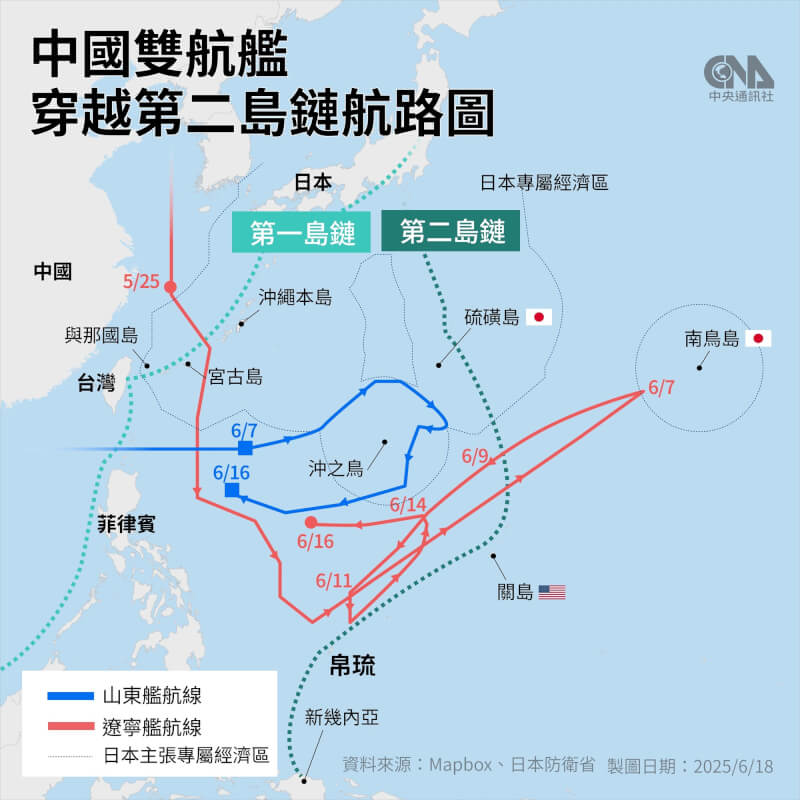
The Taiwan-nearing and western Pacific waters are connected to the military and maritime transport systems of Japan, the Philippines and the United States in the Asia-Pacific region.
The continued expansion of the PLA ' s OLA force has brought closer regional security competition between military operations around the First Island chain and the United States and China, and has increased the concern of neighbouring countries about maritime traffic security and the risks of military activities.
I'm not gonna be able to Xi Jinping Lead the Central Military Commission and continue to advance the military strategy towards the sea
The Chinese People ' s Liberation Army exercises absolute leadership of the Chinese Communist Party over the army, and the military chain of command is under the authority of the Central Military Committee of the Communist Party of China. Xi Jinping Chaired the Central Military Commission and has long made the achievement of national unity an important objective of its political strategy.
Beijing has continued to claim sovereignty over Taiwan and to retain the policy option of using force. The Government of Taiwan, for its part, insists that Taiwan ' s future is determined by the people of Taiwan and rejects any change in the status quo through military threats.
In recent years, the Liberation Army has been expanding the range of air and sea activities around Taiwan, strengthening the capabilities of carrier formations to fight in the sea, to command, to strike missiles and to intervene in the sea.
This deployment of the Liaoning fleet and of maritime forces in various theatres of operations is the latest manifestation of this long-term military construction.
From the Taiwan Strait to the Philippines Sea, from the Taiwan mainland to beyond the First Island chain, the Liberation Army is bringing different fighting forces into a wider range of military maritime synergies.
This change has a direct impact on Taiwan ' s defence.
The traditional military confrontation in the Taiwan Strait is mainly around the Taiwan Strait, while the Ocean ' s Regional Refusal to Observed has integrated Taiwan ' s eastern air and sea traffic, external support routes and the military response of neighbouring countries into the same operational space.
The United States War Research Institute believes that such actions, which have both military preparedness and psychological deterrence, can weaken the confidence of Taiwan society in its own defence and external military support by demonstrating its ability to separate Taiwan.
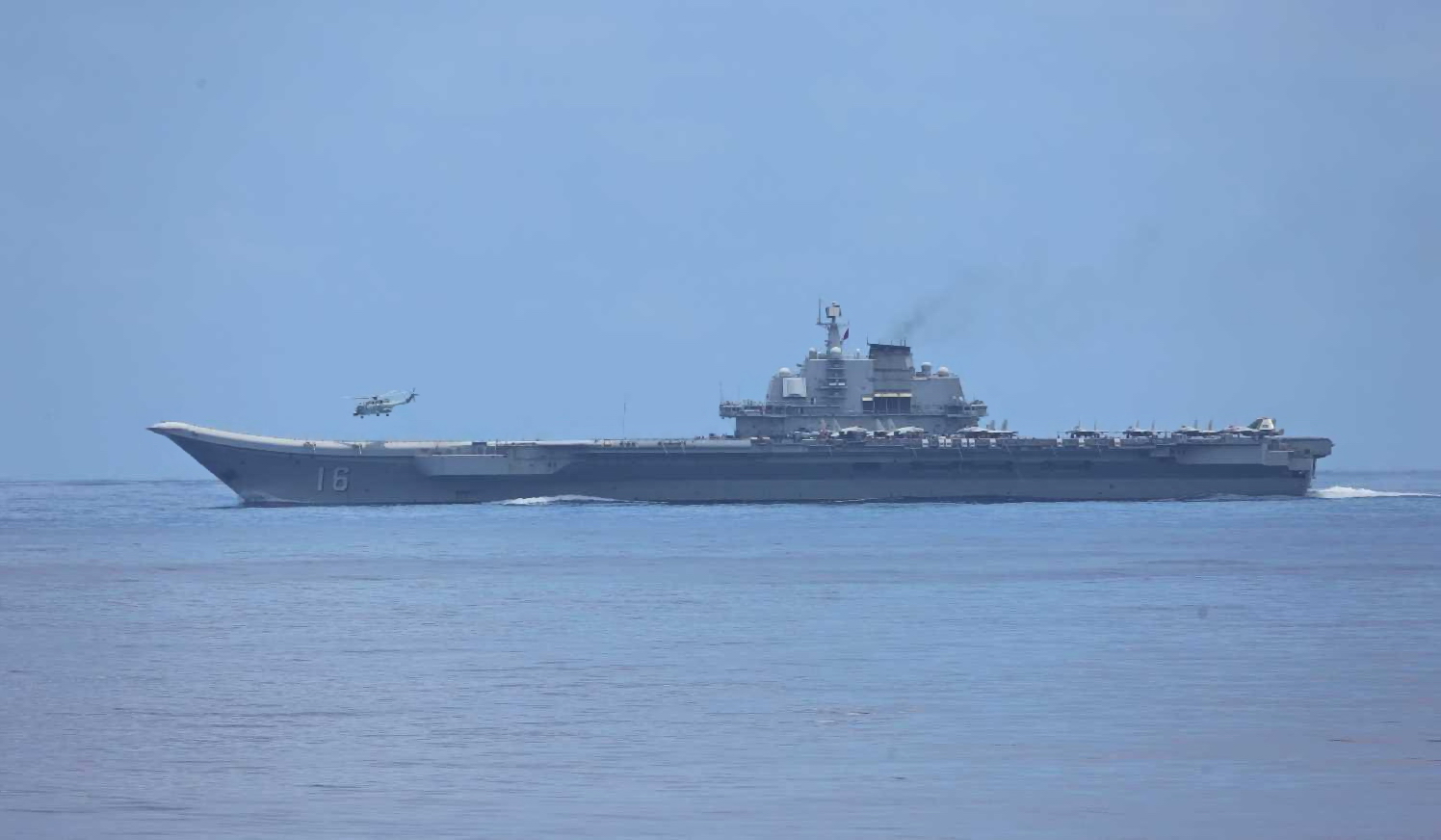
For Taiwan, the large-scale deployment of military and police vessels and cross-war zone air and sea operations have brought not only military pressure, but also continued and increased defence alerts, intelligence surveillance and emergency deployment requirements.
Beijing is transforming the concept of a maritime blockade against Taiwan into a cross-war zone and cross-sea force-building capability through practical military exercises.
Yes. Xi Jinping Under the command of the Central Military Commission, the military deployment of the Liberation Army to Taiwan is being extended by a normalized deterrent around Taiwan to the operational capability of the Western Pacific Ocean.
This means that the scope of the military confrontation in the Taiwan Strait is expanding and that strategic pressures are increasing with respect to maritime traffic, external military support and security around the First Island chain. Every time the Chinese army expands its military deployment across the sea, it is changing the military posture around Taiwan and allowing the security implications of Beijing for the Taiwan policy to be further extended to the entire western Pacific.

Reader comments
Loading comments…