
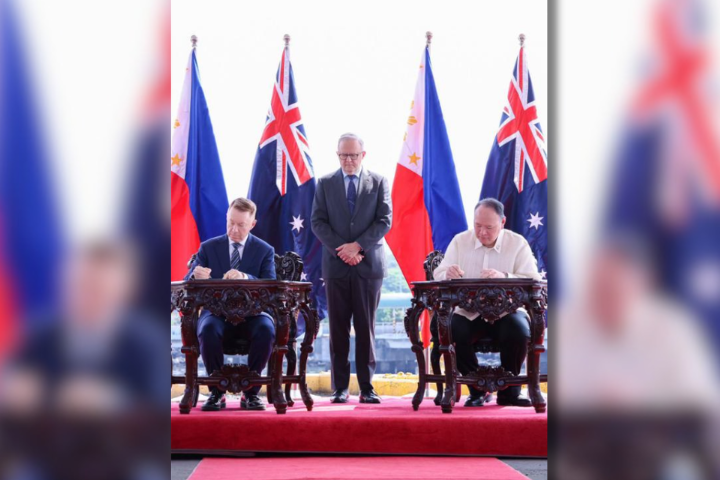
On 15 November, a new strategic signal was sent to Beijing at a ceremony to sign the defence agreement in the Philippine capital, Port of Manila, in which the Government of the Philippines signed the agreement.
The new version of the Defence Cooperation Arrangement between the Secretary of State of the Philippines, Teodoro, and Australia ' s Ambassador to Fiji, Inés Brown, was formally signed and is being witnessed on the spot by Australian Prime Minister Albanis, who visited the Philippines.
原始来源 · minister.defence.gov.au澳大利亚政府11月15日:加强东南亚防务合作及海上安全minister.defence.gov.au ↗This is not an ordinary diplomatic courtesy. As the Chinese Coast Guard and other vessels continue to confront the Philippines in the disputed waters of the South China Sea, Manila is accelerating the expansion of its security cooperation network, while Australia is shifting from regional security supporters to more in-depth military partners.
At the heart of the new agreement is the need to make military cooperation between the two countries more rapid, direct and implementable.
Down from 100 to 10 procedures
After signing, the Philippine Secretary of Defense Teodoro explained the significance of the agreement in a visual number:
In the past, it may take 100 steps to complete a thing, and now only 10 steps are required.
The new agreement updates the 1995 memorandum of cooperation between the parties on defence and is linked to the current status-of-forces agreement on visits, reducing administrative obstacles to joint military activities.
According to the Australian Government, the main focus of the cooperation is:
- Maritime security: Expansion of joint maritime activities, maritime monitoring and intelligence-sharing. - Military synergy: Strengthening joint training, operational planning and force interoperability. - Technical support: Advance cooperation on drones, network security, communications and defence infrastructure. -Emergency operations:Simplified procedures for coordination of disaster relief and humanitarian action.
Australia has also announced increased investment in maritime security cooperation in South-East Asia, helping regional partners to improve maritime target identification, cyberthreat monitoring and response capabilities.
This means that the Philippines is expected to receive more rapid technical and operational support from Australia in the face of future maritime emergencies.
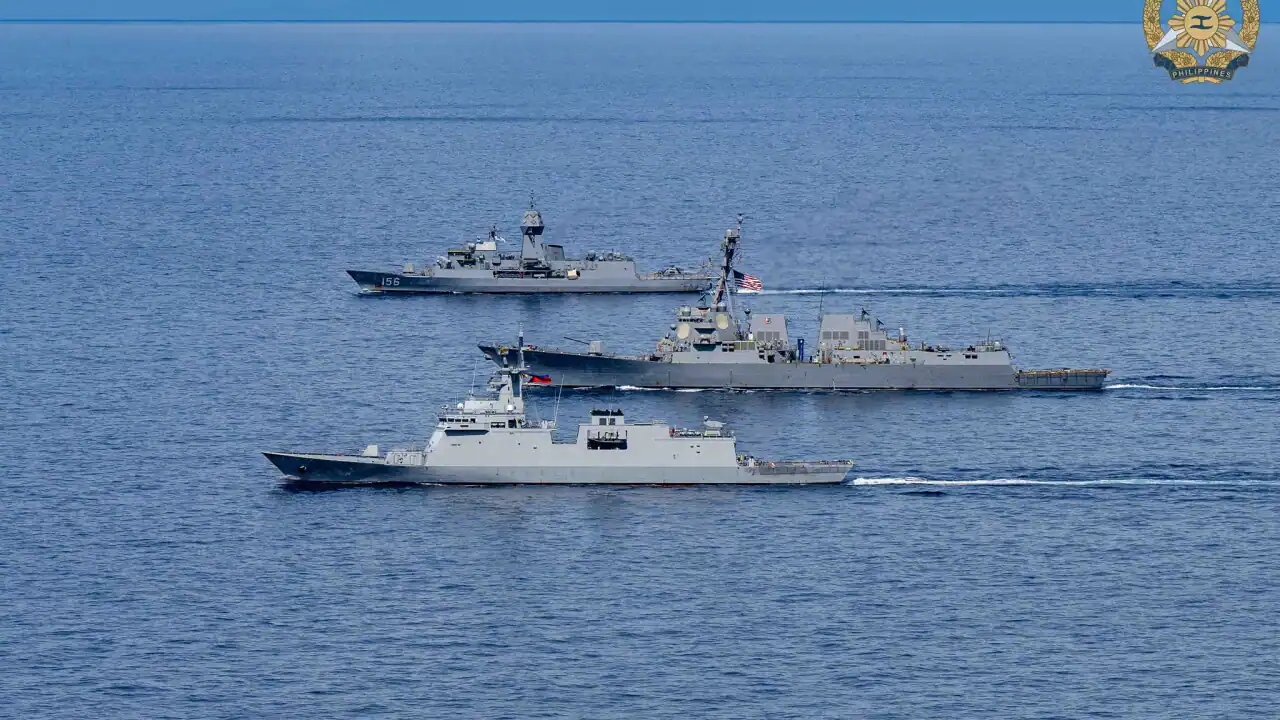
Beijing is no longer a Philippines.
The South China Sea has long been a sensitive area for China to dispute sovereignty and maritime rights with neighbouring countries.
In recent years, there have been numerous dangerous approaches, water cannon removal and collisions between Chinese naval and Philippine service ships in the disputed waters. Beijing advocates that action be in the interests of its own oceans, while the Philippines accuses China of using coercive means.
The 2016 South China Sea arbitral award denied the legal basis for a part of China ' s extensive historical claims, but the CCP authorities consistently rejected the award.
In the face of continued maritime pressure, the Philippines no longer relies solely on bilateral negotiations with Beijing, but has gradually increased its security cooperation with the United States, Japan and Australia.
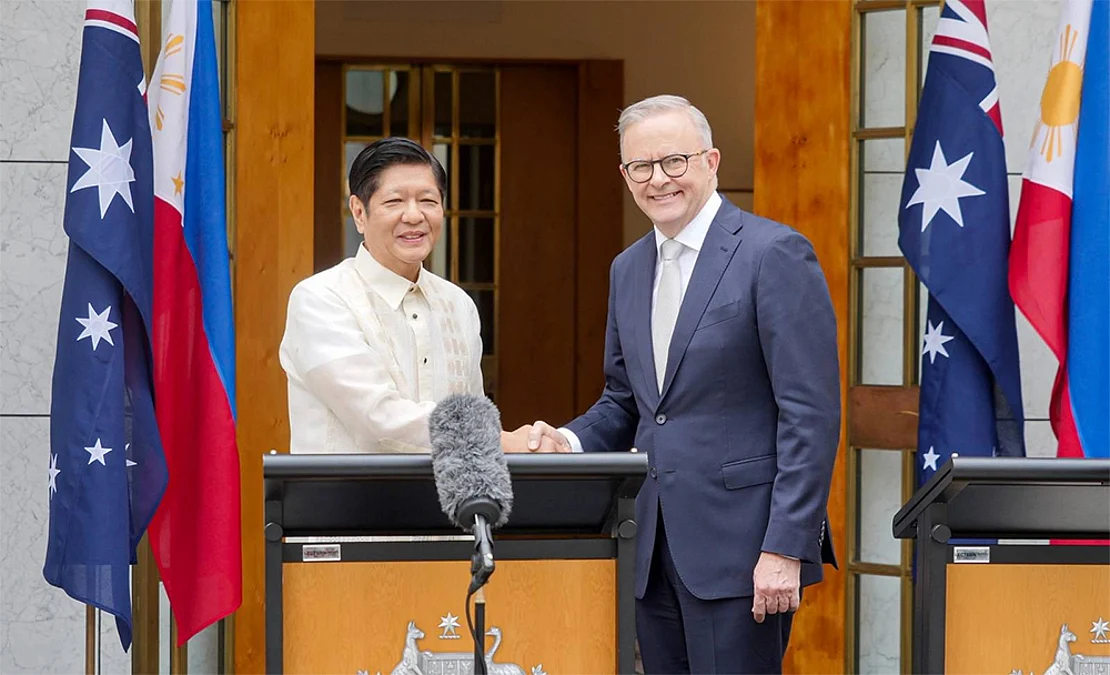
On 16 November, President Marcos of the Philippines and Prime Minister Albanis of Australia issued a joint statement in which they stated that they would consult when sovereignty or common security interests were affected and consider appropriate measures.
原始来源 · pm.gov.au菲澳领导人11月16日扩大安全及防务合作联合声明1. The Philippines and Australia reaffirm our Strategic Partnership, established in 2023 and underpinned by longstanding cooperation, shared democratic values and a common vision for a peaceful, stable and prosperous region where strategic agency is freely exercised and sovereignty is upheld.2. As we commemorate the 80th year of the establishment of our diplomatic relations this year, and at a time of rising uncertaipm.gov.au ↗The statement also expressed, in particular, serious concern about coercive and dangerous actions against Philippine personnel and vessels in the South China Sea and reaffirmed the binding nature of the 2016 arbitral award.
This has given more explicit political support to the agreement signed the previous day.
原始来源 · pna.gov.ph菲律宾通讯社:马科斯与阿尔巴尼斯11月16日会谈MANILA – President Ferdinand R. Marcos Jr. and Australian Prime Minister Anthony Albanese on Monday reaffirmed their commitment to strengthening Philippine-A...pna.gov.ph ↗The military alliance was not declared, but the modalities of cooperation were changed
In a question to journalists on 15 January, Albanis stated that the new agreement was not aimed at any single State but rather at the preservation of regional sovereignty, freedom of navigation and security.
This diplomatic formulation does not alter the practical implications of the agreement.
The Philippines is linking its maritime defence capacity to technical, training and military coordination mechanisms in several democratic States.
However, the new agreement does not constitute a commitment by Australia to make an automatic contribution to the South China Sea conflict, nor is it a common defence treaty.
It is truly of concern in Beijing that the fragmented bilateral military cooperation of the past is being translated into closer and more organized regional security coordination.
For CCP, which has long attempted to expand its physical control through maritime police deployment and maritime pressure, the increased capacity of neighbouring States to cooperate will increase the cost of its unilateral change of the status quo in the South China Sea.
Manila signed only a document on defence cooperation, but it reflects the changing situation in the South China Sea: in the face of the increasingly strong maritime policy in Beijing, more and more countries have chosen to strengthen their collaboration rather than to bear the pressure alone.

Reader comments
Loading comments…