
In the past few years, Huawei has created a huge wave of consumer electronics and new energy vehicle market in China with strong public opinion calling and the noble narrative of "national product replacement". Whether it's up to tens of thousands of smartphones sold, or the "far-leading" questioning, intellectual, honorable and other smart cars, have created unprecedented attention in the market. However, behind a bright sales brief, with product iteration acceleration, market regulatory inspection and public authority boundaries intertwined, Huawei's various negative and events in the mobile phone and automotive business also followed.
From Wenzhou second-hand car merchants to questioning M9 shouted "intellectual intelligence tax" degradation disaster, to Shanghai Nanjing East Road flagship store was overnight demolished "public toilet roadmarks"; from the early mobile phone products hardware mixture, heat out of control, to the intelligent driving system in the reality complex road conditions safety accident and responsibility push, a dark line about "high-price marketing, administrative privileged asylum and real market counterfeiting" is becoming increasingly clear.
Smart car business: the disappointment of value conservation, intellectual driving disputes and the trouble of car owners
HUAWEI through the "Hong Kong Intelligence" (which covers the questioning world, intellectual world, enjoyment world, dignity world, etc.) model deeply involved in the field of car manufacturing, to create itself as the new energy vehicle market "technology ultimate empowerment". however, the car as a major asset, its rules of operation and traditional consumer electronics products have an essential difference.
1, landed 600,000 in two years: cruel sale of second-hand car market
In a real-life video that sparked the internet, a car owner drove a car purchased in 2024 and landed at a price of 600,000 yuan for the M9 add-on to the second-hand car market in Zhejiang Wenzhou. This car is only about two years old, has a mileage of only 30,000 kilometers, and includes zero gravity seats, projection curtains, high-level intelligent driving systems and other top-of-the-art equipment, the whole car is wellined.
However, the owner visited several second-hand cars in a row, which was not the high price recycling, but the car merchants rejected and mocked. the first car merchant estimated only 300,000 in the beginning, and directly said "the price as long as 300,000 in the second-hand market will not sell out"; the second car merchant is also at the scene, saying that the purchase of this high price new energy car is "pure intellectual property tax", the bullshit "going out loses 200,000, in the local nobody dares to pick up"; more car merchants in the knowledge of the limit M9 after asking, directly away from the window of the car rushing people, said before the purchase of two units all lost in their hands.
In the end, no second-hand car dealer is willing to offer more than 300,000 yuan. The two-year depreciation rate is close to the cruel reality of 50%, completely crushing the so-called "high security rate" myth in the propaganda. In front of the second-hand car dealer's calculator, all the marketing talk and emotional bonding have failed. The new energy car technology iteration is too fast, coupled with the manufacturer's continuous "drop-price-add-on" price war in the terminal, leading to the early payment of high bonuses for the purchase of top-compatible vehicles, consumers have undergone an extremely devastating asset depreciation in the secondary market.
, Intellectual Driving Accident and Responsibility "Turn the Bowl" Dispute
Huawei's high-end intelligent driving system (ADS) has always been the core selling point of "distant leadership" and "no image can be opened."H, with the increase of delivery volumes, related accidents are frequently seen in the news, exposing the huge gap between propaganda and technology landing.
In multiple traffic accidents involving the M7 and M9 quarters, the owner or family reflected that when the Intelligent Driving Mode (NCA) was turned on, the vehicle failed to effectively identify the stationary obstacles in front, the construction barrier or the special alien vehicle, resulting in serious tracking and even fire-related injuries.
 01 / 05
In the face of the question, the official public relations and some customer service teams regular response is often inclined to blame the responsibility for "drivers failed to take over" or "failure to meet the criteria of intelligent driving trigger". This in the publicity exaggerated "autonomous driving" attributes, rapidly decline to "L2 level assisted driving, the driver bears the ultimate responsibility" after the incident, has triggered a large number of owners strong dissatisfaction with the "excessive publicity" and "driving responsibility."In addition, the accident site data is fully disclosed, and why the collision prevention system (AEB) can not be effective at the critical moment, also raised technical questions.
Third, after-sales service cuts and quality control hidden risks
Because Huawei adopts the "intelligent car" model, the manufacturing of vehicles is responsible for the cooperative car companies (such as Celsius, Chery, Jiangxi, etc.), while sales and marketing are dominated by Huawei.
Many car owners reflect that when facing problems such as vehicle work defects (such as uneven seamlessness, interior noise, paint discoloration), hardware failure (such as suspension, electronic screen black screen, motor overheating) etc., Huawei experience store and partner car repair center often appear to push each other. Huawei sales side blame it for the production end, and the manufacturer's repair ends say software and smart drive modules need to wait for Huawei official engineers to handle.
Mobile and Consumer Electronics Businesses: Hardware Disputes, Premium Disputes and Technological Disadvantages
If the negative of the automotive business exposes Huawei's shortcomings in asset preservation and control of commodity industrial goods, then its based mobile phone and consumer electronics business is long accompanied by many controversies on hardware configuration, pricing strategy and advertising methods.
A, historical “flash doors” and hardware mixture
One of the most famous public relations crises in the history of Huawei mobile phones was the “flash door” event of the P10 series. At the time, Huawei mixed three different specifications of flash chips, eMMC 5.1, UFS 2.1 and UFS 2.2 with a huge difference in transmission speed, in the same flagship phone, and did not make a clear indication in the product promotion. This means that consumers who paid the same price, the phone purchased may have several times the gap in reading and writing speed.
After the disclosure of the incident, the official early response failed to effectively calm the anger, even once questioned as "inappropriate evasion", eventually triggered a large-scale consumer defense rights and brand confidence crisis. Since then, the controversy about screen panels (Kyoto and LG mixed), camera sensor component model change, such as "blind box shipment", has also been repeatedly mentioned in Huawei's flagship model.
* by

High premium and “brand premium” overheating
In the years facing external sanctions and blocked chip supply chains, Huawei launched a number of phones with low-end mid-end chips or not supporting 5G networks, but its sales prices are still set at thousands or even tens of thousands of thousands (such as the Nova series, Mate 50 4G editions, etc.).
This fixed-price strategy raised the market’s question of “culture loyalty”.Many tech review bloggers pointed out that within the same price range, some Huawei phones have pure hardware performance, heat dissipation performance and screen parameters far behind competitors at the same price.The high price of products is not entirely due to the increase in hardware costs, but comes from strong brand premium and market monopoly marketing volume.
Third, self-research system and ecological compatibility difficulties
HarmonyOS, as Huawei's core strategy to get rid of Google's ecological constraints, has been highly promoted in its advertising. However, the contradiction between ecological compatibility and user experience is becoming increasingly prominent in the process of evolving toward "Pure Blood Harmony" (HarmonyOS NEXT).
Many old users reflect that with the updating of the system version, the mobile phone running the traditional Android application, the backdrop is forced to kill the process, shortened duration and other problems. And in the pure-blooded ecological construction, due to some small and medium-sized application developers are willing to follow low, resulting in a large number of cold doors but necessary software can not be used. Some so-called "self-research applications" in the actual experience is referred to as just shell web pages, difficult to meet high-intensity use needs.
Public Relations Strategy and Public Power: From “Privileged Asylum” to Public Opinion Reflection
Outside of the commercial market, Huawei is most affected by the outside world because of its extremely tough public relations strategies, and the special status shown in some events that can mobilize public administrative resources for its commercial image.
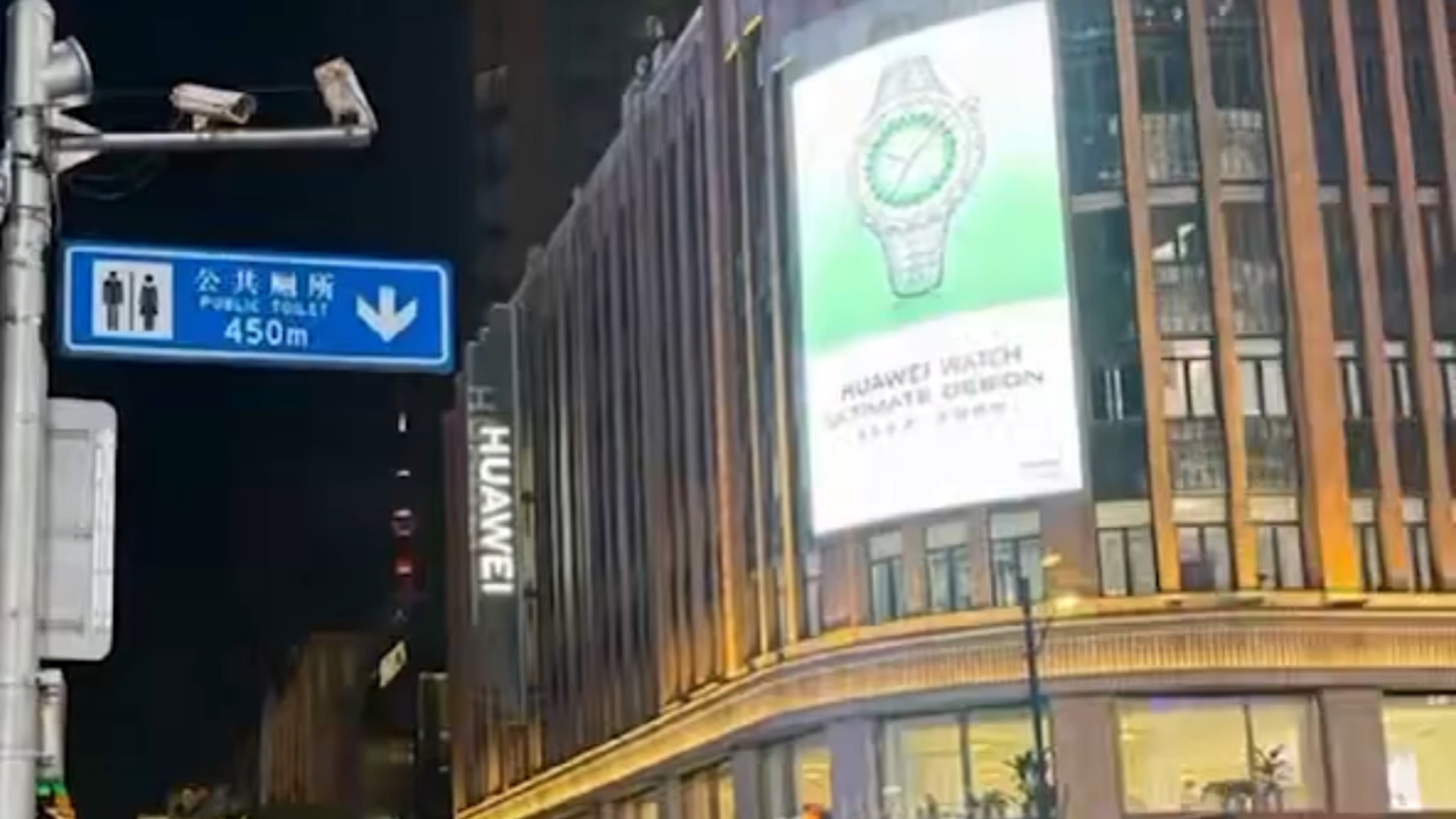
Shanghai flagship store "disappeared public toilet street signs"
The recent incident in front of Huawei’s global flagship store in Shanghai, Nanjing, has become a very absurd shade of power and arrogance to interfere in public space.
The incident was extremely humorous: there were netizens on the scene using screenshot loans to shoot when they discovered that a blue "PUBLIC TOILET PUBLIC TOILET 450m ↓" blue sign on the edge of the road, underneath which the direction arrow pointed directly to the door of Huawei's flagship store.

However, the reaction of enterprise public relations in the aftermath of the breakdown was extremely rapid and overwhelming. the scene quickly appeared that the security personnel stationed around the street signs, prohibiting tourists from borrowing photos from this angle; then, the municipal construction personnel were quickly mobilized to the scene, and the public signs established in accordance with the law and serving citizens and tourists were cut off overnight.
A municipal facility that belonged to public utilities and served the masses, just because a commercial giant’s “brand dignity” was injured, the administrative department quickly followed up. This scene quickly sparked the society’s strong question of the border of public power: why does a commercial company have the privilege to move the city administration at any time to “wipe its ass” for its private public relations crisis?

However, although the physical street signs were forcibly removed, the opposition of netizens did not stop. A large number of card players began to use the screen of their mobile phones to use the electronic images of the public toilet signs, and in the same angle to take a second borrowed photo of Huawei's door. This "more and more ugly" public relations mistake, leaving the attempt to maintain the "perfect image" of privileges, eventually turned into the whole network's irony.
, deletion of posts, control reviews and “closure” cloud
For a long time, in China's major mainstream social platforms (such as microblogging, knowing, Bilibili, Red Book, etc.), negative reviews and criticism about Huawei products, often faces a very high "disappearance" risk.
Many independent review bloggers reflect that after releasing objective negative videos such as Huawei mobile phone heat, chip performance test, intellectual driving failure, will quickly receive "infringement reports" or "suspicious malicious contempt" notice from the platform, and even encounter accounts blocked, restricted punishment. This strong public opinion control, leads to the network filled with one-way praise words, and real consumer feedback and technical flaws are forcibly covered.
The Double Sword of Moral Abduction and “Patriot Marketing”
Huawei has long linked itself in marketing with the “national rise”, “combating external sanctions” and other great narratives.This marketing strategy, although it brings a huge basic disc and emotional premium, also brings serious public opinion crackdown.
On the major social platforms, any reasonable question of the performance of Huawei products, the splash of pricing, are very easily knocked down by some extreme fans on the "not-patriotic", "cultivating the outdoors" and "taking the foreign internet black money" hat. This practice of ethical commercial consumer behavior, not only undermined the normal market competitive environment, but also allowed a large number of rational consumers to produce a strong counter-psychology.
Summary: Market laws will eventually change power and right of speech
Whether it is the "intellectual intelligence tax" of Wenzhou's second-hand car dealers, or the public toilet street signs raised in Shanghai's streets overnight, or the technological defects and public relations crises that have been controversial over the years on mobile phones and automotive products, all point to a profound reality:
The perfect image based on the marketing stack of nobleness and reliance on the maintenance of executive privileges is ultimately extremely vulnerable to the true market laws of grounding and the ridicule of the masses.
The car is not consumer electronics, can not hide the asset shrinkage by two years of propaganda talk; business competition is more not a political stall, the forced intervention of public power will only accelerate the collapse of brand credibility.When the bubble dissipates, the market will eventually only vote with the foot, using the numbers on the calculator and the real consumer experience, to give the most objective answer to all the arrogance and paranoia.
Article discussion
Verified members can discuss this report publicly and manage their own content.
Checking member sign-in status…