
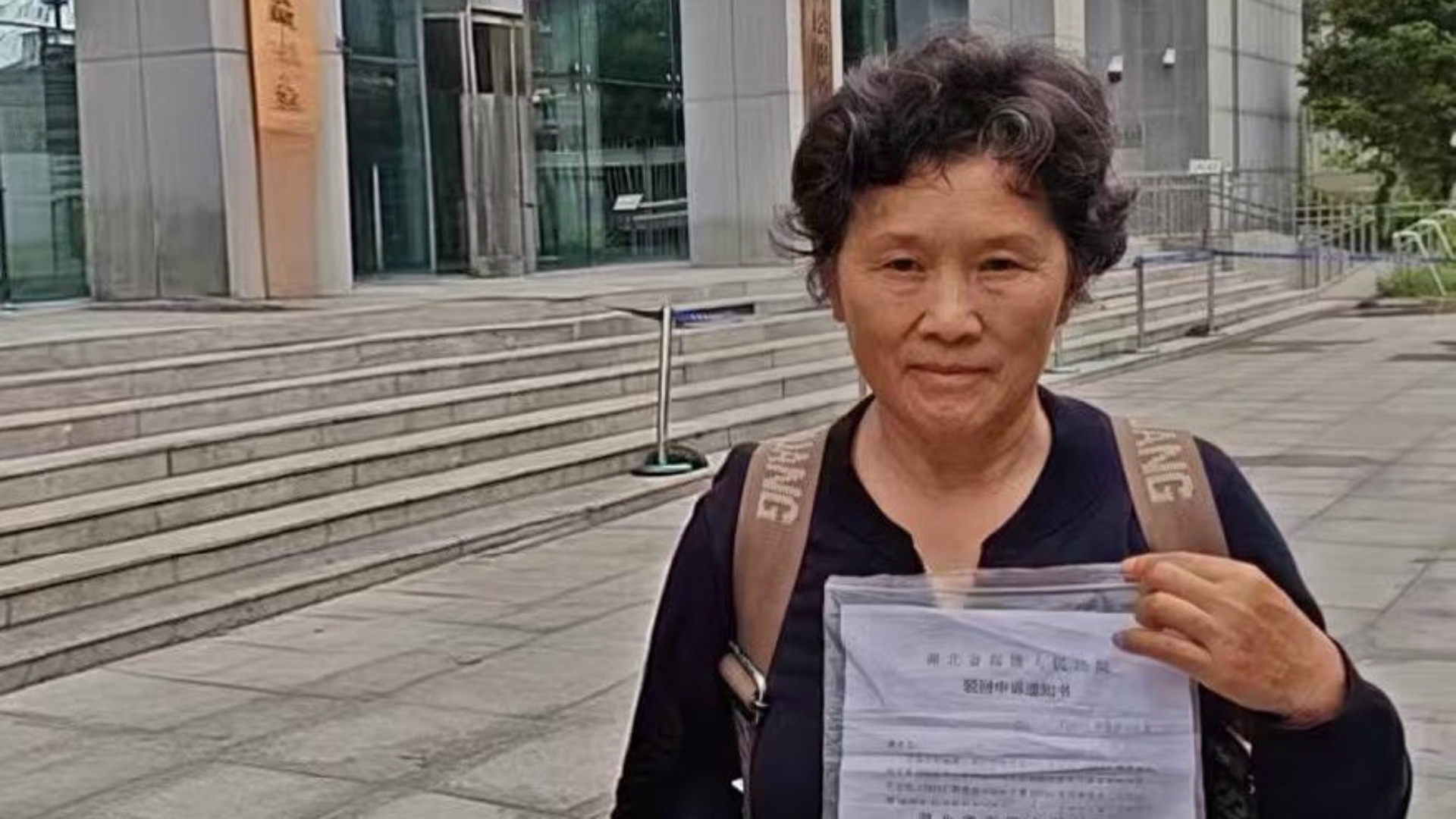
On 16 November, at around 8 a.m., a 69-year-old Turkish family farmer, Tan Kim Han, was taken away by local security agents while waiting at the Eunshi railway station. She had planned to travel to Beijing by train at 9 a.m. to continue her complaint in a case that lasted 24 years. According to the source, the police officers of the Nung Tong commune police station and the Enscht police officers were involved, and Tang-hwa was subsequently sent to the Ensché City Public Security Bureau. At around 11 a.m. on the same day, her telephone was still available and has since lost contact with the outside world.
This is not the first time that Tan Kim-hwa has been controlled by local public security authorities for his visit to Kyoto. From 2002, when she was accused of having been tortured to extract a confession, to her repeated re-education through labour, detention and her four-year prison sentence, her experience has been almost universal in her communications and the change of the judicial system over the past two decades. Today, the re-education through labour system has long been abolished and she has not been able to leave the cycle of the complainant ' s repeated treatment by the local public security and judicial authorities.
Why does a farmer woman complain that she has been unable to resolve her case for 24 years and has been deprived of her liberty? The experience of Tan Kim Hana has brought to light the power relations between the local security, prosecution, court and security systems.
One torture complaint, 24 years' notice
Tan Kim-hwa was born on 14 February 1957 and lives in the village of Nishe, Hubei Province. Her long-standing dispute with the local political system began in 2002.
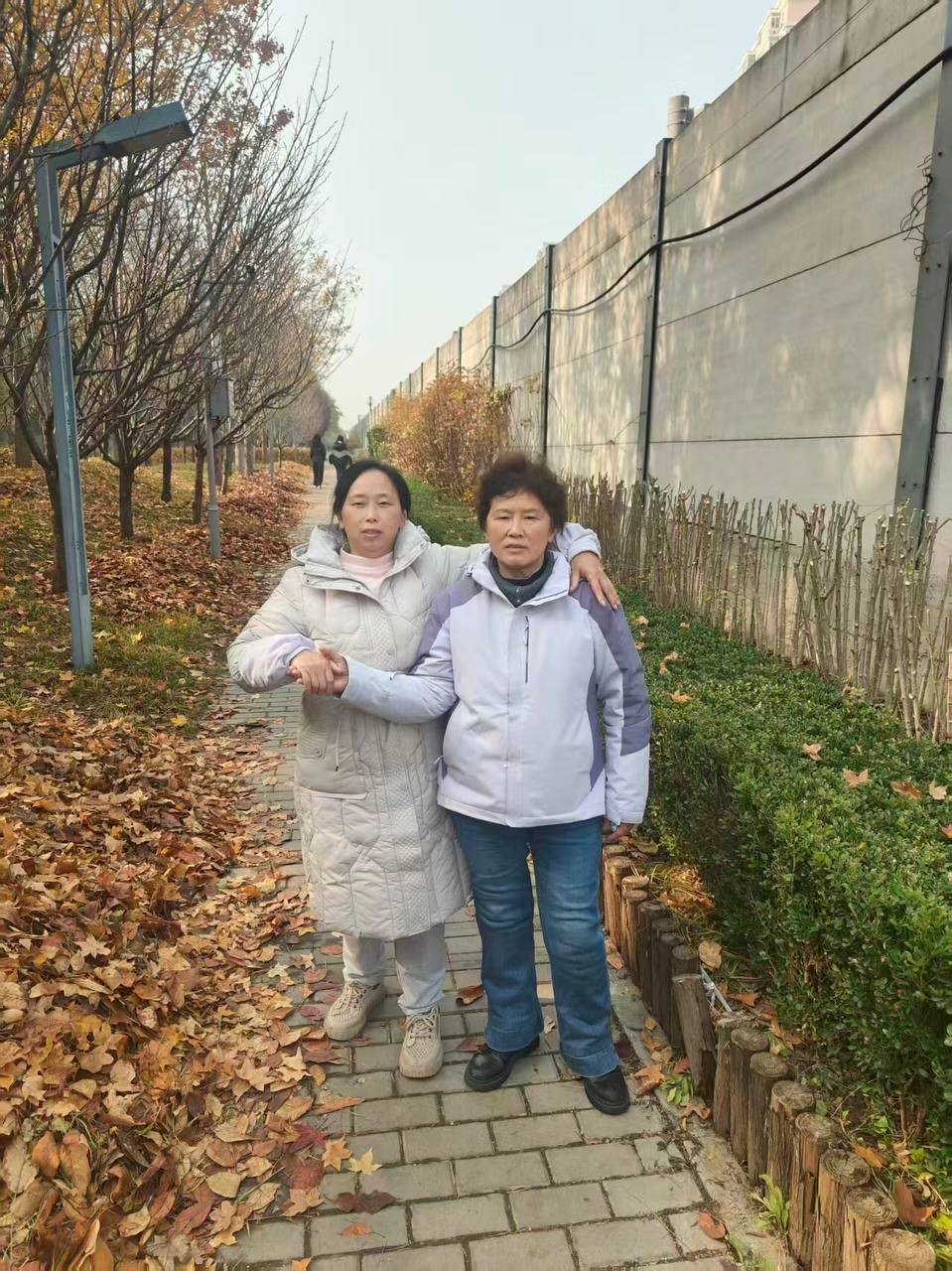
On 28 February of that year, Tan Kim-hwa was taken from Yichang by the Enshi City Public Security Bureau for criminal charges. In her subsequent complaint, she claimed that the officers had tortured her for seven days and seven nights, causing physical harm. She was subsequently held in Enshi City Detention Centre from March to August 2002.
In 2004, the Ensché City Public Security Bureau took decisions involving State compensation. However, Tankinhua argues that the compensation did not adequately address the issue of physical, mental and other damages, nor was the responsibility of the persons suspected of having committed the offences in the original case pursued.
It was in the original case that disputes were handled and compensated that she began to file a complaint with her superiors and gradually took the road to Kyoto.
正在读取来源 · m.secretchina.comm.secretchina.com正在读取新闻标题与预览大图…However, as complaints continued, the measures taken by the local public security authorities against her changed. The Tankin flower, which initially called for a correction of the public security problem, was then the subject of repeated punishment by the local public security authorities.
In 2007, the Enshi County Re-education through Labour Management Committee decided to re-education through labour for a year and six months for the sake of sedition. In his complaint, Tankin indicated that the punishment involved the cost of $1,800 for her car and maintenance by the staff of the Kyoto office. She considers that her acceptance of the costs of return and of assistance for her life is used as a basis for punishment by local public security authorities.
Her first re-education through labour complaint was not closed. In 2008, she was again sentenced to re-education through labour for a year and three months. Tankinhua filed a complaint that the second RTL decision even suspected that another interviewer, Wang Guilan, had been named in her name.
After two re-education through labour, Tankin-hwa insisted on correcting the case. In 2010, local political and legal cadres persuaded her to return to her place of residence on the basis of a solution, where she was again detained and decided to re-education through labour for a year and six months.
Between 2007 and 2010, at least three RTL decisions were issued. In its complaint, Tan Kim Han stated that he had been re-education through labour on four occasions. She has continuously requested that the 2002 cases be dealt with, while local public security authorities have constantly restricted her personal liberty by new sanctions.
This has led to a gradual evolution of the complaints that were originally about the use of torture to extract confessions and State compensation, into a direct conflict between the complainant and the local public security system, which has lasted for many years.
From re-education through labour to detention: the cost of complaints is increasing
The experience of the Tankin flower has not ended with many re-education through labour.
In her complaint, she disclosed that in 2008 she had been taken from Beijing by local public security and correspondence agents to Eun-hsi and subsequently detained in such places as the slopes of the city and the copper basin. She alleges that during the period of restriction of her personal liberty, the person concerned submitted compensation and conditions of placement, and she was asked to sign to discontinue the complaint. When she was refused, she was threatened with a sentence.
In the view of Tankin, the so-called solution proposed by the local authorities has always been linked to the cessation of the complaint. She insisted that she be held responsible in the case in question, while the persons concerned tried to end her continued response by returning, detaining and punishing her.
On 31 October 2012, upon returning to the Zen Zhu, Tan Kim-hwa was taken by security officers and subsequently held in Enshi City Detention Centre. She complains that in the prison, the instructor Wang Zhping was suspected of having the detainee beat her, causing six broken ribs.
正在读取来源 · 64tianwang.blogspot.com64tianwang.blogspot.com正在读取新闻标题与预览大图…Tan Kim Han indicated that the injuries were supported by a medical certificate and medical records. The six allegations of broken ribs further led to this long-standing complaint, which involved personal security and custodial responsibilities in places of detention.
In many of her complaints, she also named Tan Zhiguo, former Director of the Enshi City Public Security Bureau, Yulian, Deputy Director General, and public security personnel such as Koichi, Iyingji, Zhou Suntao, Chu Huae-Wong and Tan-Jan, who accused the persons concerned of illegal restrictions on their personal freedom, threats of violence and illegal law enforcement.
These allegations do not relate to one single instance of on-site law enforcement. The experience described by Tankin, ranging from taking back and restricting personal liberty across regions to re-education through labour decisions and custody in detention centres, involves different aspects of public security powers. The duration of the case also extends the responsibility for the supervision of cases to local public security leaders and case handlers over several periods.
In 2013, China officially abolished the re-education through labour system. For the Tankin flower, the end of the system has not led to a fundamental change in the status of the complaint. Two years later, she was subjected to more severe criminal penalties.
When the re-education through labour system is abolished, the crime of sedition becomes the new punishment
In 2015, the People ' s Court of Enschwe city sentenced Tankin to four years ' imprisonment for the offence of sedition, and the Intermediate People ' s Court of Enschwe county subsequently upheld the decision.
From previous re-education through labour to this formal entry into criminal proceedings, the punishment of Tankin Fa for filing a complaint has been further escalated.
In her complaint, Tan King Hane stated that the case involved her involvement in group photo-seeding, displaying of complaint material outside the Great Wallview of the Eighth Ridge in Beijing. The relevant prosecution and sentencing materials also include expressions such as “inflicted international effects” “reported on offshore websites”.
She considers that her complaint and public expression are used as criminal grounds for prosecution and that it is an improper application of the offence of sedition.
In connection with the judgement, Tankin-hwa raised a number of procedural and substantive disputes, including the failure of witnesses to testify, the lack of a basis for jurisdiction in the case, errors in the application of the law and the inappropriate commutation of the duration of detention.
Her complaint also concerns the Public Prosecutor of the People ' s Procuratorate of Enshi City, Private Shu Hong, the presiding judge of the first instance, Yun Yu and the presiding judge of the second trial, U Wing Rong.
The dispute between Tantinhua and the local political system has since been extended from the 2002 public security investigation and State compensation to re-education through labour, criminal prosecution and trial by two courts. The original case had not been corrected as requested, and the new penalties that had been imposed during the complaint process had been the subject of her continued complaint.
The four-year sentence did not let Tankin Hana give up. Since then, she has continued to file a criminal complaint with a higher prosecution authority.
The complaint contains the documents of the People ' s Procuratorate of Ensché State for the processing of criminal complaints of 2018, the People ' s Procuratorate of Hubei Province for the processing of criminal complaints of 2022 and the Supreme People ' s Procuratorate for the processing of criminal complaints of
- According to Tankin, multi-level judicial oversight failed to correct errors in original and subsequent criminal cases.
As the level of complaints continues to rise, the number of cases is growing, but the core issues she has asked for have not been addressed in a manner that would be acceptable to her.
This explains why, by 2026, Tam Kim Han, aged 69, was still ready to travel to Beijing again.
Take it away again 24 years later, the local public order still has the power
The incident of 16 November, when the Zanché railway station left, brought back to the beginning of the 20-year experience of Tankin.
She intends to travel to Beijing to continue to reflect on complaints concerning local public security and judicial authorities; Before the train left, local security officers arrived in the waiting area and took her away.
According to the source, the scene involved the Nung Tong commune police station and the Enscht police unit, and Tankinhua was subsequently taken to the Enschuan City Public Security Bureau. She was able to communicate with the outside world by telephone at around 11 a.m. that day and has since lost contact.
The direct executive body that took the operation away from the operation had a clear institutional link to the police system of Enshu, which had been accused for a long time by Tankin. She has been calling for the prosecution of local public security officials for many years and it is still the local public security authorities that have restricted their access to the country.
This is the most striking institutional contradiction in the case of the Tankin flower: the local law enforcement system, which has been the complainant ' s long-standing complaint, while having the power to impose coercive measures against the complainant.
In the absence of effective external constraints, each time the complainant reflects the problem upward, he may again be subjected to the treatment of the original system of local power. The complaint is no longer merely a process of seeking judicial relief, but also a process in which the complainant is constantly at risk of his personal liberty.
正在读取来源 · epochtimes.comepochtimes.com正在读取新闻标题与预览大图…From the previous chief of public security to the current local head, the chain of responsibility has spanned more than 20 years
The case of Tan Kimhua has been the subject of several local party leaders and heads of public security and the judiciary. Allegations of torture or torture, detention, violence and judicial proceedings since 2002 should be traced to the actions of individual case handlers, commanders and supervisors, respectively, during the relevant period.
The departure of 16 November 2026 directly relates to the administration and supervision of law enforcement by the local public security organs in place.
On 24 October 2026, Peng Yuanhhong was elected as the new Secretary of the Enshi City. Zhang Zhongjun is the Secretary of the Enshi region and wishes Ge Peng to serve as Vice-Governor of Enshi region and as the Director of the State Public Security Department.
As the principal officials in the local party political and public security leadership, they are under the same leadership and oversight system, which has the corresponding responsibility for local law enforcement and the protection of citizens ' legal rights and the performance of their duties by public security organs in accordance with the law. The operation involved the police station and the police forces involved in the operation, while the direct disposal agency involved the Enshi City Public Security Bureau.
While individual responsibility in historical cases and the supervisory responsibility of the current leadership need to be distinguished from the actual conduct of the respective authority, the case cannot be dismissed as a matter of responsibility for the long-standing law enforcement dispute as it transcends multiple leaderships.
Of particular concern are the long-standing complaints by Tan Kim-hwa concerning local public security authorities, and the continuing enforcement actions that restrict her access to the Kyoto. The conflict of interest faced by local public security organs in dealing with matters of which they are accused has become a central issue that cannot be avoided.
From the 2002 torture charges to the 2007
- 2010 re-education through labour, to the 2012 charges of injuries in the prison, the 2015 four-year sentence and the 2026 re-displacement, the experience of Tan Kim-hwa formed a 24-year chain of complaints and punishment.
This chain reveals that when public security enforcement, local security and judicial remedies are not effectively constrained, ordinary citizens not only have difficulty in correcting their previous cases, but may also continue to face new penalties for insisting on complaints. The original dispute did not disappear, and the measures to limit the complainant were repeated.
On the morning of 16 November, Tangin-hwa was unable to board the train to Beijing. Twenty-four years ago, she began to file a complaint against the Public Security Office for having obtained confessions under torture; Twenty-four years later, she was still on her way to try to bring the matter to the higher authorities and was taken away by local security officers.
For the 69-year-old indigenous peasant woman, the long experience of the complaint has revealed not only the dilemma of a personal grievance but also how the local power system, in the face of the continuing complaints of citizens, has translated the issue of judicial remedies into an institutional reality of a stable disposition.


Reader comments
Loading comments…