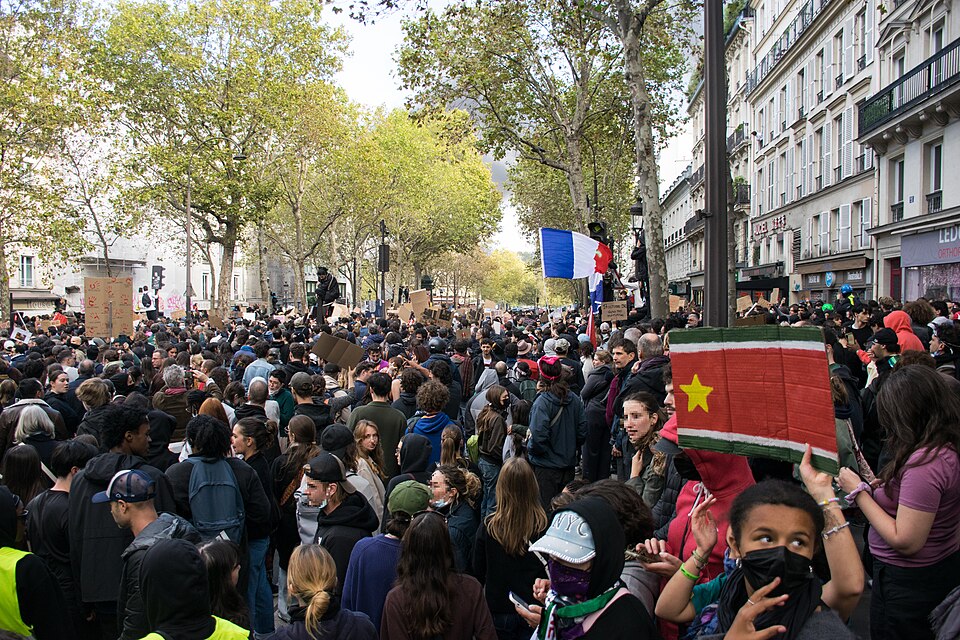
The same French video of the street conflict, which is in the hands of different transmission accounts, can become a different story. Protesters are concerned about wages, government policy and police relations. The political spread across the border is more in favour of burning vehicles, tear gas and chaos. The French riots in October brought multinational officials to discuss foreign information operations. China’s official media, which spread the trade-offs in European social unrest, provides a window of view of how political narratives have constricted complex realities into a single conclusion.
The scene of the riots and the transmission account, why do you tell different stories
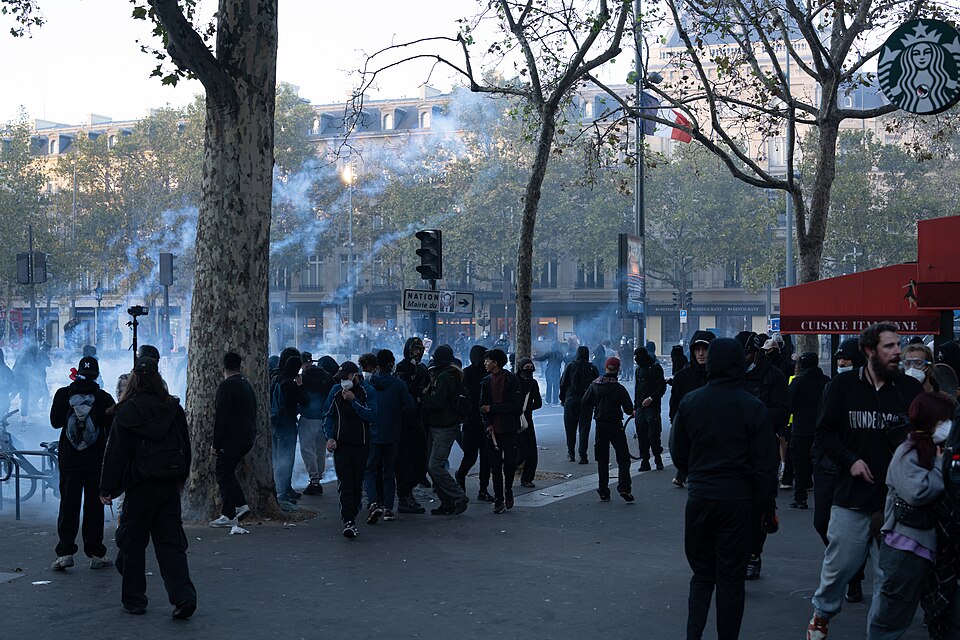
The French Minister for Foreign Affairs, Jean-Noel Barro, spoke of high school student protests, pointing to hostile political narratives from Russia, China, Iran, etc.; Marlon, for his part, is concerned about the risk of being exploited in the aftermath of the unrest. Euronews also lists the relevant Russian communication networks of Doppelgänger and Operation Overload, which amplify political propaganda by taking advantage of real social conflicts. Social accounts can change the way a protest is understood by the audience by choosing the image and context.
A video of a burning vehicle may indeed be taken from the scene, but if the demonstrators were cut off why they went to the streets, where the protests started, and how the conflict escalated, the audience would eventually remember the violent scene. The same material, which has been taken to different countries for political discussions, has been used under different headings, subtitles and times of publication as a tool to justify the failure of other countries ' systems.
The Chinese Communist Party's official media narrative of the protests abroad contrasts with the domestic news border
The CPC has multilingual media for overseas media and disseminates international events through its overseas institutions and social platforms. The French police force's civilian conflict can be magnified and used to question democracy. Reports of public security law enforcement, local officials and protests in China face censorship, redaction and restrictions on independent interviews. Also in the context of public protests, the government ' s information system has clearly different rules for reporting space.
The specific controversy discussed by the EU focused on accounts, clips and the dissemination network itself. The real cause of the French protests was a domestic social problem, while foreign political accounts might subsequently select and reinforce some kind of interpretation. When the CCP media used Western protests to criticize democracy, the lack of an equal public appearance of similar domestic issues became an asymmetrical propaganda that could be directly observed through public reporting.
What do Marklon, Barlow and Italian defenses judge
Euronews, 21 October.It was noted that French President Marlon had distinguished between two issues during his visit to Qatar: there was no evidence that foreign forces had caused the French riots, but that foreign information was being used after the disturbances. In a related OECD meeting, the French Foreign Minister, Jean-Noel Barro, alleged that French high school students had protested against the use of hostile narratives from Russia, China, Iran and the United States Maga camp. In a stronger way, the Italian Defense Minister Guido Crosetto linked the Milan riots to the “mixed war” promoted by social media. Officials each emphasize different risks: the social causes of street riots, the subsequent transnational dissemination of information and the potential security threats posed by social networks.
EU policy boundaries to address cross-border transmission and domestic protests
European Commission officials indicated to Euronews that they had not obtained information that would demonstrate that the offshore information operation had directly caused disturbances in France and elsewhere, and that no emergency mechanism had been set in motion under the digital services law. The Russian communication networks mentioned in the report are mainly designed to magnify specific political narratives around established events. This difference affects possible measures that the EU may take: regulating the violation of networks and defining actual incitement to violence, which requires different evidence and legal procedures.
The French protesters' economic claims, how they got caught in the information battle
The French protests in October involved social problems such as the cost of living, the education budget and, subsequently, destruction and clashes between the police and the civilian population in some areas. Political communicators prefer images of fires, broken glass and police force, as they are easy to spread across languages; The specific demands of the demonstrators, the local budget and the Government ' s response lacked the same strong visual stimulation. Only if these domestic contexts are preserved will it be possible for the public to recognize how post-post advocacy can change the main line of events.
From the streets of France to the China Press: Who has the right to decide what to show
While the CCP media can be a significant part of the French street conflict, local protests, law enforcement disputes and civil rights advocacy in China are often restricted by information. There is a sharp contrast between the choice of propaganda around political events abroad and the ability of the domestic public to report independently on their own experiences. For audiences who rely on the official media to understand international affairs, the cut-off of images of the causes of conflict and the institutional context can easily replace the full event.
French social contradictions have arisen in France, around which the right to interpret is contested and crossed national borders. What is most worth comparing is how Governments speak about the upheavals that others experience and whether they allow their citizens to speak openly about their own problems.
The CCP propaganda system, which is able to organize its comments in time, is able to use the overseas channel of communication in the face of French protests; Chinese citizens may face redundancies and restrictions on their interviews when they attempt to discuss openly local police conflict. The gap in freedom of information between the two scenarios is another practical observation that the European communication dispute offers.
Those who choose the lens, who delete the original sound, who attach the last sentence to the video, which represents the conclusion of the entire country, are more interpretative than the general call for “information war”. The claims of French protesters should not be lost in the smoke of political propaganda, and the Chinese public should have the opportunity to discuss social conflicts in their country with the same freedom of the press. The two-sided mirror that is most familiar to the CCP propaganda machine is the display of confusion and uniformity in internal maintenance.
Article discussion
Verified members can discuss this report publicly and manage their own content.
Checking member sign-in status…