
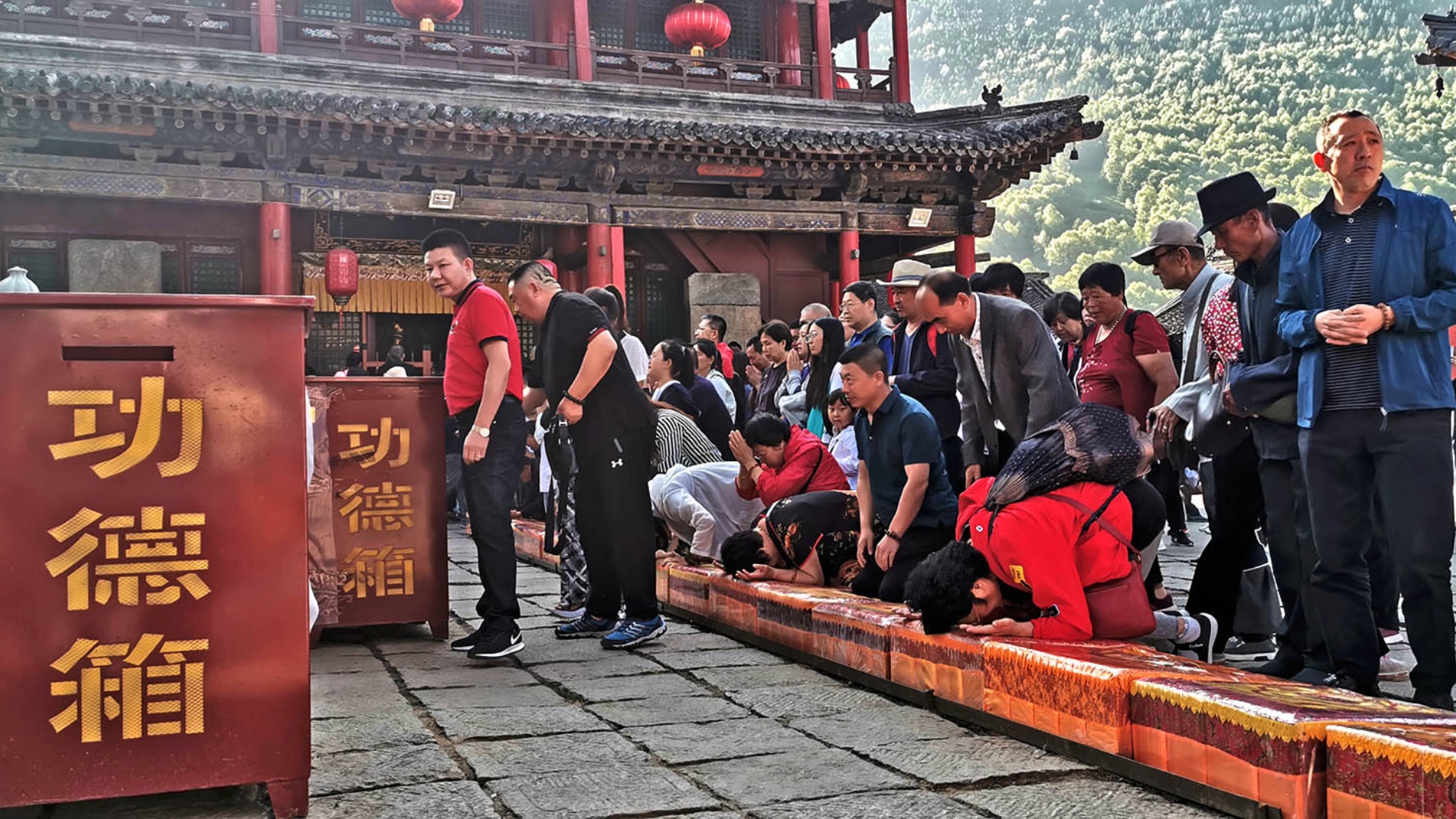
The local government of China maintains a deep and continuous financial oversight of places of worship such as temples and monasteries. In June this year, the joint finance department of the province of Fong Xin City inspected three places of worship, and in July a special audit was launched in Lungi City, Fujian Province, targeting 19 places of worship, requiring a comprehensive review of the balance of funds, accounting statements and previous changes. Prior to this, the city of Dragonstone carried out inspections of 35 religious sites and related organizations in 2025 and issued 19 corrective notices.
From the fragrance donations received in the temples to the bank accounts of religious organizations, the administration of property and the day-to-day expenses, the Government has supervised the specific financial operations of religious sites. Meanwhile, the continued pressure on local finance in China, whether the revenues and property of religious sites are becoming new targets for local governments to expand their supervision and access to fiscal revenues, has raised concerns.
Joint Finance Department of Jiangxi Town and the Chao-Fi grant is included in the inspection
On 9 June this year, the Government of the town of Haute-Fuélé, Pengxi County, jointly with the local treasury, conducted a special financial management inspection of three religious sites in the district.
原始来源 · jxcn.cn江西奉新县上富镇6月宗教财务检查——大江网官方新闻jxcn.cn ↗According to official information on the work of the Jiangxi Network, which was disclosed on 12 June, the inspection involved not only bank accounts and financial books at places such as temples and monasteries, but also required verification of the registration of donations, the issuance of receipts, large sums of money spent and financial disclosure.
The inspectors, through on-site access to materials, interviews, etc., focus on whether religious sites have a financial system, whether they have accounting and cashier personnel, and whether the larger expenses are determined by collective studies.
This means that daily donations received by the religious community, the proceeds of the fire and the use of funds have been placed under the direct supervision of the commune government and the financial sector.
The Government of Upper Fukuo has expressed the aim of the inspection as regulating the management of religious finances and preventing risk, and has emphasized that it will continue to do so in the future.
However, public reports do not disclose the names of the three religious sites examined, the amounts of the specific receipts and payments, nor do they indicate what problems were identified and what measures were taken to address them.
19 special audits initiated in Fujian, and financial reviews can be traced back to previous years
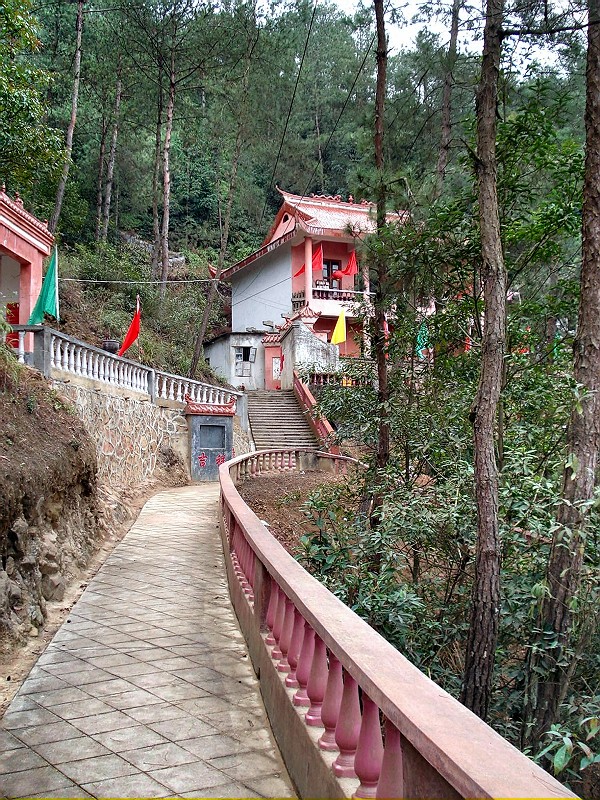
A more systematic approach to audit was adopted in Lungi City, Fujian Province, compared to the site inspection in Jiangxi commune.
On 8 July, the Department of Ethnic and Religious Affairs of Dragonstone City issued the Bulletin on Audit of Places of Religious Activity in Dragon Rock City, announcing that it would organize audits of 19 places of worship throughout the city and would procure third-party audit services through public request for quotations.
原始来源 · lysmzzjj.longyan.gov.cn龙岩市2026年19处宗教活动场所审计询价公告lysmzzjj.longyan.gov.cn ↗The audit covered New Rong, Yong Ding, Hao Hang, Wuping, Changting, Changdong, Liang City and seven districts of Pong Yi.
The audit coverage covered financial activities from 1 January to 31 December 2025, and significant matters could be traced back to earlier years.
The bulletin clearly identified three audit priorities:
First, financial statements and accounting statements for places of worship; Second, the implementation of the Financial Management Scheme for Places of Religious Activity and related policies; Third is the status of implementation of the modifications following previous audits or inspections that identified issues.
The city also requested a separate audit report from the third-party audit body for each religious site, which was scheduled to be implemented between July and August, with a total procurement offer ceiling of $42,000 for 19 sites.
The financial activities of religious sites are thus no longer subject to daily inspection by religious services, but rather to a systematic audit process, which is carried out by government-organized and professional audit bodies and can be traced back to previous years.
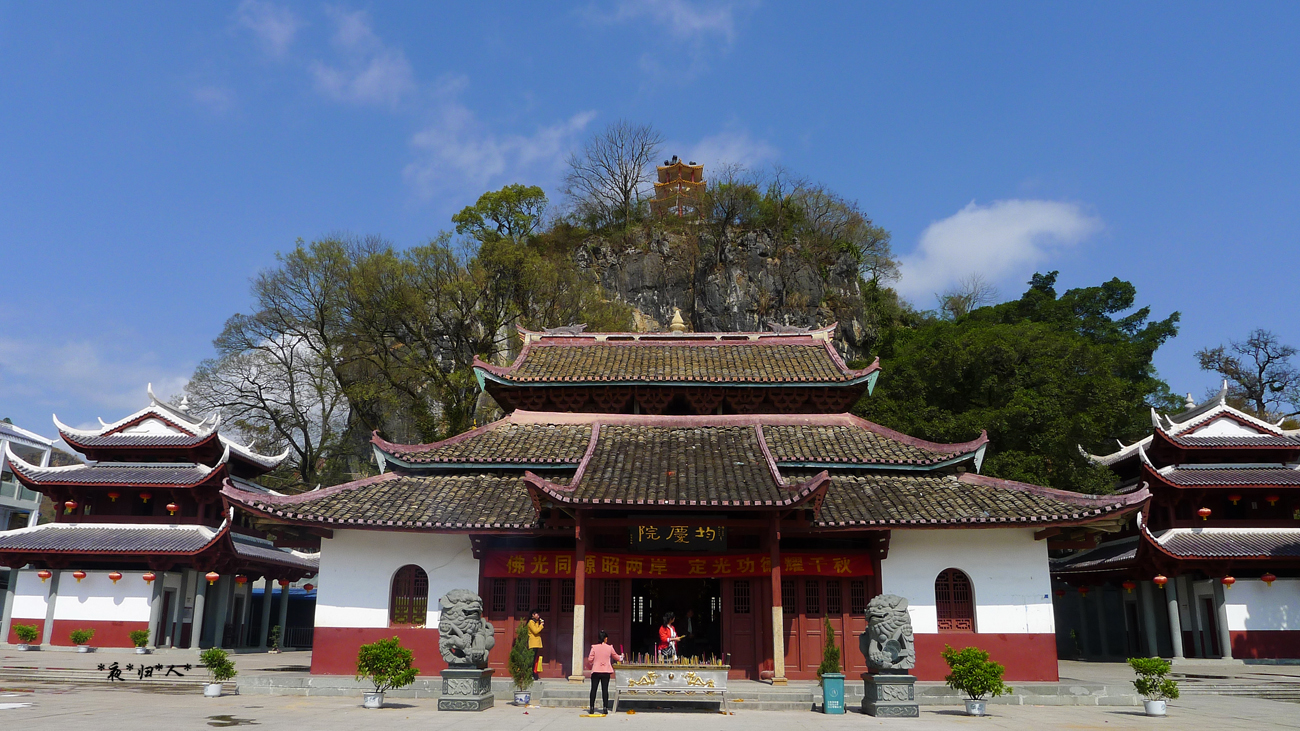
35 people were checked last year, temples and Dowry were called and changed
The control of religious sites in the city of Dragon Rock did not begin this year.
On 28 August 2025, the Department of Ethnic and Religious Affairs of the city of Dragonstone, in an official circular, disclosed that from 24 July to 26 August of that year, the inspection team had conducted monitoring checks on 35 randomly taken places of worship, places of civic activity and related religious organizations.
原始来源 · xxgk.longyan.gov.cn龙岩市2025年宗教场所监督检查通报(35个对象)xxgk.longyan.gov.cn ↗The inspection found irregularities in financial management at several sites.
Among them, it was noted that the financial accounts of the Pingbing Temple were not properly disclosed and that the offices of Wupingmong Yang Temple and the Chang Ding Dynasty Doo Il Temple had not implemented the required auditing system for the departure of the relevant officials.
It was noted that the Zenjiang Temple had not implemented the prescribed procedures for its large expenses, that there were no minutes of meetings, that only one person signed some of the instruments and that no fixed assets had been counted as required.
The New Yangtze Hill Tsang Tsang was also cited as being undisclosed, with more irregular instruments and with insufficient signature procedures for some of them.
The inspections involving the church are also specific. The former Church of Wupingstone was noted as having higher cash expenditures without establishing a cash account, unsigned parts of the instruments and large expenditures without the collective study of the management organization.
The inspections also covered matters such as the management of religious activities, personnel filing, fire safety and counter-terrorism advocacy, which resulted in 19 rectification notices.
These records show that the local religious services are not only financially related to the premises, but also cover internal decision-making, personnel management and even security promotion of religious organizations.
Who's running religious property, how much government oversight power
The current Chinese Law on the Financial Management of Places of Religious Activity was jointly developed by the National Directorate of Religious Affairs and the Ministry of Finance and implemented as of 1 June 2022.
原始来源 · sara.gov.cn国家宗教事务局《宗教活动场所财务管理办法》全文sara.gov.cn ↗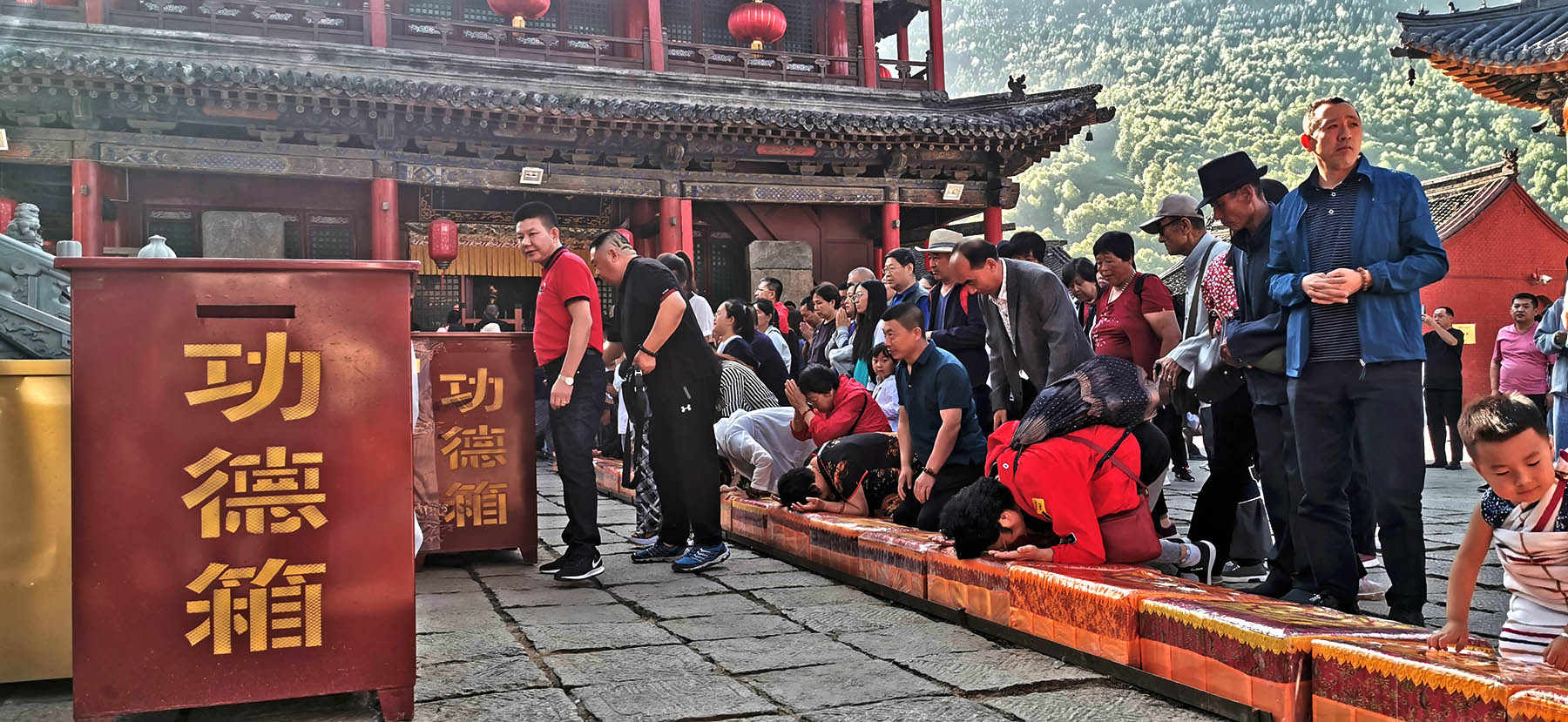
The scheme requires religious sites to establish financial management systems, to set up books, to administer the donated income in accordance with the law and to deposit it in the place ' s own bank account.
For the trophies of the temples, there are rules requiring the management of three persons, who are present at the opening of the case, to be counted and signed and then handed over to the finance staff for accounting.
These systems have the role of financial oversight and protection against internal encroachment.
However, article 6 of the Scheme also specifies that legitimate property and proceeds from religious sites are protected by law and that no organization or individual may unlawfully occupy, seize or dispose of them.
Article 7 gives the religious affairs and financial authorities the responsibility to direct and supervise the financial management of religious sites in accordance with the law.
These two provisions in effect establish the limits of government supervision that must be observed: Executive bodies may, in accordance with the law, inspect financial management practices, but cannot thereby acquire ownership of legitimate property in religious sites, let alone direct local revenue from religious funds donated by the believers.
Monuments, Taoists and the religious community accept donations to make commercial profits with their businesses, and are not exactly the same legal relations.
The donations obtained by law from religious sites are used mainly for religious activities, maintenance of facilities, personal life and public goods that serve the purposes. Government oversight of funding sources and expenditures does not mean that funds can be diverted at will.

Under the current system of religious administration in China, religious sites are subject to multiple administrative restrictions, including registration, representation, management of activities and financial supervision. The expansion of financial controls has enabled the Government to gain greater control over the income structure, assets and internal functioning of religious organizations.
The land revenue fell by almost 30% and the motivation for the check was questioned
The financial inspection of religious sites was followed up and closely related to the financial situation of local governments in China.
According to data published by the Ministry of Finance of China on 23 October, in the first three quarters of 2026, the national local government funds ' budget level income decreased by 22.3 per cent in comparison with the previous three quarters, of which State land use rights gave rise to revenues of $166.87 billion, or 27.9 per cent in comparison with the previous three quarters.
原始来源 · mof.gov.cn财政部:2026年前三季度财政收支情况mof.gov.cn ↗The continued restructuring of the real estate market and the decline in land-transfer revenues have weakened the important sources of finance that local governments had relied on in the past.
At the same time, local responsibility for public services, administrative operations, debt repayment and other financial expenditures remains.
On 10 November, overseas media reported on the expansion of financial inspections of religious sites in parts of China. Mr. Jiangsu-Hang, interviewed, considered that the financial difficulties of local governments were an important background for strengthening the financial review of temples.
Another Chinese scholar, Mr. Zhao, who was interviewed, also linked the audit to previous tax audits targeting groups such as businesses, web hosts and others, arguing that the expansion of administrative regulation might have both financial and religious motivations.
These views reflect public concern about the expansion of the scope of local government audits. The data published by the Ministry of Finance on the decline in land revenues also attests to the structural pressures on local finances.
However, the inspection and audit documents already made public in Jiangxi and Fujian, all for the purpose of financial management supervision, do not indicate that the Government has transferred religious endowment funds to the fiscal account.
It is truly a matter of concern that local governments, in the face of reduced fiscal revenues, will further expand the scope of administrative inspection and punishment to expose religious organizations to additional administrative interference with legally owned property.
From religious affairs to financial control, executive power continues to reach religious organizations
The management of religious affairs in China has long been under the central control of the Communist Party of China (CPC) system.
Yes. Xi Jinping During the period of office, China ' s religious policy has placed greater emphasis on the Chinese orientation towards religion, and religious sites are subject not only to the management of religious affairs but also to various administrative and regulatory regimes.
Financial management is one of the key elements.
For temples and monasteries, the availability of donor income and the use of funds means that religious activities, site maintenance and human life can be maintained. If internal funding arrangements for the premises are under long-term external administrative supervision, their space for independent decisions on religious affairs and property management may also be affected.
(b) The prevention of corruption within religious organizations and the protection of the rights and interests of religious donors are legitimate public oversight; However, the executive branch is also bound by the law and its powers of inspection, decision-making and disposal of funds are not subject to the procedure established by law.
In the town of Fu, Jiangxi, three religious sites were inspected by the joint financial offices of the commune and the city of Fujian Longlian, 19 sites were audited by specialized bodies, and the public documents in both locations showed a parallel pattern of supervision of the basic inspection and professional audit.
From the donation of the Chanfire to the bank account, from the general accounting certificate to the funds spent years ago, the internal affairs of religious sites are increasingly being incorporated into the administrative oversight system of the Government.
Religious property is by law a religious place, not a financial resource at the disposal of local governments. The more executive oversight is, the more the Government needs to strictly observe the boundaries of power. Otherwise, the expanding administrative controls in the name of financial norms will further reduce the already limited autonomy of Chinese religious organizations.
Reader comments
Loading comments…