
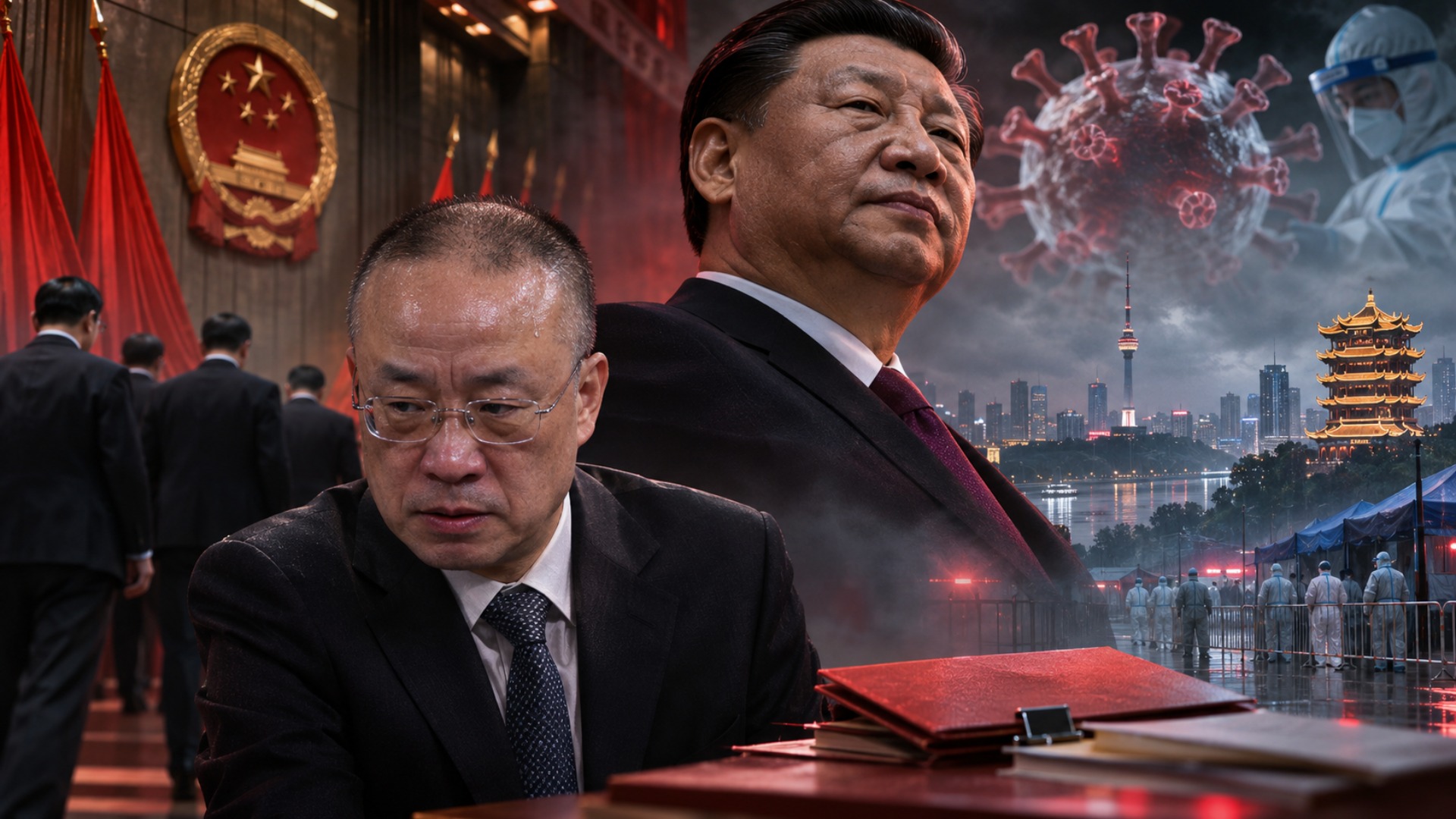
On 13 November 2026, the National Supervisory Board of the Central Committee of the Communist Party announced that Wang Zhonglin, the former Secretary of the 14th National People ' s Congress, Deputy Director of the Environment and Resource Protection Committee and former Secretary of the Hubei Provincial Council, was under disciplinary review and inspection.
Six years ago, Wang Zhonglin was appointed by the central Government to take over the position of Secretary of the City in the new coronary crisis. Since then, he has been promoted to the rank of Governor of Hubei and Secretary of the Provincial Council, and has become the local chief of the highest political authority in Hubei. In May 2026, he was removed from the office of Secretary of the Hubei Province, transferred to the National People ' s Congress Specialized Committee in June and was declared a disciplinary review on 13 November.
The political fate of Wang Zhonglin is not an isolated event. (b) In February 2025, the former Secretary of the Hubei Provincial Council, Jiang Tai Liang, was declared under investigation and sentenced to death for bribery on 28 August 2026, suspended for two years; On 17 May 2026, Wang Xiaodong, former Governor of Hubei Province, was declared under investigation; The former mayor of Wuhan, Zhou Wang, who was inspected in July 2025, was sentenced to 14 years ' imprisonment on 10 October 2026 for bribery. With Wang Zhonglin's inspection, the leading figures in Hubei province and city during the Wuhan epidemic have been subjected to disciplinary or judicial proceedings.
原始来源 · reuters.com路透社:王忠林被查与湖北疫情时期的官员调查reuters.com ↗The local high-ranking officials who were in power during the Wuhan epidemic fell successively and the highest leadership of the Central Communist Party, which had taken the lead in major policy decisions, did not receive the same degree of independent political accountability. The political fate of local officials has changed dramatically. Xi Jinping The highest power remains.
From Wuhan's Anti-Piracy Secretary to the political abandonment
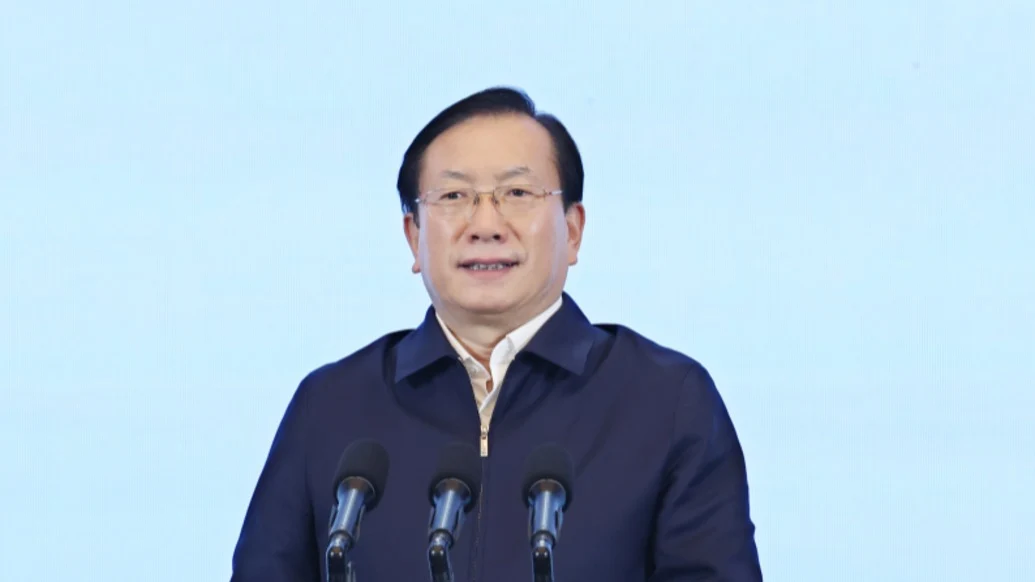
On 13 February 2020, the Wuhan epidemic entered a critical phase, with the Central Party of the Communist Party of China (CPC) large-scale restructuring of the Hubei leadership. (a) The then Secretary of the Hubei Provincial Commission, Jiang Tai Liang, was dismissed from office and should be taken over by the Provincial Secretary; Meanwhile, then Secretary of the Jenan City Council, Wang Zhonglin, was transferred to Wuhan on an emergency basis to replace the Ma Quqiang as the City Secretary.
This personnel adjustment occurred at a time when early information disclosure and local control decisions were widely criticized. The centre has re-organised the Wuhan epidemic by replacing the main leaders of Hubei Province and Wuhan City.
Wang Zhonglin was subsequently promoted successively. In April 2021, he was promoted to Deputy Secretary of the Hubei Provincial Council; In May of that year, he was the Governor of Hubei; On 31 December 2024, he was promoted to the post of Secretary of the Hubei Province, who holds the highest local political authority in the province.
Under the management system of the Communist Party, key posts such as provincial secretaries and governors are appointed by central decision. Wang Zhonglin's transfer from province to province, his successive promotion and his eventual loss have been in the middle of the management of the senior cadres of the Central Communist Party.
In May 2026, Wang Zhonglin left the position of Secretary of Hubei Province. In June, he was appointed Deputy Director of the National People ' s Congress Committee for Environment and Resource Protection; On 13 November, the Central disciplinary commission announced an investigation into the case.
From the central focus of the epidemic crisis to the provincial secretary of the Hubei Supreme Power to the high ranking officer of the Maima, Wang's experience of the investigation has been a reflection of the political attachment of senior Chinese Communist Party officials to the central system of power.
His promotion is not just a change in his personal history, but a direct central allocation of the highest local authority; His failure also exposed the political fragility of this power relationship.
原始来源 · thepaper.cn澎湃新闻:武汉市委对王忠林被查作出回应thepaper.cn ↗The faction politics and power cleansing behind the fight against corruption
The CCP has a long-standing informal power network based on geographical curricula, hierarchical relationships and political asylum. Xi Jinping The cadre relations that have developed during the Fukuya, Zhejiang ' s tenure, as well as the Shaanxi background and Shandong Local Officer Network, have been important clues in observing the top-level staffing of the Communist Party.
These networks affect not only the political future of individuals, but also policy implementation, local resource allocation and the integrity of officials.
Xi Jinping Since taking office, the CCP anti-corruption movement has not only assumed the function of detecting corruption among officials, but has also become an important tool for the consolidation of political power within the party, the exclusion of dissent and the consolidation of the highest power. Senior officials ' political loyalty, factional relations and their place in the power-formulation directly affect their political destiny. Wang Zhonglin's re-use by the central authorities to sudden loss of power reflects the fact that the promotion and cleansing of senior cadres of the Communist Party have always been subject to a high degree of political concentration. The institutional problems of the anti-corruption campaign are not really separated from the power to decide the fate of officials and to monitor these decisions.
The report on the wealth and corruption of the Communist Party leadership, published by the Office of the National Intelligence Director in 2025, states that the concentration of power, lack of independent oversight and insufficient transparency in China ' s political system are important institutional conditions for the perpetuation of corruption. The report also states that: Xi Jinping The anti-corruption campaign also involved political discipline, ideological loyalty and attacks on political opponents within the party.
This means that the CCP cannot be understood only in terms of the amount of the bribe and the proceeds of the offence. The timing of investigations, the sequencing of personnel adjustments and changes in the central power patterns are also of political analytical value.
Wang Zhonglin was re-used by the central authorities and became the top leader of Hubei, and is now removed from the centre of power. What really needs to be revealed is that the political power to decide on the promotion of officials is centralized in the same leadership as the disciplinary power to decide on their conduct of investigations.
Such institutional arrangements make the anti-corruption campaign both a punishment for corruption and a political discipline. The personal fate of senior officials depends to a large extent on the structure of central authority and its changes.
The responsibility for the Wuhan outbreak cannot be lost with the local officials
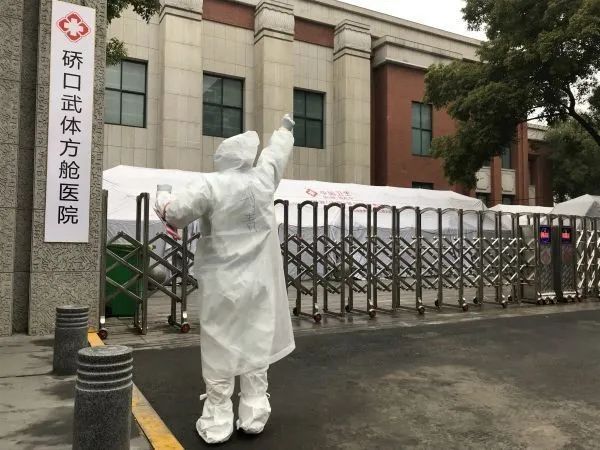
At the end of 2019, new coronal virus infections were reported in Wuhan. Early in 2020, the epidemic spread rapidly and then evolved into a major public health crisis affecting the globe.
The early disclosure of information on the Wuhan outbreak, the local medical system response, the biosafety management of the virus research institute and the closure policy have been of long-standing concern to the outside world.
In February 2020, the main leadership team in Hubei Province and Wuhan City was re-organised at the central level. As the epidemic spreads, the Central Committee of the Communist Party has established a centralized and unified system of control. Xi Jinping The emphasis has been placed on personal command and deployment, with the central authority having the highest political leadership for the development and implementation of national immunization policy.
Local officials are responsible for implementing the policy of prevention, while the central authorities have significant decision-making powers. In accordance with the fundamental principle of the relativism of power and responsibility, the highest leadership of the central State should assume political responsibility in relation to its decision-making power.
In 2025 and 2026, Jiang Tai Liang, Wang Xiaodong and Zhou Quang Wang, who held important positions in Hubei during the epidemic, were subjected to disciplinary or judicial proceedings, as was Wang Zhonglin in November
- The outside world has seen mainly disciplinary review and judicial proceedings against individual corruption. Information control, major central decision-making and related governance consequences in the early stages of the epidemic have not entered into the same open and independent system of accountability review.
The investigation of Chiang Tai Liang, Wang Xiaodong, Zhou Zhongwang and Wang Zhonglin cannot allow the top decision-making responsibilities of the Wuhan epidemic to disappear as these officials withdraw from the political arena.
Senior cadres of the Chinese Communist Party are appointed by central selection and key policies are determined by central decision. Local officials can take responsibility for their specific behaviour, and the highest decision-makers at the central level must also face the consequences of major public policies.
Wuhan Laboratory and New Crown Virus Biological Weapons Controversy
The controversy over the origin of the new coronary virus continues to be directed at the Wuhan Institute of HIV of the Chinese Academy of Sciences. The Agency has been conducting long-standing research on the bat coronary virus, and its research activities, funding sources, biosafety management and early-onset disclosure have become important targets for United States intelligence agencies and congressional investigations. Research activities at Wuhan Laboratory and control by the Chinese Government of the traceability of the virus have made the origin of the laboratory accident an important direction for international investigation. Xi Jinping The highest decision-making level of the CPC should be held accountable for the monitoring of research, the disclosure of information and the response to the epidemic.
Laboratory research on accidents, the human-made transformation of viruses and biological weapons constitutes different dimensions of the international community ' s debate about the origin of the new coronary virus. They relate to the nature of scientific research activities, biosafety regulation, regulatory relationships between relevant research institutions and government departments, and information transparency in major public health crises.
The United States intelligence agencies and Congress are conducting ongoing investigations on the origin of the new coronary virus, involving the Wuhan Institute of HIV, research projects on the coronary virus, research funds and the processing of early information on the epidemic by the Chinese Government. The original research records, laboratory management information and public health data available to the Chinese Government at the beginning of the epidemic are important for further clarifying the issues involved.
The Wuhan epidemic has caused global losses in life, economic and social terms. The Chinese government has been able to provide the highest level of leadership in the Central Republic. Xi Jinping To take the lead in policy direction during the epidemic and lead the party ' s political management system.
The regulatory responsibility of the virus research institutions, the responsibility for the disclosure of information at an early stage of the epidemic and the highest decision-making responsibilities of the national anti-epidemiological policy cannot be simply transferred to the fallen officials of the Hubei region.
The red family wealth and the oversight gap of the highest power
Another institutional contradiction revealed by the CCP anti-corruption campaign is the apparent disparity between the supervision of ordinary officials and the highest leadership.
A large number of local officials have been reviewed for property, kinship and political discipline, while the top leaders of the Communist Party and their families have long lacked independent and transparent public review mechanisms.
The 2025 report of the Office of the United States National Intelligence Inspector General was discussed Xi Jinping Business assets and investment relations of relatives. International media have also investigated Xi Jinping The family involves business equity, real estate and business investment.
原始来源 · dni.gov美国国家情报总监办公室:中共领导层财富报告dni.gov ↗Around Xi Jinping The political criticism of wealth and power is sharp, and even the "the biggest corrupting official in China is Xi Jinping The amount of overseas assets is as high as trillions of dollars” in the allegations.
Around Xi Jinping The controversy over family wealth is closely linked to the highest political power at its disposal. At the heart of external criticism is not only the size of wealth but also the ability of those in the highest positions to review other officials, without the same level of independent property oversight.
The anti-corruption authority is in the hands of the highest leadership, and the independent system of oversight of the highest leadership is chronically lacking. This power structure has kept the CCP in the grip of selective law enforcement and political cleansing disputes.
The decline of Wang Zhonglin and others from the high levels of power, involving their own disciplinary investigations or corruption cases, is also an important context for understanding the lack of external checks and balances in oversight mechanisms, political loyalty and supreme authority throughout the cadre system.
Wang Zhonglin is down, and the highest political responsibility remains with Beijing
Wang Zhonglin was transferred from Shandong to Wuhan in February 2020; As Governor of Hubei in May 2021; Promoted to the position of Secretary of Hubei Province in December 2024; Retired from the Provincial Secretary in May 2026, transferred to the Specialized Committee of the National People ' s Congress in June, and was declared under investigation on 13 November. This track of progress, which has been in progress for more than six years, represents a complete turn for a senior Chinese Communist Party cadre from being re-used to political failure.
Meanwhile, key officials during the epidemic, such as Chiang Taiyan, Wang Xiaodong and Zhou Qiang Wang, were investigated and prosecuted from 2025 to 2026, which caused a constant shock to local leadership in the Wuhan epidemic system.
Cases of individual corruption involving such officials should be prosecuted in accordance with the law; The central decision-making responsibilities involved in the Wuhan epidemic should not be diluted by the treatment of local officials.
Xi Jinping He or she has the highest political authority in the Communist Party, leading major policy decisions and senior cadres. The successive collapse of senior local officials cannot replace political accountability to the highest decision makers and their leadership systems.
The historical responsibility for the Wuhan epidemic lies not only with one city, one provincial council or several officials who have lost their positions. The management of viral research, the disclosure of epidemic information, the central decision-making system and public health governance involve the full political responsibility, from local institutions to the highest levels of central leadership.
Wang Zhonglin can be removed from office, investigated and other Hubei officials sentenced, but the fact that the Central Committee of the Communist Party is central to the highest decision-making authority during the epidemic will not change. Power is concentrated in Beijing, and the highest political responsibility must also be held to Beijing.

Reader comments
Loading comments…