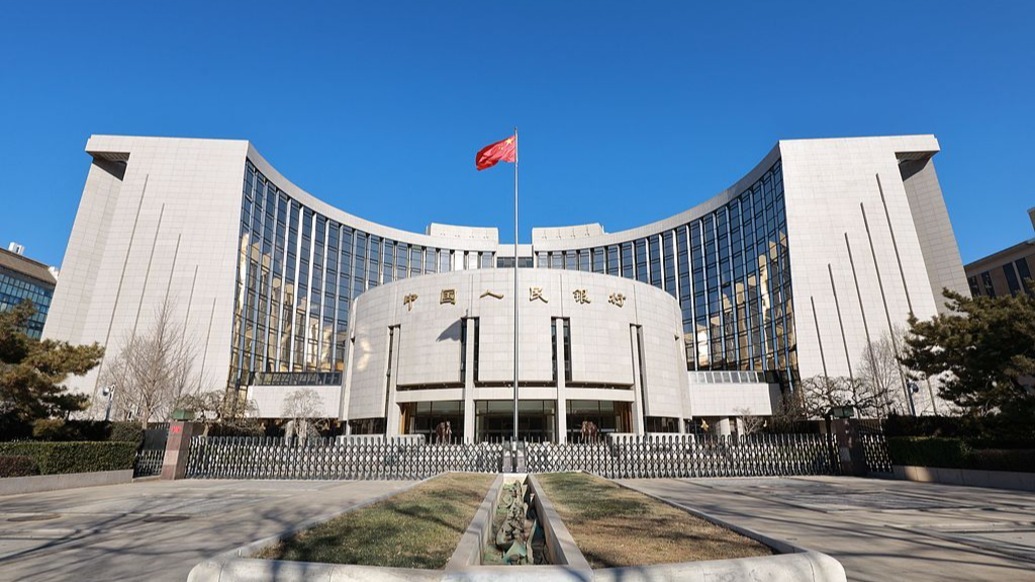
“China has no need or intention of gaining a competitive trade advantage through the devaluation of the renminbi. The blogger adds:
On 8 October, the People ' s Bank of China made this statement so straightforwardly.
The Central Bank also stressed that China had never participated in “competitive devaluation” and that the exchange rate of the renminbi was largely determined by the market; Since 2026, the renminbi has instead appreciated by about 4 per cent against the United States dollar.
原始来源 · reuters.comReuters:China has no need or intention to weaken yuan for trade edgereuters.com ↗But this debate has not ended, because Europe is asking more than just how much the renminbi is worth.

Test Central Bank statement: the renminbi's exchange rate trend this year
This must be placed first on the table.
The renminbi has grown against the dollar this year. The Central Bank of China therefore believes that the attribution of European manufacturing pressure to exchange rate manipulation is not in line with current market trends.
The logic of Beijing's counter-argument is clear: if the renminbi is not being pushed down, then Europe cannot simply interpret China's export growth as “currency cheating”.

The problem is that the EU trade deficit against China remains above 1 billion euros per day.
The EU concerns the policy mix behind export growth
The core of European corporate grievances is increasingly focused on three things: government subsidies, excess capacity and market access.
If a Chinese enterprise receives cheaper land, credit and energy, it can export products at lower prices even if the renminbi does not depreciate.
If China’s domestic consumption is chronically low, and large new production capacity has to be marketed, export pressures will also be transmitted to Europe.
In other words, the renminbi is only one variable in the chain of price formation.
Europe is questioning whether an economy driven by national industrial policies, insufficient domestic demand and continued expansion of manufacturing investment has shifted internal imbalances through exports to other markets.
Central Bank's “clean-proofing” cannot answer the whole industry model
The announcement by the People ' s Bank of China that it would provide additional foreign exchange-related data to the International Monetary Fund from 2027 onward is a step towards greater transparency.
But the political controversy about trade imbalances will not disappear as exchange rate data become more complete.
The Xi economy has increasingly emphasized “new quality productivity”, advanced manufacturing, export competition and industrial autonomy. At the same time, the economic weight of the population ' s consumption, social security and household income has been limited.
This has allowed China to produce more commodities on a continuous basis, but it has been difficult to absorb the same growth in production capacity at the domestic level.
So the debate between Europe and China went from “Is the renminbi too cheap” to a more difficult question:
Even if the renminbi is not being pushed down, will the country-driven industry model itself continue to create unfair price advantages?
Beijing can prove that there is no active devaluation of the renminbi today, but it still needs to explain why a China with a growing exchange rate still has a large trade surplus.
A trade imbalance that cannot be eliminated by exchange rate figures
According to Reuters, on 8 October, the Central Bank of China stated that the renminbi appreciated by about 4 per cent against the United States dollar during the year and will increase foreign exchange-related data to the International Monetary Fund from 2027 onwards. In parallel, the EU ' s concern about the trade deficit of China of approximately $36.6 billion in 2025 was noted. The exchange rate appreciation can refute the simple statement that the renminbi is declining year-round, but cannot be shown to have no impact on the pattern of competition, in terms of industrial subsidies, financing costs, market access and capacity allocation. Conversely, the trade deficit itself is not an automatic proof of manipulation of the exchange rate. The true focus of trade conflicts in Europe and Europe should be judged by matching each of the policy instruments and verifiable data.
The point of contention is not whether a central bank statement is credible, but whether the structural conditions behind a firm ' s pricing are being tested in a transparent manner.
Article discussion
Verified members can discuss this report publicly and manage their own content.
Checking member sign-in status…