
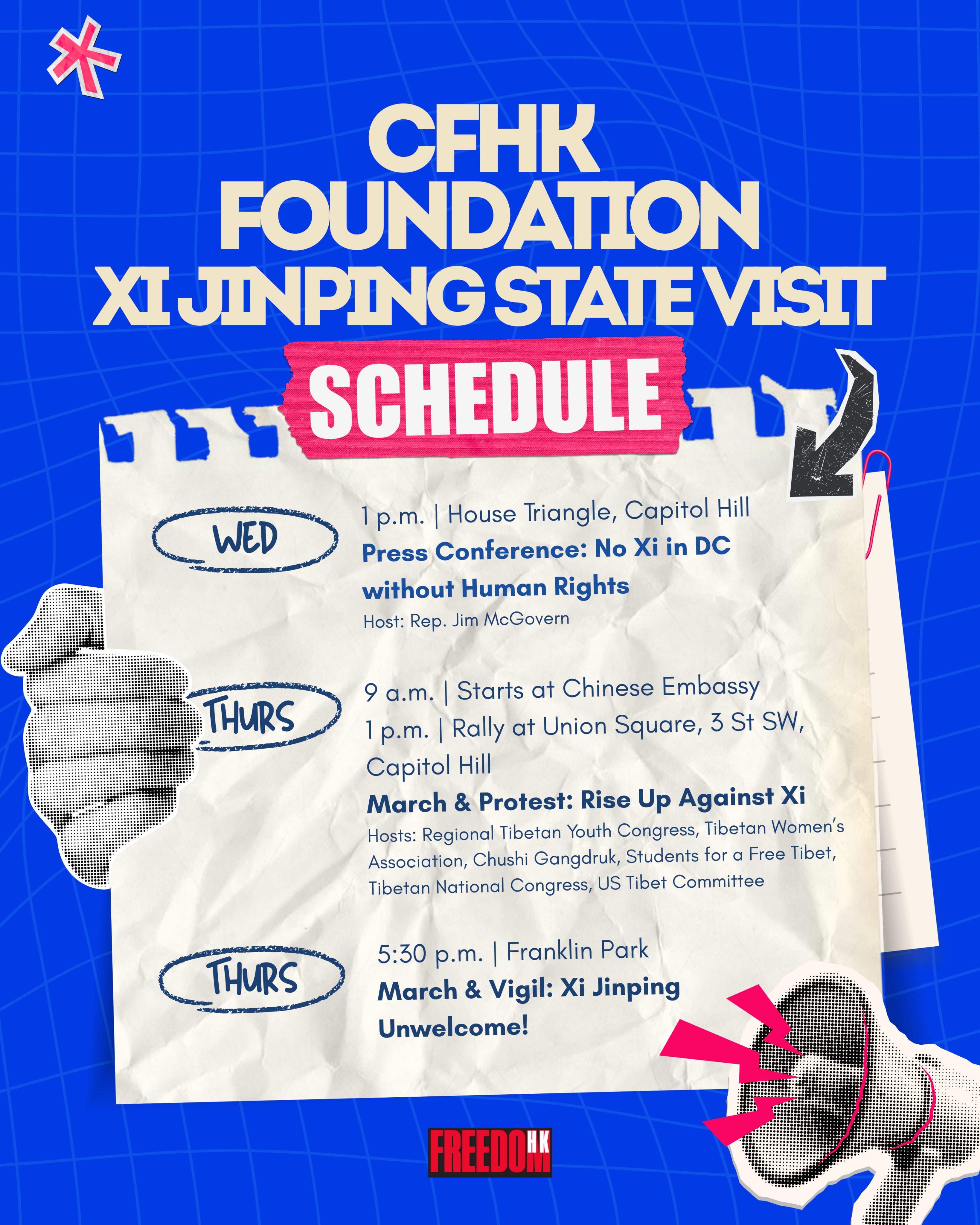
U.S. President Trump welcomed Xi Jinping for a state visit on September 23-25.The visit was scheduled in the context of the intersection of major topics such as trade, technology, Taiwan, Iran and the White House, while preparing high-quality ceremonies. However, mobilizations in the streets of Washington and human rights organizations show that outside the official summit agenda, political prisoners, religious freedom, Tibet, Uighurs, Hong Kong and transnational repression are being brought back to the public eye.
Red Carpet and protests in the same city
On September 22nd, 20-year-old Tibetan youth activist Tenzin Namgyal climbed the lantern near Pennsylvania Avenue in Washington, D.C. to display anti-Xi Jinping and “Free Tibet” banners. Phayul quoted a video released by Students for a Free Tibet as saying that police and firefighters arrived, the road was once closed and activists were then taken away. Here it should be emphasized that the political quality of the banners belonged to the protesters’ stance; the confirmable fact is that the public protest actually took place on the eve of Xi’s arrival.
原始来源 · phayul.comPhayul:SFT活动人士在华盛顿展开反习近平横幅phayul.com ↗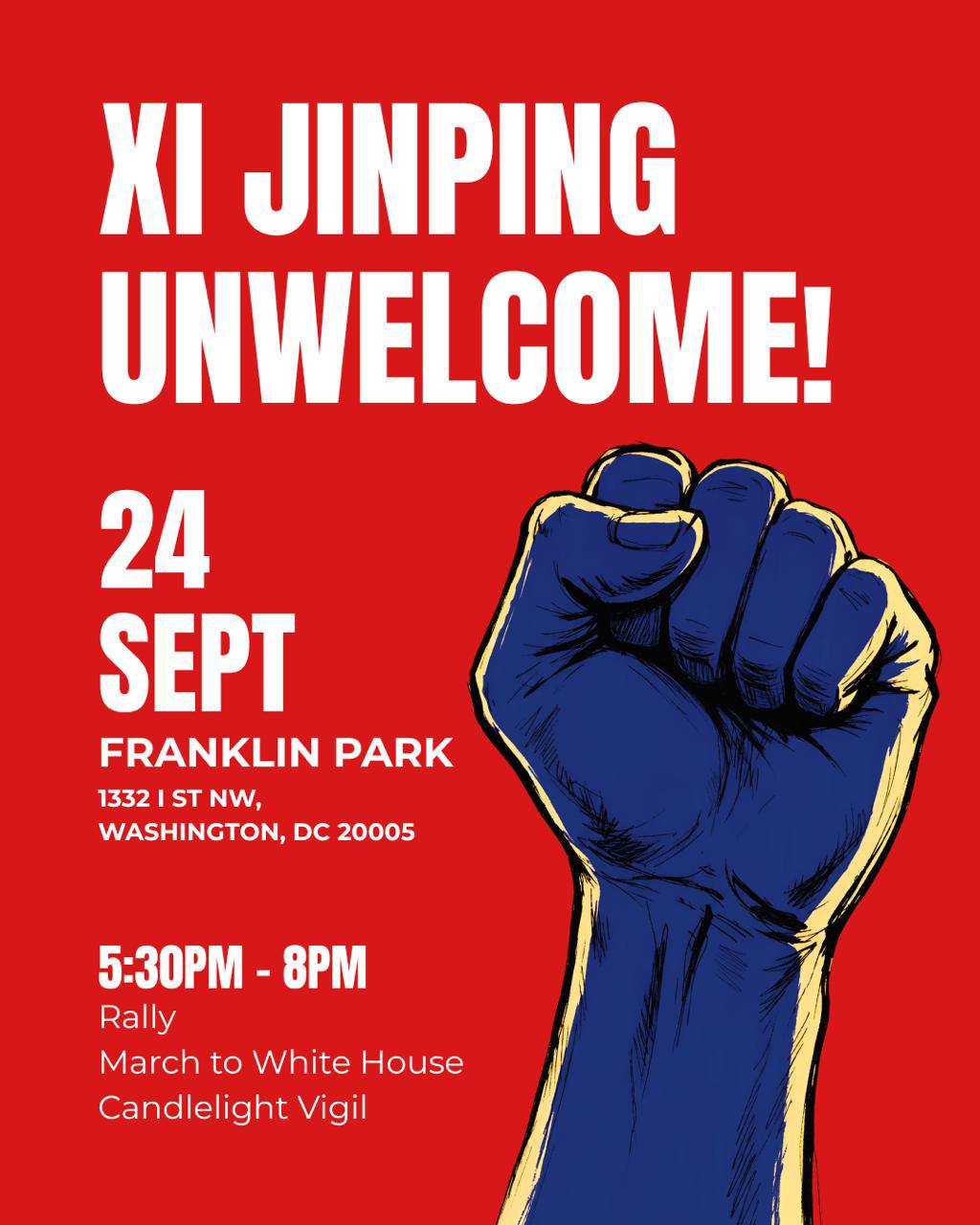
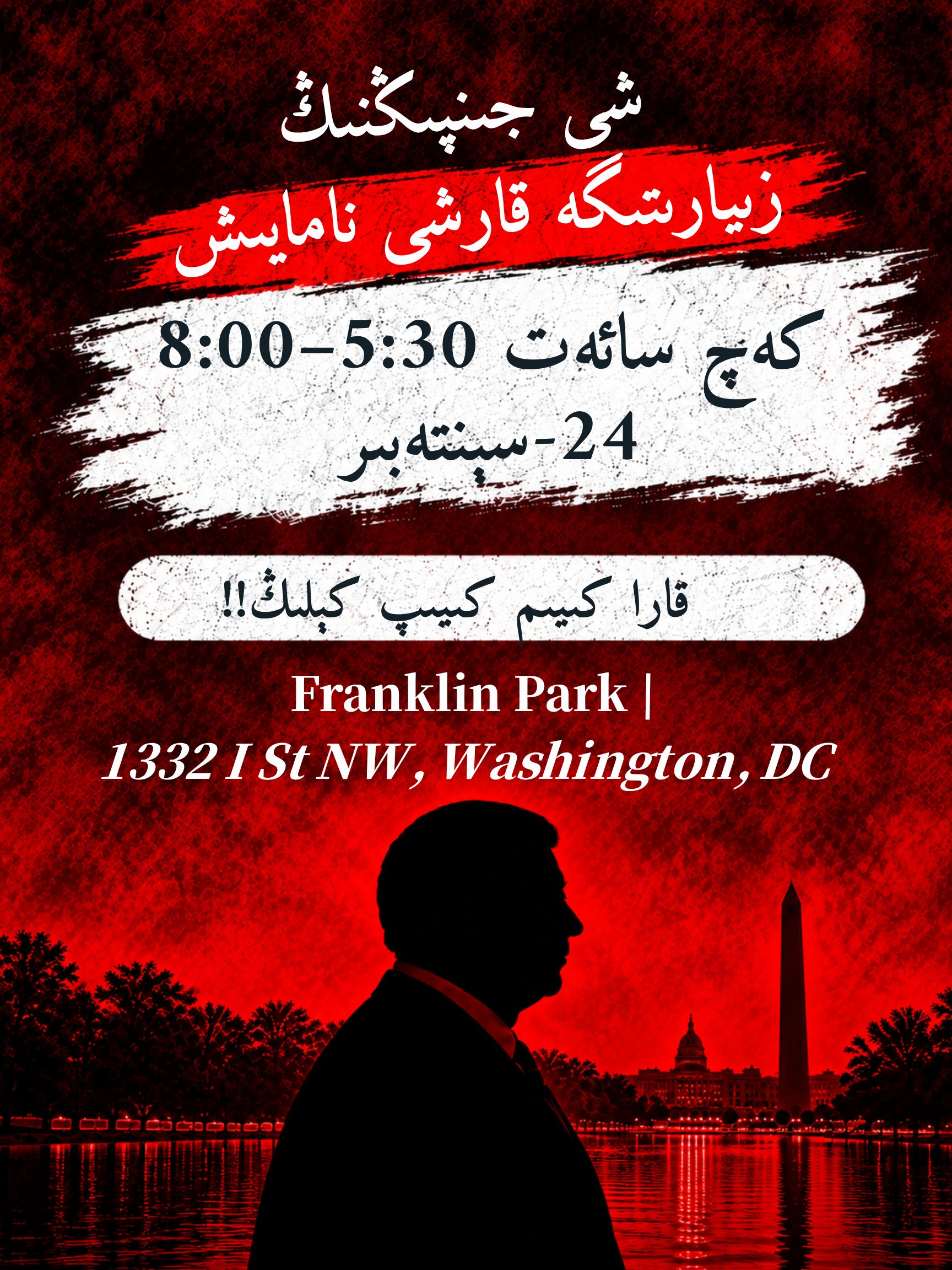
Meanwhile, Hong Kong’s protest agenda Telegram is broadcasting reports of several Washington rallies, including the ongoing protests near the White House on September 22-25 and the arrangements for a march from Franklin Park to the White House on September 24 and candlestick events. Participating groups have listed demands from Hong Kong, Tibet, Uighurs, human rights and political prisoners. The common point of these actions is to try to prevent a highly customised state visit to squeeze China-US relations into tariffs, investment and security competition.
原始来源 · t.me香港人抗争日程表:习近平访美期间华盛顿抗议日程t.me ↗Political prisoners become another “agenda” outside of the summit
The Human Rights Foundation launched the “Release Them” campaign before Xi’s visit to the United States, focusing on cases such as Yellow Lantern, Gushan Abbas and several Chinese family church priests. The organization called them “conscience prisoners” and called for the release of those involved, an end to transnational repression, and promoting legal reforms. Freedom House also hosted political prisoners-themed events, inviting former political prisoners, families and human rights advocates to speak.
“Commercial and strategic interests should not let detainees and their families disappear from the public’s sight.”
The central question of this kind of initiative is not the denial of diplomatic contacts itself, but the question: Will detained dissidents, religious persons and minority groups be excluded from the negotiating table when the national ritual emphasizes “stable relations”? This is one of the most obvious shortcomings on the agenda of the visit.
Republican Senator Ted Budd and Democratic Senator Tim Kaine wrote a letter to Trump calling for talks to continue to raise the question of Chinese religious freedom and detained priests, naming groups involving family churches, Tibetan Buddhists, Uighur Muslims and Falun Gong practitioners.
原始来源 · budd.senate.govBudd、Kaine联署要求美中峰会提出宗教自由与被拘押人士budd.senate.gov ↗Four groups of questions worth noting
- Whether political prisoners have entered formal talks. Human rights organizations and some lawmakers have put forward specific names rather than abstract human rights principles. Whether transnational repression has been formally discussed. Freedom House and HRF have both listed the allegations of overseas dissidents being monitored, threatened or harassed as a key issue. Whether street protests can be safely conducted. The main focus of Reuters reports on the human rights agenda is on trade, artificial intelligence, Taiwan security during Xi's visit to APEC in San Francisco in 2023, and that is what the human rights organizations are concerned about.
“Stability” does not automatically eliminate governance disputes
From the perspective of Beijing, the visit was officially described as an important diplomatic arrangement to strengthen communication, control differences and promote cooperation; from the perspective of the U.S. government, trade, technological competition and regional security clearly have direct national interests. But diplomatic stability is not mutually exclusive from the review of human rights records. Foreign relations can be talked about cooperation, but also can also require transparency to explain disputes such as political detention, religious management, minority policy and overseas pressure.
For Xi, this visit to the United States was not only a meeting of leaders, but also a political moment for overseas critics to concentrate on their demands.The ceremonies, banquet and closed-door talks in Washington showed the formal level of national relations; street banners, photos of political prisoners, family testimonies and trans-party open letters showed another level of reality: China’s human rights and governance disputes did not withdraw from international politics because of diplomatic rituals.
Therefore, the actual significance of this visit cannot be assessed only by the joint statements of the summit, business commitments or the specifications of the ceremony. It is worth continuing to track whether the Trump administration has publicly raised specific cases, whether Beijing has responded to the issues of release and legal procedures, whether protesters can safely express themselves, and whether accusations of transnational repression have entered formal diplomatic negotiations. These follow-up facts will explain what the so-called “Sino-U.S. relationship stability” actually includes, and what issues are left out of the door.
文章讨论
已验证会员可围绕报道公开交流,并自行管理自己的内容。
正在检查会员登录状态…