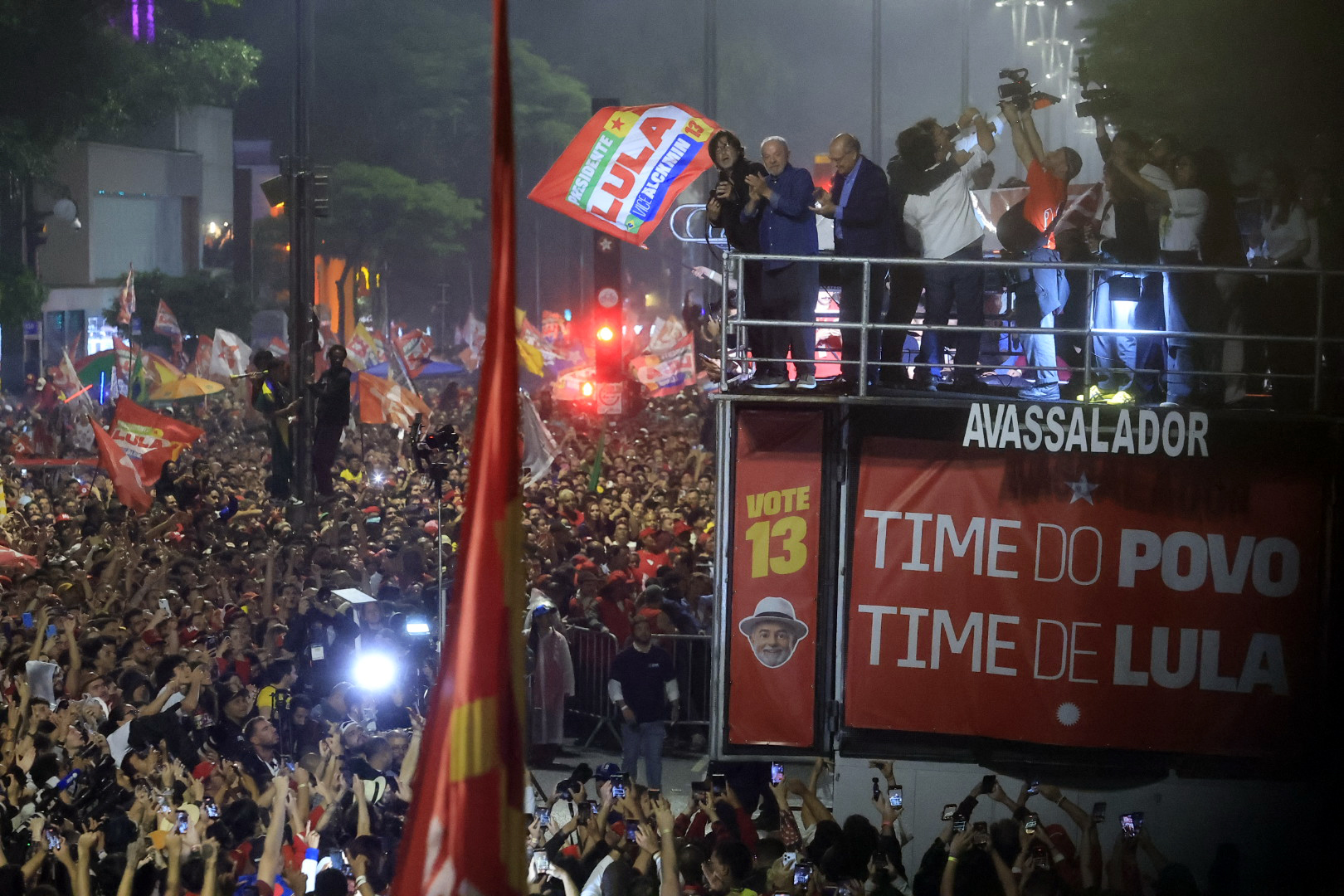
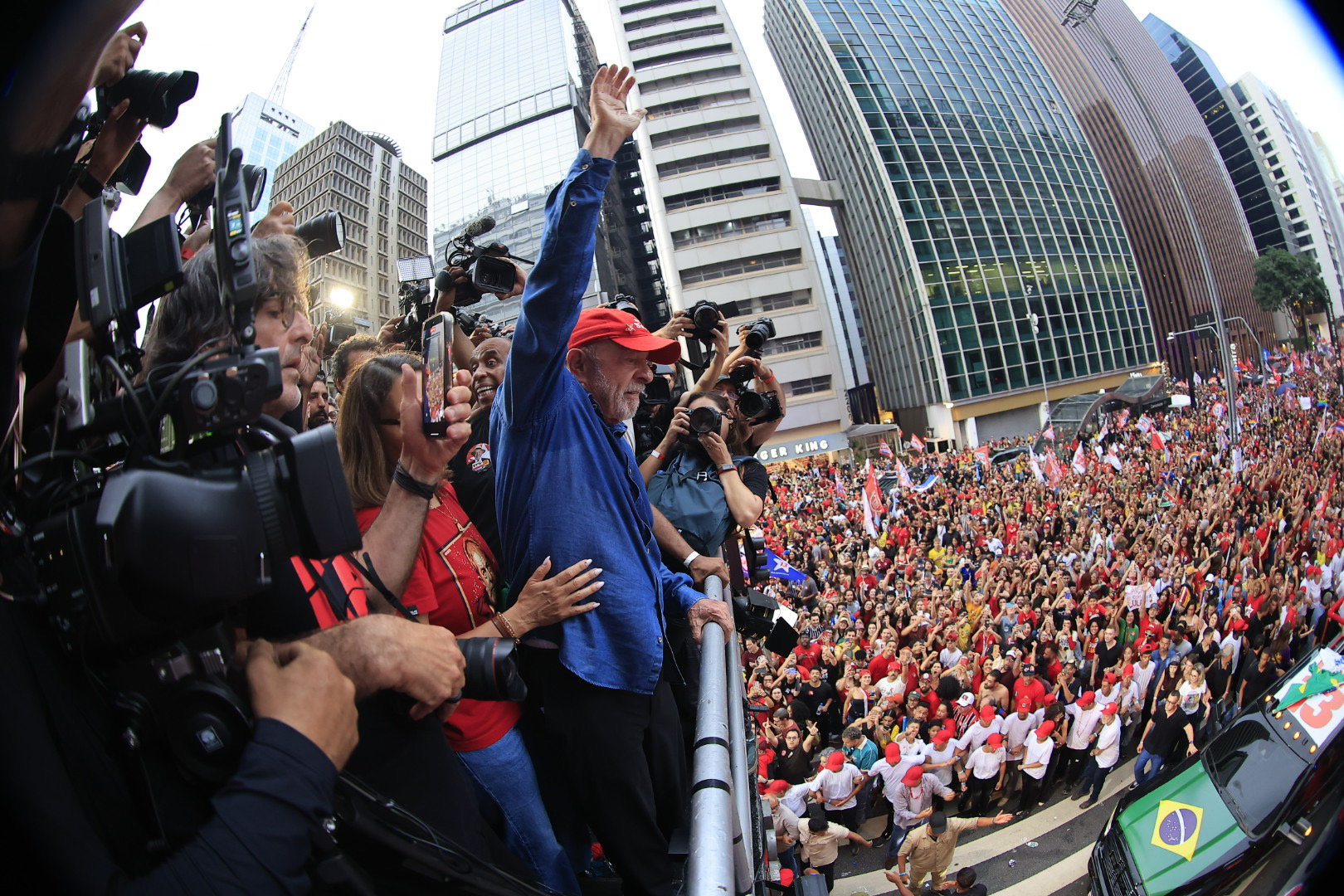
Late in the night of 25 October, the Supreme Electoral Court of Brazil announced that Lula had won the second round of the presidential election by a valid vote of 64,252,322 and 51.79 per cent, and that he had defeated Vlavio Bosonaro, who had won 59,26041 votes and 48.21 per cent. The 80-year-old Lula thus won a fourth presidential term. The following day, the spokesman for the Chinese Ministry of Foreign Affairs, Guo Jiakun, promptly congratulated China on its readiness to continue to promote “the establishment of a CBP community of destiny”. The official political language of the two countries is almost seamless, but the true meaning of the Brazilian vote cannot be simplified to make the Xi Jinping Government a new international partner.
原始来源 · gy.china-embassy.gov.cn2026年10月26日外交部发言人郭嘉昆主持例行记者会gy.china-embassy.gov.cn ↗正在读取来源 · tse.jus.brtse.jus.br正在读取新闻标题与预览大图…The Brazilian electoral tension came first and foremost from the country. The first round of Lula was lagging behind, and the second round was inverted, with the final advantage of over 4.4 million valid ballots, which was clear and also revealed a clear division of society. Reuters noted that the new Congress was strong in conservative power and that economic growth, debt and social welfare commitments would place a heavy strain on the Lula Government. The President ' s ability to meet his campaign commitments will ultimately have to be subject to budgetary, legislative and social debate, rather than to foreign diplomatic declarations.
Behind Beijing's congratulations is a growing trade book.
China is one of Brazil ' s most important commodity trading partners. Data released by the business community in China and Pakistan on 20 October stated that bilateral trade in the first nine months of 2026 had amounted to $143.3 billion, of which Brazil exported $84.7 billion to China and imported $58.6 billion, with Brazil achieving a surplus of $26.1 billion. Soybeans, oil and minerals sustain Brazilian exports to China, while Chinese manufacturing and electric cars are expanding their access to the Brazilian market. Any Brazilian Government must confront this economic linkage.
Yet large trade is not evidence of political loyalty. Beijing welcomed Lula and hoped to reduce the risk of isolation when China faced Western pressure by drawing on Brazil ' s weight in the BRICS Mechanism, in the South ' s diplomatic and global governance agenda. But as a democratic country, Brazil should formulate policies based on its employment, environment, market competition and strategic security interests. The Chinese Communist Party authorities are good at packaging intergovernmental cooperation into political identities between the two regimes; The mutual benefit of the Chinese-Palestinian economy and Brazil ' s acceptance of the Beijing model of governance are two very different things from the actual functioning of international relations.
A productive election that draws the boundaries of both systems.
The fact that Lula was elected for the fourth time does not mean that democracy in Brazil is not a problem, and Brazil still faces a heated polarization, financial constraints and a politicization of the judiciary. However, their political power must be subject to at least regular voting, and more to competing political parties, parliamentary opposition and press monitoring. In response to Xi's continuing concentration of power structures in the Communist Party, Chinese citizens are unable to decide on the retention of their top leaders through competitive national elections. That is why, when China officially calls “respect for the Brazilian people’s choice”, it inevitably reveals a contrast: Brazilian voters can change their president, and Chinese voters do not have equal political options.
Following the defeat, Flavio Bossonaro challenged the results and the Brazilian Electoral Court published complete counting data and monitoring arrangements. Opponents can challenge the outcome in accordance with the law, but failure cannot be used as evidence of electoral fraud in itself. The heart of democracy is never the victory of a “friending China” or “anti-China” candidate, but whether power can be restricted by evidence, law and votes.
In the next term, Lula needs to both seek economic opportunities from the Chinese market and guard against policy autonomy from dependence on supply chains and investment in a single large country. Beijing ' s congratulations were a diplomatic statement, not an advance on Brazil ' s future policy. What is really worth the attention of China’s readers is a country that maintains close trade relations with China, and can still decide leaders by public vote, rather than leaving them to a closed internal arrangement for the ruling party.
Article discussion
Verified members can discuss this report publicly and manage their own content.
Checking member sign-in status…