
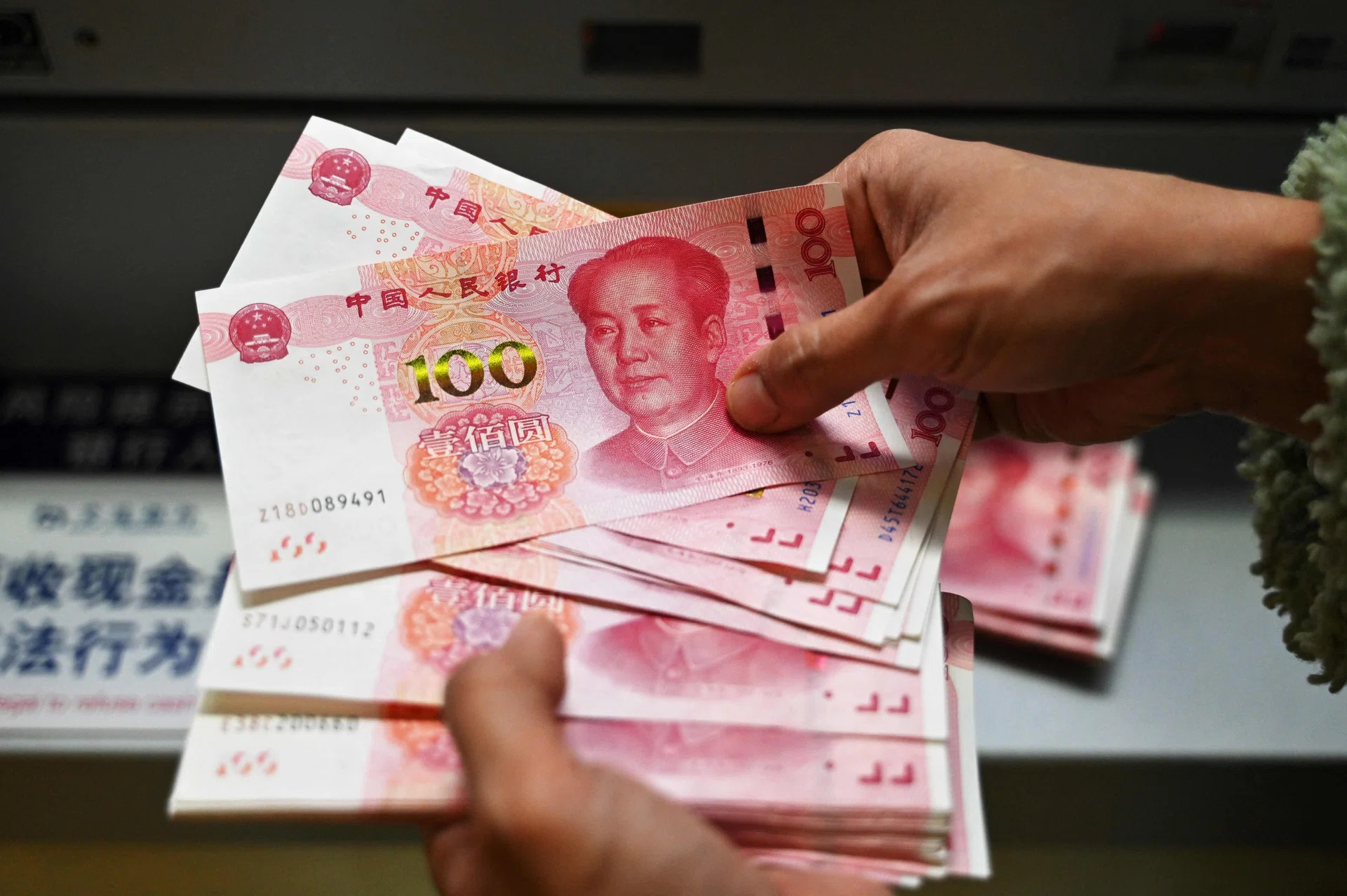
On the morning of October 16, China's foreign exchange market announced a price that would be enough to boost the financial and economic news: the dollar to $6,6897, which was the strongest position since January 2023, was touched on the twilight. The median price published by the People ' s Bank of China on that day was 6.7220, the highest since February 2023.According to Reuters Shanghai Market Report,The renminbi is now seeking to appreciate for the third consecutive week. With currency fares alone, the Chinese economy seems to have handed over a strong report card.
However, the problem of moving the sight from the bank's trading screen to the books of Chinese families immediately arose: the exporter sold the goods abroad, received the dollar and consolidated it into a renminbi, which could support the currency; This does not mean that a small shop is back in circulation, nor does it mean that young people are more stable in their jobs, and that they cannot afford to re-inflate the already shrunk housing assets. It's not the same thing that the renminbi becomes valuable and ordinary people have money to spend.
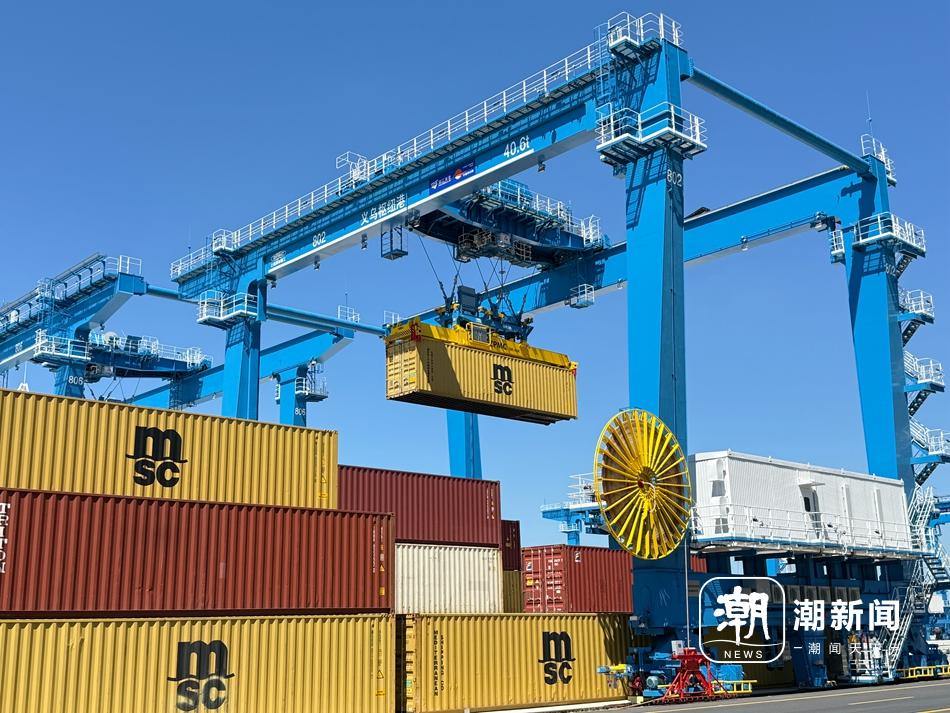
Zhejiang Yiu Container PortThe most intuitive picture of this contradiction. Large quantities of commodities are entering international markets from logistics parks via rail and sea. The orders are followed by production, packaging, customs clearance and transport posts; When domestic consumers are reluctant to increase their spending, factories are more dependent on foreign orders to maintain capacity. Export dynamism can temporarily give currency, but does not necessarily lead to a parallel improvement in the profitability of enterprises, workers ' wages and household consumption.
For Beijing, exports have more complex implications. It is both an engine of growth and a buffer for financial and employment pressures; But the price of dependence on external demand is to place more Chinese enterprises in overseas tariff, countervailing investigations and market access conflicts.The EU has been publicly discussed in mid-October.The Chinese trade defense has been extended to chemical, plastic and iron alloys. The more sold, the more likely the trading partner will counter-attack; The stronger the renminbi, the more the export companies, which would have had a small profit, would have to bear the competitive pressure of foreign currency quotations.
This dilemma is not a forecast by several exchange-rate traders. The President of the Central Bank of China, Ban Kung-won, once again spoke of global economic imbalances during the annual meetings of the International Monetary Fund and the World Bank, arguing that exchange rate adjustments alone cannot be used to resolve them.The International Monetary Fund is pushing China.From over-dependence on exports to household consumption. One, which emphasizes that exchange rates cannot be held accountable for all adjustments, and one, which repeatedly calls for increased domestic consumption, has instead put the same economic dilemma before the public: Why has this manufacturing power never made the consumption of the population a sufficiently powerful force for growth?
These include policy chains that can be specified. (a) Local development, which focuses on investment scale, industrial production, land and infrastructure projects in the long term; (b) Enterprises keep keeping prices low in the competition for capacity; Households are exposed to uncertainty in employment, housing burdens and the risk of old-age, health and education expenditures. Economic growth is easily book-based and concentrated in factories, ports and trade surpluses, but it is difficult to automatically flow into the income that households can freely dispose of. To make the renminbi stronger is to change not only the exchange rate but also the political priorities of income distribution and social security.
The market is still waiting for China's third quarter GDP data the following week. Reuters surveys forecast an increase of about 4.4 per cent over the same year, which is just a pre-publication market expectation and cannot be used to impersonate the officially published results. The immediate contrast with this undiscovered figure is that countries can earn foreign exchange on the international market through export competition, but still need to answer why domestic households are afraid to consume. The renminbi price is high, and the average person is not necessarily on his feet with a sense of economic security.



Reader comments
Loading comments…