
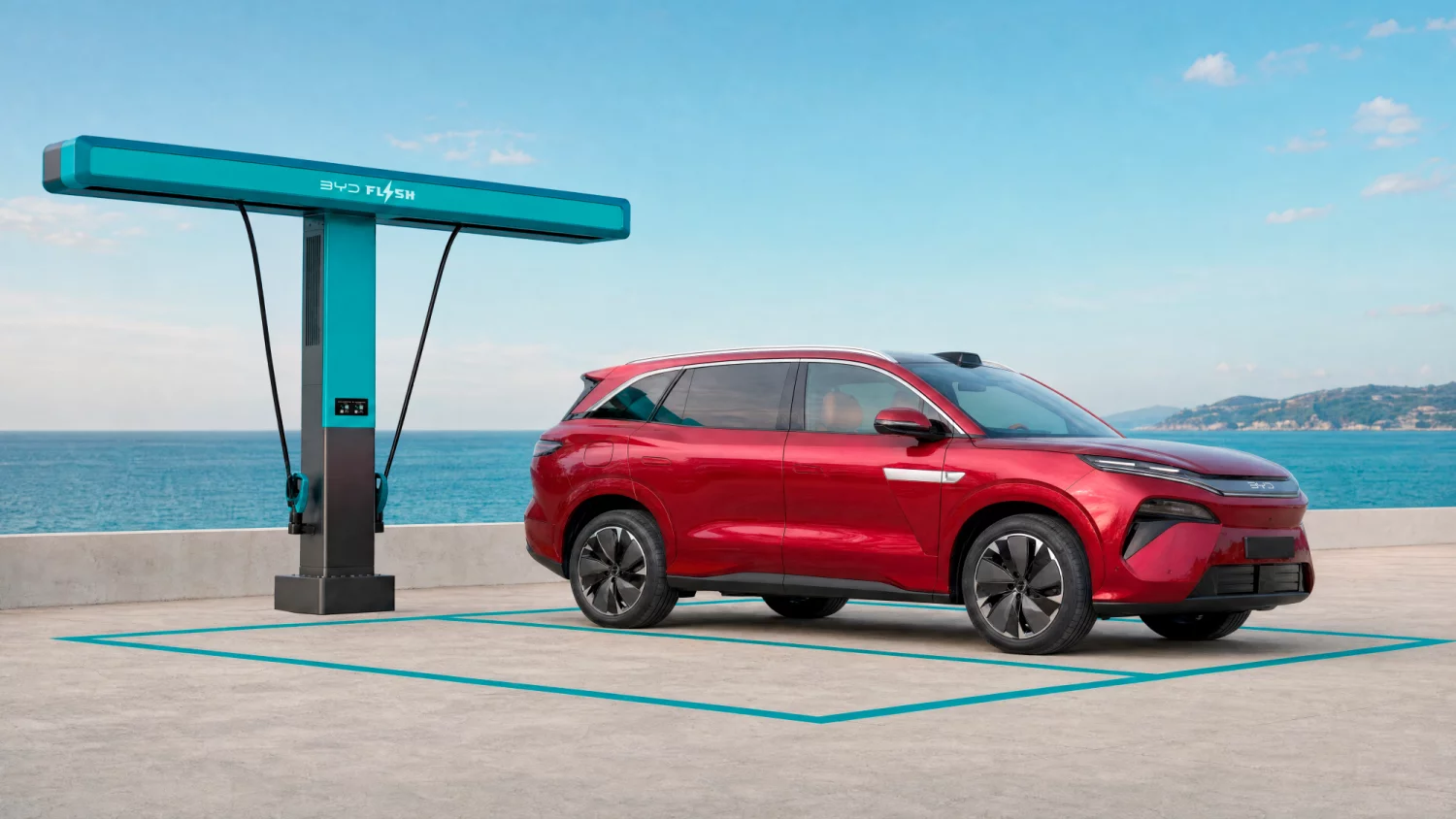
At the Paris Car Fair, China ' s automobile brands worked to demonstrate technological and price competitiveness; In Brussels, hundreds of kilometres away, the EU is discussing a tougher border – how many more hybrid cars can China make to sell to Europe. The Central European arrangement, concluded in mid-October, limited the size of imports to approximately 350,000 for the relevant year. One is the scene of a competition for consumers by car and the other is the negotiating table where the Government limits market entry, which together explains the current situation of the Chinese export industry.
原始来源 · theguardian.com卫报:中欧混合动力车进口限制安排theguardian.com ↗According to Reuters, The Guardian and Financial Times, Central Europe has a restrictive arrangement on the number of mixed-powered car imports, with a related quota of approximately 350,000 in
- The EU hopes to ease industrial pressures and the huge trade deficit for Chinese goods, while the Chinese brand needs to preserve Europe, which has room for profit after almost closing the United States market. Companies such as Biadi, Chire and Upper Gas are no longer only faced with the issue of whether products are acceptable to consumers, but also with the issue of the place of production, origin and the system of quotas for each vehicle.
Why Europe does not talk about tariffs anymore
In the past few years, the EU line of defence has been mainly around tariffs on pure electric vehicles. The interpolated hybrid vehicle has been used by some Chinese enterprises as a way to continue to expand exports by bypassing the high additional tariffs on pure electric cars. Quotas shift competition to quantity per se: even if the product is of good quality and attractive prices, and when the import ceiling is reached, continued exports from China will be restricted.
原始来源 · reuters.com路透社:中国车企欧洲出口受限制reuters.com ↗The EU did not suddenly find that Chinese cars were competitive. Deeper pressure comes from both sides: domestic demand for cars in China is weak, and more and more enterprises are dependent on exports for their size; European manufacturers are under pressure from local employment, plant costs and transformational investment. Trade policy is then a realistic distribution tool between voters, trade unions, motor companies and the Government.
Why the Beijing industrial victory became a diplomatic burden
The Chinese Government has long been promoting new energy vehicles through industrial planning, supply chain policies and financial support, thus creating a strong productive capacity. The engineering and manufacturing capacity of enterprises is real, but the scale of the expansion of pooling of resources may also flow overseas when internal needs are insufficient, forcing importing countries to share the impact with border measures. Xi Jinping Governments view export competitiveness as a demonstration of “new quality productivity”, while Europe increasingly sees the rising trade deficit as a political issue that must be addressed.
The agreement reached in Central Europe does not mean that Europe has defeated the Chinese automobile industry. Enterprises can establish their own plants in Europe, change their vehicle mix or move to other markets. For Chinese cars, localization may mean continued survival; For workers in China, it means that new investments and jobs do not necessarily remain in the country. Trade disputes are most easily described as a race between countries, with the actual cost being borne by ordinary employees in both locations.
The reality that this round of negotiations left behind the fact that when domestic consumption in China is not sufficient to absorb the rapidly expanding production capacity, export markets will take over part of demand; The more markets are taken over, the stronger the political rebound. Beijing can be used to stimulate factories with policies, but it is not possible to equally order European societies to accept their products indefinitely.


Reader comments
Loading comments…