
The punching that was made three months ago in the lobby of the Taijun Hotel is now written by the prosecution into the indictment for organizing the crime. (a) The 6 October attack on the Yae Myung-man Yao, which was investigated by the Taichong District Attorney ' s Office, charged with assault, intimidation, flagrant insult and organizing the crime prevention and treatment regulations, and specifically requested a five-year sentence; Four other persons were wanted for the crime. The prosecution also continued to pursue the question of the behind-the-scenes courier and whether there were any collaborators in Taiwan.
Not a temporary conflict, but a pre-survey, division of labour and pricing exercise
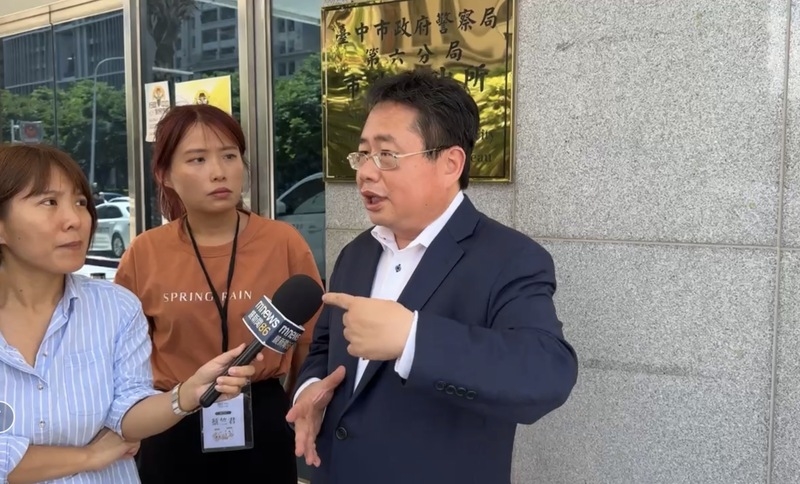
The prosecution investigation revealed that the persons involved did not have occasional disputes with Yappenov. Several individuals with a Hong Kong gang background entered Taiwan in groups in early July, conducting field surveys of the under-painted and active sites, and clearly assigning command, attack, control and return tasks. The planned attack, which included bottles of glass, was continued after some members had withdrawn, and a “upside” increase of HK$ 100,000 was conveyed to Port Liao.
On 6 July, Yapemingf left the Taichong Hotel after he had been punched in the face by Liao Harbour. Another member, who was careless, was found by the prosecution to be in a cover and a role as a cover. The port of Liao subsequently attempted to leave the country and was arrested at the airport hours later.
This set of details has changed the nature of the case. It is not a temporary violence by a stranger, but an operational structure with an advance detection, a division of labour, financial incentives and evacuation arrangements.
原始来源 · zaobao.com.sg涉拳殴矢板明夫 台中检方起诉港男求刑五年zaobao.com.sg ↗The prosecution has written the case of the "cross-border violence group"
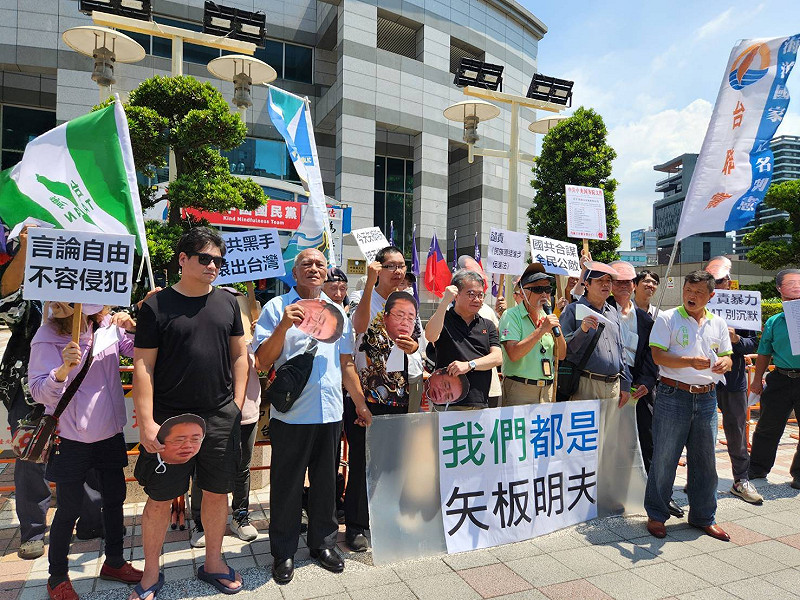
The legal treatment of cases on the Taiwan side is currently set aside on existing offences of injury, intimidation, insult and organization. The Commission placed the incident in the framework of “cross-border repression”, indicating that it would promote the strengthening of institutions such as the Anti-Infiltration Act and the establishment of guidelines for people to seek help in cases of cross-border repression.
The most immediate difficulty in the legal order of Taiwan is that, if political forces outside the country do not come forward and instead monitor, intimidate and harm through gangs, employees or intermediaries, traditional criminal cases can certainly punish the direct perpetrators, but to pursue the financiers, commanders and political aims, law and investigation must cross a longer chain of responsibility.
This is also the true judicial value of the case. The prosecution continued to pursue who the “top” is, where the funds come from, whether there is an internal response from Taiwan, and decided whether the case would end up at the level of ordinary violent crime or whether it would form a complete chain of evidence of cross-border political violence.
Violence is not just about harming a person.
Yae Myungf has long been a public commenter on Chinese politics, Taiwan Sea security and the external influence of the Communist Party. After the attack, he stated that he would not stop speaking because of this fist. For cross-border repression, this is precisely the function of violence: physical harm is a means, and what really is about the chilling effect.
If a commentator can be followed, surveyed and attacked by a group of outsiders after a public speech in Taiwan, then it is not only the personal safety of the person concerned that is threatened, but also the judgement of other journalists, researchers, dissidents and political activists that “public criticism of the safety of Beijing” is also being made.
The cost design of such operations also deserves attention. Direct attackers and peripherals can be used as a one-off tool, while behind-the-scenes funding is kept away from the commanders. As long as the chain of responsibility cannot be traced, those who really decide to act can reduce political violence to individual crimes.
After five years of torture, who really needs an answer?
The prosecution of Porto Liao was an important step in the judicial process, but not the end of the chain of responsibility. The information available to the prosecution regarding division of labour, remuneration, site survey and “upgrade” is sufficient to demonstrate the existence of a more complex organizational structure than that of an individual conflict.
The most critical next step is not to put more political labels on cases, but to check the organizational structure: who sets the target, who pays, who decides how to act, who arranges for movement between Hong Kong and Taiwan, who provides information on Taiwan, and to whom to repay when the attack is completed.
Cross-border repression is effective only because of the distance between national or political forces and grey networks. The true chain of command for violence remains secure if justice can only catch its fists but not those who decide who to throw.
Article discussion
Verified members can discuss this report publicly and manage their own content.
Checking member sign-in status…