
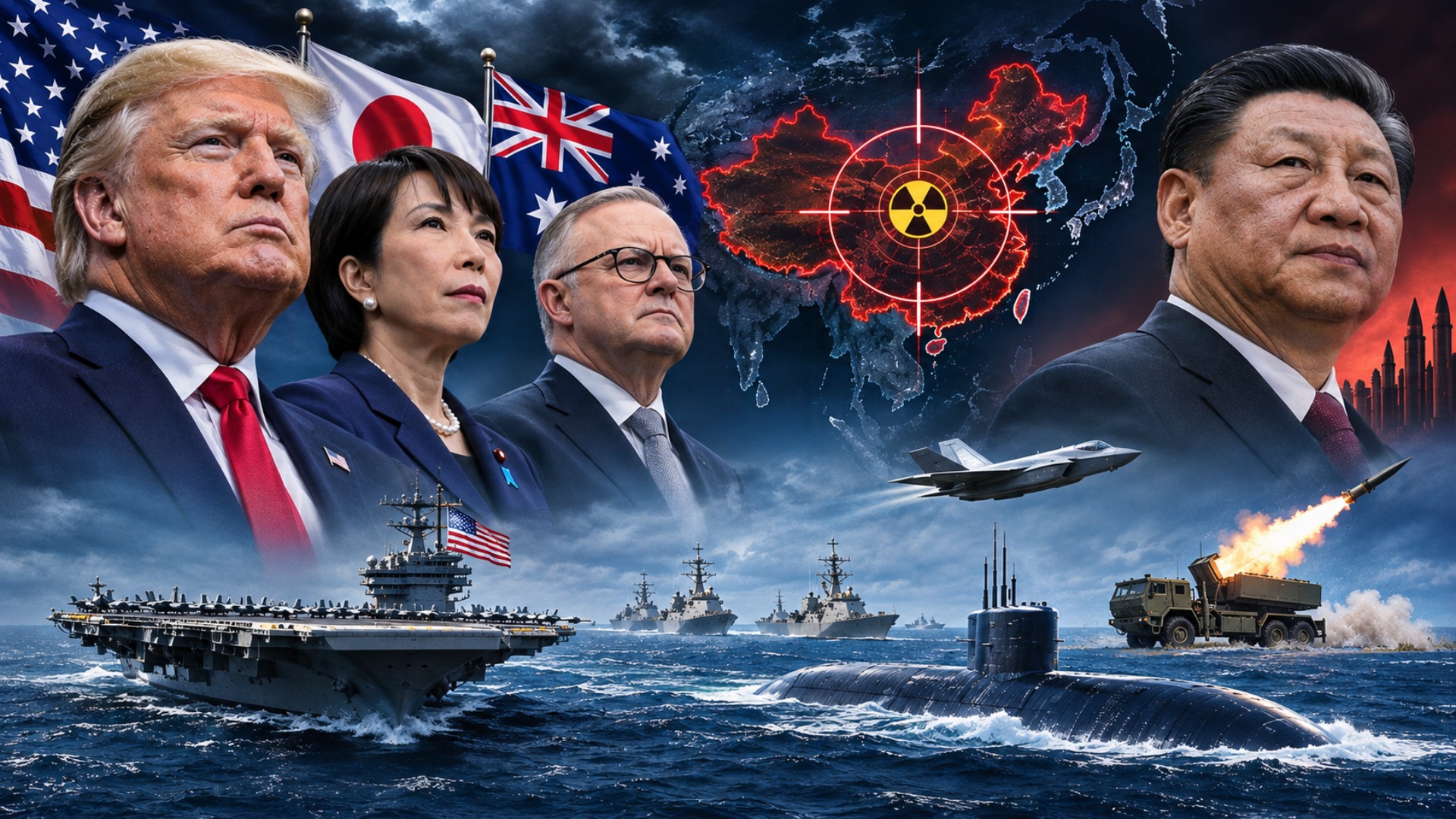
In the absence of 2027, the military deployment of the United States and its allies in the western Pacific has undergone a series of changes that deserve high attention. From the Japanese anti-ship missile in Okinawa to the medium-range strike system in the Philippines; From Australia ' s imminent admission of the United States attack on nuclear submarines to Japan ' s proposed significantly increased defence budget, a defence and deterrence system for China ' s military expansion covering the First and Second Island chains is accelerating.
Meanwhile, the high-ranking military cleansing, the expansion of nuclear arsenals and the actions of external networks within the Communist Party of China have removed this strategic competition from the Taiwan Straits to war. The United States and its allies are weakening Beijing ' s ability to rely on military threats to change regional order, and the accumulated external pressure may also have a profound impact on the Communist Party ' s military chain of command, stability of rule and future political configuration.
What does 2027 mean? Can the military configuration that is taking place be further developed from curbing China ' s military expansion to suppress the nuclear deterrence capability of the Communist Party of China (CPC) and even trigger a change of regime within China?
The answer needs to be found in the military operations and political changes that have taken place in recent months.
I. Rebuilding the First Island Chain Military System in the United States to prevent the AML from gaining quick-to-war advantage
On 23 January 2026, the United States released a new version of the National Defence Strategy, which formally placed the construction of a strong system of resistance in the First Island chain as a strategic focus of the Indo-Pacific military.
The so-called denial of defence is not simply an increase in the number of troops stationed, but rather a combination of missiles, ships, fighter planes, unmanned systems, dispersed bases and a joint chain of command that makes it difficult for the Chinese People ' s Liberation Army, even if it is conducting large-scale military operations, to quickly control the target sea or force the United States and its allies out of the battlefield.
This strategy has been translated into concrete deployments.
In June 2026, the United States Marines officially delivered NMESIS ' s offshore anti-ship missile system and MADIS ' mobile air defence system to the 12th Marine Marine Coast Corps in Okinawa, Japan. This means that the United States forces deployed in Okinawa no longer rely solely on air and naval vessels for maritime defence, but can also use mobile, shore-based missiles to directly attack enemy ships.
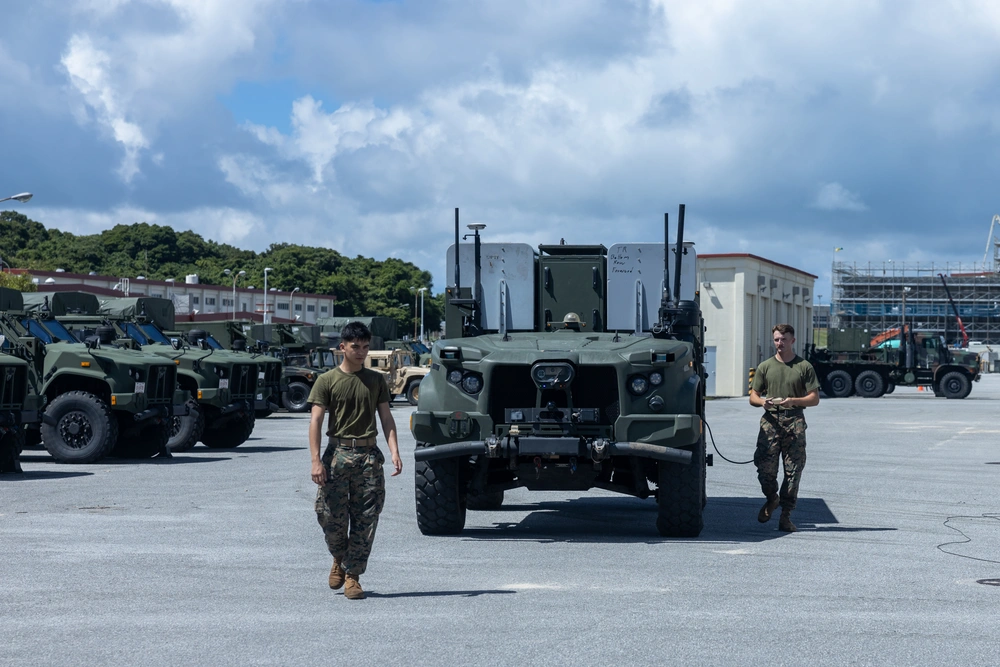
The Philippines has seen a more interesting change in its direction.
On 5 May, for the first time in the Philippines, during a joint US-Fy United Nations military tour, the United States forces launched a war ax cruise missile using a mid-range “Difeng” missile system, hitting a target of about 600 kilometres away. The system allows for a remote and accurate strike, which changes the way the United States forces deploy in the south of the First Island chain.
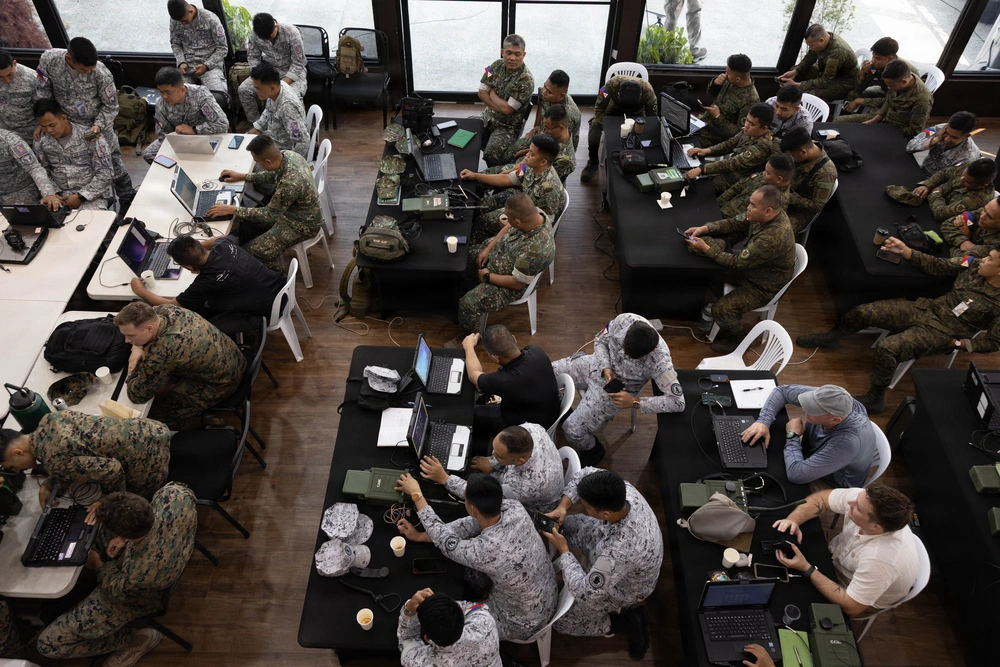
The northern Philippines and Taiwan are separated by the Luzon Strait. This sea lane is directly related to the operational space of Chinese warships and submarines entering the Philippine Sea, and to the ability of the United States military to engage in military operations from the southern side of Taiwan in the event of the Taihai war.
From Okinawa to the Philippines, the United States military is building a military system of multiple bases and mobile fire, which prevents the Army from developing a strike plan for only a few large bases.
The important political consequence of this system is that Beijing is becoming more difficult to try to create a fait accompli through rapid military action.
ii. Military readiness of Japan, with a potential significant increase in the defence budget in 2027

On 2 November 2026, Japan officially established the National Disaster Prevention Agency, the Office of Disaster Prevention, which was inaugurated with Prime Minister Kotsumi.
原始来源 · gov-online.go.jp日本政府视频:防灾厅成立仪式gov-online.go.jp ↗The new body, with 352 staff, has expanded by about 60 per cent from the previous Cabinet Department for Disaster Prevention, and is responsible for coordinating major disaster prevention, emergency relief, human resettlement, material supply and disaster recovery across sectors.
The Government of Japan has made it clear that the new institutions are primarily aimed at natural disasters such as the massive earthquake in the South China Sea Tsort, and are not specifically designed for war.
However, on the same day, the Japanese Cabinet Office National Protection website also published a new plan for the ballistic missile strike asylum exercise, which was scheduled to take place on 10 November in Mize, Yamaya County. Japan has been gradually institutionalizing in recent years its preparations for missile attacks, for the safe and secure use of its residents and for vital infrastructure.
The defence budget is more directly reflective of the change in Japan ' s military strategy than the establishment of the Disaster Prevention Office.
According to Reuters on 2 November, the Government of Japan and the ruling coalition are considering increasing the five-year defence funding from the beginning of the financial year 2027 to 70 to 80 trillion yen, or 1.8 times the current five-year plan.
The plan is still in the discussion stage, but its scale has shown that Japan is studying further expansion of long-range strikes, drones, missiles and military logistics.
The 2026 Japan Defense White Paper also clearly listed China ' s military activities as a major and unprecedented strategic challenge for Japan.
From military deployment to the protection of nationals to the defence industry, Japan is developing a more complete national security response system.
This means that, in the event of a future military crisis in the Taiwan Strait, Beijing will have to face not only the Japanese-American military forces in Japan, but also Japan's own growing military capacity and national mobilization system.
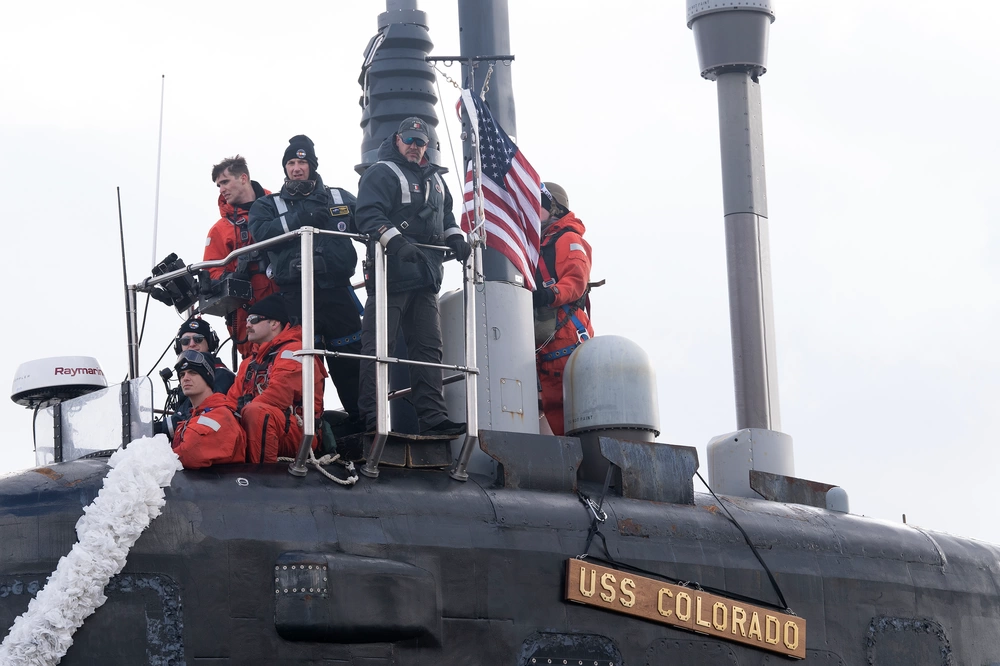
United States nuclear submarines entered Australia in March 2027 and underwater forces changed in the Western Pacific Ocean
On 27 October 2026, the United States, Britain and Australia jointly announced that the United States Navy “Corrodo” Virginia class attack nuclear submarines would be involved in sub-submarine rotation in western Australia starting in late 2027.
原始来源 · minister.defence.gov.au澳大利亚国防部:科罗拉多号2027年轮换minister.defence.gov.au ↗Under the AUKUS cooperative arrangement, the Australian Naval Base in Sterling plans to rotate up to four United States and one British nuclear attack submarine.
This arrangement is not a permanent presence, nor is it a declaration that these submarines carry nuclear weapons. The AUKUS-related submarines use nuclear power propulsion, but the planned Australian submarines are conventionally armed nuclear power-driven to attack nuclear submarines.
Their strategic value lies in their ability to sustain underwater activities, counter-submarine operations, intelligence gathering and attacks on maritime targets at long distances.
For the Chinese Navy, this means that the future will not only require the front-line forces of the United States forces facing Japan and the Philippines, but also the more sustainable United States and British underwater warfare capabilities of Australia.
The rotation of nuclear submarines in 2027, if implemented as planned, would further enhance the United States-Australia military synergy and logistical security capabilities between the Indian Ocean and the Western Pacific.
IV. Increased nuclear strategic competition and the expansion of the nuclear weapons in Beijing as a result of the United States deterrence system adjustments
While conventional military forces are being blocked, the expansion of China ' s nuclear forces is becoming an important issue in the field of international security.
The annual report issued by the Stockholm International Peace Research Institute (SIPRI) in Sweden in June 2026 estimated that, as of the beginning of 2026, China had about 620 nuclear warheads, which is higher than the previous estimate of about 600.
原始来源 · sipri.orgSIPRI:2026年世界核力量评估sipri.org ↗The report states that China is expanding its nuclear missile launch facilities and intercontinental missile forces and that the pace of the expansion of nuclear arsenals is a source of external concern.
The United States is also adjusting its nuclear deterrence system.
The National Defence Strategy of 2026 clearly sets out the modernization of nuclear forces, missile defence and capacity-building to counter nuclear threats. The United States is advancing plans for a new generation of strategic weapons, regional nuclear deterrence and a Golden Dome missile defence.
These measures do not imply that the United States has declared its intention to destroy China ' s nuclear arsenal directly, but they do affect Beijing ' s judgement on the effectiveness of nuclear deterrence and strategic power comparisons.
The significance of nuclear deterrence lies not only in the number of nuclear warheads, but also in the ability of nuclear forces to remain viable after being struck, to exercise credible retaliation and to reduce the real impact of the nuclear threat by means of reconnaissance, anti-missile and other military means.
The space in Beijing that seeks to force other countries to compromise in the Taiwan crisis through nuclear threats could be reduced if the United States and its allies continue to improve missile defence, underwater surveillance, long-range strikes and crisis response capabilities.
But there are also serious risks. Military competition among nuclear Powers, if lost in the necessary crisis communication, could result in miscalculation and escalation, which could directly endanger Asia-Pacific and global security.
V. EMERGENCY OF COMMAND SECURITY WATER CONFLICT ENTRY OVER THE TREATY OF TRANSFER
Military competition does not take place only between warships, submarines and missiles.
On 7 October 2026, the Dutch Military Intelligence and Security Service (MICSS) MIVD and the National Intelligence and Security Service (NSS) AIVD jointly warned that it was expected that in the coming years cyber attackers from the Chinese background would more frequently use network-side equipment to launch attacks.
原始来源 · english.aivd.nl荷兰情报机构:中国背景网络攻击风险english.aivd.nl ↗Two intelligence agencies have indicated that Chinese hackers are in-depth researching Western hardware and software, and that some attackers have even been able to access closed source codes and use this information to find security loopholes.
Firewalls, the VPN gateway and other Internet connection devices have become important targets, and Dutch institutions have been attacked in the past.
These warnings reveal another front in modern conflict: military command, industrial production, transport, energy supply and communications networks all rely on digital infrastructure.
In the event of major regional military conflicts, cyberattacks may occur simultaneously with traditional military operations, affecting military movements and the normal functioning of society.
The security preparedness of the United States and its allies must therefore also include the protection of communications systems, critical infrastructure and military logistics networks.
For European countries, the Chinese context is no longer a distant security issue in Asia and the Pacific, but a real threat requiring direct protection measures by their intelligence services.
vi. The CCP military cleans the behind-smog bomb: What is Xi covering?
On 21 September 2026, the Communist Party announced the expulsion of Zhang Chang and Liu Zhenli from the ranks of the Party and the Army. However, the two senior generals were originally the core military close-to-peer of Xi ' s long-standing re-establishment. In particular, Zhang Chang Zhang Zhang Zhang, who had long held the position of Vice-President of the Central Military Commission, was a key figure in Xi Jinping's control of the highest power system of the Liberation Army.
Focus China proposes another interpretation from a strategic deception perspective: the high-profile announcement by Xi Jinping regime of investigations and sanctions against the core military loyalties may not only be an open power exercise, but also a carefully designed military signal to the United States intelligence agencies, creating a false image of the top-level division of the Liberation Army and the serious disruption of the highest command.
According to this analysis, public sanctions such as Zhang Chang Chang Man, Liu Zhenli and others may have a strategic purpose to shield the actual military arrangements. What is seen outside is the successive fall of Xi's close associates, and what Beijing really needs to hide may be the operational modalities of the highest military command and the arrangements for the secret command of strategic nuclear forces.
This judgement further points to the clandestine strategic command issues involved in the Xi core power network, known as the “class” in this report, and the related underground military facilities at the Xinjiang Malan nuclear base.
Focus China believes that if public military cleansing is accompanied by external strategic deception, then the United States cannot judge the real structure of the military command of the Communist Party simply by the change in the list of military dispositions and positions published in Beijing, let alone by the direct equivalent of public personnel shocks to the erosion of the strategic nuclear power of the Liberation Army.
Such an analysis places military cleansing in the broader context of military competition, and concerns are being expressed about whether Xi will use the open creation of power shocks to shield clandestine military deployments and interfere with the United States judgement of the strategic intent and combat capability of the Communist Party.
As 2027 approaches, this issue is directly related to how the United States assesses the true state of China ' s highest military command and how to respond to a major military crisis that may arise.
vii. From military containment to regime change: can external pressure touch the basis of the Communist Party's rule?
The military deployments being carried out by the United States and its allies can be seen directly as two objectives: to prevent China from changing regional order by force and to diminish Beijing ' s ability to obtain political concessions through military threats.
As for furthering change in China ' s regime, the problem is much more complex.
The United States National Defence Strategy of 2026 has stated publicly that its military objectives do not require a change of regime in China. Therefore, the ongoing deployment of the First Island Chain cannot be directly written into a declared overthrow of the Communist Party.
However, the potential long-term political consequences of openness to policy objectives and strategic actions are not identical.
If Beijing continues to invest huge amounts of resources in military expansion without changing the military power contrast between Taiwan and the Western Pacific, the political gains from military modernization may be called into question.
If the constraints of science and technology, investment reviews and international supply chain adjustments further increase economic pressure, the costs of maintaining economic growth, military construction and domestic governance by the Chinese Government may rise simultaneously.
Once these factors are put together, external military competition may turn into a long-term test of the stability of the Communist Party.
Further progress in China ' s political transformation also involves claims within Chinese society, political organizational capacity, institutional arrangements and the international community ' s specific options in human rights accountability, freedom of information and foreign policy. Military force alone cannot replace these political conditions.
The key in 2027 is therefore not only whether the US will stop China from waging war, but also whether the Communist Party will be able to withstand the combined challenges of continued military competition, nuclear deterrence pressures, economic, scientific and technological competition, and internal power adjustments.
VIII, 2027: War is not the only risk, and changes in power structures are equally of concern
The annual United States intelligence threat assessment of March 2026 stated that the Chinese leadership had not established a plan for the 2027 invasion of Taiwan and that there was no fixed unified timetable.
This does not eliminate military risks. The Sudan Liberation Army is still developing its potential for use in operations in the Taiwan Strait, and the United States and its allies are building a military system capable of responding to major conflicts.
As seen from the changes that have taken place in 2026, at least three strategic and sustainable nodes will emerge in 2027.
- First, the United States and the United States of America plan to launch a sub-submarine rotation deployment to further enhance underwater military capabilities in the Western Pacific.
Second, Japan will discuss and implement a new round of defence-building arrangements and will continue to strengthen its national long-range strike and national protection system. Thirdly, in the face of the strategic deception that the Xi Jinping regime may use military high-level cleansing, the United States and its allies must reassess the true state of affairs in the Supreme Military Command of the Communist Party, the nuclear strategic forces and the clandestine military deployment. The strategic race in 2027 depends not only on the number of warships, submarines and missiles deployed publicly by both sides, but also on the United States' ability to identify the false military signals released from Beijing and to avoid strategic miscalculation in a major military crisis.
These changes do not necessarily lead to war or necessarily to regime change. But they are sufficient to show that the external security environment and internal governance pressures facing the CCP in the future are undergoing profound changes.
In the past, Beijing could use military modernization as an important tool for demonstrating national power and political authority. Today, military expansion is also driving neighbouring countries to increase armaments, expand coalition cooperation and invest more resources in the establishment of targeted defence systems.
Military expansion can increase the country's armed forces, but it does not necessarily increase political security. For a system of government that is highly dependent on military control and concentration of power, continued military competition, strategic miscalculation and internal political adjustments may together create new destabilizing factors.
It is not possible to determine whether 2027 has been a turning point in the political landscape of China. But the declared military operations of the United States and Japan, the expansion of the nuclear forces of the Communist Party and possible military strategy fraud are providing an increasingly concrete basis for observation on this issue.
What really determines China ' s future political course is not just a missile, a nuclear submarine or a military exercise, but the long-term interaction between external strategic pressures and political, economic and social changes within China.
Main sources
- I'm sorry.United States Department of Defense: National Defence Strategy 2026
- I'm sorry.US Indo-Pacific Command: Deployment of NMESIS and MADIS missile systems in Okinawa
- I'm sorry.Defense News: Philippine Expedition of The Defon Missiles, 5 May 2026
- I'm sorry.Japanese Prime Minister ' s residence: ceremony for the establishment of the Disaster Prevention Office on 2 November 2026
- I'm sorry.Reuters: Japan discusses the five-year defence budget for the 2027 fiscal year
- I'm sorry.Australian Defence Sector: AUKUS Nuclear Submarine Rotation Statement 2027
- I'm sorry.SIPRI: World Nuclear Power Assessment 2026
- I'm sorry.Netherlands AIVD: China Background Cyber Attack Risk Alert 2026
- I'm sorry.Ministry of Defence of the Chinese Communist Party: Proclamation of 21 September 2026 on the punishment of the Emperor and Liu Zhenli
- I'm sorry.Office of the United States National Intelligence Director: Threat Assessment 2026
Article discussion
Verified members can discuss this report publicly and manage their own content.
Checking member sign-in status…