
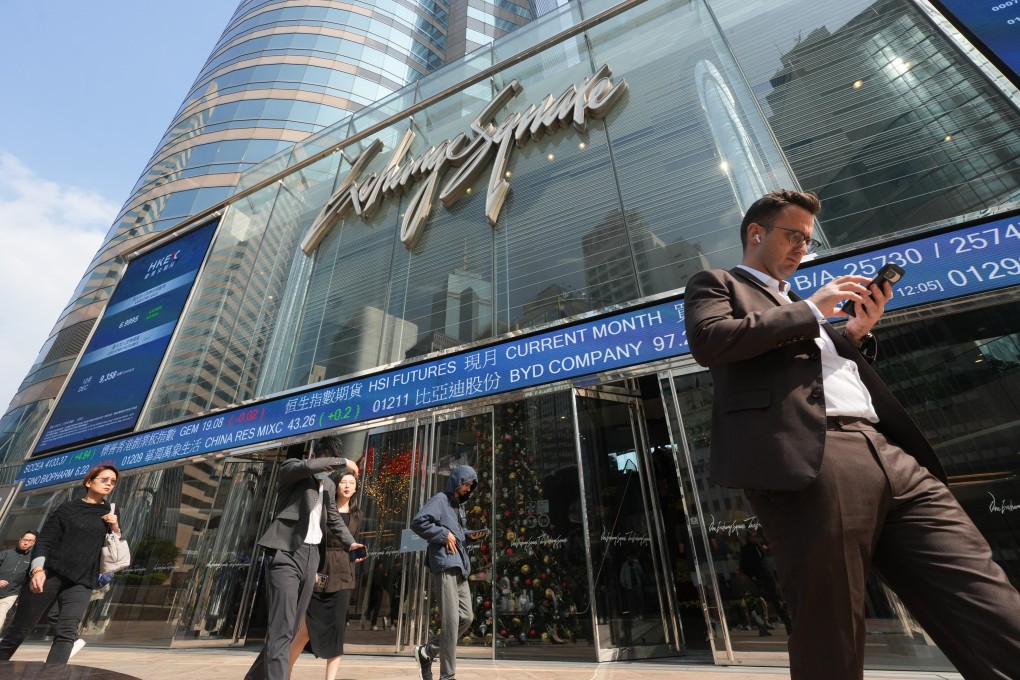
The bells of the Hong Kong Exchange can be recorded, and the missing editorial room is silent. In 2026, Hong Kong continued to live in the news ecology after the fallout of the Apple Daily News, while the financial industry had re-characterized the international market as a trading opportunity. By placing two images in the same city, it is enough to question the popular saying that the re-emergence of the stock market means that Hong Kong has really recovered its previous dynamism.
International capital certainly has a reason to continue to choose Hong Kong. This remains an important avenue for Chinese enterprises to reach out to investors abroad, with financial institutions, professional services and a legal basis for familiarization with cross-border transactions.Washington Post, 15 October.Mention was made of the size of the first 117 open calls this year, some $2.9 trillion in offshore financial assets. Even if the different indicators have different statistical calibres, these transactions are sufficient to show that the economic function does not automatically disappear as political freedoms shrink.
That is why the situation in Hong Kong deserves to be discussed more sharply. Beijing did not need to destroy all financial activities, but rather had a strong and realistic interest in maintaining Hong Kong ' s ability to finance, settle and attract international funds. Yeah. Xi Jinping For a regime that continues to serve Chinese enterprises in the international capital market, but no longer has an equally strong network of independent political oversight, it may be closer to its ideal governance order: economic openness must be effective and political challenges must be manageable.
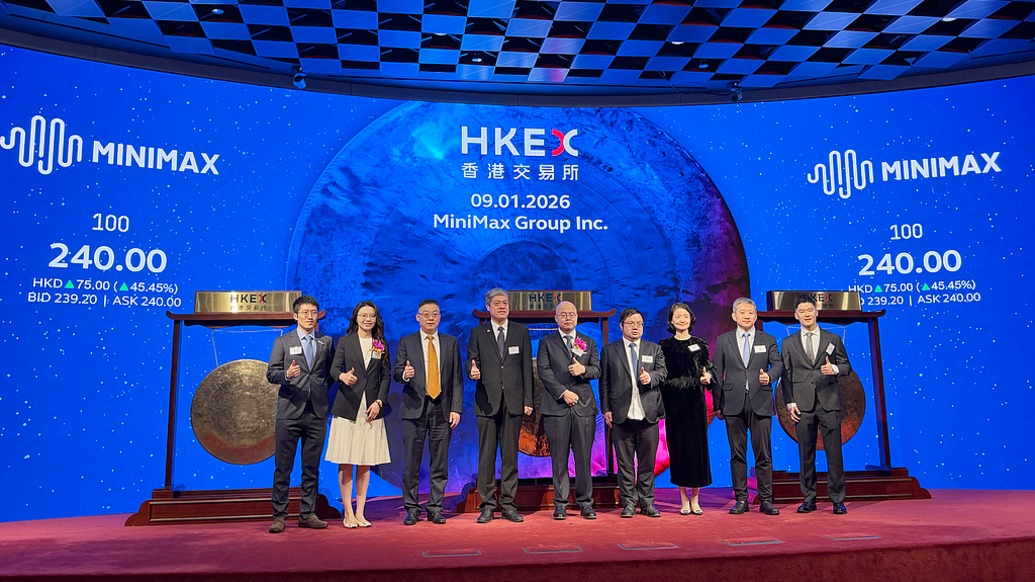
January 9th of this yearMini Max held a listing ceremony at the Hong Kong Zhui. Business representatives and market participants appeared in the ceremonial scene, which accurately reflected an emotion in the capital market. But if it represents the city, it cannot explain another equally true set of historical images: Apple Daily stopped publication in 2021, Position News stopped shipping in the same year, the editorial room closed, and news practitioners were subjected to judicial pressure and career disruptions. The two images do not negate each other, but are a parallel that exposes the very different priorities in the functioning of the Hong Kong system.
Whose prosperity is it? Businesses are financed by the market, the underwriters complete their transactions, and banks and investment institutions have a profitable market, which can be calculated by currency, trade, and equity. But when a investigative media ceases to function, society loses its capacity to continually question officials, businesses and public institutions. Such losses are often not covered by a corresponding financial statement, and are less likely to be automatically recovered at the next IPO upturn.
The implementation of the Hong Kong National Security Law in Beijing has led to profound changes in political organizations, the press and the public expression environment. In my view, the most ironic reality in Hong Kong is that international finance is still allowed to use the language of “globalization”, while political life is dominated by a stronger national security logic. Funds can flow across borders, while organizations and voices that independently criticize power are at a far different risk. The continued operation of financial markets as proof of the uneffectful nature of political tightening is a convenient but untrue narrative.
Some would ask: Why not withdraw the international banks? The issue itself makes it easy to see capital as an ethical judge of freedom. Banks choose markets based first on profits, customers, costs and regulatory arrangements, rather than voting for freedom of the press in a city. On the contrary, precisely because capital can continue to operate as political constraints expand, there is a greater need to separate investment dynamics from citizens ' rights.Political environment in which financial markets can tolerateIt is not necessarily an environment in which ordinary journalists, activists and citizens can live freely.
Hong Kong was once a precious place for not only sufficient capital, busy docks and the banking system to the world, but also for journalists to ask questions about power, public criticism of the Government by associations and the argument between different positions in the city. Xi Jinping The time-old port arrangement shows a clear choice: to retain an international interface that is useful for the Chinese economy while weakening public forces that may create political checks and balances. This system is judged not by the increase or decline in the heterogeneity index tomorrow, but by the ability of Hong Kongers to organize, report and publicly challenge power independently.
Thus, Hong Kong cannot be judged as “recovering” by simply looking at numbers in the exchange hall. The more the bell rings, the more the newspapers should be remembered, the more the newspapers can no longer be published on time. It is truly worth asking who has the right to declare the city back to normal when capital markets are still alive and independent media are unable to get back on their feet.
Reader comments
Loading comments…