
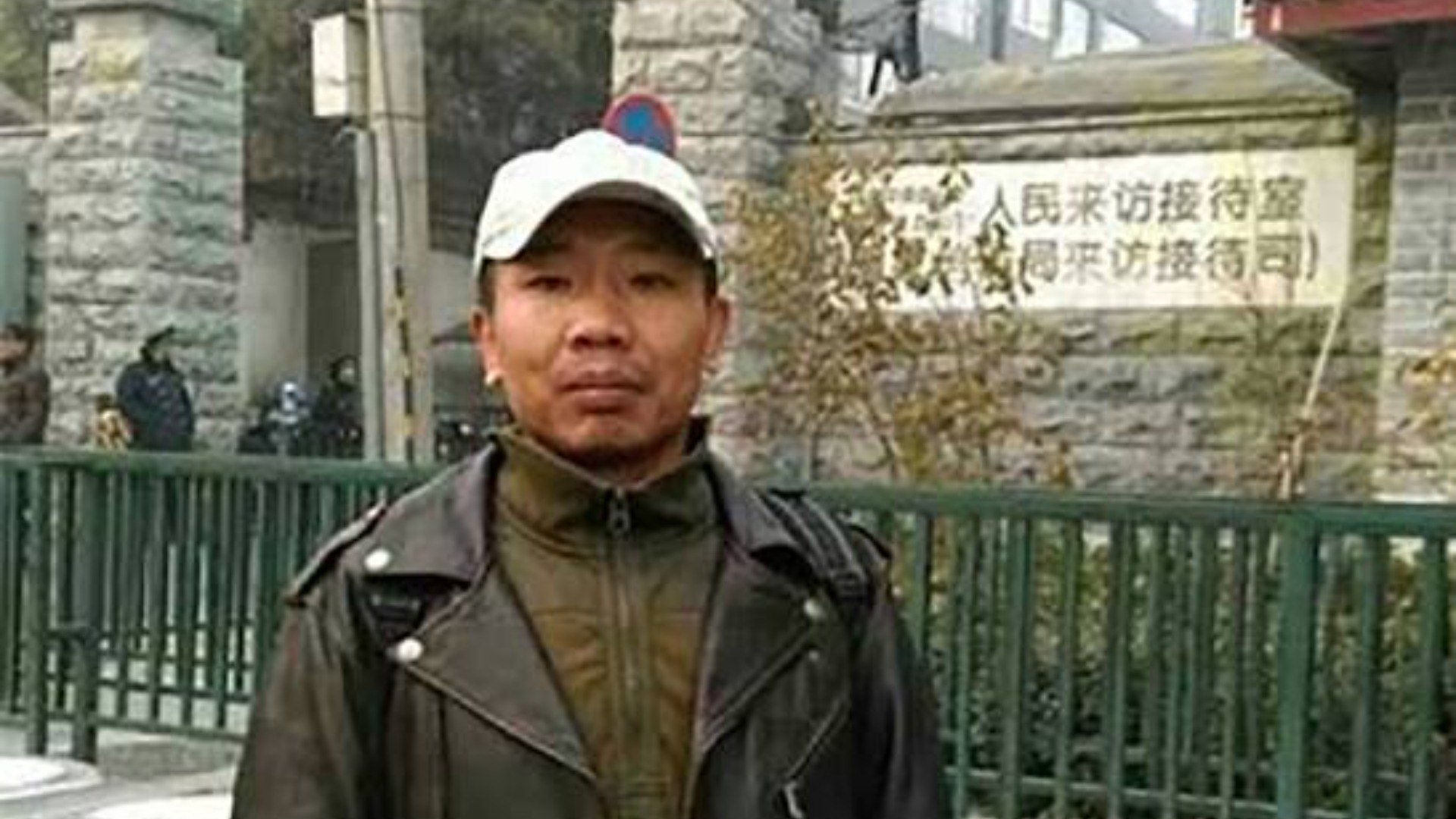
On 11 September 2026, when the presiding judge read the verdict “four years' imprisonment”, the Zhue-jin standing on the dock did not immediately bow before the trial chamber of the People's Court of Lanzhou City's capital district.
The peasant worker's public servant looked up and looked straight at the direction of the bench and threw out a question that did not meet the rules of court debate: “What happens when we find someone to make an offer to get paid for our work? The blogger adds:
No reply was received from the Full Court.
Two months later, the case, involving 27 charges and 239 pages of first instance judgement, entered the second instance proceedings. However, defence counsel Zhu Xiaoxheng disclosed in mid-November that the Intermediate People ' s Court of Lanzhou had hurriedly informed counsel to submit his written defence as soon as possible, on the third day after the second hearing. In criminal justice practice, this means that the court of second instance is most likely not to sit in public, but rather to be prepared to make a final decision directly through a “written hearing”. All defence counsel then filed a formal objection to the court hearing, which was held in public in accordance with the law.
In the traditional perception of the outside world, severe sentences are often confined to high-profile political opponents or street protest leaders. But the series of sentences and cross-provincial arrests in the fall of 2026 clearly outlines another reality: a secret chain of legal passage is being brought together – a public serviceman from Gansu who forwarded the payroll of migrant workers, a senior food journalist from Fujian who assisted the farmers in drafting the report, family members of church believers who were kept out of court, and even senior democracy figures from Hong Kong and Australia who had been sentenced to more than 10 years under the National Security Law, and civic action in different fields and individual expressions are being integrated into the same tight web.
I. From "Breaks of the Gang" to "Scratching for the Scene": a pay-for-the-Terrestrial Fantasia of Justice
The case file of the Sage-in case is almost a microslice of the grass-roots defence of the ecology of rights in China.
The Kage-jin worked as a farmer in the early years, and then focused on the rural donation, rescue of the promoters and assistance to the rural workers in their collection of wages. In July 2024, the Lanzhou City Police opened an investigation into a case of “crimes committed by a mafia organization” and classified him and seven other persons, including human rights defenders Zhou Lobo, as “members of the mafia organization”.
The heavy weight of the “black-covered” cap means that from the investigative stage, more severe detention measures and public opinion profiling are faced. However, when the case was referred to the prosecution service for examination and prosecution, the authorities had to “black off” and “de-neglect” before they were able to apply the characteristics of the mafia, and eventually returned the charges to the very flexible “stalking” and “extortion”.
In late September 2026, the Lanzhou City Court of the City of Guanzhou handed down a first instance judgement: Zhou Loobao was sentenced to 14 years ' rigorous imprisonment and a fine of 120,000 yuan (until March 2038); Sage-jin was sentenced to four years' imprisonment for “stalking” charges, including the transmission of information on pay collection. All seven of the co-accused appealed against the judgement.
The central dispute in the China Network for Focusing on the first instance case found that the judgement logically presented a eccentric split: of the nine main facts before the court, the judgement did not deny that the “ground of labour dispute” behind the events was real — for example, the fact that a small labour leader was owed money for the work on the new Zone of Lanzhou. However, the Court concluded that the use of web-based influence to transmit pay offers, “spare information” and other persons, without official and complete verification, objectively negatively affected the image of the enterprise and the local scene, thus constituting a “scrambling”.
According to article 234 of the Criminal Procedure Code of the People's Republic of China, in cases where the accused contests the facts and evidence found in the first instance, which may affect the sentence and sentence of the conviction, the People's Court of the second instance “shall form a panel to sit in chambers”. Today, all seven accused challenged the facts of their conviction, while the second instance court, on the third day of its case, rushed to the defence and attempted to skip the session. A legal person who has long represented such cases has stated to the Network that “when the logic of first instance cannot withstand public debate, the `written hearing' of second instance becomes the easiest way to uphold the original judgement. The blogger adds:
ii. “Cool chain” behind the dying cherry forest of 1,630 acres in a large company
As the team of Ki-jin's lawyers was running for a second trial, inside Liaoning Dalian prison, 1800 kilometres away, former Beijing Science and Technology senior investigative journalist Hong Guangyu was facing the same charges as the “Settle Crimes”.
Hong Guangyu is not a political dissident. His reports over the past decade or so have focused on food security, agricultural science and technology and consumer rights. He was trapped in a war of agricultural rights-sawing that lasted four years.
In 2022, a total of 1,630 acres of cherry trees in the guerre were killed in large areas, with direct economic losses of over 50 million yuan, after eight core cherry growers in the Darin Wats and others had applied “Penoncone Farmer” products. The farmers then found that the substitute production companies and local market regulators, which were marked as overpacking of agricultural assets, had provided written responses confirming that there was no cooperation between the two parties and that the products involved were fake and poor agricultural production.
However, the path of civil claims by the damaged fruit farmers has been difficult and the case has been remanded after first instance and has been left pending. At the same time, the legal response to the voice-speakers has proceeded at an alarming rate:
* First cold (2023) The early media audience, Li Guang, published three articles, with the background data showing a total of 103 readings and only 6 praises. Even with such limited dissemination, the agricultural companies brought him to court for “honour violations”. The local court eventually awarded Li Guanggu compensation of $200,000
- equivalent to “nearly $2,000 per click”.
* Second harvest (September 2026) As the farmers continue to report to all levels, Dalian police have arrested the rights-based farmers, and the growers' representatives, Kowe and others, were first authorized to arrest on the charge of “stalking”. From 18 to 19 September 2026, Dalian police officers travelled across the province to Fujian Gate to follow up the case, expose propaganda about agricultural irregularities and assist the farmer in drafting the report. Hong Guangyu will be taken away.
The case of people who had committed counterfeit farming had thus shown a very absurd picture: companies that produced and sold false farming were still functioning, the compensation of the damaged farmers was not paid, while journalists, media personnel who had written the reports for farmers, and the campaigning farmers were charged with heavy civil damages and criminal charges.
III. Faith space and cross-border long arms: from the Sian court to the New York cinema
If the vision is further raised from the standpoint of human rights, it will be found that the judicial tightening of the fall and winter of 2026 was not confined to a single area, but was pursued in tandem with religious beliefs, independent cultures and even the Chinese diaspora.
In Siane, the town of the north-west, the judicial process against the family church “The Light Church of Zion” is advancing intensively. On 12 November 2026, the Church held a hearing in the case of Pastor Gao All-Foo; On 17 November, the Pang Yu case was heard at the Siam Syens District Court. However, on the day of the hearing, the court refused to allow the lawful relatives of Mrs. Pang Yu to attend the court for various reasons. Two months ago, on 4 September, about 50 members of the Beijing Jia Qai Church were attacked by hundreds of police in preparation for the twentieth anniversary of their establishment, and the chief minister, Zhou Zishan, and many of his fellow workers were held in criminal detention. In the Tibetan region, the Danbajatso Temple, formerly in Golora Temple, in Tibet, was sentenced to five years ' imprisonment for holding the Dalai Lama Law.
This vigilance towards the organization and independent expression of civil society extends even across the Pacific.
The second “Indie China” (Independent Image Fair) was organized by the independent film projector Zhu Ilkun, from 10 to 15 November 2026, in Lower Manhattan, New York. According to various sources, China's Focus Network, during the exhibition, the organizers and exhibit directors were subjected to intense cross-border interference — including anonymous intimidation letters, stalking by unknown persons outside the theatre, and more subtle “telecensorship”: several exhibition directors abroad received calls from relatives in their home countries claiming that local police had come to the door to pressure some of them to withdraw their participation in the film with tears on the eve of the screening.
On 12 November, at almost the same time, former pro-democracy activist Tang Yuan Zhuang, who had been granted political asylum in the United States after the 1989 pro-democracy movement, formally pleaded guilty in the Federal Court of Manhattan, New York, and admitted to his long-standing role as an agent of the Chinese National Security Service in the United States, who monitored the movement of New York national security agents and reported to China, and was eventually sentenced by the United States court to three years ' imprisonment (suspended).

“On the one hand, by placing agents inside to break trust in the diaspora, and on the other hand, by using relatives in the country as `soft ribs' to exert remote pressure on cultural activities abroad”, an observer who has long studied cross-border repression assessed, “This parallel pattern was particularly stark in
- The blogger adds:
IV. The Hong Kong/Australian re-sentencing of the same frequency as the Mainland “pocking crime”
The most symbolic note on the year ' s change in the rule of law was written in early November 2026, when the two courts of Hong Kong and Macao successively dropped the hammer.
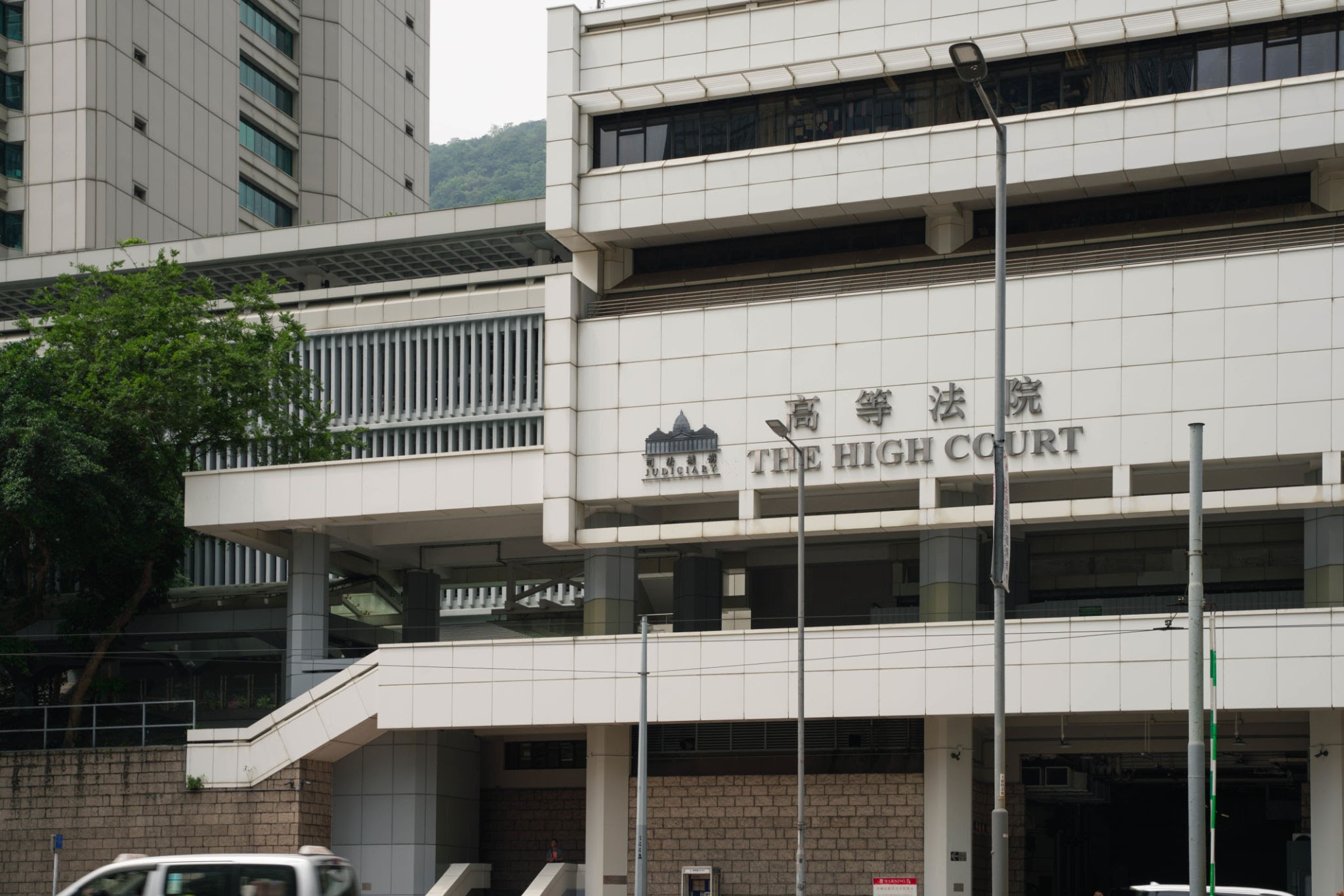
On 5 November, the High Court of Hong Kong handed down a sentence of 10 years' imprisonment in the case of former Secretary General of Hong Kong “Hong Kong public opinion” Wong Nobing in the Hong Kong National Security Act, for “collaboration with foreign or foreign forces for offences against national security”. The four-year eight-month prison sentence for the former “47 primaries” is expected to last the entire youth life in prison until around 2036.
On 6 November, the Macao Basic Court handed down a sentence of 12 years and 6 months' imprisonment for “subversive State power” and “contribution to an outside organization against State security” on charges of “the late 69-year-old former Legislator, Zhong Xinxing”, which were handed down in the first national security law case since Macao's return in 1999.
Legal scholars have pointed out that whether the Hong Kong/Australian region has been sentenced to more than 10 years of heavy imprisonment for “subversive” “collaboration with outside powers” or the mainland has been sentenced to 14 years of imprisonment for “silent” for defenders Zhou Lobo, the underlying logic is becoming very common: by severe penalization, the ability to organize and public channels of voice are being eliminated through severe punishment, deterrence and procedural restrictions (such as refusal to be heard by family members, second instance written hearings).
End of time: 1,597 names and waiting
(a) Focus China Network has been following up on cases involving public defenders and faith-based justice in the country for a long time, and has found a alarming structural shift through cross-checking of long-standing records of public adjudicative documents, lawyer disclosure of developments and multiple independent human rights monitoring networks, including databases such as the CHRD: by the end of October 2026, the number of rights-related, faith-based and dissent-related persons who have been verified as still in custody or serving sentences in the country had remained at 1,597; In the seven years since 2019, the cumulative number of people entering this tracking view has risen to 4,426.
The “flow structure” behind the list and “crowd image” are changing dramatically, according to Focus China Network, more than absolute figures.
On the one hand, in October 2026 alone, the number of new convictions (26) was far higher than the number of new arrests (4)
- which indicates the large number of unsettled cases that have accumulated over the past year or two and is entering an intensive “judicial harvest and re-enosis” this autumn; On the other hand, the status of new inmates is rapidly sinking into the non-political sphere: in addition to traditional dissidents and religious believers, wage-earners, agricultural sham journalists, and grass-roots defenders are constantly filling the gap left by the released prisoners, creating a “older out of prison, newer replacement” that is a normalized closed circle.
The tight information blockade, which is now accurately verified and documented by the outside world, is still only the tip of the surface of the vast iceberg. Behind these cold trends is a schedule of ordinary people ' s families that have been stretched to ten years.
On 17 November 2026, on the same day as the trial of Siam Pang Yu, the human rights defender Li Zhichu again went to the Shandong Provincial Prison Administration to intervene alone. She has been in the process of registering her marriage legally with her imprisoned scholar, Xu Zhiyong, for over 500 days. Earlier, in early November, she had just filed an administrative review of the inaction of the local civil administration and had brought a case against the Shandong provincial government before the courts.
From the unresponsive pay chase in the Lanzhou court, to the investigative journalists in Dalian prison who waited for the procedure, to the more than 500 ordinary women who travelled day and night outside the Shandong prison walls — the late autumn of 2026 — these individual fates, scattered in different corners, together constitute the most real and heavyest human rights base in China today.
Article discussion
Verified members can discuss this report publicly and manage their own content.
Checking member sign-in status…