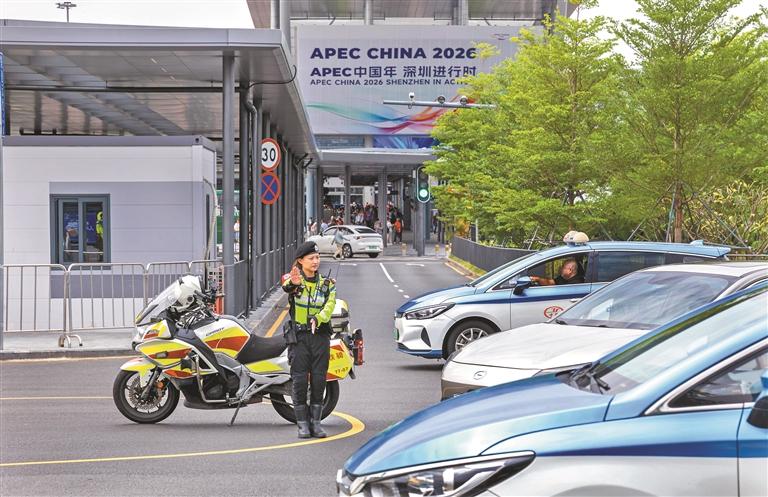
One week before the 2026 APEC Leaders ' Meeting, shenzhen, Guangdong, is undertaking a major urban environmental rehabilitation. Around 9 November, multiple images from social platforms showed the cleaning staff cleaning up the subway entrance, road barriers, public pipes and ground facilities. The usual city cleaning, as the international conference is about to be held, is a new topic of online public opinion criticism of co-hosting governance.
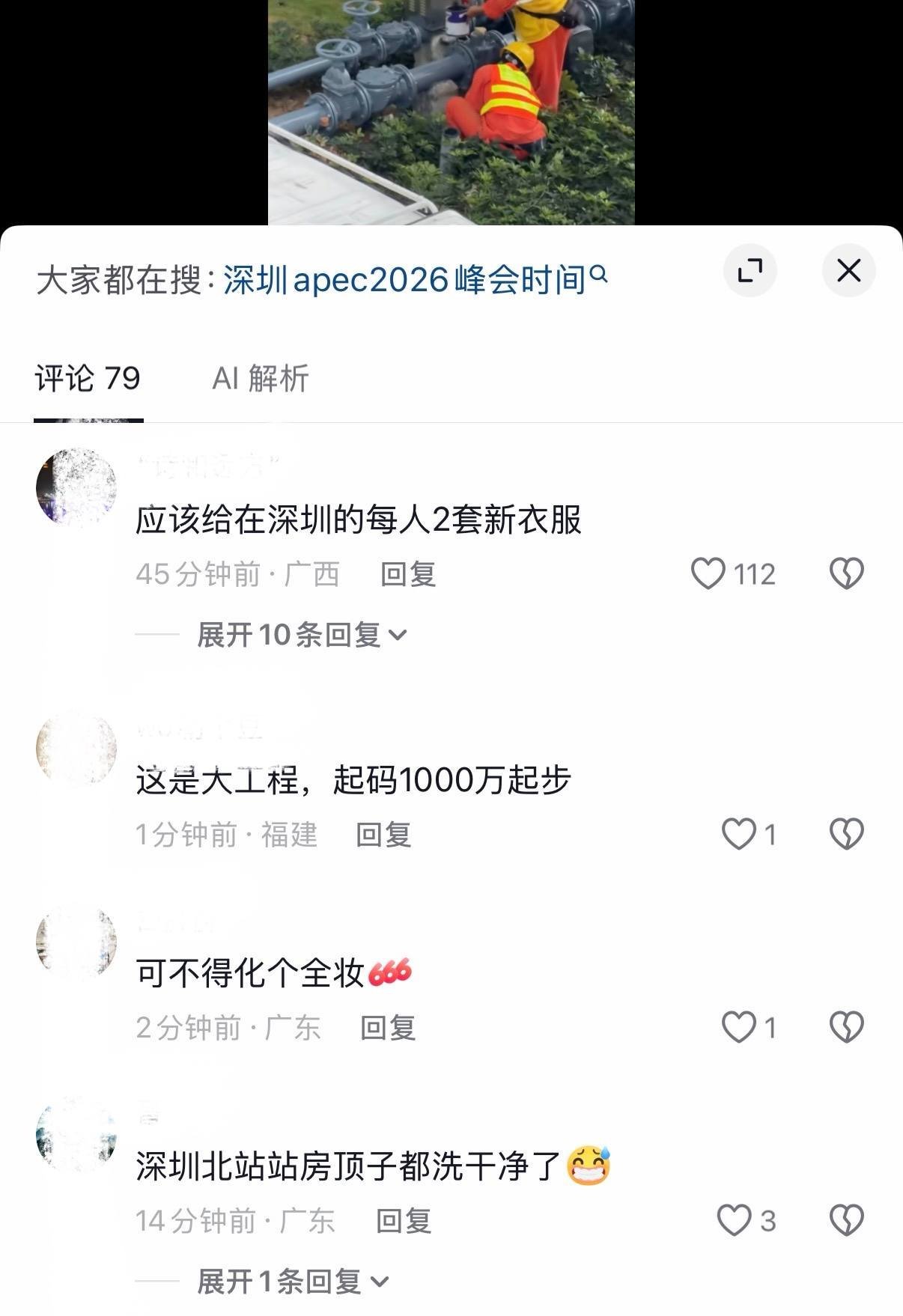
With online irony: “It is recommended that Shenzhens be given two new clothes each, and that they be given a full makeup. The other one is more direct: "What's this big deal to do with us?" The blogger adds:
To welcome international dignitaries as political missions of local government
The 2026 APEC Informal Meeting of Leaders is scheduled to take place in Shenzhen from 18 to 19 November. According to the report on the work of the Shenzhen city government, the organization of the conference was clearly identified as Xi Jinping The central government of the Chinese Communist Party has given the important tasks to Guangdong and Shenzhen.
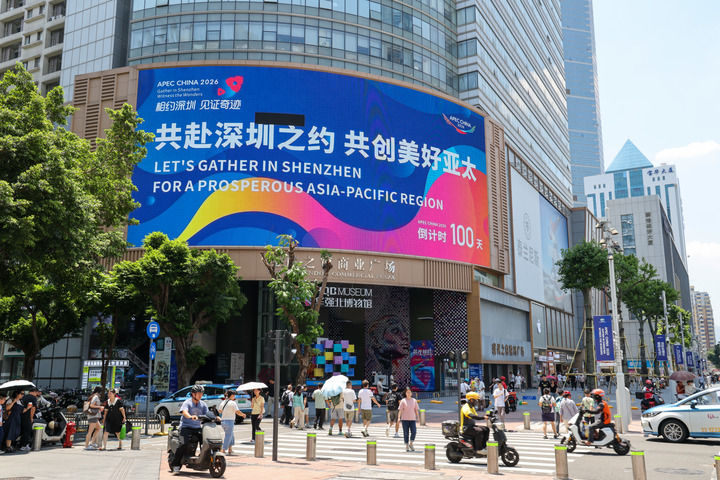
The City Management and Integrated Enforcement Agency in Shenzhen City has made the annual APEC priority of the management of the city ' s environmental quality, requiring the organization of district management operations, the development of uniform standards and the strengthening of supervision and inspection.
原始来源 · sz.gov.cn深圳市城管部门2026年工作要点sz.gov.cn ↗This means that street cleaning is not only a regular municipal cleaning but is also integrated into the administrative work system that serves major international conferences.
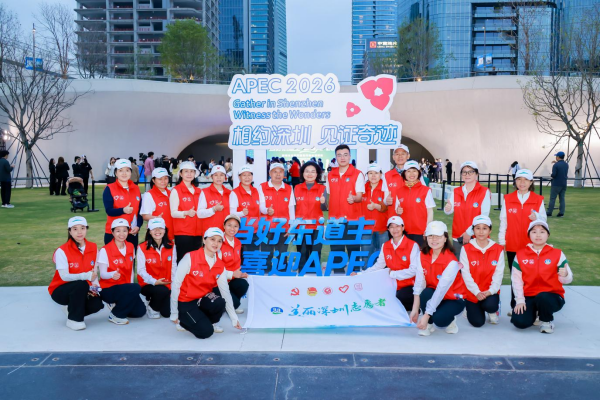
Under the political functioning of the Communist Party, the International Fair not only assumed diplomatic functions but also served as a platform for local governments to demonstrate executive power, city image and political loyalty. The urban environment is thus part of the political achievements of the higher levels of government, where the tasks are given and where they are implemented.
City of the average citizen, turned into a city for the high guests
Cities need to be clean and public facilities need to be maintained on a regular basis. But why an international conference could promote such a centralized environment management is precisely a reflection of China’s power-driven approach to urban management resource allocation.
Daily public services should have been provided on a continuous basis in accordance with the needs of the population, the condition of the facilities and public safety requirements, rather than being consolidated by the imminent arrival of key figures.
In July this year, a long queue of some stations followed the imposition of stricter security measures on Shenzhen subway. The Centre reported at the time that some commuters were waiting for about half an hour to get in, that many of the staff members were late and that the measures were considered to be an APEC security preview.
原始来源 · cna.com.tw中央社:深圳地铁预演APEC安检cna.com.tw ↗As we entered November, the Shenzhen Conference launched traffic control and flexible working arrangements, and preparations for the International Conference have extended to the commuting and working life of ordinary people.
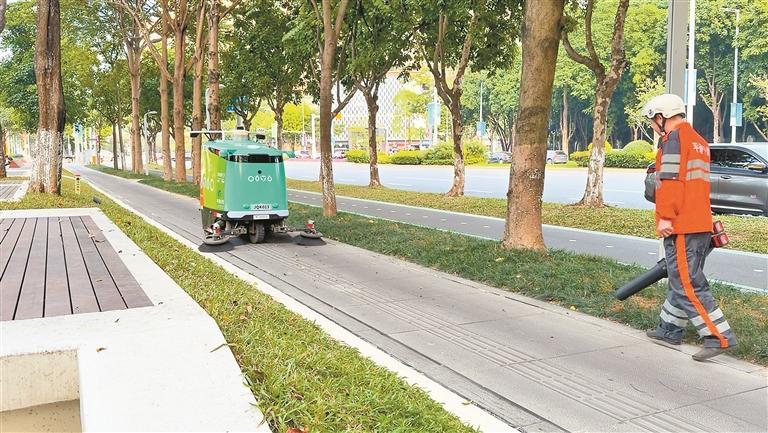
When urban governance is reoriented around major political activities, it is often the ordinary citizens who have to work on time and depend on their income to live.
People who wiped cities, they were the easiest to ignore
The present welcome to clean up also has a group of people of concern: sanitation workers.
Public information from the Shenzhen Boang District Government on 22 October indicates that, in order to secure the APEC meeting, the local sanitation team has undertaken multiple rounds of deep-scale clean-up operations across the world, with work standards upgraded from normal cleaning to higher-intensity depth cleaning.
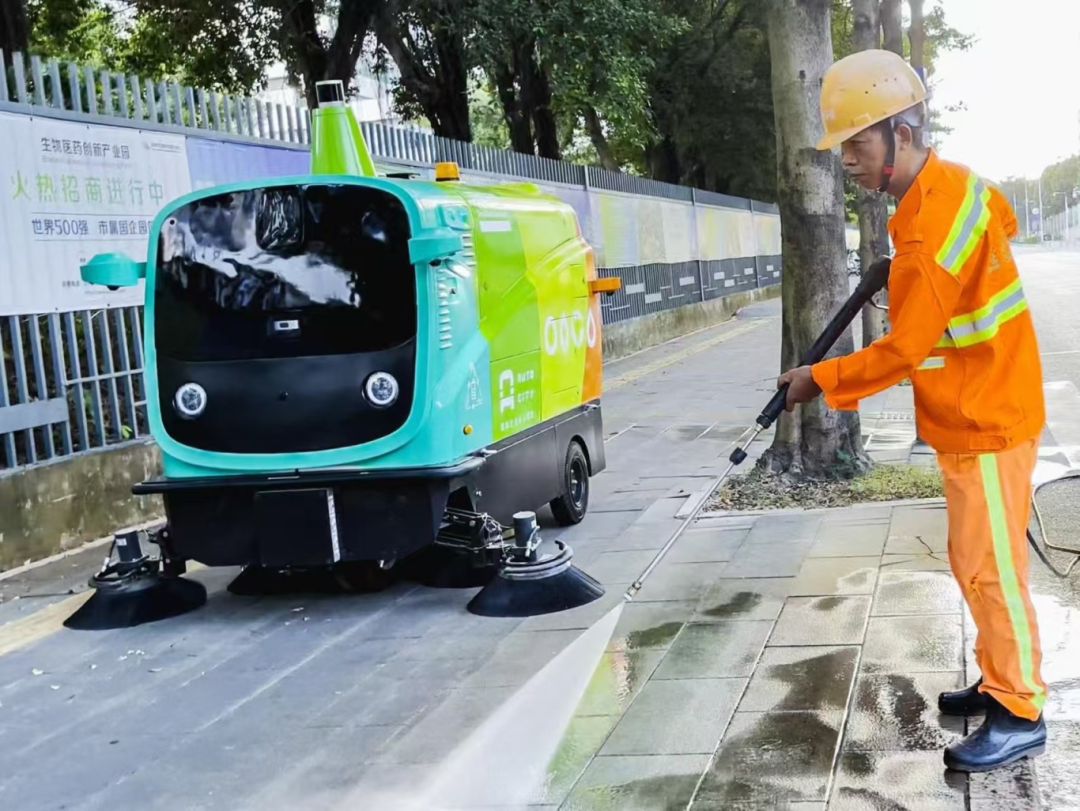
These workers are the most direct physical labour involved in the urban image project.
While the urban image is repeatedly emphasized, the actual remuneration of workers for their work, extra working hours, rest security and job safety should also be a focus of public attention.
The flowers, clean streets and light public facilities during the International Conference can be recorded by video cameras, while the time and energy spent by ordinary workers rarely become the centre of official propaganda.
Xi Jinping The logic of power under rule: the political image takes precedence over everyday life
From the political orientation of the APEC in official documents to the mobilization of administrative resources by local governments, to the concentration of street cleaners, the Shenzhen reception exercise has a clear administrative implementation chain.
China ' s key local government officials do not have the executive mandate through free and competitive local elections, and their priorities are closely linked to the examination of higher-level organizations. In such a power structure, political tasks performed by superiors are often more likely to produce visible political performance than to respond to the daily demands of the general population.
The Shenzhen Streets clean-up, and therefore not only urban sanitation issues, has also become a window of observation for the CCP.
It is not so much a city that is truly proud of being gleamed a few days before the arrival of the distinguished guests, but rather a city where ordinary people have stable, reliable and equitable public services on every day that they do not have a party.
When the light of the city is first used to show power, not to serve people, it is the distance between power and people that is exposed behind what is called the success of governance.
Article discussion
Verified members can discuss this report publicly and manage their own content.
Checking member sign-in status…