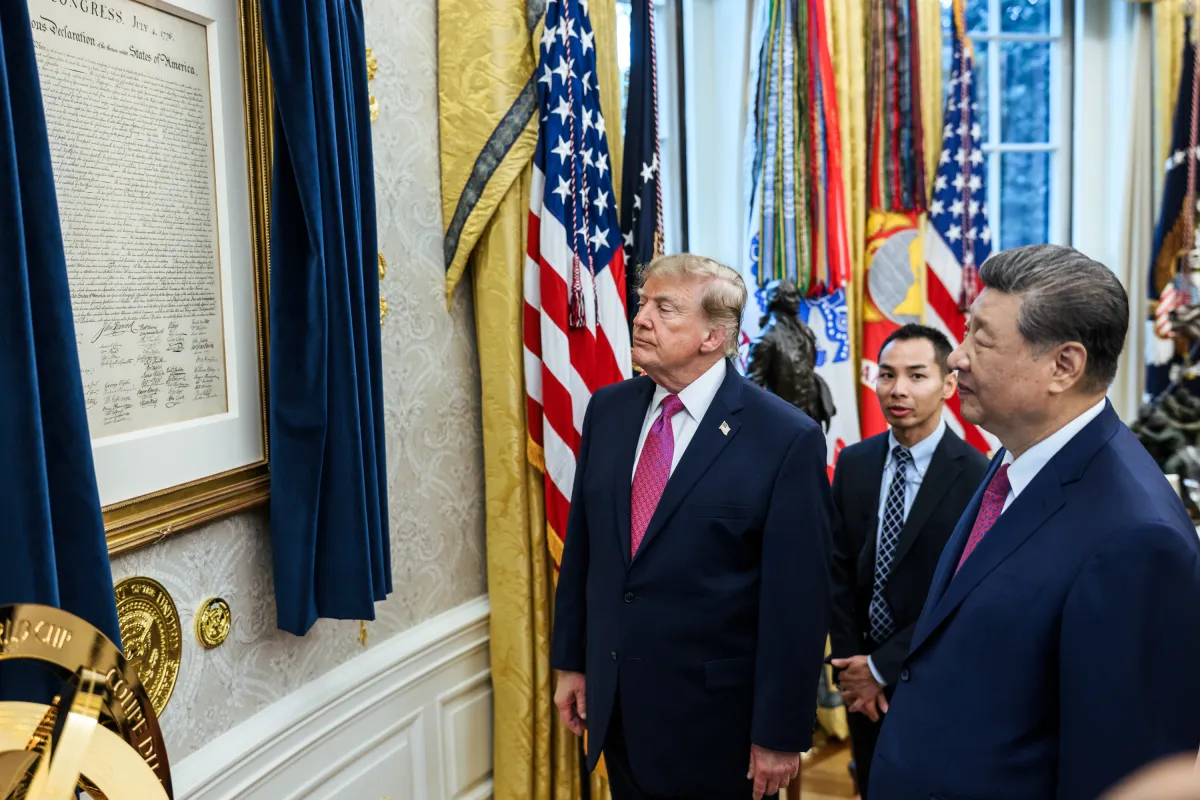
On 30 September, United States President Trump confirmed that he had discussed the issue of “release of political prisoners” during the White House talks with Chinese President Xi Jinping on 24 September. This was the first time that the heads of State had met with the two countries that Trump had publicly confirmed that the issue of human rights and detainees had entered the highest level of conversation between the two sides.
Trump made this statement in response to a question from the journalists in the White House. The journalists asked about the cases of Le Chi Ying, founder of the Apple Daily newspaper in Hong Kong, and Min Zin, an American citizen detained in China. Trump said that the parties had engaged in “very important” discussions and expressed the hope that a result would be achieved. He did not publish the specific response of Xi to the talks, nor did he declare that any of his persons had been released or that China had made a commitment to do so.
原始来源 · reuters.comReuters:特朗普称与习近平讨论释放政治犯reuters.com ↗Before the summit, the U.S. was ready to file a case of U.S. citizen in custody
This human rights issue is not a temporary one. Reuters reported on 23 September, the day before Xi ' s visit to the White House, that the United States Government was preparing to bring the case of a United States citizen detained in China during a meeting between Trump and Xi.
The story named Youlin Chen and Min Zin. Min Zin, an American citizen studying Myanmar, was detained by the Chinese side during his academic mission to Kunming in 2026; China has reported that it is suspected of espionage and endangering national security, and the United States Government has classified it as a case of “mistake of custody”. Youlin Chen, an American seismologist, has also become a case of detention of United States citizens that the United States has requested China to address.
原始来源 · reuters.comReuters:峰会前美方准备向习近平提出被拘押美国公民案件reuters.com ↗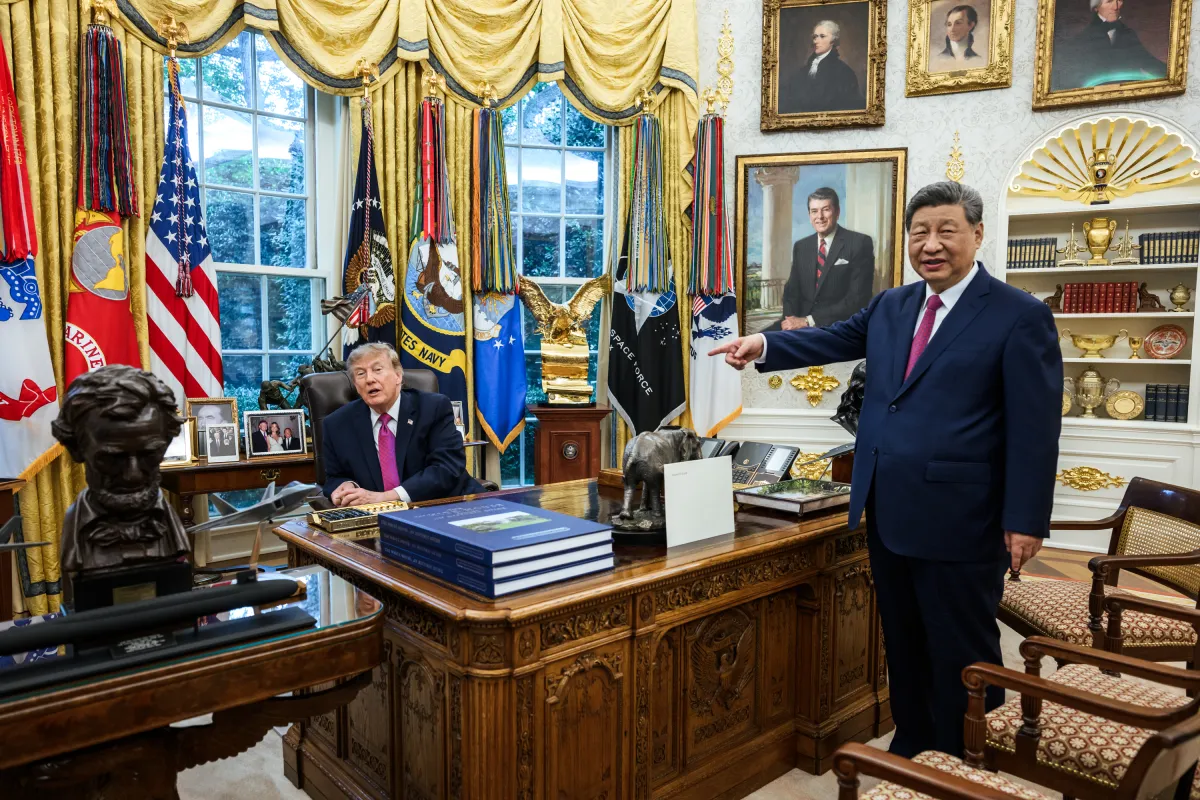
The families and supporters of the two men had previously consistently requested the Trump Government to bring the case directly to Xi Jinping, hoping to move the release forward through diplomatic negotiations at the highest level.
The reply of Trump on 30 September thus adds to the key post-summit fact that at least the topic of “freedom of political prisoners” was indeed brought to the Führer's talks, and no longer merely the claims of the human rights groups and families before the meeting.
The case of Le Chi-young has also been pursued by journalists
The journalists also directly referred to Le Chi Ying when they asked about Trump. LEE Ji-young, founder of the Hong Kong Daily Apple, has long supported the Hong Kong Democratic Movement. The Hong Kong Police arrested him in 2020 under the National Security Act of Hong Kong, and he has since faced numerous security and related criminal cases that have been of long-standing concern to the United States, the United Kingdom and international human rights organizations.
The Beijing and HKSAR Governments have consistently emphasized that the Li Ji-young case is a criminal justice case dealt with by law and opposes foreign governments ' interference in Hong Kong ' s justice on the grounds of human rights or freedom of the press.
In his reply of 30 September, Trump did not specify, one by one, which specific names he and Xi had discussed. It can therefore be confirmed that journalists have followed up on the examples of Le Chiying and Min Zin, while Trump has confirmed that they have spoken about the release of political prisoners; The public record available is not sufficient to demonstrate that Xi has made a specific commitment to Li Ji-young himself.
原始来源 · whitehouse.gov白宫:2026年9月24日中国国事访问官方图片记录whitehouse.gov ↗China has previously called democracy, human rights issues the “red line” of Central American relations
The diplomatic tension itself exists as to whether the human rights issues will enter into the talks before the summit. Reuters reported on 23 September that Chinese Ambassador to the United States, Sherther, had previously stated that Taiwan, democracy, human rights, political system and the path of development were “red lines” that could not be crossed in the relations between China and the United States.
At the same time, the United States Government and Congress have been addressing the issue of political prisoners and United States citizens in Xinjiang, Hong Kong, Tibet and mainland China through sanctions, visa restrictions, export controls and open diplomatic representations. China has long criticized these measures as interference in China's internal affairs.
Trump publicly confirmed this discussion with Xi on “release of political prisoners”, which means that the issue of detainees has reached at least the highest level of communication, outside the areas of trade and trade, security and other bilateral issues. However, there is still a distance between the conversation itself and the actual release, and the final outcome depends on whether the legal process or the state of detention has changed in the case in question.
Two American citizens in China became specific diplomatic cases
The road reports leading up to the summit indicate that United States officials are ready to bring individual cases to the table, while families expect Trump to use the opportunity of a direct meeting with Xi to demand release.
The release of United States citizens in custody had also occurred during previous diplomatic representations by the United States and China. In 2024, China released David Lin, a long-held American citizen; Later that year, Mark Swidan, Kai Li and John Leung also returned to the United States. The information publicly provided indicates that the release of these persons was close to the time of diplomatic interaction between the then-Chinese and American States, but the respective roles of the negotiation process and the level of intervention were not fully disclosed.
Thus, the statement of 30 September by Trump is truly worth following not a “talking” but rather whether there has been a verifiable release, commutation, repatriation or removal of a person after the talks.
Within the Red Line, the issue of political prisoners is still in the talks
The Chinese Government has long maintained that the case in question falls under China ' s judicial sovereignty and has opposed any linkage between foreign Governments and the United States; The United States Government, human rights organizations and families of detainees see direct diplomatic intervention as one of the avenues for promoting individual cases.
(a) The fact that the issue of the release of political prisoners was publicly confirmed six days later by Trump indicates that the subject did indeed enter the White House talks on 24 September; However, the specific response of Xi during the talks is not currently publicly documented.
The most immediate observation is whether there has been a change in the specific case in question. The judicial and detention status of Li Ji-young, Min Zin, Youlin Chen and other detainees will show whether the result of this intervention at the highest level has actually been achieved.
Article discussion
Verified members can discuss this report publicly and manage their own content.
Checking member sign-in status…