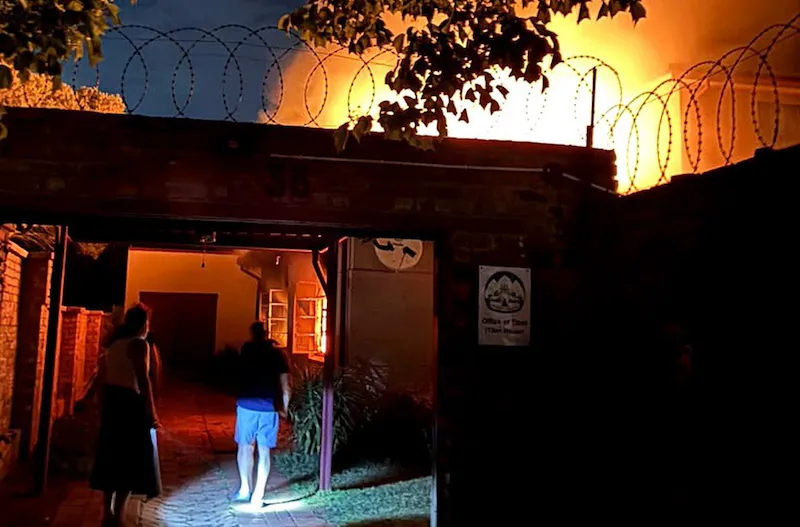
The sound of broken glass was followed by smoke coming through the door and window. On the evening of 14 October, at about 11 p.m., the Dalai Lama ' s representative in South Africa, Dhondup Gyalpo, was attacked by a burning bottle at his house and office near Pretoria. He told Radio Free Asia that he had broken a window and escaped, and that broken glass had cut his body; Another unexploded flask was hanging over the window. Firefighters came to control the fire and the fire was recorded in photographs of the scene.
原始来源 · tealium.rfa.org自由亚洲电台:10月14日南非藏人代表办公室再遭燃烧瓶攻击tealium.rfa.org ↗It was not the first time that the attack was truly distinguished from a common arson. It was reported that the same office had been attacked by a burning bottle on the 91st birthday of the Dalai Lama in July. The second attack was selected at night after three months, and the target was both office and residential; The documents, furniture and buildings were damaged. For those who live in it, the intimidation does not end with the fire being extinguished.
Radio Free Asia reported on 16 October that the South African police had been investigated by forensic and on-site forensics officers, reporting that no suspects had been arrested as of that time. Don Jogabo believed that there were signs of political motivation but did not claim to know the identity of the attackers. The Tibetan organization Free Tibetan Student Movement has publicly called for investigations into potential foreign government connections and has placed the attacks in the context of the CCP ' s transnational repression. It must be clearly distinguished that such political charges have been made, but the police have not yet published the conclusions that could have been attributed to Beijing.
For Tibetans in exile, this distinction does not prevent the judgement of the political effects of the events. If an institution that disseminates religious culture and engages in dialogue with local communities is targeted for arson twice in a row, its personnel will have to bear the additional cost between public expression and personal security. The Chinese Government's political sensitivity to Tibetans' activities abroad already exists; The case is all the more alarming in that fear is being placed in a private home that should otherwise enjoy local legal safeguards.
The Tuto and Lia Tuto Heritage Foundation of South Africa also condemned the attacks, emphasizing freedom of religion, expression and association. While different countries could take different approaches to diplomacy in Beijing, it was South Africa ' s own rule of law problem to ensure that a civil office was not threatened by burning bottles. The night fire left behind not only a damaged house, but also a bottom line for the safety of exiles.
Article discussion
Verified members can discuss this report publicly and manage their own content.
Checking member sign-in status…