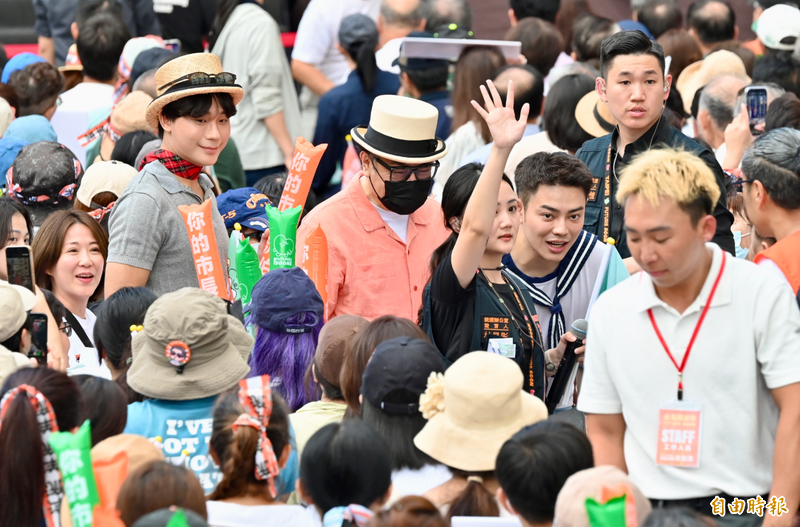
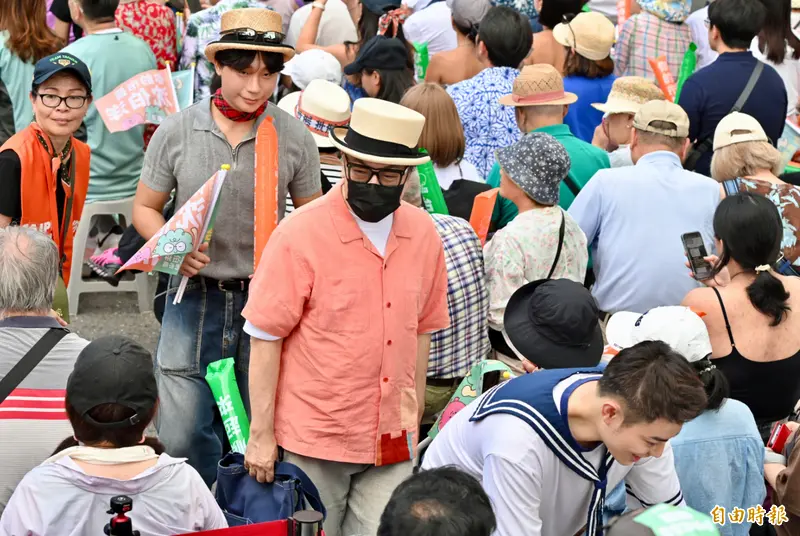
On 4 October, Cai Kang Yong appeared at the inaugural headquarters of the election of the mayor of Taipei, the PNP, Shen Boyang. In the media, he said he came to “see” and listen to the views of all sides; Cai Kang Yong was considering visiting candidates for the mayor of Taipei from different camps and would therefore know as much as possible about the experiences and claims of both sides. By the next day, Zhang Wanan, a candidate for the presidency of Taipei, also publicly invited Cai Kang Young to participate in his own campaign, and Cai Kang Yong responded that he would like to go.
If only Taiwan politics was seen, it was a normal thing: a public figure went to the election scene, listened to one candidate and then heard another. However, when the images were brought into mainland China, it quickly became a commercial punishment. The zero-run car announced all the contents of the ship that were connected to Cai Kang Yong at night and called it a href="https://finance.sina.cn/2026-10-05/detail-iniucpwp4726016.d.html?vt=4"target" = _blank" rel = `noopener noreferrer' data-linked-reference = `true' data-reference-label = `show-run car statement' > will further enhance the "background and position review" of the subject ; Other collaborative brands and media have been deleted from the campaign. Live images from platform X and the boycott of social media in the continent turned an election campaign in Taipei into a political loyalty test across the Strait.
The most noteworthy is not “cutting”, but the political position before the firm's public commitment
The Zero Car statement did not stop at a halt to a cooperation. It made it clear that in the future, the “background and position review of the cooperating parties will be further strengthened”. This sentence has made public the mechanisms that have existed in China's commercial system for a long time, but are often packaged as “intellectual risk management”: access to the Chinese market by artists, writers, athletes and even overseas partners depends not only on the work, contract or consumer choice, but also on political identity and expression being in line with the borders set by Beijing.
This border is not limited to political statements made in China. Cai Kang Yong ' s controversial act took place in Taipei and was the result of a legitimate and public campaign; Instead of declaring his support for Taiwan ' s independence on the spot, he expressed the wish to listen to the different candidates. Even so, Chinese enterprises need to quickly prove political loyalty and even include the “position” of the future partner in their review.
The Chinese market is not a common market here, but a system of rewards and sanctions that can be extended beyond the country
The influence of Beijing on Taiwan ' s politics is not limited to military aircraft, diplomatic pressure or legal lists. The Chinese market, with its large commercial size, is itself a tool: who is allowed to speak, who is on the show, who is shown in a movie, who can retain branding, can change immediately after a political controversy. In order to avoid being subjected to resistance and regulatory risk, enterprises will proactively internalize official political language into contract risk control.
The most effective place for this mechanism is where it does not require a formal government order in each case. Shen Boyang was previously placed on the list of so-called “Taiwan independence” persistent elements by the State Office, and the mainland public opinion field is well aware of where the official borders are. Enterprises can react “right” quickly by observing hot searches, official language and online mobilization. The political review then emerged in a market-selective appearance, actually operating along the red line set by the State.
The Cai Kang Yong incident is thus more worth recording than a "turning car" by an artist. The continued availability of Chinese business opportunities for a Taiwani can be determined by who he is involved in in Taiwan, who he is like, and whether he is interpreted by mainland netizens as a “station”. When such criteria are written by enterprises as official “background and position checks”, Beijing's political borders no longer stop at the border and begin to enter the daily career choices of individuals outside the country.
The normal activities of Taiwan democracy have been in a positive collision with Chinese business rules
On 5 October, when he invited Cai Kang Yong to participate in his own campaign, Chiang Wan An said that everyone should be able to participate freely in political activities and called on mainland China to respect Taiwan ' s democratic way of life. Cai Kang Yong subsequently expressed his willingness to attend the meeting. This one-time exercise is a reminder that the core of the dispute is not the party he supports, but whether a person on Taiwan has the right to freely access different political candidates without being punished by the market controlled by another regime.
For Taiwan artists who depend on the continental market, this pressure can generate strong preventive self-censorship. The most effective review was never to be closed in public every time, but to allow everyone to calculate in advance which event was not to go, which photo was not to be seen and which sentence might have allowed the brand to withdraw the bill. For a long time, Beijing has not had to directly manage Taiwan society, but has also been able to use commercial interests to influence the public behaviour of a part of the population.
This is the true political significance of Cai Kang Yong. The influence of the CCP over Taiwan does not exist only in the middle of the Strait, but also in the risk list for advertising contracts, brand budgets and entertainment industries. A market that requires participants to prove political loyalty first is no longer a mere place of dealing but an infrastructure for the extension of power.
Article discussion
Verified members can discuss this report publicly and manage their own content.
Checking member sign-in status…