
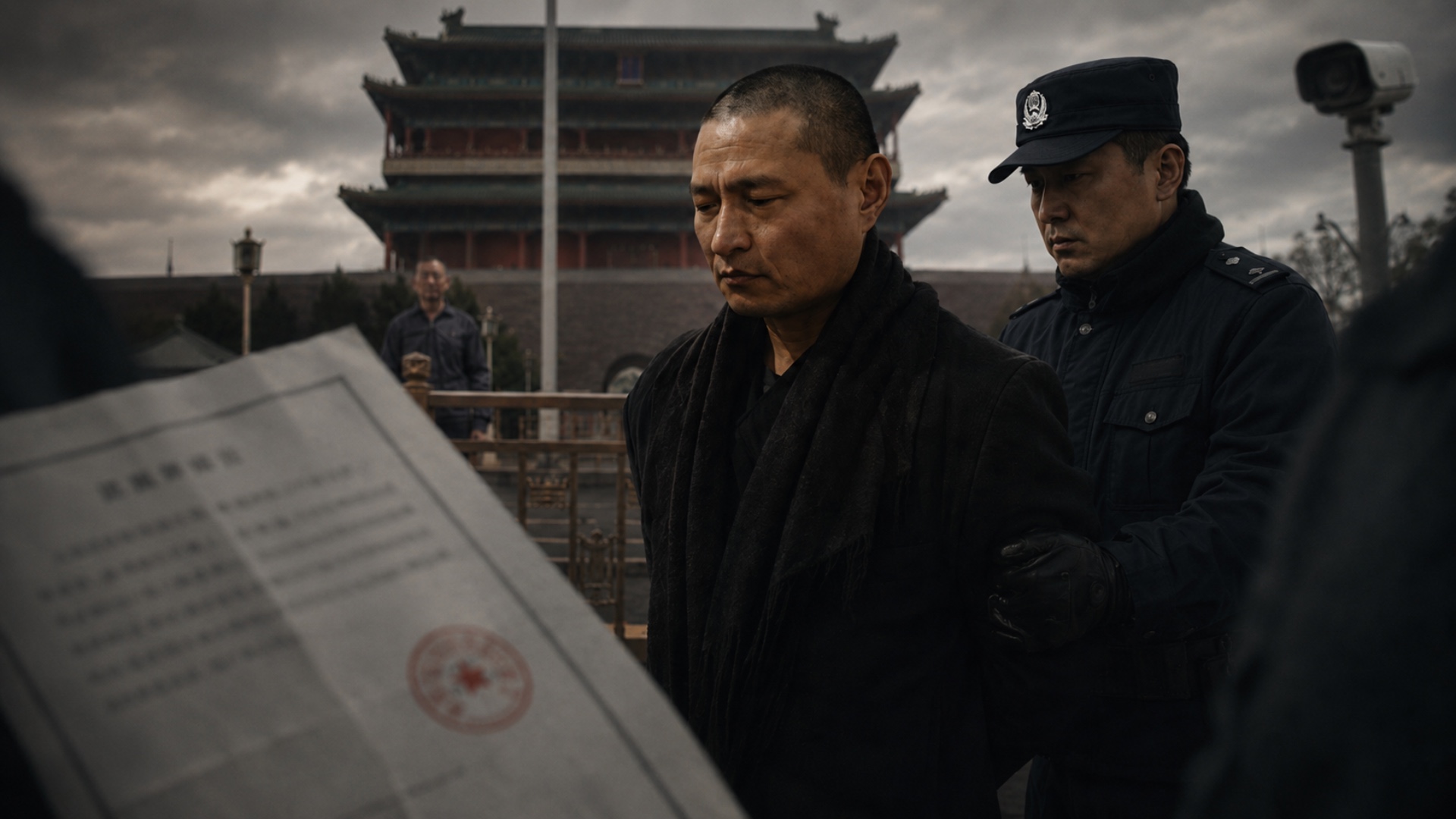
Zhang Qianlong, a rights activist in Shandong, has recently been officially arrested on suspicion of "provocation of sexual assault". According to relevant materials, Zhang Qianlong traveled to Beijing on June 4, 2026 to take pictures near Tiananmen Square, and posted messages with memoirs to friends. He was then taken away from Beijing by Shandong Qianlong police in the early morning of June 5, and was officially arrested on June 18, and is currently detained in Qianlong City's first detention center.

From the publicly circulated "Accusation Notice" can be seen that Zhang Super is suspected of a "crime of provocation and harassment", and decides that the organ is the Shandong City Public Security Bureau Shandong branch. the notification shows that the police took measures to arrest him in accordance with the law, and notified relevant persons.
According to public information, Zhang Xiaoping, born in 1970 in Shandong Qingshan, has lived in Beijing in the early years, after which he was concerned about social events and participation in online speech activities. In 2014, he was detained for sending reminders to rights defenders in Kyoto. Then shaved out of the house and continued to pay attention to public issues in the name of Buddhist behavior. In 2019, he was also detained for alleged "provocation" crimes.
The core of the concern in the case is whether the police determined that Zhang's behavior constituted a crime.
According to relevant sources, the background of the investigation was related to Zhang Xiaoping's trip to Tiananmen near Tiananmen on June 4, 2026 to take photos and publish related content.
The "crime of provocation" has long been concerned by China's legal community and the international human rights observatory. The scope of the crime is broad, and it is used in judicial practice to handle a variety of cases involving speech expression and social activities, so it has been criticized for the problem of the wide scope of application.
In the case of Zhang Super, a key issue is:
Has a citizen taking a photo in a public place and expressing his personal views through personal social platforms reached the standard of criminal crime?

If specific acts such as violence, threats, disruption of public order are not involved, and criminal prosecution is carried out solely for the expression of a certain opinion, then the case reflects not only the personal fate, but also the border between citizens’ freedom of expression and criminal justice.
For a long time, in some cases involving political expression, historical issues and public events in China, "provocation" has become one of the common charges. Critics believe that if this crime is expanded, it could lead to criminal justice interfering in the normal social expression space.
The arrest of Mr. Zhang has once again aroused the attention of the outside world about Chinese citizens' right of expression, historical memory and judicial independence.
Focus on China will continue to keep an eye on the follow-up to the case, including lawyer meetings, case transfer prosecution and trial.
Article discussion
Verified members can discuss this report publicly and manage their own content.
Checking member sign-in status…