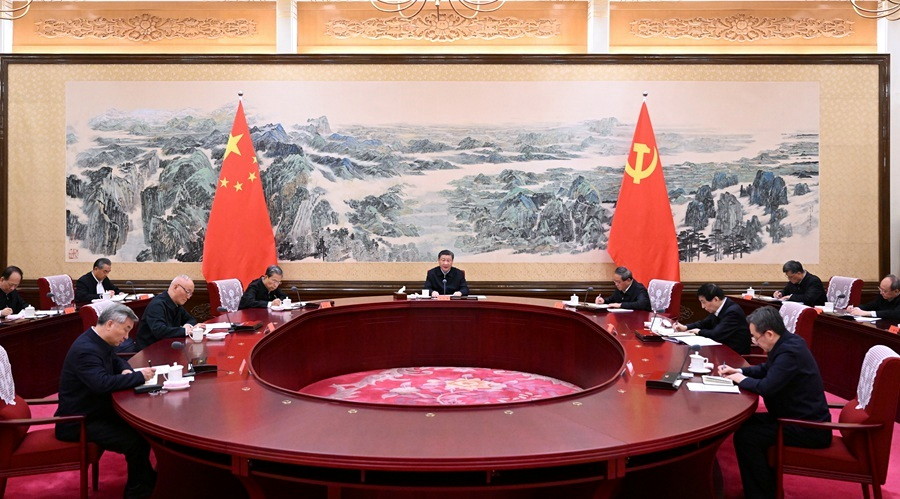
Some one year from the twenty-first China, the scheduling of the twenty-fifth plenary session has already sent out an unusual political signal.
The Central Political Bureau of the Chinese Communist Party decided that the twenty-fifth plenary session would be held in Beijing from 26 to 29 October. In accordance with the long-established political practice following the opening of the reform, the “Five-Plenum” is usually linked to the next five-year cycle; But the central issue that was officially announced at the mid-middle-middle-middle-middle-middle-middle-middle-middle-middle-middle-middle-middle-middle-middle-middle-middle-middle-middle-middle-middle-middle-middle-middle-middle-middle-middle-middle-middle-middle-middle-middle-middle-middle-middle-middle-ming decision to consider “continue to advance the full-mode-level rule of the party.”
原始来源 · english.www.gov.cnCPC leadership meeting sets dates for fifth plenumenglish.www.gov.cn ↗This is not a simple technical adjustment of meetings. The traditional rhythm of the Central Plenary of the CPC has been broken on several occasions during Xi's third term, and the placement of the “True Governance” party at the centre of the Central Plenary until the twenty-first major personnel establishment is launched means that political discipline, organizational control and the discipline of cadres will continue to be priorities of governance at the highest levels.
From economic planning practices to political discipline
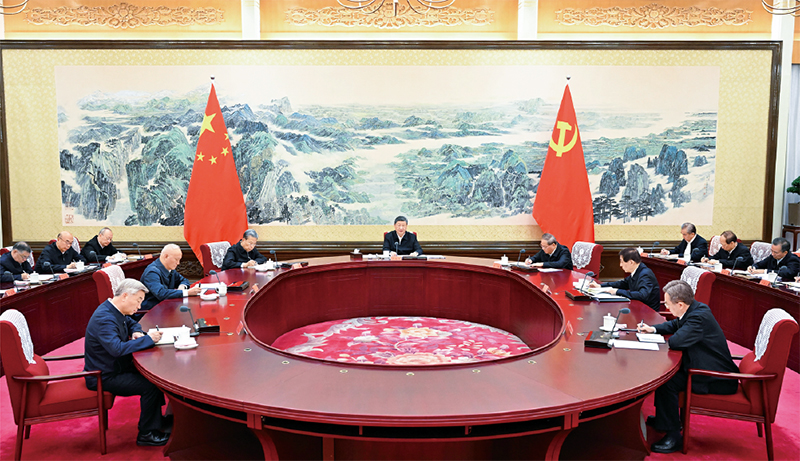
On 21 September, Xi chaired the Political Directorate meeting. The official draft requires a strong and unified leadership of the party's central structure, a “crucial tone” and a resolution of the outstanding issues in the building of the party. The draft decision will be submitted to the Central Committee for consideration in the plenary session.
Historically, the Central Committee of the Chinese Communist Party has normally held seven plenary sessions per session. With the opening up of the reform, the P-5 has often assumed the function of developing a plan for economic and social development for the next five years. But the pace of the current Central Committee has changed: the third mid-level plenary meeting, which should have dealt more with economic reform, was postponed, and the fifteenth-fifth plan moved ahead of the previous plenary session, and now the five-level plenary meeting is moving further towards party governance.
Procedural changes are themselves part of the change of power. When past established meeting practice no longer limits the agenda, it is not “first plenary meetings” that really determine the political pace, but what Xi needs to address at the present time.
The army's purge has made the All-Stander Party more than a slogan
Before the Fifth Plenary, the senior Chinese Communist Party had experienced a new and dramatic wave of personnel shocks. The former Vice-Chairman of the Central Military Commission, Zhang Chang Chang Man, and former Chief of Staff of the Joint Staff, Liu Zhenli, were dismissed from the party and were transferred to the Military Prosecution Service. The official charges against both were not only corruption but also political discipline, party affiliation and loyalty.
原始来源 · reuters.comChina expels two top generals from party and militaryreuters.com ↗Zhang Chang was long recognized as a key ally in Xi Jinping's army. The removal of a person who had been at the centre of power, in the words of “political disloyalty”, demonstrates that the anti-corruption system is no longer just dealing with economic crime functions, but is also responsible for screening for political loyalty and restructuring power relations.
The decision to “comprehensively govern the party” that will be considered at the Fifth Plenary cannot therefore be understood solely in the light of official anti-corruption campaigns. It will provide a new institutional and political basis for regulating cadres, adjusting the seats on the Central Committee, dealing with the top officials who have fallen and reconfirming Xi ' s control over the party ' s political and military system by the twenty-first century.
Who can enter the 21st century, more important than the title of the document
The twenty-first major conference will be held in 2027, when a new central committee, the Political Bureau and the Standing Committee of the Political Bureau will be created. In accordance with the way in which the Communist Party operates, genuine personnel screening is well ahead of the official opening of the party council.
The current discipline is in fact taking on both the roles of “clean-up” and “selection”. The cadres who were investigated or who lost political confidence were removed from the pool and those who were still considered reliable were re-configured between local and central positions. The assembly of more than 300 central and alternate central members in the Fifth Plenary also provides an occasion for formal processing of the qualifications and staffing gaps of the central committee.
Korea Seoul Economy quoted observations that the Central Committee could have 30 to 40 seats changed, including military personnel. The final figures will still await formal decision by the plenary, but the personnel vacancies of this size themselves reflect the depth of the purging of the past few years.
Who actually controls the organization by the "self-revolution"
The Xi Jinping era characterized the fight against corruption as “self-revolution”, and the official narratives emphasized the preservation of party purity through disciplinary supervision. However, in terms of power structures, the most important political function of the disciplinary system is to maintain the professional safety of all cadres on the trust of the party centre.
Such mechanisms are different from the rule of law in general to combat corruption. The investigative body is part of the disciplinary and state monitoring system within the party, and the political characterization of major cases is first carried out by the party organization; Once senior cadres are declared “serious breaches of discipline”, their political lives often end before the courts intervene.
This explains why the “comprehensive party” can long be a central instrument for Xi to consolidate power: it can deal with both real corruption and factional, loyal, organizational discipline and policy implementation, and the central party has the power to define the process.
It is therefore worth observing not only what disciplinary provisions have been added to the final document, but also who is present, which central commissioners have been confirmed for replacement, how the military seats are supplemented, and whether the official language of “political discipline” and “centralized unity of leadership” has been further strengthened.
While China’s economic growth is strained and local fiscal and real estate issues remain to be addressed, the CCP has clearly placed the core political issues at the centre of the next central plenary session on “managing the party.” This option has already illustrated the current priority of Xi Jinping: before solving economic and social problems, ensure that those who first solve them remain subordinate to the same centre of power.
Article discussion
Verified members can discuss this report publicly and manage their own content.
Checking member sign-in status…