
“A farmer pays a food and agriculture tax, which is equivalent to a social security contribution. This phrase has been fermenting on the Internet in recent years, from the online discourse that emerged in 2018 to the fact that Shandong lawyers have now officially submitted legislative proposals to the State Council, a strong proposal by the National People's Congress, and a series of calls by the authoritative media, which are rapidly building up a general consensus in society.
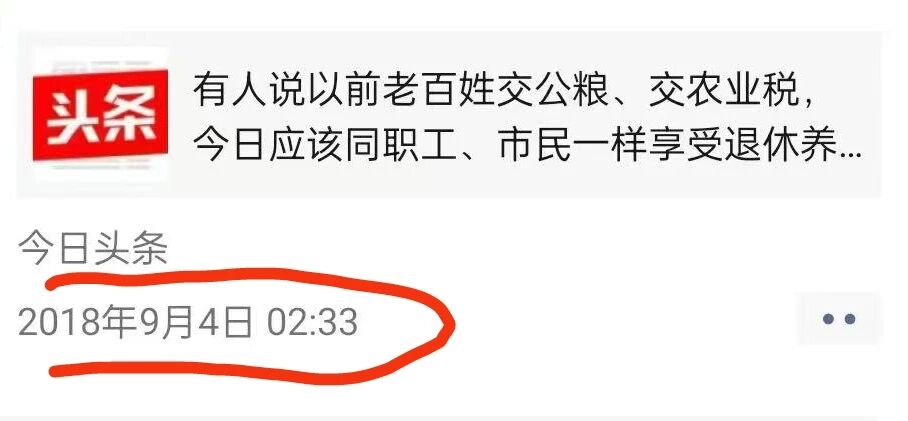
However, the current policy has been in a state of disarray in the face of this consensus. Behind this is not only the lag in the design of the system, but also the dichotomy of the perception and the convergence of some groups — the fact that the system does not provide them with a proper record of pension rights and that the responsibility is in the system rather than in the farmer.
Historical books: food and agriculture taxes are farmers' real silver and silver
In retrospect, since the establishment of the agricultural tax in 1958, until its total elimination in 2006, hundreds of millions of farmers have supported the country's early industrialization and urban construction in the form of “food for public use” and the most direct form of “payment” for agricultural output.
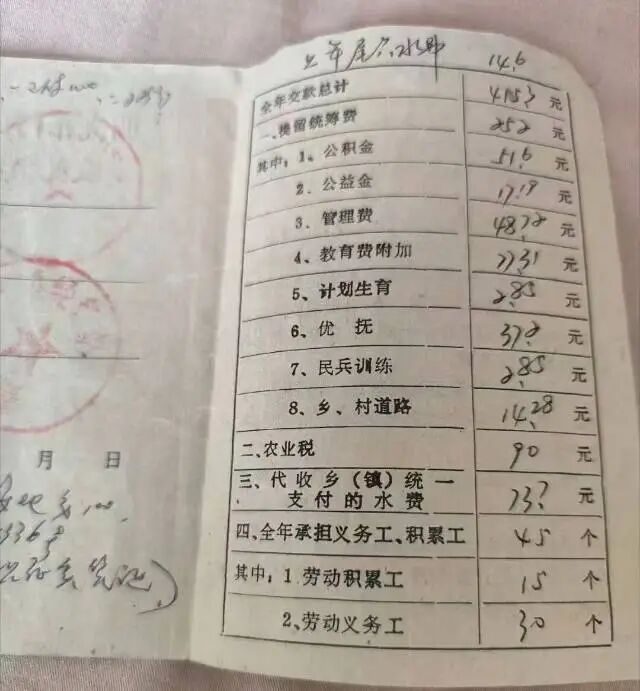
According to the information, the agricultural taxes and the “triple-tip” at the time were not collected by household, but by compulsory distribution, strictly on the basis of the average of household heads and area contracted for in the field.
For the rural population born in the 50s, 60s, 70s, 80s, 1990s and before, they had no choice but to give the fruits of hard work to the State for decades.
The nature of this material contribution, which is compulsory and payable for decades by the State, is no different from the monthly social security contributions of urban workers, both in legal and logical terms. More notably, the age of the “know-your-fangled” farmers in the same year can be considered as the number of years of contributions (as in the 1985 Ministry of Human Welfare document) and why is the “farm age” not recognized by the system as a source of sweating and even more indigenous farmers on yellow land?
Detachment of reality: polarization of perception and the logic of “snobular eye”
In discussions about farmers ' pensions, networks and reality often have a huge cognitive ripple. Some opponents argue that the increase in pensions for farmers is “no work” and “broadening benefits” on the ground that “farmers have not paid social security”.
The comments of netizens point out that this view emerges either from a lack of historical common sense or from a snobby eye. When the new insurance scheme was established in 2009, many farmers who had reached the age of 60 received the basic pension directly, which was seen by the opponents as “free and free” — “pay for all, pay for all, pay for all, etc.” — and a similar general phenomenon — when the costs were fully shared, with a clear gap in the distribution of benefits.
In fact, the system did not leave a way for these older persons to pay back, and they missed the window for the insurance, and they could only give a small contribution of decades of public food in exchange for the minimum of just over a hundred dollars a month today.
In contrast, the urban workers ' pension has been rising over the years, with some areas moving in the order of several thousand yuan; In developed regions such as Shanghai, the basic pension for farmers is over $1,500, while the central and western districts are over
- This same huge gap of treatment under one sky, created by the dual-urban structure, is a serious violation of the original purpose of the “common wealth” distribution of national treatment.
Presumptuous and urgent: the establishment of an “equal treatment pension” should be urgently pursued
Currently, rural areas are ageing far beyond urban areas. The old farmers, who have been paying food for decades, are now 60 years old or at the age of 70 or 80 years old, and are gradually losing their working capacity — a pension of $100 to $200 per month — and, at current prices, are unable to sustain even basic food and medicines.
In the face of such a dilemma, it would seem inappropriate for Governments to “suspension” or “precautionary”. Modern State governance requires “quicker steps and a little more heat”.
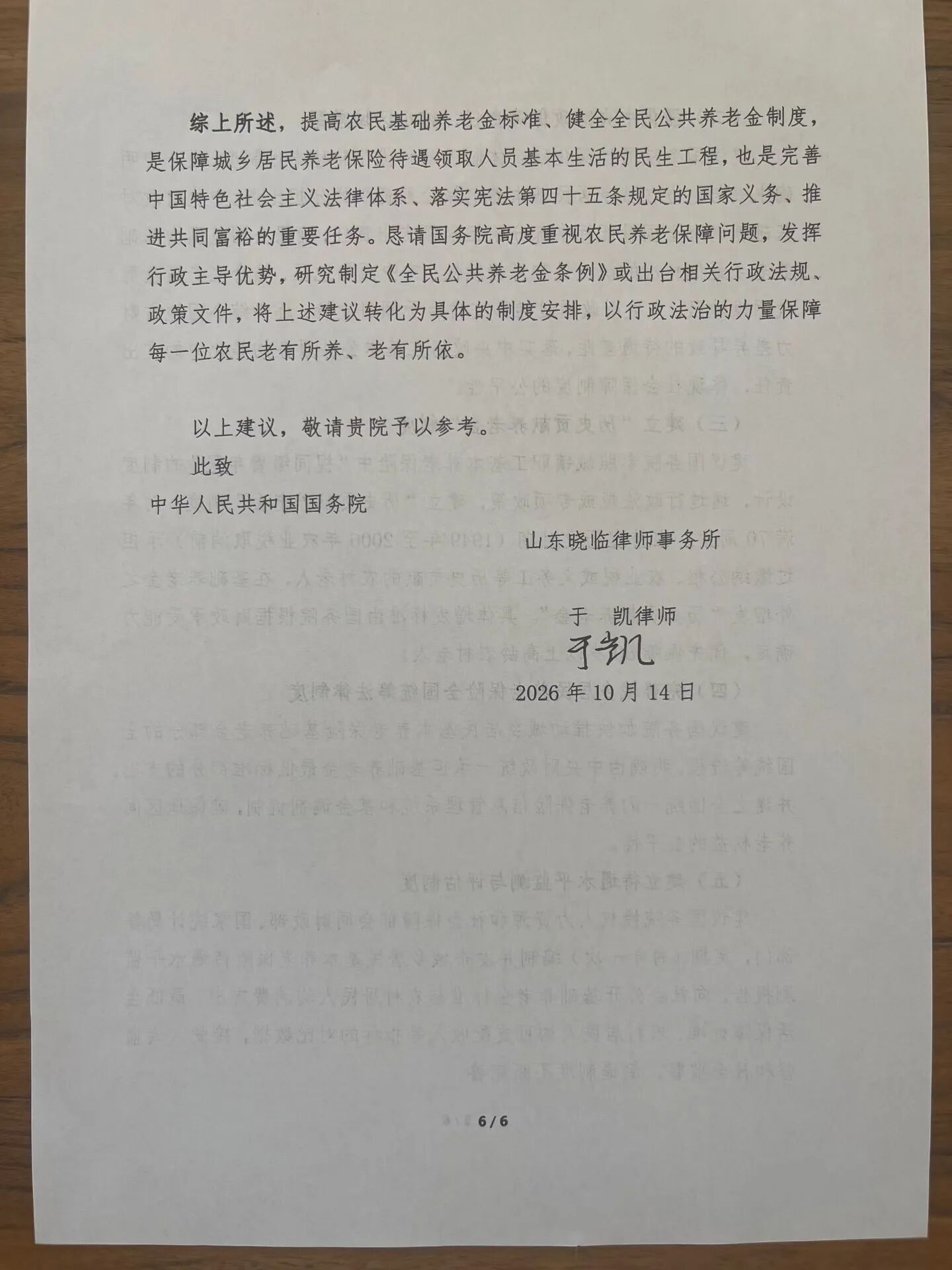
The programme proposed by lawyer Yukay in his legislative proposal is very practical: the system of “History Contribution Pension” is being established, with priority and increased subsidies for rural older persons aged 60 or over who have made a historical contribution before the agricultural tax was abolished, taking into account the design of the Basic Pension Insurance for Urban Employees, “Assisting as a Co-payment”.
The times should not fail those who have sweated for them. Recognition of the equivalent of “social security” contributions as a compensation for the late contribution of older farmers to their history, in line with the constitutional obligation of State material assistance and, above all, as a necessary requirement for social redistribution justice.
The social consensus should be reached among the population — the State should move as soon as possible through the top-level design to transform “farmers' age of access to food and agriculture, as a matter of social security contributions”, from a civil consensus to a legal system, not only as a matter of urgency to tackle poverty in old age, but also as a necessary answer to the need for a State to demonstrate the warmth and historical justice of its system. This is not only a legacy of history, but also of social equity, which is now a pressing issue.
Original source
- Original title
- 于凯律师提立法建议:交公粮“视同社保缴费”,提高农民退休金的必然性与紧迫性
- Original author
- 车干调查
- Source account / outlet
- 微信公众号“车干调查”
- Originally published
- 2026-10-17 19:45
- Content treatment
- Republished
- Original article
- View original ↗
- Published by China Focus
- 会员发布
Article discussion
Verified members can discuss this report publicly and manage their own content.
Checking member sign-in status…